 Bellingham
 Sunnyland's Siding Has a Tougher Job Than People Think
Sunnyland is one of Bellingham's older, established neighborhoods, which means a lot of its homes are wearing their original siding, a second-generation replacement, or something installed decades ago under different building standards than we use today. That siding has been sitting through the same Whatcom County weather cycle every year: wet winters, a short dry summer, and a lot of in-between days where the air just stays damp. Over enough years, that cycle finds every weak point in a siding system — the seams, the fastener lines, the spots where paint stopped bonding. Replacing siding here isn't just a cosmetic upgrade; it's resetting the building envelope so the house can handle another 30-plus years of this specific climate.
This page is about that one job, done in this one part of Bellingham: what the local climate actually does to exterior siding, what a correct replacement looks like, and why it matters that the crew doing the work already knows this neighborhood's housing stock.
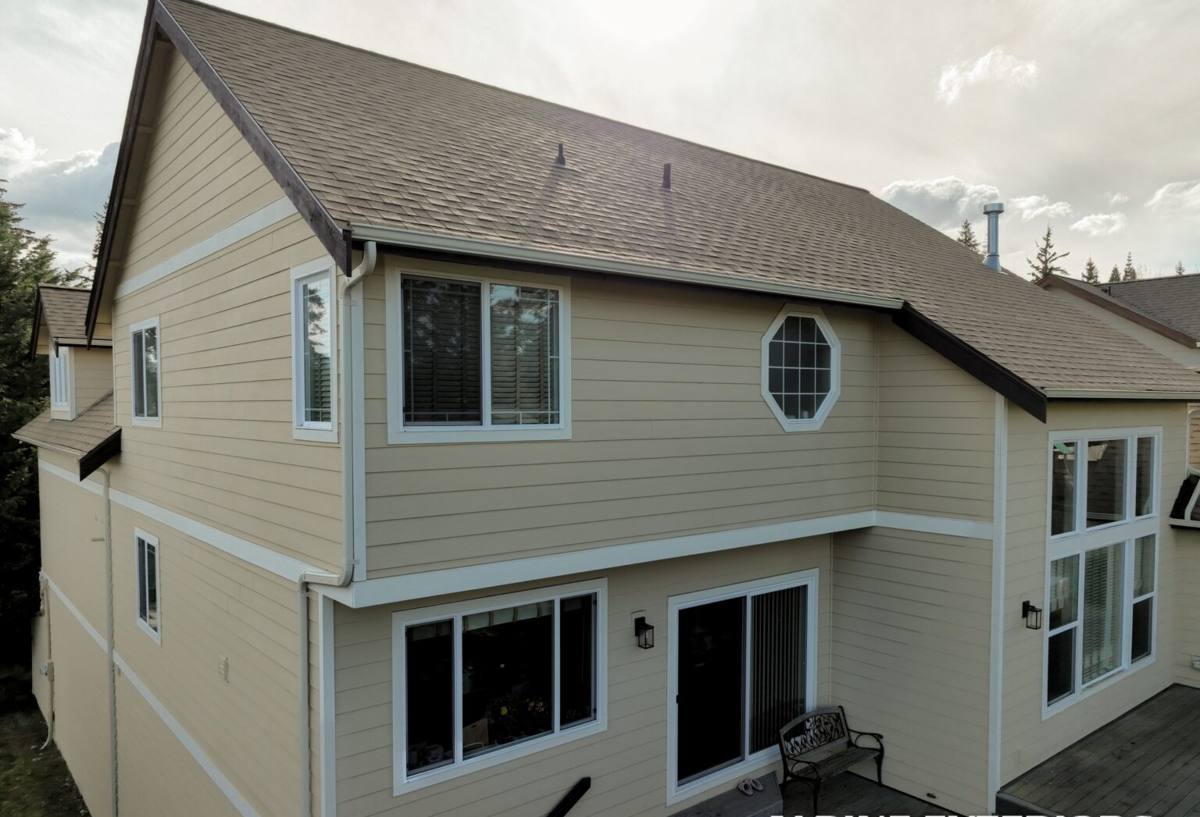
What Bellingham's Climate Does to Exterior Siding
Salt Air
Bellingham sits directly on Bellingham Bay, and salt-laden air moves inland across the whole city, including inland neighborhoods like Sunnyland. Salt air doesn't just affect waterfront property — it accelerates corrosion on any exposed metal (fasteners, flashing, hose bibs, light fixtures) and speeds up the breakdown of lower-quality paint films on siding. A siding system that isn't built to handle a marine environment will show it first at the fasteners and trim edges, long before the field of the siding looks obviously bad.
Driving Rain and Wind-Driven Moisture
Pacific Northwest storms off the Strait of Georgia and the Sound don't just drop rain straight down — they push it sideways into walls, especially on the west- and south-facing sides of a house. Wind-driven rain finds any gap in caulking, any butt joint that wasn't flashed correctly, and any place where the original siding installer cut a corner. Once water gets behind the siding, it's the sheathing and framing that pay the price, not just the surface material.
The Long Moss Season
Whatcom County's moss season runs most of the year, not just a few weeks. Shade, moisture, and mild temperatures are exactly what moss and algae need, and they'll colonize any siding surface that stays damp — north-facing walls, areas under overhangs that don't get sun, and surfaces where a rough or porous finish gives spores something to grip. Moss holds moisture against the siding surface for days at a time, which is a slow but steady way to shorten the life of paint, caulking, and the substrate underneath.
Signs a Sunnyland Home Needs Replacement, Not Just Repair
Not every siding problem calls for a full tear-off. But there's a point where patching stops making sense and full replacement becomes the more honest recommendation. Look for:
- Soft, spongy, or crumbling spots when you press on the siding, especially near the bottom courses or below windows
- Paint that keeps failing within a year or two of repainting, even after proper prep
- Persistent moss or algae staining that comes back within a season of cleaning
- Visible gaps, warping, or buckling at seams and butt joints
- Rusted or popped fasteners, or streaking below nail heads
- A musty smell or unexplained interior wall staining near exterior walls
- Siding that's simply reached the end of its expected service life for its material type
If you're seeing more than one or two of these, especially the soft-spot or persistent-staining symptoms, it's worth having someone take the siding off in a small section to see what's happening underneath before deciding on repair versus replacement.
What a Correct Siding Replacement Involves
A siding replacement done right is as much about what's underneath as what you see from the street. The visible siding is the last layer installed, not the first thing that matters.
- Full tear-off and inspection — removing the old siding down to the sheathing so any hidden moisture damage, rot, or failed flashing gets found and dealt with, not covered over
- Sheathing repair — replacing any damaged OSB or plywood before anything new goes back up; new siding over bad sheathing just hides the problem again
- Water-resistive barrier — installing (or correcting) the weather-resistant house wrap that's the actual moisture line of defense, with siding as the outer shield in front of it
- Flashing at every penetration — windows, doors, vents, hose bibs, and any other wall penetration need proper flashing and integration with the water-resistive barrier, not just a bead of caulk
- Correct fastening — the right fastener type, length, and spacing for the specific siding product, driven properly (not overdriven, which is one of the most common installation defects on fiber cement)
- Proper clearances — siding held clear of grade, roofing, and decks per manufacturer spec so it isn't sitting in standing water or trapped moisture
- Caulking and joint treatment — sealed correctly at trim and penetrations, using products compatible with the siding manufacturer's specifications
Skip any one of these steps and you can end up with siding that looks fine for a few years and then fails early — usually from the inside out, where it's hardest to catch.
Why We Install Only James Hardie Fiber Cement
We standardized on James Hardie fiber cement siding for every job we do, including replacements in Sunnyland, and we don't install vinyl, LP SmartSide, or other fiber cement brands. That's a deliberate call based on how these products perform over time in exactly the conditions described above:
- Non-combustible — fiber cement doesn't burn, which matters in a region with wildfire smoke seasons and where insurers increasingly ask about exterior materials
- Moisture-stable — fiber cement doesn't swell, rot, or delaminate the way engineered wood products can if water gets past the surface
- Factory-applied ColorPlus finish — baked-on rather than field-painted, so it holds up better against the UV cycling, damp, and algae exposure that's constant here, and it's backed by its own finish warranty
- Climate-engineered product lines — Hardie's HZ5 formulation is engineered for the wetter, cooler climate zones the Pacific Northwest falls into, rather than a one-size-fits-all product
- Strong, transferable warranty — Hardie's warranty structure is one of the more straightforward in the industry, and it transfers if you sell the house
We're not saying every other product on the market is unusable — plenty of homes around the country have vinyl or engineered wood siding that's holding up fine in a drier climate. Our position is narrower and specific to where we work: given what Whatcom County's salt air, rain, and moss season do to a wall over 20-plus years, fiber cement is the material we're willing to put our name behind.
Our Process for Sunnyland Siding Replacement
- On-site assessment — we walk the exterior, check for soft spots, moisture damage, and existing flashing issues before quoting anything
- Written scope and product selection — you get a clear plan covering tear-off, sheathing repair allowance, Hardie product line and color, and trim details
- Tear-off and hidden-damage check — old siding comes off, sheathing gets inspected, and we flag anything found before covering it back up
- Weather barrier and flashing correction — the water-resistive barrier and flashing details get installed or corrected to current standards
- Hardie installation to manufacturer spec — correct fasteners, spacing, clearances, and joint treatment throughout
- Final walkthrough and cleanup — we review the finished job with you and clear the site of debris and old materials
What Drives Cost on a Sunnyland Siding Job
| Cost Factor | Why It Matters |
|---|---|
| Home size and number of stories | More square footage and taller walls mean more material, labor, and equipment time |
| Condition of the sheathing underneath | Hidden rot or moisture damage found during tear-off adds repair scope beyond the siding itself |
| Amount of trim, corners, and detail work | Cutting and fitting around windows, dormers, and architectural detail takes more labor than flat wall runs |
| Hardie product line and profile chosen | Lap width, texture, and color selection affect material cost within the Hardie lineup |
| Access and site conditions | Tight lot lines, mature landscaping, or difficult staging areas can add time and equipment needs |
| Existing paint or coating removal | Some older siding systems require extra prep or disposal steps before tear-off can proceed |
We give a firm, written quote after the on-site assessment — not a rough number over the phone — because so much of the real cost depends on what's actually happening behind the existing siding.
Why a Crew That Already Works Sunnyland Matters
Siding replacement isn't just about the product — it's about the installer understanding how a specific area's homes were built and how the local climate has treated them. A crew that regularly works Bellingham neighborhoods like Sunnyland has already seen the common issues in this area's housing stock: how older wall assemblies were flashed, what moisture damage patterns look like on homes with this much shade and rainfall, and how to sequence a tear-off so a home isn't left exposed during an unpredictable stretch of weather. That local pattern recognition is hard to replicate with a crew that's just passing through on a regional route, and it's one of the reasons we focus on staying close to home rather than spreading thin across a wide territory.
If your Sunnyland home's siding is showing its age — moss that keeps coming back, paint that won't hold, or soft spots you'd rather not ignore — we're happy to take a look and give you a straight assessment. Reach out for a free, no-pressure estimate using the form below.