 Bellingham
 South Hill's Climate Puts Real Demands on Siding
South Hill sits up on the high ground above Bellingham Bay, and that elevation cuts both ways. Homes up here get some of the best views in Whatcom County, but they also take the weather straight on — salt-laden air pushing in off the water, driving rain that comes in sideways during fall and winter storms, and a moss season that can run most of the year under the tree canopy that makes this neighborhood what it is. Add in the older housing stock common to South Hill, much of it built well before fiber cement siding existed, and you've got a lot of exterior walls doing more work than their original materials were ever designed for.
None of that is unique to any one house — it's the baseline for this part of Bellingham. But it does mean siding choices that work fine in a drier, more sheltered inland climate don't always hold up the same way here. Salt air accelerates corrosion on fasteners and hardware. Wind-driven rain finds its way into laps, seams, and trim joints that aren't detailed correctly. And moss doesn't just sit on the surface — given enough time, it holds moisture against the wall assembly and keeps it from drying out between storms.
What South Hill Homes Actually Need From Their Siding
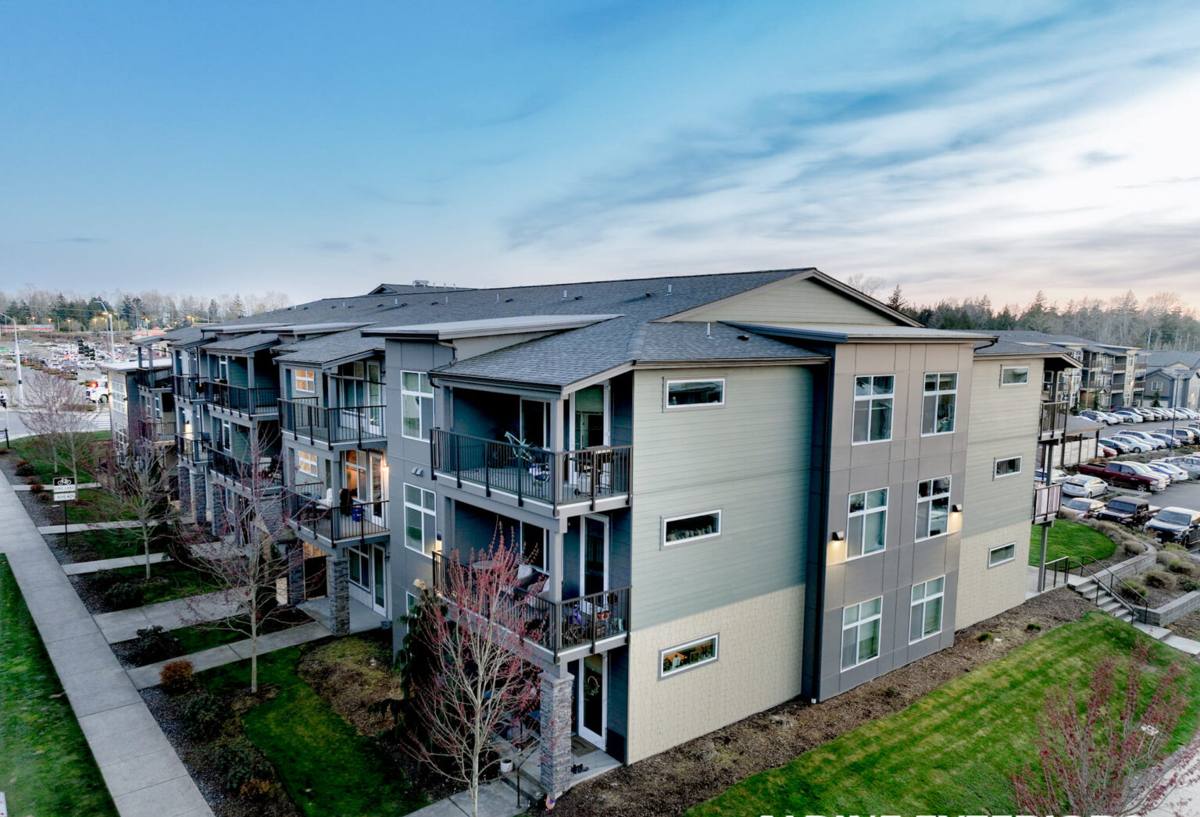
The short version: a material that doesn't absorb bulk water, a finish that doesn't need repainting every few years to stay protected, and an installation that manages moisture on purpose rather than hoping it dries out on its own. A lot of the siding failures we see on older South Hill homes aren't really about the age of the house — they're about a wall assembly that was never given a real drainage path, combined with decades of coastal moisture doing its slow work.
That shows up as soft trim near roof lines and decks, paint that won't hold no matter how often it's redone, and siding boards that have started to swell, cup, or delaminate at the butt joints. Once a wall is holding moisture instead of shedding it, the siding material almost doesn't matter — everything behind it is at risk, including sheathing and framing.
Why This Crew Installs Only James Hardie
We don't install vinyl, LP SmartSide, primed wood, cedar, or other fiber cement brands. That's not a marketing line — it's a standard we hold because of what we've seen play out on homes in exactly this kind of coastal, wet climate. James Hardie is the one product line we're willing to put our name behind here.
Engineered for This Specific Climate
James Hardie makes region-specific product formulations, and the HZ5 line is engineered for climates like ours — places with sustained moisture exposure rather than dry heat or hard freeze cycles. The fiber cement composition and factory processing are built to resist moisture absorption and hold dimensional stability through wet Pacific Northwest winters and the swelling and shrinking that comes with them.
A Factory Finish, Not a Field Promise
ColorPlus finish is baked onto the boards at the factory under controlled conditions, not brushed or sprayed on-site after installation. That matters in a climate where field-applied paint has to cure properly to perform, and where damp weather makes that harder to guarantee. A factory finish also comes with its own warranty coverage against fading and peeling, which field-applied coatings generally can't match.
A Core That Won't Feed Rot or Fire
Fiber cement doesn't have the wood fiber content that gives moisture and insects something to work with over time, and it's non-combustible — a real consideration anywhere wildfire smoke and dry-season fire risk have become a normal part of Pacific Northwest summers. It's a different risk profile than wood-based siding products, full stop.
What a Correct Hardie Installation Actually Involves
James Hardie siding fails early almost exclusively because of installation mistakes, not the product itself. In a climate like South Hill's, those mistakes get exposed faster than they would somewhere drier.
Flashing and Drainage Come First
Before a single board goes up, the wall needs a water-resistive barrier and correctly lapped flashing at every window, door, deck ledger, and roof-to-wall transition. Siding is the last line of defense, not the only one — if the drainage plane behind it isn't right, no siding material will keep the wall dry through a South Hill winter.
Fastening and Clearances
Hardie publishes specific nailing patterns, fastener types, and minimum clearances from grade, roofing, and other surfaces for a reason. Fasteners that are overdriven, spaced wrong, or the wrong material altogether will telegraph through the board or invite corrosion — a bigger issue this close to salt air. Clearance gaps that get closed up or skipped entirely trap moisture right where you don't want it.
Field Cuts, Caulking, and Trim
Every field cut needs to be sealed and primed per spec, not left exposed. Caulking has to be the right product, applied at the right joints — not used as a substitute for proper flashing. This is where a lot of installations quietly go wrong: the siding looks finished from the curb, but the small details that keep water out over the next twenty years were skipped to save time.
Our Process for South Hill Projects
- On-site inspection — we look at the existing siding, sheathing condition, trim, and any signs of moisture damage before we talk product or price.
- Scope and product selection — plank profile, panel or shingle accents, and ColorPlus color selected based on the home's exposure and your preferences.
- Tear-off and substrate repair — old siding comes off, and any soft or damaged sheathing gets replaced before anything new goes up. This step gets skipped by installers in a hurry; we don't skip it.
- Installation to Hardie's published specifications — correct flashing, fastening, clearances, and joint treatment, not shortcuts to save labor hours.
- Final walkthrough and cleanup — we check the work against spec before we call it done, and we clean the site properly.
- Warranty registration — your project gets registered so the manufacturer's transferable warranty is actually in force, not just implied.
What Drives the Cost of a Hardie Job Up or Down
Every South Hill home is different, so we won't quote a number without seeing the house. What we can do is walk through the factors that actually move the price, so you know what you're evaluating when you get an estimate.
| Factor | Why It Matters | Relative Impact |
|---|---|---|
| Home size and number of stories | More surface area and harder access both add labor time | High |
| Existing siding removal | Tear-off, disposal, and dealing with what's found underneath | High |
| Sheathing or framing repair | Moisture damage found once old siding comes off has to be fixed before new siding goes on | Variable, sometimes significant |
| Siding profile and accessories | Lap width, panel or shingle accents, and trim complexity change material and labor needs | Medium |
| Trim and fascia scope | Full trim replacement versus keeping existing trim changes both cost and long-term performance | Medium |
| Site access | Steep hillside lots, tight setbacks, and limited staging area all slow the work | Medium |
As a general rule, James Hardie siding costs more up front than vinyl and is comparable to or somewhat more than other fiber cement or engineered wood products, largely because correct installation takes more time and skill than stapling up panels. We think that difference is worth it for a product designed to last decades in this climate rather than needing attention every few years.
Why Hiring a Crew That Already Works This Neighborhood Matters
South Hill's mix of older homes, hillside lots, and mature landscaping isn't something you learn from a spec sheet — it's something you learn by working on houses here. A crew that's already familiar with the neighborhood knows to expect original framing that may need extra attention once old siding comes off, understands how site access and steep grades affect staging and safety, and isn't guessing at how Bellingham's permitting and inspection process works for exterior projects.
There's also a practical side: a local crew can get to your job site quickly if something needs a follow-up look, and they're not learning the area's weather patterns for the first time on your roof. That local familiarity doesn't replace correct installation practice — it's what lets a crew apply that practice consistently, house after house, in the conditions your home actually faces.
Caring for Hardie Siding Through Bellingham's Moss Season
James Hardie siding is low-maintenance compared to wood, but "low-maintenance" doesn't mean "no maintenance," especially in a climate this wet and shaded. A little attention keeps it performing the way it's supposed to for the long haul.
- Keep gutters and downspouts clear so water isn't overflowing onto siding below the roofline
- Trim back vegetation and tree limbs that keep siding shaded and damp longer than necessary
- Rinse siding annually with a garden hose or gentle wash to keep moss and grime from building up on the surface
- Check caulking at trim joints, window and door edges, and penetrations once a year, and touch up any that's cracked or pulled away
- Inspect flashing at decks, roof lines, and any wall penetrations for signs of wear
- Watch for any spots where field-cut edges may have lost their sealant or paint over time
If you're looking at siding on a South Hill home — whether it's showing real signs of moisture damage or you're just planning ahead — we're happy to take a look and talk through what we're seeing, no pressure and no obligation. Use the form below to request a free estimate.