 Bellingham
 Siding in Ferndale: Built for What This Climate Actually Does to a House
Ferndale sits close enough to Puget Sound and the Nooksack lowlands that homes here take on a different kind of weather load than you'd see further inland. It's not one dramatic storm that wears down a house in this part of Whatcom County — it's the steady accumulation of salt-tinged marine air, long stretches of driving rain off the water, and the shaded, damp conditions that let moss and algae take hold on north-facing walls and anything under tree cover. Siding in Ferndale isn't fighting a single enemy. It's fighting moisture that never fully leaves, for months at a time.
That combination is exactly why we standardized on one product across every job we do in this area: James Hardie fiber cement siding. We don't install vinyl, LP SmartSide, cedar, or primed spruce, and we're upfront about why. This page walks through what Ferndale's climate does to exterior siding, what we install instead, and what a correctly done job actually involves.
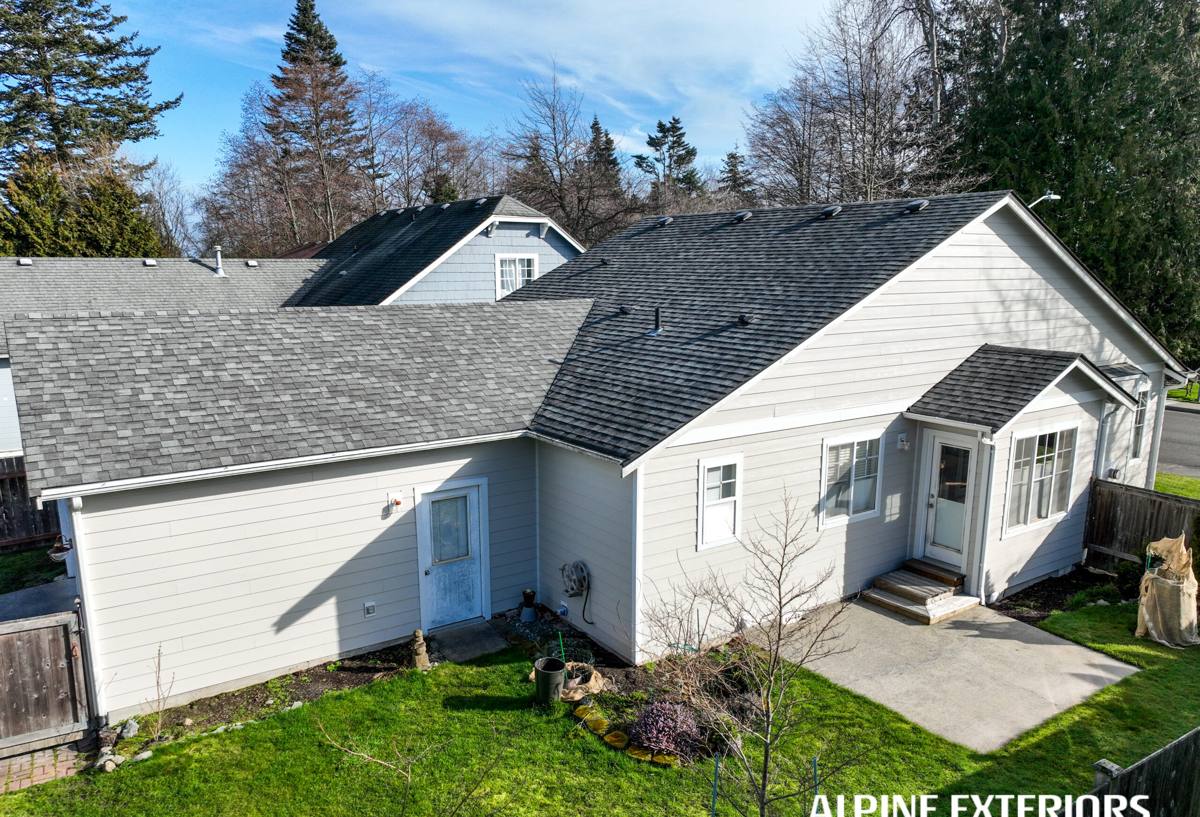
What Ferndale's Climate Does to a House Over Time
Salt Air
Proximity to Puget Sound means airborne salt is a real factor for homes in and around Ferndale, especially on the sides of a house that face open water or prevailing wind. Salt-laden moisture accelerates corrosion on fasteners, flashing, and any metal trim, and it speeds up the breakdown of finishes that aren't engineered to handle it. Paint film on wood or engineered wood siding tends to fail faster here than it would 30 miles inland.
Driving Rain
Whatcom County gets a lot of rain, but it's the wind-driven rain — rain that hits siding at an angle instead of falling straight down — that causes the real damage. Driving rain forces water into seams, laps, and butt joints that would stay dry in a calmer climate. Any siding product with a weak water-resistant barrier behind it, or with joints that aren't properly caulked and flashed, eventually lets that water in.
Moss and Algae ("Moss Season")
Ferndale gets a long stretch of the year — roughly fall through spring — where surfaces stay damp for extended periods, especially on shaded elevations and under overhangs. That's ideal growing conditions for moss and algae. On porous or absorbent siding materials, that growth doesn't just look bad — it holds moisture against the substrate, which is where rot and paint failure start.
Common Siding Problems We See on Ferndale Homes
- Paint and caulk failing years ahead of schedule on wood and wood-composite siding, especially on water-facing and north walls
- Soft or delaminating trim boards where moisture has been sitting behind moss growth
- Rusting or staining fasteners and flashing from prolonged salt exposure
- Buckled or warped panels where water got behind the siding through a failed seam
- Vinyl siding that's cracked, faded, or blown loose in wind events, with gaps that let moisture and pests behind it
None of these are freak occurrences — they're the predictable result of putting a moisture-sensitive or moisture-vulnerable product in a climate that stays wet for most of the year.
Why We Only Install James Hardie
We get asked regularly why we don't offer vinyl or LP SmartSide as a lower-cost option. The honest answer is that we've made a professional call: in a climate like Ferndale's, the products we don't install tend to shift the maintenance burden onto the homeowner within the first decade, in ways that aren't always obvious at the time of installation.
Vinyl
Vinyl is inexpensive and low-maintenance in mild, dry climates, but it's not rigid, it can crack in cold snaps, and it's not designed to be a water barrier on its own — it relies entirely on what's behind it. In a driving-rain environment, that puts a lot of pressure on the house wrap and flashing details doing all the real work.
LP SmartSide and Other Engineered Wood
Engineered wood products have improved a lot over the years and can perform reasonably well when installed and maintained exactly to spec. The trade-off is that they're wood-based, which means the cut edges, fastener holes, and any finish breach are vulnerable to moisture intrusion — and in a climate with a long wet season, that margin for error is thinner than we're comfortable with.
Cedar and Primed Spruce
Natural wood siding can look great, but it demands ongoing refinishing, is a food source for moss and mildew, and is the most labor-intensive product to maintain properly. In a marine climate, that maintenance schedule tends to slip, and once it does, the wood starts absorbing water.
James Hardie Fiber Cement
James Hardie siding is non-combustible fiber cement — it doesn't rot, it doesn't feed moss and algae the way wood does, and it holds paint and factory finish far longer than wood-based products because it doesn't expand and contract with moisture the way wood does. It's engineered specifically with climate zones in mind, which matters in a place like Whatcom County that sees sustained damp weather.
The James Hardie Product Lines We Install
| Product | Common Use | Why It Fits Ferndale |
|---|---|---|
| HardiePlank lap siding | Primary siding on most homes | Classic lap profile, holds ColorPlus finish through wet winters |
| HardiePanel vertical siding | Accent walls, gables, modern facades | Clean lines, fewer horizontal laps for water to work into |
| HardieTrim boards | Corners, fascia, window/door trim | Resists the swelling and rot common in wood trim in damp climates |
| HardieShingle | Accent gables, shingle-style sections | Textured look without the maintenance of real wood shingle |
Most Hardie products we install come in the HZ5 climate designation, which is engineered for wetter, more moisture-exposed regions — a direct fit for what a Ferndale exterior deals with. Finish comes from the factory as ColorPlus, a baked-on finish that holds color and resists fading and chipping far better than field-applied paint, which matters when the house is going to spend half the year damp.
What a Correct Installation Involves
Fiber cement siding performs well only when it's installed to manufacturer spec — that's true anywhere, but it matters more in a climate that doesn't give a bad installation much room to dry out between rain events.
- Proper water-resistive barrier and correctly lapped house wrap behind every course
- Manufacturer-specified fastener type, spacing, and embedment depth
- Correct clearance between siding and grade, decks, and roof lines to avoid wicking moisture
- Properly flashed and caulked butt joints, window and door openings, and penetrations
- Factory-cut and factory-primed edges wherever possible, with field cuts sealed per spec
- Ventilation and rainscreen detailing where the wall assembly calls for it
Skipping any of these steps is how a good product ends up with a bad reputation. We install to spec because that's the only way the product, and its warranty, actually hold up.
More Than Siding: Roofing, Windows, and Decks
Siding doesn't work in isolation — it's one piece of the building envelope. We also handle roofing, window replacement, and deck construction, because a siding job that ignores a failing roof line or a leaking window flashing is only solving part of the problem. When we're on a Ferndale property for a siding estimate, we'll flag anything we see with the roof, trim, or window flashing that could undercut the new siding's performance, even if it's not part of the original ask.
What Drives the Cost of a Siding Project in Ferndale
| Factor | Why It Matters |
|---|---|
| Home size and wall complexity | More corners, gables, and dormers mean more cutting, trim, and labor time |
| Extent of existing damage | Rotted sheathing or framing found during tear-off adds repair scope |
| Product mix | Lap siding, panel accents, shingle sections, and trim all price differently |
| Access and site conditions | Tight lots, slopes, or landscaping can affect staging and labor time |
| Finish selection | Standard ColorPlus colors versus premium or custom finish options |
We don't publish flat prices because every one of these factors changes the number, but we'll walk a property with you, point out what we see, and give you a straightforward written estimate — no inflated "scare" quotes, no pressure to sign on the spot.
Why a Local Crew Matters
A siding job in Ferndale needs to account for the specific microclimate of this part of Whatcom County — the water proximity, the rain patterns, the shaded and damp yard conditions that come with the tree cover common in this area. A crew that works this region regularly knows which elevations tend to hold moss, where driving rain hits hardest, and how to detail a house so it holds up through a full wet season, not just looks good on installation day. That local, repeated experience is part of what you're paying for when you hire a contractor — not just the labor to hang boards.
What to Ask Before You Hire a Siding Contractor
- Are they licensed and insured in Washington, and can they show proof?
- Do they specialize in fiber cement, or is it one of several products they install?
- Will they detail moisture management (house wrap, flashing, clearances) in writing, not just verbally?
- Is the manufacturer's warranty backed by a certified or trained installer status?
- Do they provide a written, itemized estimate rather than a verbal ballpark?
- Can they explain why they'd choose one Hardie product line over another for your specific home?
If your Ferndale home's siding is showing paint failure, moss buildup, soft trim, or you're just planning ahead for a replacement, we're happy to take a look. We offer free, no-pressure estimates — walk the property with you, point out what we see, and explain exactly what a correctly installed James Hardie system would involve for your home. Use the form below to get started.