 Bellingham
 Happy Valley's Exterior Challenge: A Climate That Never Really Lets Up
Happy Valley sits close enough to Bellingham Bay and the surrounding wetlands that homes here deal with a slightly different mix of weather stress than neighborhoods further inland. It's not dramatic weather — no hurricanes, no hailstorms — but it's relentless. Salt-tinged marine air drifts in off the water, wind-driven rain comes at siding sideways instead of straight down, and the tree cover that makes this part of Bellingham so pleasant to live in also means shade, damp ground, and a moss season that can run nine or ten months out of the year. Individually, none of these are dramatic. Together, over a decade or two, they're exactly the kind of slow-grinding conditions that separate exterior materials that hold up from exterior materials that don't.
We've worked on homes throughout Whatcom County long enough to see how this plays out. It's rarely one catastrophic failure. It's paint that starts chalking a few years early on the north side. It's a corner board that stays damp two extra days after every storm because it never gets direct sun. It's moss creeping up from the bottom courses of siding on the shaded side of a house, holding moisture against the wall long after the rain has stopped. None of that is exclusive to Happy Valley, but the combination of coastal humidity, tree cover, and driving rain off the bay makes it a bigger factor here than in a lot of other parts of the country.
Why Salt Air Matters More Than People Expect
Homeowners moving to Bellingham from inland areas are often surprised that "coastal" doesn't just mean pretty views — it means airborne salt and moisture settle on every exterior surface, even blocks away from the water. Over time this accelerates the breakdown of paint films, corrodes exposed fasteners, and speeds up the wear on materials that weren't engineered with coastal exposure in mind. It's a slow process, which is exactly why it's easy to underestimate until a repaint or a re-side reveals just how much of the underlying material has been compromised.
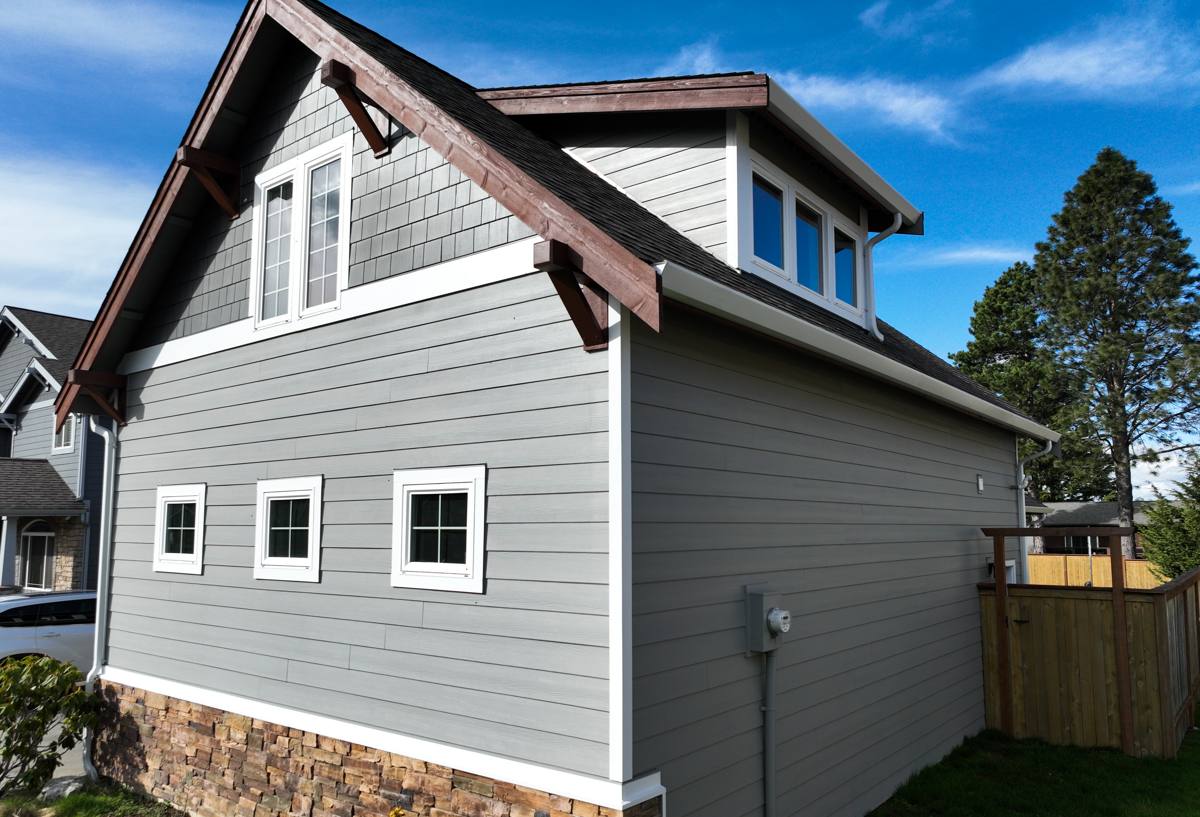
This is one of the bigger reasons we standardized on James Hardie fiber cement siding for every home we side, in Happy Valley and everywhere else we work. Fiber cement doesn't corrode, doesn't rot, and isn't a food source for the mold and mildew that salt-laden humidity encourages. It's engineered to shrug off exactly this kind of slow environmental wear rather than just survive it for a few years and then start showing its age.
What Driving Rain Does to Siding Systems
Wind off the bay doesn't just push rain down — it pushes it sideways and even upward into laps, seams, and trim joints that were only ever designed to shed water moving straight down. This is where installation quality matters as much as the material itself. A siding system with tight, correctly flashed laps and properly sealed trim intersections handles driving rain fine. A system installed loose, under-lapped, or without correct flashing behind trim and window returns will let water find its way behind the cladding — and once water gets behind siding, the sheathing and framing underneath pay the price, usually long before anyone notices from the outside.
Moss: The Slow, Patient Enemy of Bellingham Exteriors
Ask almost any longtime Whatcom County homeowner about moss and you'll get a knowing laugh. The combination of shade, moisture, and a mild climate that rarely gets cold or dry enough to kill it off makes moss one of the most persistent maintenance issues on local homes — on roofs most visibly, but also on siding, especially on the shaded north and west-facing walls where sun exposure is limited and surfaces stay damp longest.
Moss itself isn't usually what damages siding directly. The problem is what moss does to a wall's ability to dry out. A wall with moss holding moisture against it for weeks at a time is a wall that's spending far more of the year wet than a clean, sun-exposed wall would. Materials that are sensitive to sustained moisture — wood-based products in particular — lose ground fast under those conditions. Materials engineered to be dimensionally stable and moisture-resistant hold their line.
Practical Moss Management
- Keep gutters and downspouts clear so water isn't sheeting down siding it wasn't meant to run across
- Trim back vegetation and tree limbs that shade siding and restrict airflow along a wall
- Have shaded, moss-prone areas washed periodically rather than letting growth establish and spread
- Choose a factory-finished siding product that resists moisture absorption rather than one that depends entirely on surface paint to stay protected
- Address roof moss promptly — runoff carrying moss spores and organic debris onto siding below accelerates growth there too
Why We Install Only James Hardie Fiber Cement
We get asked fairly often why we don't offer vinyl, LP SmartSide, or other fiber cement brands as options. The honest answer is that after years of siding homes in this climate, we settled on one product line because it's the one we trust to perform here without surprises.
James Hardie's fiber cement is non-combustible, doesn't provide the moisture pathway that wood-based products can develop over time, and is engineered specifically for regional climate conditions through its HZ5 product line, built for the Pacific Northwest's wetter, milder weather pattern. The ColorPlus factory finish is baked on under controlled conditions rather than field-applied, which matters enormously in a climate where field-applied paint has less opportunity to cure properly between rain events. And the warranty structure is transferable, backed by a large, established manufacturer rather than a smaller regional producer.
None of that means other products are without merit — vinyl is inexpensive and low-maintenance in the right application, and engineered wood siding has real advocates. But we made a decision as a company to install one system, install it correctly, and stand behind it, rather than offer a menu of products with very different long-term track records in salt air, driving rain, and moss-heavy shade.
Roofing, Windows, and Decks in the Same Conditions
Siding is only part of a Happy Valley home's exposure. The same salt air, moisture, and shade that stress siding affect the rest of the exterior too.
Roofing
Roofs bear the brunt of moss growth first, since they're the most exposed, most consistently damp surface on the house. Proper ventilation, underlayment, and material choice all factor into how well a roof resists moss colonization and how long it lasts under sustained coastal moisture.
Windows
Window flashing and seal integrity are critical wherever driving rain is a factor. A window that's watertight in calm weather can still leak under wind-driven rain if the flashing details around it weren't done correctly during installation — this is one of the most common sources of hidden water damage we find during siding tear-offs.
Decks
Decks in shaded, damp yards deal with the same moss and moisture pressure as siding, plus direct foot traffic and standing water on horizontal surfaces. Material choice and proper drainage/spacing during construction make a significant difference in how a deck ages in this environment.
Cost Factors for Happy Valley Exterior Projects
Every home and project scope is different, but these are the variables that tend to move the needle most on siding, roofing, window, and deck projects in this area:
| Factor | Why It Matters Locally |
|---|---|
| Existing moisture damage | Homes with prior moss/moisture issues often need sheathing or framing repair discovered during tear-off |
| Shade exposure and tree cover | Heavily shaded walls may need more aggressive flashing and drainage detailing |
| Home size and wall complexity | More corners, trim, and window returns mean more flashing detail work |
| Access and site conditions | Sloped lots and tree-dense yards common in Happy Valley can affect staging and scaffolding needs |
| Scope bundling | Combining siding with roofing, window, or deck work can reduce overall mobilization costs |
Why a Local Crew Matters Here
Installation quality is what actually determines whether any siding system performs well in this climate — not just the product on the label. A crew that works Whatcom County regularly knows to pay extra attention to flashing at window and door returns, to run proper drainage planes behind siding on shaded walls, and to lap materials with driving rain off the bay in mind rather than assuming rain falls straight down. That's not something you get from a general contractor who sides a handful of homes a year outside of a specialized crew that treats it as its core trade.
We're a local, Whatcom County-based crew. We're not traveling in from out of the area, and we're not subcontracting installation out to whoever's available. The same standards we hold for a Happy Valley home we hold everywhere we work in Bellingham.
What to Expect When You Work With Us
- An honest assessment of your current siding, roofing, windows, or deck — including what's actually wrong versus what's cosmetic
- A clear explanation of why we recommend James Hardie fiber cement, and what that means for your specific home and exposure
- Attention to the flashing, drainage, and moisture-management details that matter most in this climate — not just the visible finish work
- Straightforward answers about cost drivers and timeline before any work begins
- No pressure, no scare tactics about moss or water damage — just a clear picture of your home's condition
Getting Started
If you're noticing early paint wear, moss creeping up your siding, or you're just planning ahead for a home in Happy Valley, we're happy to take a look and give you a straight answer about what your exterior actually needs — no obligation, no pressure. Use the form below to request a free estimate and we'll get in touch to schedule a time that works for you.