 Bellingham
 A Local Crew for the Puget Neighborhood
Puget sits close enough to the water and the weather patterns that come with it that homes here age differently than homes ten miles inland. Salt-tinged air, long stretches of driving rain off the Sound, and a moss season that seems to start earlier every year all put steady pressure on siding, roofing, trim, windows, and decks. We work throughout Bellingham and greater Whatcom County, and we've built our process around what actually holds up in this specific climate rather than what looks good in a showroom somewhere drier.
This page covers what we see on Puget-area homes, how we approach siding, roofing, window, and deck work here, and why we've standardized on one siding product instead of offering a menu of options.
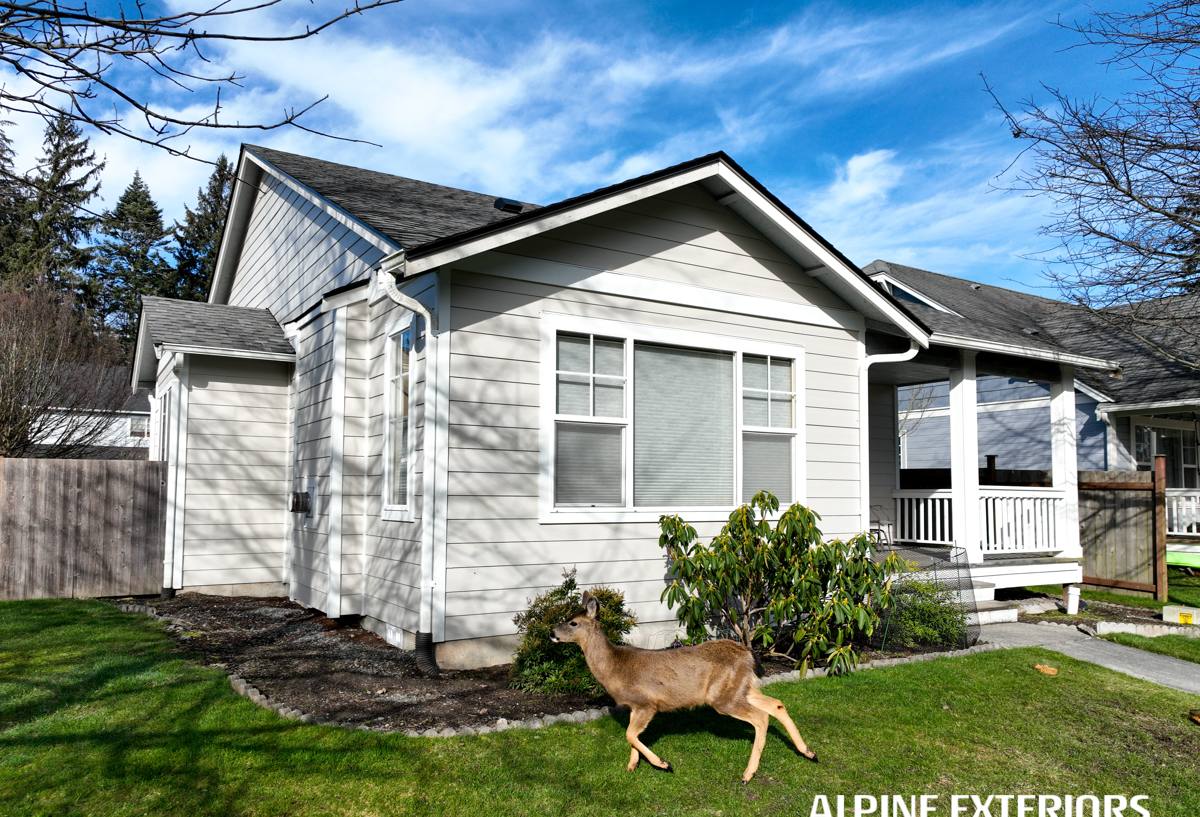
What the Climate Does to a House Here
Three things define exterior wear in this part of Whatcom County, and they compound each other.
Salt Air
Proximity to Bellingham Bay and the greater Puget Sound means airborne salt finds its way onto siding, fasteners, and metal flashing. Over years, salt exposure accelerates corrosion on unprotected metal and can degrade paint films faster than the same product would wear inland. It's not dramatic — it's slow, cumulative wear that shows up as chalking paint, rust streaks at fastener heads, and premature failure at joints and seams.
Driving Rain
Bellingham doesn't just get rain — it gets rain pushed sideways by wind off the water often enough that water intrusion at horizontal joints, window flashing, and butt seams is the single biggest cause of the exterior damage we get called out for. A siding product or installation detail that's "good enough" in a calmer climate can fail here because the water is actively being driven into gaps rather than just falling on them.
Moss and Sustained Moisture
Long, cool, damp stretches — especially on north-facing walls and anything shaded by mature trees, which much of this area has plenty of — create ideal conditions for moss and algae growth on roofing and siding. Beyond the cosmetic issue, moss holds moisture against the surface longer than bare material would, which matters a lot on products that aren't dimensionally stable when wet.
Siding: Why We Only Install James Hardie
We install James Hardie fiber cement siding exclusively. We don't offer vinyl, LP SmartSide, or other fiber cement brands as alternatives, and that's a deliberate standard, not a lack of options.
Fiber cement handles the specific problems above better than the wood-based and vinyl alternatives we used to consider. It doesn't swell, rot, or delaminate the way engineered wood siding can when moisture gets past a seam repeatedly over years. It's dimensionally stable in the wet-dry cycling that's constant here, which matters for keeping caulked joints and paint film intact. And it's non-combustible, which is worth something on its own regardless of climate.
James Hardie also engineers specific product lines (their "HZ" designations) for different climate zones, so what goes on a Whatcom County home is specified for the Pacific Northwest's wet, mild conditions rather than a generic national product. The factory-applied ColorPlus finish is baked on and warrantied against fading and peeling in a way field-applied paint isn't, which matters directly for the salt-air chalking issue described above. Hardie backs installations with a strong transferable warranty, which carries real value if the home is ever sold.
None of this means other products are junk — plenty of homes around here have vinyl or engineered wood siding doing fine. It means that after years of installs and repairs in this specific climate, fiber cement is what we're willing to put our name behind and warranty. We'd rather install one product well than offer three and let the cheapest one be the default.
Siding Material Comparison for This Climate
| Material | Moisture Behavior | Salt Air / Coastal Wear | Moss Susceptibility | Typical Lifespan Here |
|---|---|---|---|---|
| James Hardie fiber cement | Dimensionally stable, doesn't swell or rot | Factory finish resists chalking and fading | Doesn't feed moss growth like wood-based products | 30+ years with proper install |
| Engineered wood (e.g. LP-type) | Vulnerable at cut edges and seams if moisture penetrates | Coating can wear faster in salt air | Wood component can support moss/algae if damp for long periods | Shorter if edges aren't consistently maintained |
| Vinyl | Doesn't rot, but can warp or crack in temperature swings | Can chalk and fade under UV/salt exposure over time | Low nutrient value but still holds surface moisture | Varies widely with product grade |
| Cedar / primed wood | High maintenance to control moisture intake | Requires more frequent refinishing near salt air | High — organic material moss readily colonizes | Shortest without diligent upkeep |
Roofing, Windows, and Decks — The Rest of the Exterior
Siding is only part of what keeps a Puget-area home dry and sound, so we handle the full exterior envelope.
Roofing
Roofs here take the brunt of both the driving rain and the moss problem. We look at underlayment condition, flashing at valleys and penetrations, and ventilation — a roof that isn't ventilated properly traps moisture underneath, which shows up as premature shingle wear or deck rot you can't see from the ground.
Windows
Window flashing and the seal between window frame and siding is one of the most common water-intrusion points we find on older homes in this area. When we replace siding, we always evaluate window flashing at the same time rather than reinstalling siding around a leak point that's just been covered up.
Decks
Decks take direct weather exposure with no siding or roofing to shield them, so ledger board attachment, joist protection, and drainage matter as much as the decking material itself. A deck that traps water against the house structure can cause damage well beyond the deck.
Signs a Puget-Area Home Needs Exterior Attention
- Persistent moss or dark streaking on north-facing or shaded siding and roof sections
- Paint that's chalking, peeling, or fading unevenly, especially on walls facing prevailing wind and rain
- Soft spots, bubbling, or visible warping at siding seams and butt joints
- Rust staining running down from nail heads or metal flashing
- Gaps or cracked caulk at window and door trim
- Water stains on interior walls or ceilings near exterior walls
- Deck boards that stay damp long after rain has stopped, or soft spots near the house connection
Any one of these on its own might be minor. Several together, especially if they're concentrated on the same wall or elevation, usually point to a water-intrusion pattern worth having looked at before it reaches the framing.
How We Approach a Project in Puget
We start with an on-site look at the specific exposure of the home — which walls take the worst of the wind-driven rain, where moss is already established, how much shade the property gets, and what condition the existing siding, trim, and flashing are actually in versus what's visible from the street. That assessment drives the scope, not a generic package.
For siding work specifically, that means correct flashing details at every horizontal joint and window opening, proper fastening for wind exposure, and installation to James Hardie's published specifications — installation quality is what determines whether fiber cement performs the way it's engineered to, and cutting corners on flashing or fastening undermines the product regardless of brand.
What a Typical Estimate Covers
- Walk-around assessment of siding, trim, roofing, window seals, and any deck structures
- Identification of active moisture issues versus cosmetic wear
- A written scope specific to what your home actually needs, not a one-size package
- Straightforward pricing with the reasoning behind it explained, not just a number
Why a Local Crew Matters Here
A lot of exterior problems in this part of Whatcom County come down to details that a crew unfamiliar with the local weather pattern will miss — how far up a wall wind-driven rain actually reaches, which elevations need extra attention to moss and shade, how salt air changes maintenance timelines on fasteners and finishes. We're not guessing at what "coastal Pacific Northwest" means in the abstract; we see the same failure patterns repeatedly on homes in Bellingham and the surrounding area and build our installation details around avoiding them.
A local crew also means someone who'll actually be around if a warranty question comes up five or ten years down the road, rather than a company that did one job in the area and moved on.
Maintenance That Actually Matters in This Climate
Fiber cement siding cuts down on maintenance compared to wood-based alternatives, but "low-maintenance" isn't "no-maintenance" anywhere near the water. A periodic rinse to keep salt residue and organic buildup from accumulating, prompt attention to any caulk that's cracked or pulled away, and keeping gutters clear so overflow isn't running down the siding face all go a long way. None of it is complicated, but it's the kind of thing that's easy to let slide until moss or chalking has already set in.
If you're seeing any of the wear signs above, or just want an honest read on what your home's siding, roofing, windows, or deck actually need, we're glad to come take a look. Estimates are free and there's no pressure to decide anything on the spot.