 Bellingham
 Why We Narrowed Down to One Product
Most siding contractors carry a catalog: vinyl for the budget jobs, LP SmartSide for the middle tier, fiber cement for the clients who ask for it by name. We used to run that way too. Over time, warranty claims, callback patterns, and what we saw when we tore old siding off Bellingham homes pushed us toward a simpler answer: we install James Hardie fiber cement siding, and nothing else.
That's not a marketing position — it's a maintenance and liability decision. When we stand behind a job for years, we want to be standing behind a product whose failure modes we understand completely, whose finish we don't have to babysit, and whose behavior in Pacific Northwest weather is proven rather than theoretical. James Hardie is the only siding that's cleared that bar consistently enough for us to stop carrying alternatives.
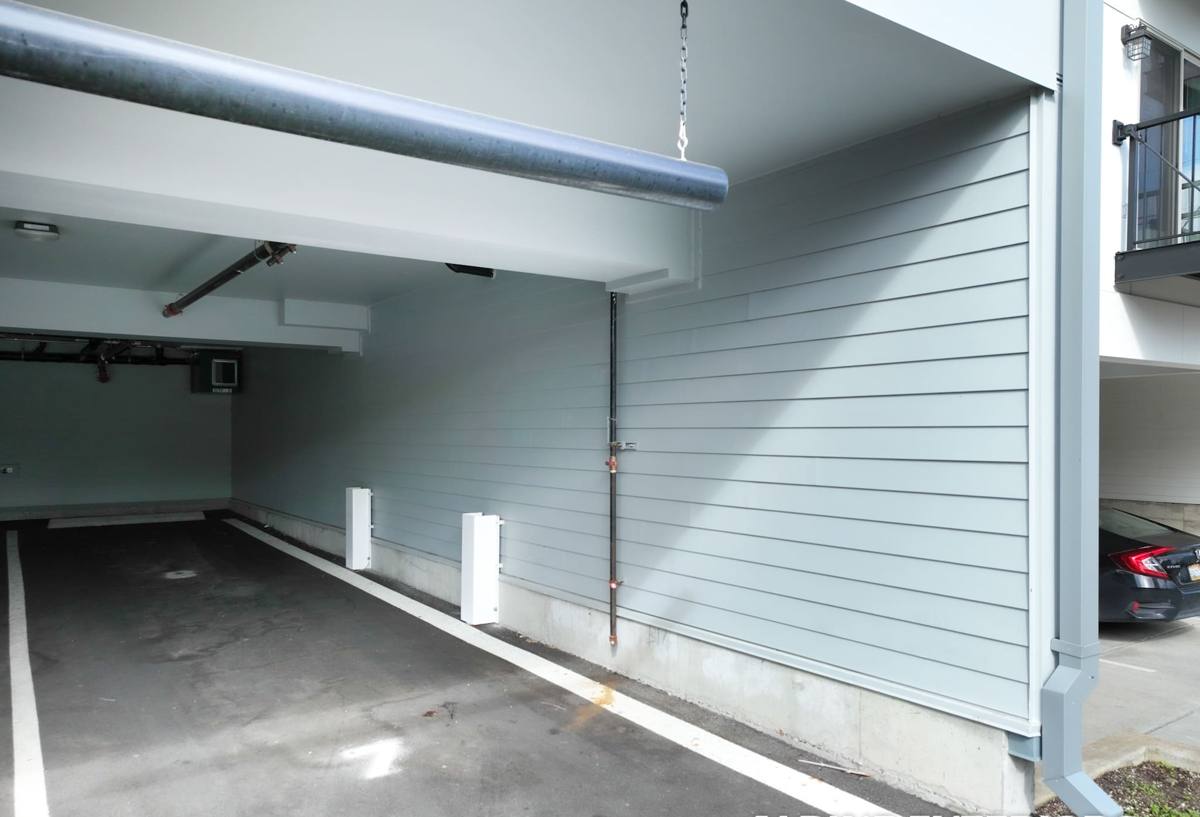
What Bellingham's Climate Actually Does to Siding
Whatcom County doesn't get hurricane winds or desert heat, but it runs a slower, more relentless kind of wear. Marine air off Bellingham Bay carries salt that settles on exterior surfaces and accelerates corrosion and finish breakdown, especially on anything within a mile or two of the water. Add in driving rain that comes sideways off Pacific storms, and siding here has to shed water at seams and laps that never fully dry out for weeks at a stretch in winter.
Then there's moss. Bellingham's combination of shade, moisture, and mild temperatures gives moss and algae a long growing season — longer than most of the country gets. Siding that holds moisture, or that has a painted surface prone to chalking and micro-cracking, gives moss spores something to grip. Once moss establishes itself on a wall, it holds even more water against the substrate, which is exactly the wrong direction for wood-based products.
None of this is exotic weather. It's just persistent, and persistent is what wears out the wrong material.
Where Other Products Fall Short Here
Vinyl
Vinyl siding is inexpensive and low-maintenance in the sense that it doesn't need painting. But it's a thin plastic product that expands and contracts significantly with temperature swings, and over the years UV exposure makes it brittle. In driving rain it relies entirely on lap geometry and careful installation to keep water out — there's no structural rigidity to fall back on if a seam opens up. It also can't be painted to match evolving trim colors without voiding warranty terms, and it doesn't offer the same fire resistance as fiber cement.
LP SmartSide and Other Engineered Wood
Engineered wood siding has improved a lot, and manufacturers back it with real warranties. But it's still a wood-strand product with a resin binder, which means its long-term performance depends heavily on caulking, flashing, and paint maintenance staying ahead of moisture intrusion. In a climate where siding stays damp for extended stretches, any breach in that protective layer — a nail pop, a hairline crack at a butt joint, a gutter that overflows for one winter — gives moisture a path into a substrate that swells and can eventually delaminate at the edges.
Cedar and Primed Spruce
Real wood siding has genuine appeal, and we understand why homeowners want it. But it demands a repaint or reseal cycle that most owners underestimate, and in a moss-prone climate like ours, that maintenance window shrinks. Skip a cycle and you're often looking at localized rot repair rather than just a fresh coat.
Cemplank, Allura, and Other Fiber Cement Brands
These are legitimate fiber cement competitors, and the base material — Portland cement, sand, and cellulose fiber — is chemically similar to Hardie's. Where we've drawn the line is factory finish and regional engineering. Hardie's ColorPlus finish and HZ5 formulation (below) are the deciding factors, not the raw material itself.
What James Hardie Fiber Cement Is
Fiber cement is a composite of Portland cement, sand, and cellulose fibers, cured and pressed into planks, panels, and shingles. It's non-combustible, doesn't attract wood-boring insects, and doesn't expand and contract with temperature the way vinyl does. Because it's dimensionally stable, seams and caulk joints stay tighter over time, which matters directly in a climate where those joints are exposed to driving rain for months at a stretch.
It's also heavy and rigid compared to vinyl or engineered wood — that mass is part of why it holds paint better and resists impact damage.
HZ5 Engineering for the Pacific Northwest
James Hardie formulates its products differently by climate zone, and the Pacific Northwest falls into their HZ5 category, engineered specifically for regions with sustained moisture exposure. That's not a marketing label — it reflects a different moisture-management formulation than the products Hardie ships to arid or hurricane-prone regions. For a county that sees rain more months than not, installing a product actually engineered for that reality is a meaningfully different starting point than installing something formulated for a drier climate and hoping it holds up.
ColorPlus Factory Finish
Field-painted siding is only as good as the paint job and the maintenance behind it. Hardie's ColorPlus technology bakes a multi-coat finish onto the board at the factory under controlled conditions, which gives more consistent coverage and adhesion than a brush or sprayer can achieve on a jobsite, especially in the on-and-off drizzle we get for much of the year. It also comes with its own finish warranty, separate from the substrate warranty, covering fading and peeling.
Hardie Product Lines We Work With
| Product Line | Format | Typical Use |
|---|---|---|
| HardiePlank | Lap siding, multiple textures | Primary siding on most homes |
| HardiePanel | Vertical sheet siding | Modern facades, accent walls, gables |
| HardieShingle | Staggered or straight-edge panels | Craftsman and cottage-style accents |
| HardieTrim | Boards for corners, fascia, window trim | Finish detailing around openings |
| HardieSoffit | Vented and non-vented panels | Eave and overhang protection |
Most Bellingham projects combine HardiePlank for the field with HardieTrim for corners and openings, and we'll bring in HardieShingle or HardiePanel where a homeowner wants texture variation on gables or accent areas.
What Correct Installation Actually Involves
Fiber cement's reputation depends heavily on installation quality — a product engineered for this climate still fails early if it's hung wrong. Hardie publishes detailed installation specifications, and following them isn't optional if you want the warranty to mean anything.
- Proper clearance from grade, decks, and roof lines to keep the bottom edge out of standing water and splash-back
- Correct fastener type, spacing, and penetration depth — under- or over-driven nails are one of the most common Hardie installation failures we see on tear-offs
- A water-resistive barrier and correctly lapped flashing at every window, door, and penetration
- Proper lap overlap and gapping at butt joints, sized for the region's expected moisture, not the manufacturer's minimum
- Caulking only where Hardie specifies it — over-caulking traps moisture just as badly as under-caulking lets it in
- Field-cut edges sealed per manufacturer spec, since raw cut edges are the most vulnerable point on any fiber cement board
We treat that installation spec as a floor, not a suggestion, because in a climate that stays wet as long as ours does, the margin for sloppy flashing or a missed cut-edge seal is thin.
The Warranty, in Plain Terms
James Hardie backs its siding with a non-prorated limited warranty on the substrate, and a separate finish warranty on ColorPlus coatings, both of which are transferable to a new owner if the home sells within the coverage period — something that matters to buyers and appraisers alike in a market where siding condition gets scrutinized during inspection. Warranty terms have conditions tied to proper installation, which is another reason installation quality isn't something we treat casually.
What Drives the Cost
| Factor | Why It Matters |
|---|---|
| Product line and texture | Panel and shingle profiles cost more than standard lap |
| Trim complexity | Homes with many corners, gables, and window returns need more custom trim work |
| Tear-off and disposal | Removing and hauling old siding, especially old cedar or stucco, adds labor |
| Underlying sheathing condition | Rot or moisture damage found during tear-off needs repair before new siding goes on |
| Color and finish | Factory ColorPlus finishes cost more upfront than primed boards but skip a paint cycle |
We won't quote a number without seeing the house — the variables above shift a project's cost more than any general price-per-square-foot figure could tell you.
Our Bottom Line
We don't install James Hardie because it's the only decent siding on the market — vinyl, engineered wood, and other fiber cement brands all have legitimate use cases somewhere. We install it exclusively because, for the specific combination of salt air, driving rain, and moss pressure that Whatcom County homes deal with year after year, it's the product whose failure points we understand best, whose factory finish holds up without a maintenance schedule, and whose warranty actually means something when we're the ones who installed it. Standardizing lets us get genuinely good at one installation spec instead of being adequate at five.
If you're weighing a siding replacement or new build in Bellingham, we're happy to walk your home, point out what the current siding is telling us, and put together a free, no-pressure estimate for a Hardie installation done to spec.