 Bellingham
 Every siding estimate is really an answer to a bigger question: what does this house need to survive the next 30 years in this specific climate? In Bellingham, that means salt air off the Sound, long stretches of driving rain, and a moss season that can run from October through May. Two houses of identical square footage can land on very different numbers once you account for what's actually happening behind the old siding and what it will take to keep water out going forward. This guide walks through the real cost drivers so you can read an estimate with some context instead of just comparing bottom-line totals.
Why Two "Same Size" Houses Can Cost Differently
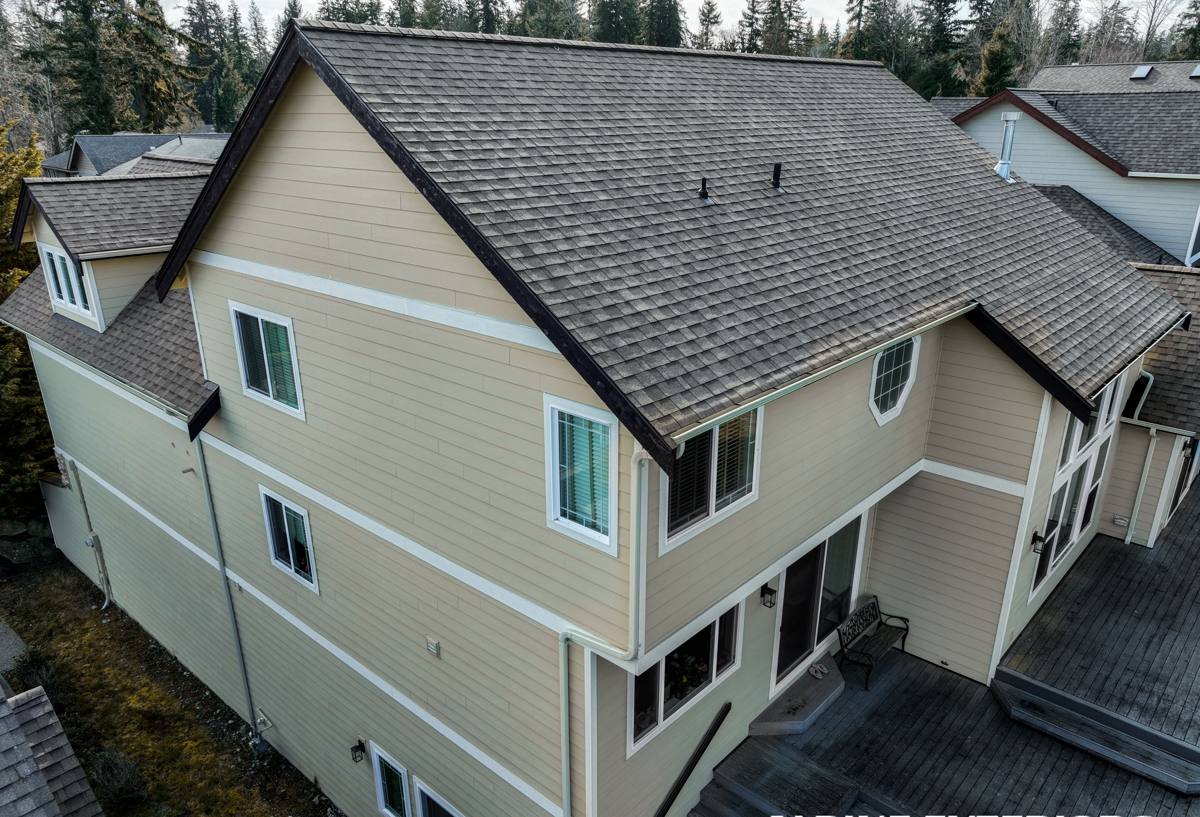
Square footage is the starting point for any estimate, but it's rarely the deciding factor. A 2,200-square-foot single-story rambler with a simple roofline is a different job than a 2,200-square-foot two-story with dormers, bump-outs, and a wraparound porch. More corners, more transitions, more cutting, and more trim work all add labor hours without adding much visible siding. Contractors price by the complexity of the job, not just the number on the tape measure.
Access matters too. A house set on a flat lot with clear space on all four sides goes faster than one on a slope, tucked against a fence line, or with landscaping that has to be protected or worked around. In older Bellingham neighborhoods with mature trees and tight lot lines, this can add real time to a project.
What's Hiding Under the Old Siding
This is the factor that surprises homeowners most, and it's especially relevant here. Whatcom County's combination of driving rain and persistent damp means water finds its way behind poorly flashed siding more often than people expect. Once the old siding comes off, a crew may find rotted sheathing, compromised framing around windows, or a weather-resistive barrier that failed years before anyone noticed a problem on the surface.
A responsible contractor builds an allowance for this into the estimate, or clearly explains that substrate repair is billed as discovered. Either way, this is not padding — it's the difference between a house that's actually protected for the next few decades and one where new siding gets nailed over an old problem. Skipping this step is the single most common reason a "good deal" on siding turns into a expensive redo five years later.
Common Substrate Issues Found in This Climate
- Rotted OSB or plywood sheathing around window and door openings
- Failed or missing weather-resistive barrier (housewrap) behind old siding
- Soft or compromised framing at the bottom plate, especially on north-facing walls that stay damp longest
- Moss and organic buildup trapped against the wall from years of poor drainage or clearance
- Improperly flashed windows, deck ledgers, or roof-to-wall transitions
Material Choice Changes the Whole Budget
What you put on the wall is one of the biggest swings in total cost, and it's also the decision with the longest tail. Vinyl siding usually carries the lowest material cost up front, but it's a thin, flexible product that can warp in direct sun, crack in cold snaps, and rarely lasts as long in a wet, coastal climate as homeowners expect when they buy it. LP SmartSide and other engineered wood products cost more than vinyl and less than fiber cement, but they're wood-based — meaning the cut edges and any breach in the factory coating are vulnerable to moisture intrusion, which is a real risk in a county that sees rain this often. Cedar and primed spruce sit at a similar or higher price point and demand an ongoing maintenance schedule — repainting, caulking, and moisture monitoring — that many homeowners underestimate when they're comparing initial bids.
We install James Hardie fiber cement exclusively, and the cost reflects that it's a denser, non-combustible product engineered specifically for wet Pacific Northwest conditions, with a factory-applied ColorPlus finish that doesn't rely on field painting to hold up. It typically costs more than vinyl and is comparable to or somewhat above engineered wood, but the total cost of ownership — repainting cycles avoided, moisture-related repairs avoided, warranty coverage — is what we ask homeowners to weigh against the sticker price, not just the install-day number.
Profile, Trim, and Finish Level
Within any material, the style you choose affects labor. Lap siding installs relatively efficiently. Shingle-style siding and mixed-profile designs (shingle accents over lap fields, for example) take more time to cut, align, and detail. Board-and-batten and panel systems have their own labor curve depending on how much trim work surrounds them.
Trim is worth calling out separately because it's an easy place for a low bid to cut corners. Corner boards, window and door casing, frieze boards, and fascia detailing all add material and labor cost, but they're also what protects the seams and edges where water tries hardest to get in. A bid that looks cheap because it skimps on trim detail is often shifting risk onto the homeowner's roof deck and window openings.
Labor, Permits, and the Whatcom County Calendar
Labor rates in the Bellingham area reflect regional cost of living and the skilled-trade labor market here, and most cities and unincorporated Whatcom County require a building permit for a full siding replacement, particularly when sheathing or the weather barrier is being replaced. Permit fees and inspection scheduling are a small piece of the total but do affect timeline.
Timing matters more here than in drier climates. Installers want dry, workable stretches to properly install a weather-resistive barrier, flash penetrations, and let caulking and sealants cure correctly. Bellingham's wetter months, combined with moss season running long on north- and shade-facing walls, narrow the ideal installation windows. Scheduling a project for late spring through early fall generally gives a crew more consistent working days, though experienced local installers work through the shoulder seasons too — it just requires more weather flexibility and can affect how quickly a job moves.
Cost Factors at a Glance
| Factor | Why It Moves the Price |
|---|---|
| Home size and roofline complexity | More corners, transitions, and cuts mean more labor hours per square foot |
| Substrate condition | Rot or failed weather barriers found during tear-off require repair before new siding goes on |
| Material selected | Vinyl, engineered wood, cedar, and fiber cement carry different material costs and different long-term maintenance costs |
| Siding profile | Lap installs faster than shingle-style or mixed-profile designs |
| Trim and detailing | Corner boards, casing, and flashing detail protect the seams but add labor |
| Access and site conditions | Tight lots, slopes, and landscaping to protect can slow a crew down |
| Permits | Required in most Whatcom County jurisdictions when sheathing or barrier work is involved |
| Season of installation | Dry-window scheduling affects how efficiently a crew can work and cure sealants properly |
Getting a Number You Can Actually Trust
The biggest driver of "surprise costs" isn't dishonesty — it's an estimate that never accounted for what was under the old siding in the first place, or one that quietly assumes the cheapest version of every line item. A good in-person estimate should include a look at trim condition, a discussion of what's likely (not guaranteed) to be found once tear-off starts, and a clear material recommendation with reasoning, not just a brand name and a price per square foot.
What to Ask Before You Sign a Siding Contract
- Does the estimate include an allowance or clear process for substrate repair if rot is found?
- Is the weather-resistive barrier being replaced, and what product is specified?
- What siding material and specific product line is being installed, and why was it recommended for this house?
- Are trim, flashing, and window/door detailing itemized, or bundled into a vague "install" line?
- Is the contractor licensed and insured in Washington, and can they provide proof?
- What's the manufacturer's warranty, and is it transferable if you sell the home?
- What's the realistic timeline given the season, and how does weather affect it?
Why We Standardize on One Product
We made a decision to install only James Hardie fiber cement siding, and it comes directly from what this climate does to a home over time. Salt air corrodes and degrades softer materials faster than inland climates. Driving rain finds every gap in flashing and trim. Moss season keeps north-facing walls damp for months at a stretch. Fiber cement holds up to all three in a way that keeps maintenance and repair costs down over the life of the siding, and Hardie's factory-applied finish and climate-engineered product lines are built with exactly these conditions in mind. It's a higher up-front number than some alternatives, but it's the number we're willing to stand behind on a Bellingham house.
If you're weighing a siding replacement and want a real number based on your home's actual condition — not a generic per-square-foot estimate — we're happy to take a look and walk you through what we find. There's no pressure and no obligation, just a straight answer about what your house needs.