 Bellingham
 Birch Bay's Exterior Sits in a Tougher Climate Than Most of Whatcom County
Birch Bay sits right on the water, and that changes what a home's exterior has to deal with day in and day out. A house a few miles inland in Bellingham gets rain and gray winters like the rest of the region. A house near the shoreline in Birch Bay gets that same rain and gray, plus salt-laden air moving off the water, plus wind that drives moisture into every seam and joint in the building envelope. Over years, that combination is harder on siding, trim, roofing, and window components than it is on a home set back in the trees.
We work throughout Whatcom County, and Birch Bay is one of the areas where we pay the closest attention to material selection and installation detail, because the margin for error is smaller here than it is elsewhere.
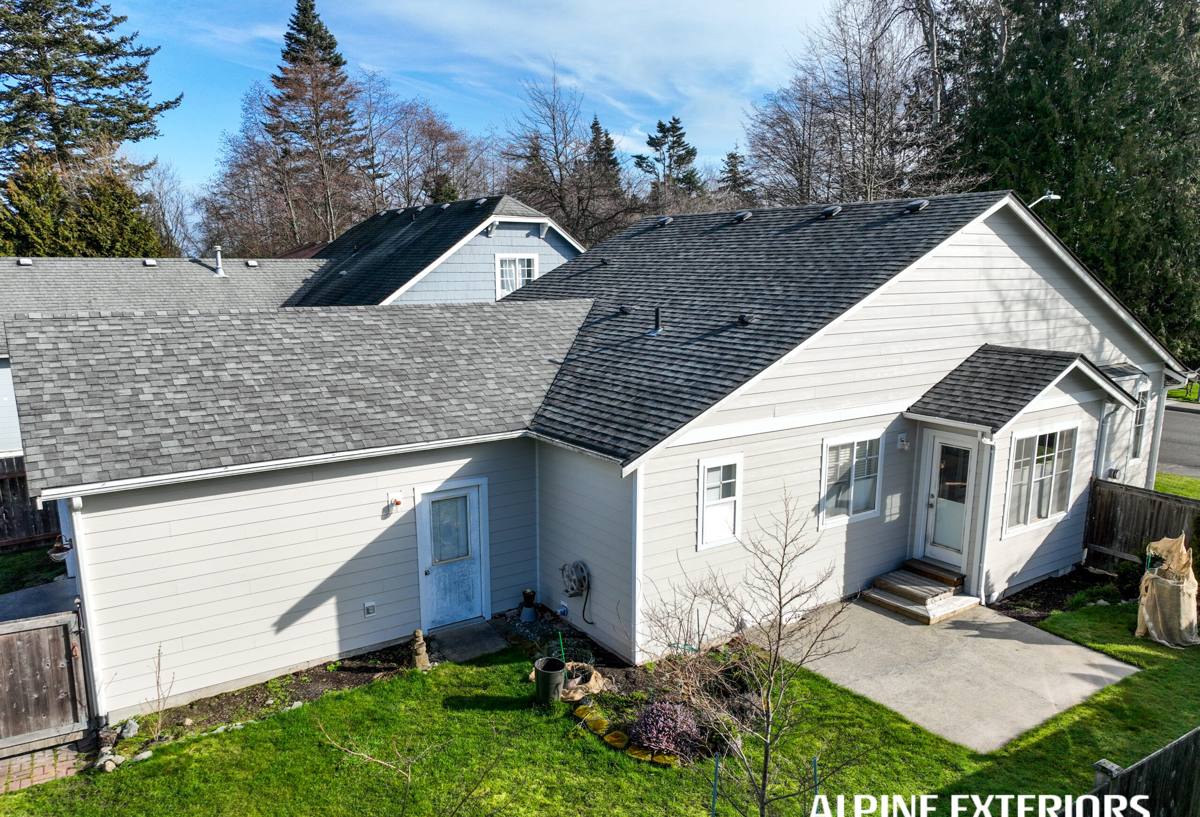
What Salt Air, Driving Rain, and Moss Actually Do to a House
Salt Air and Corrosion
Airborne salt doesn't just sit on the surface of a house — it works into fasteners, flashing, and any exposed metal on the exterior. Over time it accelerates corrosion on lower-grade hardware and can degrade finishes that weren't built to handle it. This is one of the reasons fastener selection and flashing details matter more on a Birch Bay job than on a typical inland remodel.
Driving Rain and Wind-Driven Moisture
Wind coming off the water pushes rain sideways into a house, not just down onto the roof. That means water finds its way to horizontal trim, window sills, and siding laps that would stay relatively dry on a more sheltered lot. If the water-resistive barrier, flashing, and siding overlaps aren't installed correctly, wind-driven rain is exactly the condition that turns a small gap into a moisture problem behind the wall.
Moss, Mildew, and the Long Shoulder Seasons
Whatcom County's shoulder seasons — the long stretches of damp, mild weather in spring and fall — give moss and mildew plenty of time to establish themselves on north-facing walls, shaded siding, and roof surfaces that don't get much direct sun. Add coastal humidity and it's a longer moss season than most of the rest of the county sees. Siding and roofing that hold moisture, or that have textures and seams that trap organic growth, age faster in this environment.
Why Siding Material Matters More on the Water
Every siding material handles moisture, salt, and temperature swings differently. Inland, some of those differences are minor. On the coast, they compound. A product that's marginal in a dry, sheltered location can fail years earlier in a coastal one. That's why we don't treat every job the same regardless of material — and why, for siding specifically, we've standardized on one product system rather than offering several.
Why We Only Install James Hardie Fiber Cement
We install James Hardie fiber cement siding exclusively. We don't install vinyl, LP SmartSide, Cemplank, Allura, primed spruce, or cedar. That's a deliberate standard, not a lack of options, and it's worth explaining honestly rather than just asserting it.
Vinyl
Vinyl is inexpensive and low-maintenance in mild, sheltered settings, but it's a thin plastic product that expands and contracts with temperature, can become brittle over time, and isn't the material we'd choose for a home taking on direct wind and salt exposure. It also doesn't hold paint well if a homeowner ever wants to change the color down the road.
LP SmartSide, Cemplank, and Allura
LP SmartSide is an engineered wood product — it performs well when detailed and maintained correctly, but wood-based siding depends heavily on caulking, paint maintenance, and cut-edge sealing to keep moisture out, which is a bigger ask in a wetter, saltier environment. Cemplank and Allura are both fiber cement products and share the same basic chemistry as Hardie, but we've standardized on one manufacturer so our crews install one system, know its specifications cold, and can back a single, consistent warranty path for the homeowner.
Primed Spruce and Cedar
Solid wood siding can look great, and cedar in particular has real appeal. But both require ongoing painting or staining, are more vulnerable to moisture absorption and rot, and in a coastal, high-moss environment that maintenance burden shows up faster and more often. We'd rather be honest about that upfront than sell a product we know will demand more from the homeowner than most people want to give it.
Why James Hardie
James Hardie fiber cement is non-combustible, doesn't swell or rot the way wood-based products can, and holds its factory-applied ColorPlus finish far longer than field-applied paint. Hardie engineers specific product lines (their HZ5 formulation is built for climates like the Pacific Northwest) for regional moisture and temperature conditions rather than selling one generic board everywhere. It carries a strong, transferable limited warranty on the substrate, backed by a separate finish warranty on the ColorPlus coating — but that warranty only holds up when the product is installed to Hardie's specification, which is why installation quality matters as much as the material choice.
It's Not Just Siding — Roofing, Windows, and Decks Take the Same Weather
A coastal home's exterior is one system, not a collection of unrelated parts. The same salt air and wind-driven rain that affects siding choices also affects roofing materials and detailing, window flashing and seal integrity, and the fasteners and structural connections on an exterior deck. We handle siding, roofing, windows, and decks, and on a Birch Bay property we look at all four together — a new roof with poor perimeter flashing, or new windows installed without proper coastal-grade sealing, can undermine even a well-installed set of siding.
What Correct Coastal Installation Actually Involves
- Corrosion-resistant fasteners and flashing rated for coastal or high-moisture exposure
- Proper water-resistive barrier installation with correctly lapped and taped seams
- Head flashing over every window and door opening, not just where it's visually obvious
- Correct siding overlap and gapping per manufacturer specification, not "close enough"
- Attention to inside and outside corners, where wind-driven rain finds gaps first
- Ventilation behind the siding to let any incidental moisture dry out rather than sit
None of this is exotic. It's disciplined, correct application of standard building science — but it's exactly the kind of detail that gets skipped when a crew is moving fast or isn't used to working this close to the water.
Cost Factors for a Birch Bay Exterior Project
| Factor | Why It Matters Here |
|---|---|
| Home size and wall complexity | More corners, dormers, and transitions mean more flashing and detail work |
| Existing exterior condition | Moisture-damaged sheathing found during tear-off adds repair scope |
| Siding profile and trim selection | Lap width, trim style, and shingle accents affect material and labor cost |
| Fastener and flashing grade | Coastal-appropriate hardware costs more than standard inland-grade materials |
| Access and site conditions | Waterfront lots, slopes, and limited staging space can affect labor time |
| Scope — siding only vs. siding, roofing, and windows together | Bundling exterior work can reduce redundant setup and access costs |
We won't quote a job over the phone sight unseen — an accurate number requires actually looking at the house, especially in a coastal setting where existing moisture damage isn't always visible from the driveway.
What to Look For in a Contractor for a Coastal Home
- Experience specifically with coastal or waterfront properties, not just general remodeling
- A clear explanation of the flashing and moisture-barrier plan before work starts
- Manufacturer-specific installation training on the siding product being used
- Willingness to inspect and address sheathing or framing issues found during tear-off, not just cover them up
- A written scope that spells out fastener type, flashing details, and warranty terms
- Local references and a physical presence in Whatcom County, not an out-of-area crew passing through
A local crew that works this coastline regularly knows where wind-driven rain tends to find its way in on this type of lot, and builds the installation plan around that from the start rather than treating it as an afterthought.
Maintenance That Keeps a Coastal Exterior Performing
Even the right materials installed correctly still benefit from basic upkeep in a salt-air environment. Periodic rinsing to clear salt residue and organic buildup, prompt attention to any caulking or sealant that starts to separate, and keeping gutters and downspouts clear so water isn't sheeting down the wall all help an exterior perform the way it was designed to. James Hardie's factory-applied finish reduces how much of that maintenance burden falls on the homeowner compared to field-painted materials, but no siding is entirely maintenance-free on the water.
Let's Take a Look at Your Home
If you're in Birch Bay and dealing with siding, roofing, window, or deck issues — or just want an honest read on how your exterior is holding up against the coastal weather — we're happy to come take a look. There's no pressure and no cost to get our assessment and a straight answer about what your home actually needs. Use the form below to request a free estimate.