 Bellingham
 Siding in Blaine: A Different Set of Problems Than Inland Homes
Blaine sits at the northernmost edge of Washington, wedged between Semiahmoo Bay, Drayton Harbor, and the Canadian border. That geography is part of what makes it a great place to live, and it's also exactly why siding here takes more abuse than siding twenty miles inland. Homes close to the water deal with salt-laden air moving off the bay, wind-driven rain that hits walls sideways instead of falling straight down, and a wet season that stretches long enough to let moss and algae get comfortable on anything that stays damp too long. None of that is unique to any one street or neighborhood in Blaine — it's a function of being a coastal Whatcom County town, and it shows up on siding, trim, fascia, and roofing across the whole area.
We're a local siding, roofing, window, and deck contractor, and Blaine is inside our regular service area. This page walks through what the climate actually does to exterior materials here, why we install only James Hardie fiber cement siding rather than the wider menu of products on the market, and what to expect if you're planning a siding project on a Blaine home.
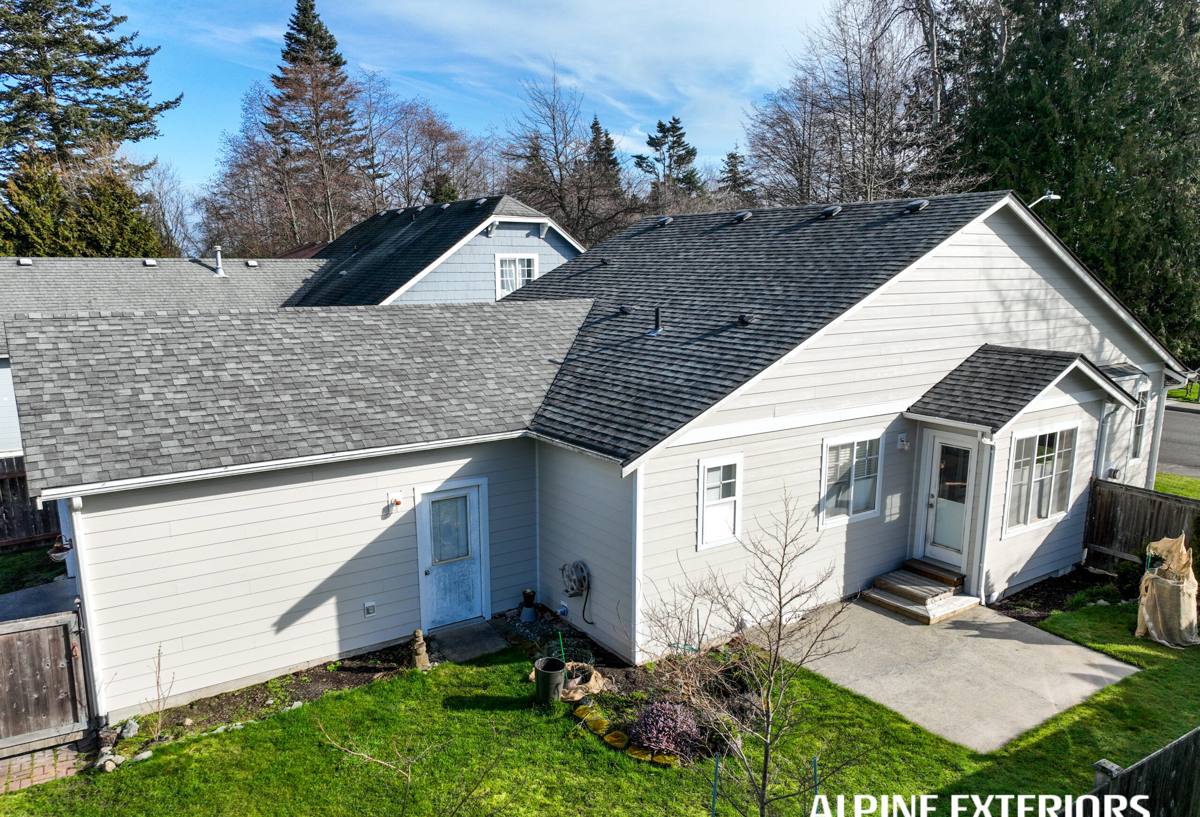
What Salt Air, Driving Rain, and Moss Season Actually Do to a House
Salt Air and Corrosion
Airborne salt from Semiahmoo Bay and Drayton Harbor doesn't just affect boats and metal railings. It settles on siding, fasteners, and trim, and over years it accelerates corrosion in anything not built to handle it — cheap fasteners, unprotected metal flashing, and siding materials that weren't engineered with coastal exposure in mind. Homes closer to the water get hit harder, but the effect reaches inland too, carried on the wind.
Wind-Driven Rain
Blaine's exposure to marine weather systems means rain frequently arrives horizontally, not vertically. That matters more than most homeowners realize, because a lot of siding products and installation details are designed around the assumption that water falls straight down and sheds off a wall. Wind-driven rain finds gaps, laps, and seams that vertical rain never would, which is why flashing details and joint treatment matter as much as the siding material itself.
The Long Moss Season
Whatcom County's wet season runs long, and shaded, north-facing, or tree-covered walls stay damp for extended stretches. That's ideal growing conditions for moss, algae, and mildew. Some siding materials tolerate that constant moisture reasonably well; others absorb it, swell, and start breaking down from the inside, which is where a lot of long-term siding failures actually begin.
Why We Install Only James Hardie Fiber Cement
We don't carry vinyl siding, LP SmartSide, Cemplank, Allura, primed spruce, or cedar. That's a deliberate decision, not an oversight, and it's worth explaining honestly rather than just asserting it.
Vinyl is inexpensive and low-maintenance in mild conditions, but it's a petroleum-based product that becomes brittle in cold snaps and can warp or buckle under sustained heat and wind stress — and in coastal wind, panels are more prone to working loose over time. Engineered wood products like LP SmartSide use a wood-strand core with a resin coating; that coating has to stay perfectly intact for the product to perform, because once moisture gets past it, wood-based cores can swell and deteriorate, which is a real risk in a climate that stays wet as long as Whatcom County's does. Primed spruce and cedar are real wood, full stop — beautiful when new, but they demand ongoing painting, caulking, and moisture vigilance to hold up against driving rain and salt air, and skipping a maintenance cycle costs you fast in a marine climate. Other fiber cement brands like Cemplank and Allura are chemically similar to James Hardie, but we've standardized on Hardie specifically for its factory-applied ColorPlus finish, its climate-engineered HZ product lines, and the depth of its installer network and warranty support in this region.
James Hardie fiber cement is non-combustible, doesn't absorb water the way wood-based products do, holds paint and color far longer because the ColorPlus finish is baked on at the factory rather than field-applied, and is engineered in HZ5 and HZ10 formulations specifically for climates like ours — freeze-thaw cycles, sustained moisture, and coastal air included. It's not the cheapest material on the market, and it's heavier and less forgiving to install than vinyl, which is exactly why installation quality matters as much as the material choice.
James Hardie Product Lines Worth Knowing
| Product Line | Best For | Look |
|---|---|---|
| HardiePlank Lap Siding | Most homes; the classic horizontal lap look | Smooth or cedar-textured |
| HardiePanel Vertical Siding | Modern facades, accent walls, gable ends | Smooth or stucco-textured |
| HardieShingle | Craftsman and cottage-style homes | Staggered or straight-edge shingle |
| HardieTrim | Window and door surrounds, fascia, corner boards | Smooth or textured |
Most Blaine projects use HardiePlank as the primary field material, with HardieTrim around openings and HardieShingle or HardiePanel worked in as an accent where it fits the home's style. Color selection matters more here than in drier inland climates — ColorPlus finishes are baked on and warranted against fading and chipping, which is a real advantage over field-applied paint that has to be recoated every several years to keep looking right under coastal sun and salt exposure.
How a Proper Siding Installation Works
Fiber cement performs the way it's supposed to only when it's installed to spec. A rushed or careless install can undercut even the best material, especially in a climate where wind-driven rain will find every shortcut.
- Tear off old siding and inspect the sheathing underneath for rot, soft spots, or prior water damage.
- Repair or replace any compromised sheathing before anything new goes up — covering a problem never fixes it.
- Install a weather-resistant barrier and correctly lapped, sealed flashing at every window, door, and penetration.
- Hang James Hardie panels or planks with the manufacturer-specified fasteners, spacing, and clearances — including gaps at grade and at trim to allow for drainage and expansion.
- Caulk and seal joints per Hardie's installation guidelines, not generic best guesses.
- Final inspection of seams, corners, and penetrations before the job is called complete.
What to Ask Before You Hire
- Is the crew certified or specifically trained on James Hardie installation requirements?
- Will they follow Hardie's published fastener and clearance specs, or their own shortcuts?
- Do they inspect and repair sheathing before installing new siding, or just cover what's there?
- What does the warranty actually cover — material only, or labor too?
- Are they familiar with wind-driven rain detailing, or do they install the same way regardless of exposure?
It's Not Just Siding — Roofing, Windows, and Decks Face the Same Climate
The same salt air, driving rain, and moss pressure that affects siding in Blaine affects everything else on the exterior of a home. Roofing takes direct exposure to wind-driven rain and needs flashing and underlayment details that account for it, not just shingles laid down and called finished. Window units and their surrounding trim are common points where water finds its way in if flashing and sealant aren't done correctly, and in a coastal climate that failure point shows up faster than it would inland. Decks built with the wrong materials or fasteners corrode and gray out quickly under salt exposure and sustained moisture. Because we handle siding, roofing, windows, and decks, we look at a home's exterior as one connected system rather than a set of unrelated projects — a flashing mistake at a window affects the siding around it, and a roof edge detail affects the wall below it.
What Drives the Cost of a Siding Project
| Factor | Why It Matters |
|---|---|
| Home size and wall complexity | More corners, gables, and dormers mean more cutting, trim work, and labor hours |
| Sheathing condition underneath | Rot or water damage found during tear-off adds repair cost before new siding goes up |
| Product line and profile | HardieShingle and detailed trim work cost more in labor than straight lap siding |
| Color and finish | ColorPlus factory finishes cost more upfront but eliminate repainting cycles |
| Access and site conditions | Tight lots, slopes, or limited equipment access add time and cost |
Every home is different, and the only way to get a real number is a walk-through and a written estimate — we're not going to throw out a broad price range that doesn't reflect your actual house.
Why a Local Crew Matters in a Place Like Blaine
Contractors who don't work in Whatcom County regularly can underestimate what coastal exposure does to an exterior. A crew that mostly works drier, inland jobs may not think twice about flashing details that are non-negotiable here, or may not account for how long moss season actually lasts on a shaded, water-facing wall. Working in Blaine and the surrounding area regularly means seeing how James Hardie siding, roofing, and trim actually hold up over years in this specific climate — not just on paper, but on real houses exposed to real salt air and real wind-driven rain. That experience shapes how we detail flashing, where we add extra sealant, and which product lines we recommend for which exposure.
Maintenance: What Ownership Looks Like After Installation
James Hardie siding is genuinely low-maintenance compared to wood, but "low-maintenance" doesn't mean "no maintenance," especially in a moss-prone coastal climate. A periodic rinse to clear off moss, algae, and salt residue keeps the ColorPlus finish looking sharp and prevents organic growth from taking hold in shaded areas. Caulked joints and trim should get a visual check every year or two, since caulk is the one component that ages faster than the fiber cement itself. Keeping gutters clear and grading water away from the foundation also protects the bottom courses of siding, which take the most splash-back and standing moisture exposure on any home near the water.
Get a Free, No-Pressure Estimate
If you're dealing with aging siding, visible moss and mildew buildup, or you're just planning ahead for a Blaine home that needs to hold up to salt air and coastal storms, we're happy to take a look. The estimate is free, there's no pressure, and you'll get a straight answer about what your home actually needs — use the form below to get started.