 Bellingham
 Sunnyland's Housing Stock and Its Climate Challenge
Sunnyland is one of Bellingham's established residential neighborhoods, sitting close enough to Bellingham Bay to catch the salt-tinged air that moves in off the water and close enough to Whatcom County's forested hillsides to sit under tree cover for much of the year. That combination — coastal moisture and shade — is exactly the environment that wears down exterior siding faster than almost anywhere else in Western Washington. Homes here range from early- and mid-century construction to newer infill, and regardless of age, the exterior envelope is doing the same job: keeping out a climate that rarely lets up.
We work on siding, roofing, windows, and decks across Bellingham and Whatcom County, and Sunnyland comes up often enough that we've got a clear sense of what its homes tend to face. This page is meant to walk through that honestly — not to scare anyone into a replacement they don't need, but to explain what the climate does to a home's exterior over time and what actually holds up against it.
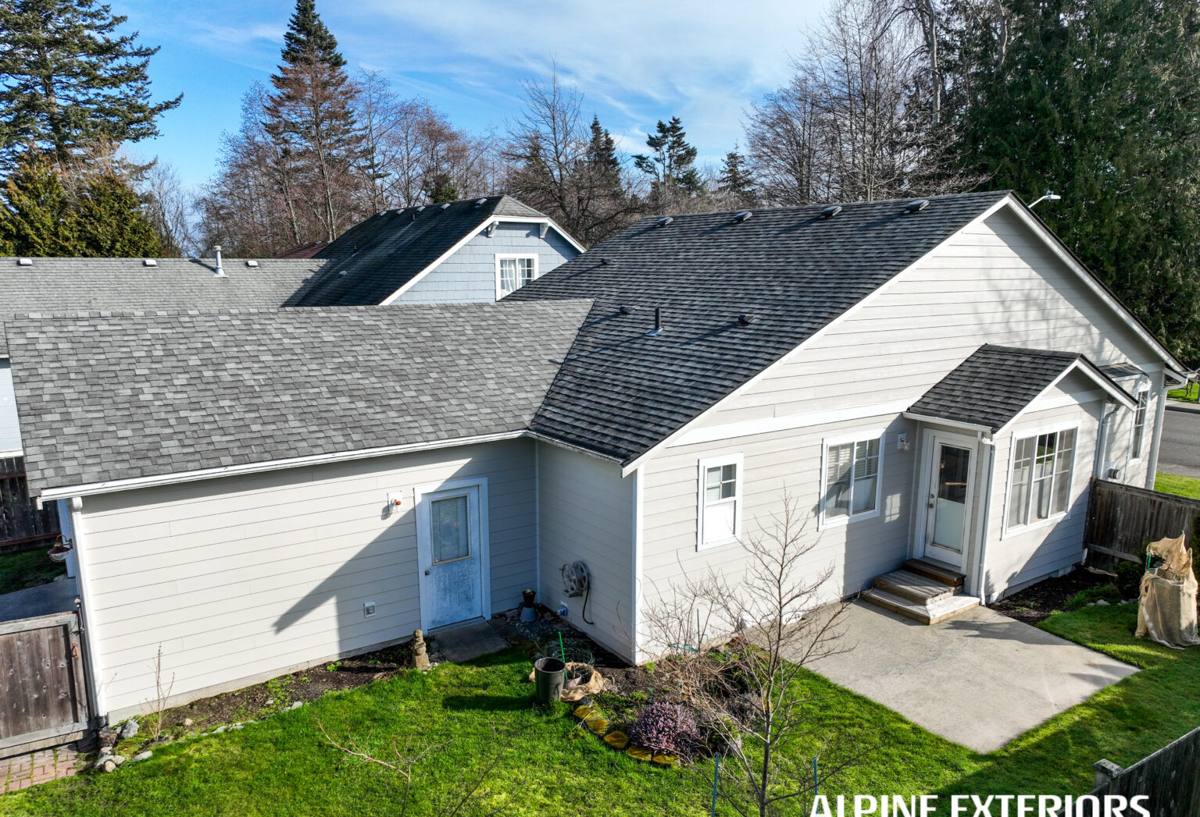
What Salt Air, Driving Rain, and Moss Actually Do to a House
Salt Air
Proximity to Bellingham Bay means airborne salt is a real factor, even a few miles inland. Salt accelerates corrosion on fasteners, flashing, and any exposed metal trim, and it can degrade certain paint and coating systems faster than manufacturers' published weathering estimates assume. It's a slow, cumulative effect — not something that shows up in year one, but something that separates a home that still looks sharp at year fifteen from one that doesn't.
Driving Rain
Whatcom County doesn't just get a lot of rain — much of it arrives wind-driven, which matters more than total rainfall totals suggest. Wind-driven rain pushes water sideways into seams, laps, and butt joints that a straight-down rain would never reach. Siding systems and installation details that work fine in a drier or calmer climate can fail here specifically because they weren't engineered for water moving horizontally against a wall.
The Long Moss Season
Between the tree cover common in Sunnyland and the region's extended damp season, north- and shade-facing walls, rooflines, and deck surfaces stay wet longer than they would in full sun. That's the setup moss and algae need to take hold. Moss on a roof holds moisture against shingles and can work under flashing over time. Moss and green staining on siding are mostly cosmetic on some materials but can signal moisture retention problems on others, especially anything with an absorbent substrate.
Common Issues We See on Sunnyland Exteriors
Given the mix of older and newer homes in the neighborhood, the issues we run into vary by era of construction, but a few patterns repeat:
- Paint and caulking failing years ahead of schedule on south- and west-facing walls that take the brunt of wind-driven storms
- Persistent green or black staining on shaded north walls and under eaves where airflow is limited
- Soft or delaminating trim and siding edges where water has been wicking in at seams for years, unnoticed
- Moss buildup at roof valleys and along shaded roof slopes, sometimes with visible granule loss on the shingles underneath
- Corroding fasteners or streaking rust stains below nail heads and metal trim pieces
- Window flashing that was adequate when installed but has since failed, letting water track down into wall cavities
None of these are unique to Sunnyland — they're the standard wear pattern for this climate zone. But they show up here reliably enough that when we're asked to look at a home in the neighborhood, we already know roughly where to check first.
Siding Materials: How They Actually Perform in This Climate
Homeowners are often choosing between several siding materials when they're facing a replacement, and marketing claims don't always match how a product behaves after a decade of Pacific Northwest weather. Here's an honest comparison based on how these materials tend to hold up specifically against salt air, wind-driven rain, and prolonged dampness:
| Material | Moisture Behavior | Moss/Algae Resistance | Long-Term Maintenance |
|---|---|---|---|
| James Hardie fiber cement | Non-combustible, engineered to resist moisture-related swelling and cracking; HZ product lines are matched to climate zone | Factory ColorPlus finish resists staining and doesn't feed organic growth the way wood-based products can | Low; periodic rinsing, no repainting on ColorPlus finishes for the life of the warranty |
| Vinyl | Sheds water on the surface but seams and J-channels can trap moisture behind the panel; prone to warping under sustained wet-dry cycling | Susceptible to mildew streaking in shaded areas; hard to clean without damaging the surface | Low upfront, but color fades and panels become brittle and prone to cracking over time |
| LP SmartSide (engineered wood) | Wood-strand core is more vulnerable to swelling and edge deterioration if the factory seal is compromised at a cut or seam | Wood-based substrate is more hospitable to moisture-loving growth if coatings degrade | Moderate; edge sealing and caulking maintenance matters more here than in drier climates |
| Cedar / primed spruce | Absorbs and releases moisture naturally; performs well when detailed and maintained correctly, but unforgiving of gaps | Highest susceptibility to moss and algae without regular treatment | High; refinishing, caulking, and moss treatment on a recurring schedule |
This is exactly why we standardize on one product rather than offering all of the above. A siding material that performs beautifully in a drier inland climate can be a poor match for a shaded, salt-air, wind-driven-rain environment like Sunnyland — and we'd rather install one product correctly and stand behind it than offer a menu of options with very different long-term outcomes.
Why We Only Install James Hardie Fiber Cement
We install James Hardie exclusively — not LP SmartSide, not vinyl, not Cemplank or Allura, not primed spruce or cedar. That's a deliberate standard, not a lack of options.
Fiber cement is non-combustible and dimensionally stable, meaning it doesn't swell, crack, or delaminate the way wood-based or wood-strand products can when they take on moisture at cut edges or compromised seams — a real risk in a climate where wind pushes rain into every gap. Hardie's ColorPlus factory finish is baked on under controlled conditions, which gives it more consistent, longer-lasting resistance to fading and staining than field-applied paint, and it means homeowners aren't on a repainting cycle. Hardie also produces HZ5 and HZ10 product lines engineered specifically for climate zones like ours, with moisture and impact performance matched to what the Pacific Northwest actually throws at a house. Add a strong transferable warranty and a track record of holding up when installed to manufacturer spec, and it's the product we're comfortable putting our name behind on every home we side — including in Sunnyland, where the shade and salt air make material choice matter more than it does in a lot of places.
We'll be straightforward if a customer specifically wants vinyl or engineered wood: we won't install it. That's a standard we hold across every job, not a sales pitch — it's what lets us give a real warranty and a real answer when someone asks how their siding will look in fifteen years.
It's Not Just Siding: Roofing, Windows, and Decks Face the Same Climate
Salt air, driving rain, and moss don't stop at the wall line. Roofs in shaded parts of Sunnyland are prone to the same moss buildup that affects siding, and moss left unaddressed on a roof can shorten the life of shingles well below their rated lifespan. Windows take the brunt of wind-driven rain at the flashing and sill, and older window installations in the neighborhood's mix of vintage homes are a common source of hidden water intrusion. Decks, especially those without full sun exposure, deal with the same moss and moisture retention that make surfaces slick and accelerate wood decay at ledger boards and joints.
Because we handle all four — siding, roofing, windows, and decks — we look at a home's exterior as one connected system rather than a set of separate trades. A roof leak can show up as a siding stain. A failed window flashing can rot the wall sheathing behind good siding. Treating them together, rather than patching one at a time, is usually what actually solves the problem instead of moving it somewhere else on the house.
Why a Local Crew Matters Here
Bellingham and Whatcom County's climate isn't generic Pacific Northwest weather — the combination of bay-adjacent salt air, wind-driven rain off the water, and heavy tree cover in neighborhoods like Sunnyland creates a specific set of demands on an exterior. A crew that works this area regularly knows which details actually matter here: how flashing needs to be lapped to handle sideways rain, where moss tends to establish and why, and which installation shortcuts that might pass in a drier climate simply fail here within a few years.
That local knowledge also shows up in smaller, practical ways — knowing the neighborhood's typical lot layouts and access constraints, being available for a follow-up look without a long drive, and standing behind work on homes we'll likely see again down the street. It's the difference between a crew that installs siding and a crew that installs siding meant to last through what this specific climate does to a house.
Maintenance Checklist for Sunnyland Homeowners
Whatever your current siding, roofing, and decking materials are, a few habits go a long way in this climate:
- Walk the exterior once or twice a year, focusing on north-facing and shaded walls where moss and staining show up first
- Check caulking and seams at window and door trim annually — this is where wind-driven rain finds its way in
- Keep gutters and downspouts clear so water isn't sheeting down walls or pooling near the foundation
- Have moss on roofs and decks treated before it spreads, rather than after shingles or boards start to show damage
- Watch for rust streaking below fasteners or metal trim, an early sign of corrosion from salt-air exposure
- Trim back vegetation that's keeping specific wall sections shaded and damp longer than necessary
Getting an Honest Look at Your Home
If you're in Sunnyland and noticing moss, staining, soft trim, or siding that's just not holding up the way it used to, it's worth getting an honest, no-pressure assessment rather than guessing. We'll tell you plainly what we see, what's driving it, and what options actually make sense for your home in this climate — use the form below to request a free estimate.