 Bellingham
 What Primed Wood Siding Actually Is
Primed wood siding — usually spruce, sometimes pine or fir — is solid or finger-jointed lumber milled into lap boards, panels, or shingles and coated at the factory or mill with a single coat of primer before it ships. The primer is meant to give painters a head start and to slow moisture absorption until the final paint coats go on. It's been a staple of Pacific Northwest home exteriors for decades, and there are still houses around Bellingham wearing it well after thirty or forty years of careful upkeep.
We get asked about it often, usually by homeowners doing a like-for-like replacement on an older Fairhaven or York Neighborhood bungalow, or by someone who likes the idea of a paintable, traditional wood look. It's a fair question, and the product isn't a scam or a bad idea in the abstract. We just don't install it, and we think homeowners deserve the real reasoning instead of a sales brush-off.
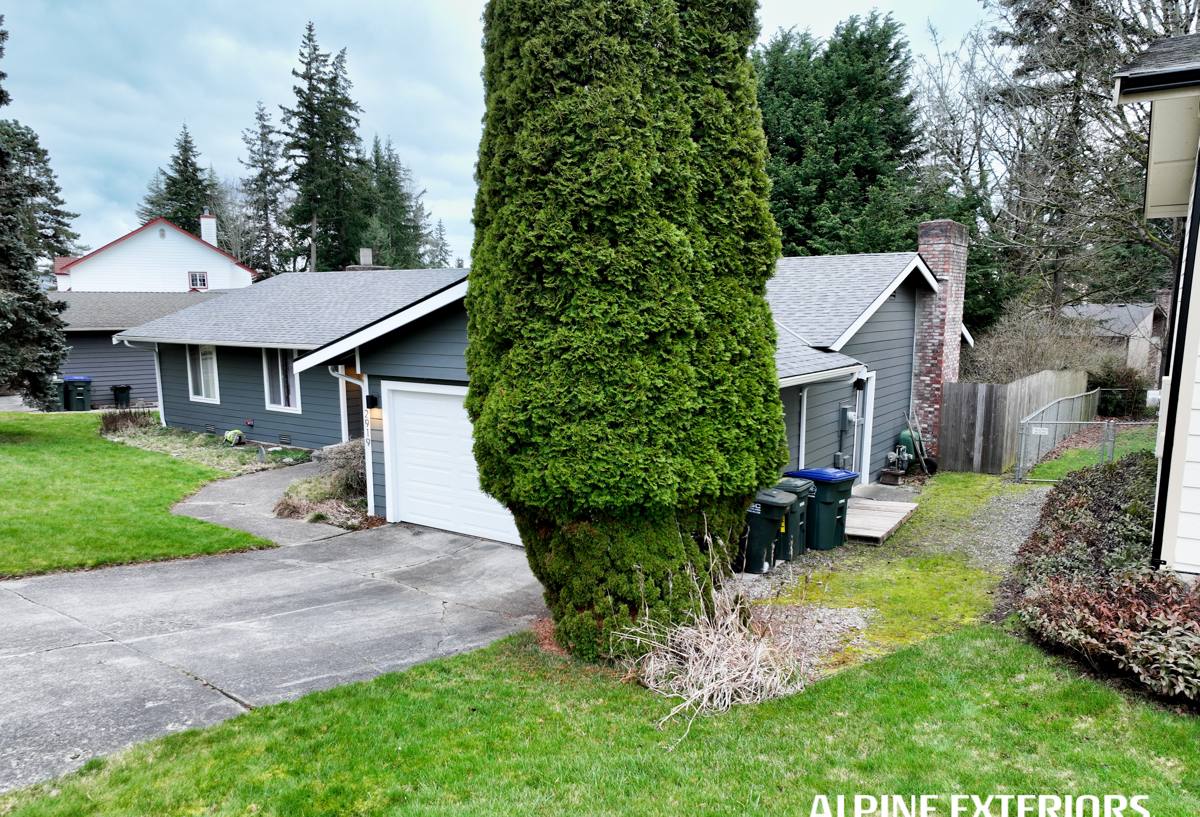
What Primed Wood Gets Right
To be fair to the product: primed wood siding has a genuine, straightforward appeal.
- Authentic material. It's real wood, not a composite or engineered substitute, which matters to homeowners restoring or matching a historic exterior.
- Paintable to any color, any time. No factory color system to work around — you or your painter choose the color, and it can change again in ten years.
- Familiar to trades. Most carpenters and painters in Whatcom County have worked with it for decades, so labor isn't hard to find.
- Lower upfront material cost than most fiber cement or engineered wood systems, before you factor in what it costs to keep up.
None of that is in dispute. Where it runs into trouble is in what happens after the boards go up, especially in a climate like ours.
The Primer Is a Head Start, Not a Finish
This is the part that gets lost in the sales pitch: primer is not a finish coat. It's a bonding layer designed to be covered — usually within 60 to 90 days — by a full paint system, including a quality exterior finish coat and, ideally, back-priming and end-grain sealing on every cut. If that full system isn't applied correctly, and reapplied on schedule for the life of the siding, the wood underneath is exposed to exactly the kind of moisture cycling that wood siding is worst at handling.
In practice, a lot of primed wood siding installations skip steps that matter most: field-applied end cuts don't get resealed, back-priming gets skipped to save labor, and the first full paint job gets delayed past the manufacturer's window. None of that is usually visible at final walkthrough. It shows up three to seven years later as checking, cupping, and paint failure at the seams.
Where Moisture Gets In
- Unsealed or field-cut board ends, especially at corners and window trim
- Nail heads that aren't set and sealed correctly
- Butt joints and laps where caulking has shrunk or failed
- Back sides of boards left unprimed against the water-resistive barrier
Why Bellingham's Climate Is a Tough Test for Wood
Whatcom County isn't the harshest climate in the country, but it stacks several conditions that are specifically hard on painted wood siding:
- Salt-laden marine air off Bellingham Bay and the Salish Sea accelerates paint film breakdown and corrodes fasteners faster than an inland climate would.
- Driving, wind-blown rain off Puget Sound doesn't just fall straight down — it gets pushed sideways into laps, seams, and trim joints that were only designed for gravity drainage.
- A long moss and algae season. Our wet, mild winters and shaded lots (especially in the tree-heavy neighborhoods around Bellingham and up toward Lake Whatcom) keep siding damp for extended stretches, which feeds moss and mildew growth on painted wood surfaces.
- Extended dry periods are short. Wood siding needs time to fully dry out between wet cycles to avoid trapped moisture under the paint film. In this region, that window is narrower than it is in drier climates.
None of these conditions destroy wood siding on their own. Combined, and repeated year after year, they shorten the interval between repaints and raise the odds that a missed maintenance cycle turns into rot rather than just faded paint.
The Maintenance Commitment Is the Real Cost
The number that matters with primed wood siding isn't the install price — it's the lifetime cost of keeping the paint film intact. A well-installed, well-maintained system needs a full repaint roughly every 7 to 10 years in a marine climate like ours, sometimes sooner on south- and west-facing walls that take the worst of the sun and driving rain. Skip or delay that cycle and the paint failure accelerates the wood's exposure, not the other way around.
| Factor | Primed Wood Siding | James Hardie Fiber Cement |
|---|---|---|
| Repaint interval (marine climate) | Roughly every 7-10 years, often sooner on exposed walls | ColorPlus factory finish typically holds 15+ years before a repaint is needed |
| Moisture behavior | Absorbs and swells if the paint film fails; prone to cupping, checking, rot at end grain | Engineered to resist moisture-driven swelling and rot; won't absorb water like wood |
| Combustibility | Combustible | Non-combustible core material |
| Moss and algae resistance | Painted surface is a food source for mildew/algae once the film ages | Factory finish and cement composition resist moss/algae buildup better than painted wood |
| Warranty | Typically limited to the paint manufacturer's product warranty; labor and material coverage vary widely by installer | Manufacturer-backed limited warranty on the product, transferable, plus factory finish warranty on ColorPlus lines |
| Installation sensitivity | High — every cut, joint, and nail head needs to be sealed correctly or moisture finds a way in | Installed to Hardie's published specs (clearances, fastening, joint treatment) for consistent long-term performance |
Installation Sensitivity Is Where Most Failures Start
Even a top-quality primed wood board can fail early if it's installed wrong, and the margin for error is small. Every field cut needs end-grain sealer before it goes up. Every board needs proper back-priming, not just a front coat. Fasteners need to be set and caulked, not left proud or driven flush and left bare. Butt joints need flashing or sealant that's rated to move with the wood as it expands and contracts through our wet winters and drier summers.
We're not willing to put our name on a product where a single missed step — one unsealed cut end at a corner board, one skipped back-prime coat — can turn into a callback five years down the road that isn't really about our workmanship at the time of install, but about a maintenance system that has to be perfect and stay perfect for decades.
Why We Install James Hardie Instead
We standardized on James Hardie fiber cement siding because it removes most of the variables that make wood siding a long-term gamble in this climate. It's non-combustible, engineered specifically for wet climates through Hardie's HZ10 product line, and it comes with a factory-applied ColorPlus finish baked on under controlled conditions — not a field-applied paint job depending on weather, timing, and technique on install day. That finish is backed by a real manufacturer warranty that's transferable if you sell the house, which matters to buyers and to us as the installer standing behind the work.
It still needs to be installed correctly — clearances, fastening patterns, and joint treatment all matter — but the material itself isn't racing against a repaint clock the way primed wood is. That's a meaningful difference for a house that's going to sit through decades of Bellingham rain, salt air, and moss season.
What to Weigh Before You Choose
- Are you prepared to budget for a full repaint every 7-10 years, sooner on exposed sides?
- Will every field cut and joint actually get sealed correctly, and will you know if it wasn't?
- Does your lot get heavy shade or sit close to the water, where moss and prolonged dampness are worse?
- Is a transferable material warranty something you want if you plan to sell in the next 10-15 years?
- Does the historic character of the home require real wood, or would a factory-finished fiber cement profile get you the same look with less upkeep?
If you're weighing primed wood siding against the alternatives for a Bellingham or Whatcom County home, we're happy to walk the property with you, look at sun exposure and moisture patterns specific to your lot, and give you a straight answer — including telling you if wood is genuinely the right call for your situation. Reach out for a free, no-pressure estimate and we'll go over the options in person.