 Bellingham
 Sunnyland's Climate Is Harder on Siding Than It Looks
Sunnyland sits close enough to Bellingham Bay that salt-laden air is a constant, low-grade stress on exterior building materials, even on days when nobody would call the weather dramatic. Add Whatcom County's long wet season — months of driving rain pushed sideways by wind off the water — and you have conditions that punish any siding product with a weak seam, an unsealed edge, or a finish that can't shed water fast enough. Then there's moss. Bellingham's moss season isn't a few weeks in spring; on shaded, tree-covered lots it can run more than half the year, and Sunnyland's mature street trees and older lot layouts mean a lot of north- and east-facing walls stay damp for days after a storm passes.
None of this is unique to one street or one style of house. It's the baseline for this part of Whatcom County. What it means practically is that siding here has to do three things at once: shed wind-driven rain without letting it track behind the cladding, resist moss and algae staining on the shaded sides of the house, and hold its finish without cracking or peeling as it cycles through wet winters and dry summers year after year.
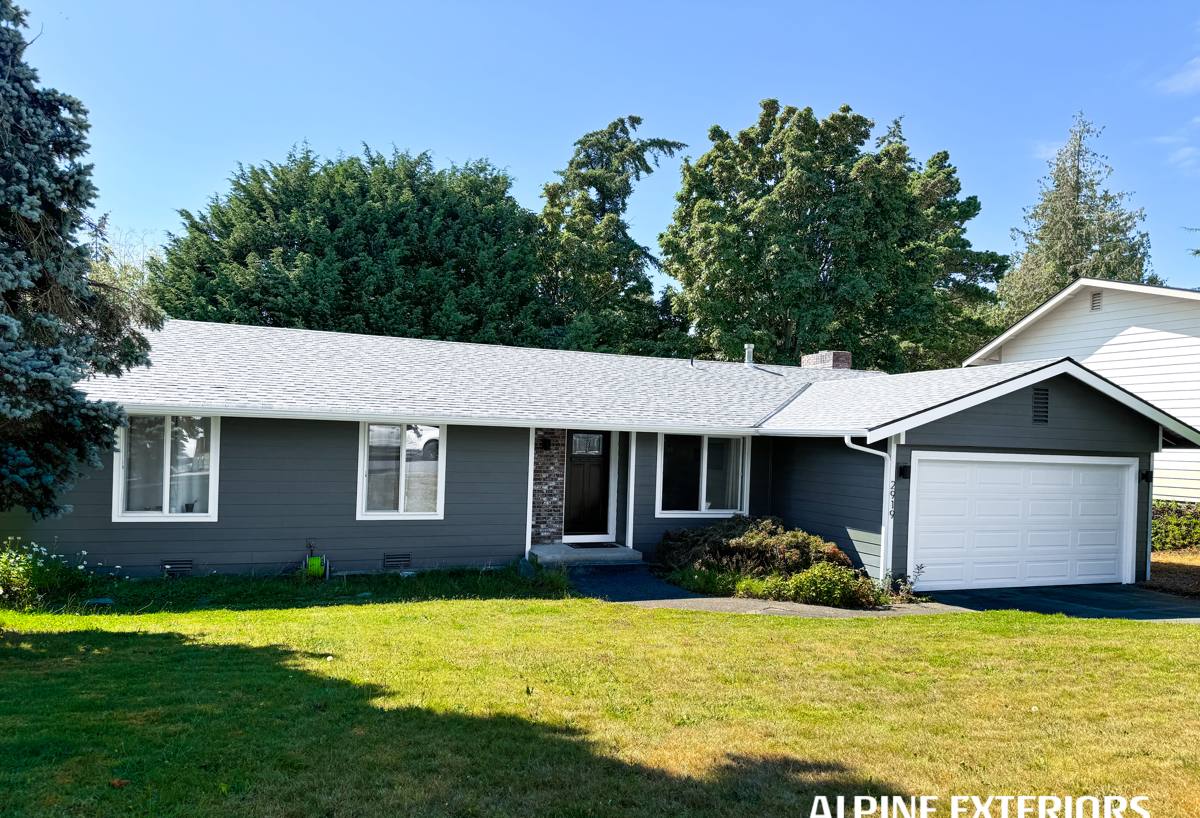
Why Older Sunnyland Homes Face Extra Risk
Sunnyland is one of Bellingham's established, tree-canopied residential neighborhoods, with a good number of homes built well before modern weather-resistive barriers and rainscreen details were standard practice. Original siding on houses of that era — old cedar lap, early aluminum, or whatever was patched in over the decades — was often installed with none of the moisture-management layers we consider baseline today. That's not a knock on the original builders; it's just how construction has changed.
The practical result is that when we pull siding off an older Sunnyland home, we often find sheathing that's been absorbing moisture behind the cladding for years without anyone knowing, because the symptoms — a little bit of soft trim, some paint that won't hold, faint staining near window heads — look cosmetic from the outside. Combined with heavier shade from mature trees, these homes tend to hold moisture longer after every storm than a newer build on an open lot. That's exactly the kind of house where cutting corners on the reinstall causes problems again in five to ten years instead of thirty.
What This Means for a Replacement Project
On a home like this, the siding material matters, but the installation details matter just as much — arguably more. A high-end product installed without proper flashing and drainage behind it will fail in the same places the old siding did. A modest product installed correctly, with the water managed properly, will outlast a premium product installed carelessly.
What a Correct Siding Installation Actually Involves
"Siding installation" sounds like one job, but it's really a stack of smaller decisions, each of which has to be right for the wall assembly to work as a system.
Moisture Management Behind the Cladding
Before a single piece of siding goes up, the wall needs a continuous weather-resistive barrier, properly lapped and taped, with a drainage gap behind the siding so any water that does get past the outer layer can run down and out instead of sitting against the sheathing. On a shaded, rain-exposed neighborhood like Sunnyland, this drainage layer is what separates a wall that dries out between storms from one that stays chronically damp.
Flashing and Trim Details
Window heads, door tops, deck ledgers, and roof-to-wall transitions are where water intrusion actually starts on most homes. Correct flashing at every one of these penetrations — not just caulk covering a gap — is non-negotiable. Caulk is a backup, not a strategy.
Fastening and Field Finish
Fastener placement, spacing, and depth affect both how the siding performs in wind and how well it resists cracking over time. A factory-applied finish (rather than field-painting after installation) also matters here specifically because it cures under controlled conditions rather than in Bellingham's damp air, which affects adhesion and long-term color hold.
Why We Only Install James Hardie Fiber Cement
We don't install vinyl, LP SmartSide, primed spruce, cedar, or other fiber cement brands, and that's a deliberate standard, not a limited product list we're stuck with. Each of those products has real strengths, but each also has a trade-off — moisture sensitivity at cut edges, a maintenance schedule that depends on the homeowner staying on top of caulking and painting, or a finish that shows algae and moss staining faster in shaded, damp conditions like Sunnyland's.
James Hardie's fiber cement is non-combustible, holds its ColorPlus factory finish without the peeling and cracking that field-applied paint is prone to in wet climates, and Hardie engineers specific product lines (their HZ5 line, built for regions with more moisture exposure) for exactly the conditions Whatcom County sees. It's not that other products can't be installed correctly — it's that we've standardized on the product and system we can stand behind on every home we touch, including the shaded, salt-exposed lots that make up a lot of Sunnyland.
How the Main Siding Materials Compare Here
| Factor | Vinyl | Cedar / Wood | Engineered Wood (LP-type) | James Hardie Fiber Cement |
|---|---|---|---|---|
| Moss/algae resistance in shade | Moderate, can trap moisture behind panels | Low without regular treatment | Moderate, edge sealing critical | High with factory finish |
| Wind-driven rain performance | Depends heavily on install quality | Needs diligent maintenance | Sensitive to unsealed cuts | Strong when correctly flashed |
| Finish longevity | Fades, can't be repainted easily | Repaint/restain every few years | Field paint required, needs upkeep | Factory ColorPlus finish, long repaint interval |
| Combustibility | Melts/deforms under heat | Combustible | Combustible | Non-combustible |
| Typical maintenance | Low, but limited repair options | High | Moderate to high | Low |
Our Installation Process for Sunnyland Homes
- On-site assessment: We inspect existing siding, trim, and — where visible — sheathing condition, paying particular attention to shaded elevations and areas near mature trees where moisture sits longest.
- Tear-off and sheathing check: Old siding comes off and we inspect the sheathing underneath. Any soft or water-damaged sheathing gets repaired before anything new goes up — this step is where hidden moisture problems from older installations get caught.
- Weather-resistive barrier and drainage plane: A continuous barrier goes on with a proper drainage gap, so bulk water has somewhere to go besides sitting against the wall.
- Flashing at every penetration: Windows, doors, and roof transitions get flashed correctly, not just caulked.
- James Hardie installation to manufacturer spec: Fastening, clearances, and joint treatment follow Hardie's published installation requirements for our climate zone.
- Final inspection and walkthrough: We check the finished work against the plan and walk the homeowner through what was done and why.
What Affects the Cost of a Sunnyland Siding Project
| Cost Factor | Why It Matters |
|---|---|
| Age and condition of existing siding | Older homes more often need sheathing repair discovered during tear-off |
| Tree cover and site access | Mature trees on tighter Sunnyland lots can slow staging and require extra care around landscaping |
| Architectural trim complexity | Bungalow and mid-century detailing common in the neighborhood adds cutting and fitting time |
| Square footage and wall height | Straightforward multiplier, but story height affects staging and labor time |
| Extent of moisture damage found | Sheathing or framing repair is the most common cause of a cost change mid-project |
Signs a Sunnyland Home May Need New Siding
- Persistent dark or greenish staining on shaded or north-facing walls that returns after cleaning
- Paint that won't hold, bubbles, or peels within a year or two of being applied
- Soft spots, especially near window trim, corners, or where siding meets the foundation
- Visible warping, cracking, or gaps at seams and joints
- A musty smell near exterior walls inside the home, which can point to trapped moisture
- Rising heating bills that aren't explained by anything else, suggesting air and moisture infiltration
Why a Crew That Already Works in Sunnyland Matters
A siding crew that regularly works this neighborhood already knows what to expect before the first piece of old siding comes off: which elevations stay wet longest, how mature tree cover changes the moisture picture, and what condition to expect from sheathing on homes of a certain age. That familiarity shows up in how a job is scoped, how contingencies are priced, and how flashing and drainage details are handled around older trim profiles that are common in this part of Bellingham.
It also matters for permitting and code compliance specific to the City of Bellingham and Whatcom County, and for simply being reachable if a question comes up after the job is done. A contractor with a track record in the neighborhood has a reputation riding on every house they touch here, which is a different incentive than a crew passing through for a single job.
If you're weighing a siding replacement for a home in Sunnyland, we're glad to take a look and give you a straightforward, no-pressure estimate — including what we find about your home's specific exposure, shade, and moisture situation before we recommend anything.