 Bellingham
 Siding in Silver Beach: What Makes This Bellingham Neighborhood Different
Silver Beach sits along the north end of Lake Whatcom, one of the more wooded, water-adjacent pockets of Bellingham. Homes here live under a mix of tall conifers, lake-generated humidity, and the same marine-influenced weather pattern that moves through all of Whatcom County off Bellingham Bay and the Salish Sea. That combination — shade, moisture, and salt-tinged coastal air working together over the course of a year — puts a specific kind of stress on exterior siding that homeowners a few miles inland don't deal with in the same way.
We've worked on homes throughout Bellingham and Whatcom County long enough to know that a siding job that holds up in a dry, sunny climate can fail early here if it isn't matched to the actual conditions. Silver Beach is a good example of a neighborhood where the wrong product choice, or a rushed installation, shows its problems within a few years instead of a few decades.
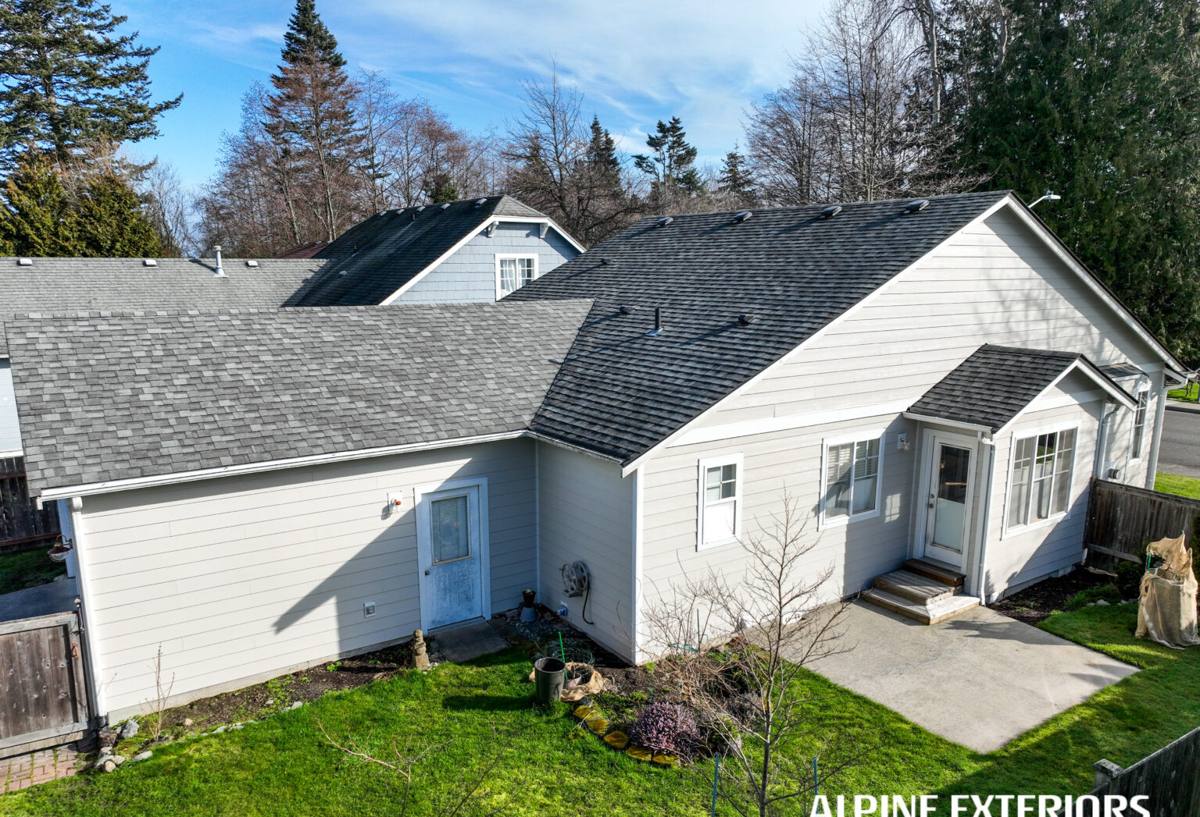
The Climate Silver Beach Homes Actually Deal With
Shade and Moisture from the Lake and Tree Cover
Lakefront and near-lake properties tend to hold moisture longer than homes on open, sun-exposed lots. Morning fog off the water, dense tree canopy, and north-facing walls that rarely see direct sun all add up to siding that stays damp longer after every rain. That extended dry-out time is exactly what moss, algae, and mildew need to get established.
Driving Rain and Wind-Driven Moisture
Whatcom County gets a long, wet fall-through-spring season, and wind off the water can push rain sideways into wall assemblies rather than letting it fall straight down. Siding, trim, and the seams around windows and doors take the brunt of that. Poor flashing or caulk-dependent detailing is where driving rain finds its way in.
Salt-Influenced Marine Air
Bellingham's broader climate, including areas near Bellingham Bay and the surrounding waterways, carries a mild but persistent salt content in the air compared to inland Washington. Over years, that salt exposure accelerates corrosion of exposed fasteners and hardware, and it's part of why we lean toward materials and installation details that don't depend on staying perfectly sealed to perform.
A Long Moss Season
Between the shade, the humidity, and the mild year-round temperatures, Whatcom County effectively has a moss season that runs most of the year rather than a few weeks. On wood-based or absorbent siding materials, moss doesn't just sit on the surface — it holds moisture against the substrate, which is where real damage starts.
Why Product Choice Matters More in Silver Beach Than in Drier Climates
In a dry inland climate, a lot of siding products perform reasonably well simply because they don't get tested very hard. In a lake-adjacent, tree-shaded, marine-influenced neighborhood like Silver Beach, the material itself becomes the deciding factor between a siding job that looks good for 30+ years and one that needs paint, caulk, and board replacement within a decade.
This is why our company installs only James Hardie fiber cement siding. We don't offer LP SmartSide, vinyl, Cemplank, Allura, primed spruce, or raw cedar — not because those products can't be installed correctly somewhere, but because we've made a professional decision about what we're willing to put our name behind in this specific climate.
Where Other Products Struggle Here
- Wood-based siding (engineered wood, primed spruce, cedar): Any product with wood fiber or solid wood at its core absorbs moisture. In a shaded, humid setting like Silver Beach, that means longer wet cycles, higher risk of swelling at cut edges and fastener points, and more susceptibility to moss and rot over time — even with factory treatments.
- Vinyl siding: Vinyl expands and contracts significantly with temperature swings and can become brittle in cold snaps. It also relies on lap joints and trim pieces that give moisture more places to work behind the panel, which is a bigger liability in a wet, shaded lot than in a dry one.
- Lower-grade or unbranded fiber cement: Not all fiber cement is engineered the same way. Product consistency, factory finish quality, and warranty backing vary a lot between manufacturers, and that gap shows up over years of Pacific Northwest weather, not in the first season.
Why James Hardie Fiber Cement Fits This Climate
James Hardie siding is non-combustible fiber cement, which means it doesn't rely on a surface coating alone to resist moisture damage — the material itself is dense and dimensionally stable, so it doesn't swell, warp, or feed rot the way wood-based products can. The ColorPlus factory finish is baked on under controlled conditions, which holds color and resists the kind of fading, chalking, and moss staining that painted or field-finished siding tends to show first in shaded, damp settings like Silver Beach.
Hardie also builds climate-specific HZ product lines engineered for exactly the conditions we get in Western Washington — repeated wet-dry cycling, moderate temperatures, and high humidity — rather than a one-size-fits-all national product. Combined with a strong transferable warranty, it's the product we're comfortable standing behind on a lake-adjacent, tree-covered lot where the siding is going to get tested every single winter.
Comparing Siding Materials for a Silver Beach Property
| Material | Moisture Behavior | Moss/Algae Resistance | Long-Term Maintenance |
|---|---|---|---|
| James Hardie Fiber Cement | Dimensionally stable, does not absorb and swell | Factory finish resists staining and buildup | Low — occasional wash, no repainting cycle needed |
| Vinyl | Doesn't absorb, but joints/laps allow moisture behind panel | Moderate, but grime and mildew collect in seams | Low-cost but panels can crack, fade, and need full replacement in sections |
| Wood-Based / Engineered Wood | Absorbs moisture, especially at cut edges | Susceptible, especially in shaded areas | High — repainting, caulking, and edge sealing on a recurring schedule |
| Cedar | Absorbs moisture, prone to cupping and checking | Higher risk in constant shade/humidity | High — staining/sealing every few years, more with lake-side shade |
Our Full Exterior Services in Silver Beach
Siding is our specialty, but exterior systems work together, and we treat them that way. We also handle roofing, windows, and decks for Silver Beach homeowners, because a siding job done in isolation — without checking the roof edge, window flashing, or deck ledger connections — can leave the exact gaps where moisture problems start.
Roofing
Roof-to-wall transitions, valleys, and eave flashing all interact directly with siding performance. On a shaded, moss-prone lot, we look at roof condition and moss growth as part of any siding conversation, since a roof shedding debris and holding moisture onto the wall line undermines even a well-installed siding job.
Windows
Window flashing and trim details are one of the most common failure points on older Bellingham homes, especially where driving rain is common. When we replace siding, we make sure window openings are properly flashed and integrated with the new siding plane rather than just caulked and covered.
Decks
Decks near a lake environment see similar wet-dry cycling and shade exposure as siding does. We build and repair decks with the same climate-first mindset — materials and detailing chosen for what actually survives here, not just what looks good on install day.
What a Local Crew Actually Means for a Neighborhood Like This
Silver Beach isn't a generic subdivision — it's a mix of lake-facing lots, wooded interior lots, older homes, and newer builds, often on sloped terrain with mature trees close to the structure. A crew that works across Bellingham and Whatcom County regularly knows how to read those site conditions: where moss has already taken hold, where shade patterns mean certain walls will always dry slower, and where flashing details need extra attention because of wind direction off the lake.
That local knowledge changes how a job gets planned — not just how it gets installed. It affects product selection, trim detailing, ventilation considerations behind the siding, and even the order operations happen in during a wet-season install.
Signs Your Silver Beach Home May Need Siding Attention
- Visible moss or green/black staining on siding, especially on shaded or north-facing walls
- Soft spots, bubbling, or a "spongy" feel when you press on wood-based or engineered wood siding
- Paint that's peeling, chalking, or failing faster than it used to
- Gaps, cracking, or separation at seams, corners, or trim boards
- Rust streaking near fasteners or metal trim, a sign of corrosion from marine air
- Rising energy bills or drafts, which can point to compromised siding and underlying moisture damage
What to Expect from a Siding Estimate in Silver Beach
Every property here is a little different depending on how close it sits to the water, how much tree cover it has, and its current siding condition. A proper estimate involves walking the exterior, checking for existing moisture damage or moss buildup, looking at flashing details around windows and rooflines, and talking through which James Hardie product and color line fits the home. We'll always tell you honestly if a wall or section needs more than a straightforward re-side, rather than quoting a number that doesn't reflect the real condition underneath.
If you're in Silver Beach and thinking about siding, roofing, windows, or a deck project, we're happy to come take a look and give you a straightforward, no-pressure estimate — no obligation, just an honest read on what your home actually needs.