 Bellingham
 Exterior Contracting for Columbia, Bellingham
Columbia is one of Bellingham's older established neighborhoods, sitting close enough to the water and to Whatcom Creek that its homes take on a particular set of exterior challenges. You'll find a mix of early-1900s bungalows and Craftsman-era houses alongside newer infill construction, many with mature tree cover and lots that stay shaded and damp for long stretches of the year. That combination — older wood-frame construction, dense tree canopy, and a maritime climate — is exactly the kind of environment where the wrong siding, roofing, or window choice shows its weaknesses fast, and where the right materials and installation practices earn their keep for decades.
We work throughout Whatcom County, and Columbia is a neighborhood we know well: the narrower older lots, the alley access on some blocks, the tree roots that complicate excavation near foundations, and the way certain streets catch more wind-driven rain off the bay than others just a few blocks inland. That local familiarity shapes how we scope a job before we ever price it.
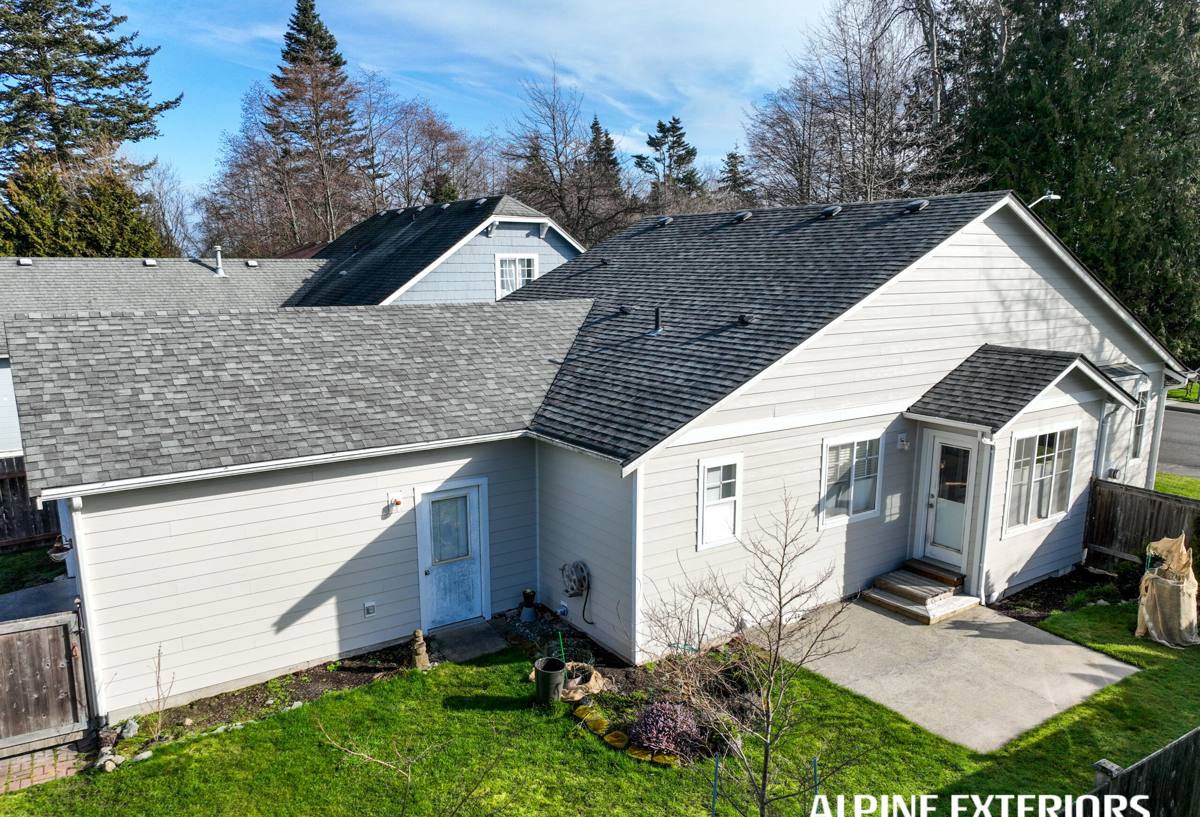
What Columbia Homes Are Up Against
Bellingham's climate is generally mild, but "mild" doesn't mean easy on a house. A few specific stresses show up over and over in this part of town:
Salt Air and Moisture
Columbia's proximity to Bellingham Bay means homes here take on a low but steady dose of salt-laden air, especially on days with wind off the water. Salt air accelerates corrosion on fasteners, flashing, and metal trim, and it works against paint and finish systems that aren't built to handle it. Over years, that steady exposure is part of why some exterior finishes chalk, fade, or fail faster here than they would twenty or thirty miles inland.
Driving Rain
Whatcom County doesn't get the heaviest rainfall totals in Western Washington, but it gets a lot of wind-driven rain — the kind that hits siding and window trim sideways rather than falling straight down. That matters more than total rainfall for how a home's envelope performs, because driving rain finds every gap in flashing, every under-caulked seam, and every place where a siding product wasn't installed with the right clearances.
A Long Moss Season
Shaded lots, damp air, and mild temperatures add up to a moss and algae season that runs most of the year in Columbia's tree-covered blocks. Moss on a roof holds moisture against shingles and underlayment far longer than open sky and sun would allow, and moss or algae streaking on siding is as much a signal of trapped moisture as it is a cosmetic issue.
Siding: Why We Install Only James Hardie Fiber Cement
We made a deliberate decision as a company to install James Hardie fiber cement siding exclusively — we don't install vinyl, LP SmartSide, Cemplank, Allura, primed spruce, or cedar. That's not a marketing position; it's a standard we hold because of what we've seen these products do (and not do) in exactly the conditions Columbia homes deal with.
What Fiber Cement Gets Right Here
James Hardie siding is non-combustible, dimensionally stable in wet-dry cycling, and finished at the factory with a baked-on ColorPlus coating that's engineered to resist fading and chalking better than field-applied paint. Hardie also builds region-specific product lines — its HZ5 formulation is engineered for the freeze-thaw and moisture patterns of the Pacific Northwest, which is a meaningful distinction when you're dealing with the wet-cold-wet cycles a Whatcom County winter and spring put a house through.
Why We Don't Install the Alternatives
Vinyl siding is inexpensive and low-maintenance in a general sense, but it's a thin plastic product that can warp in direct sun exposure, crack in cold snaps, and it simply isn't engineered to compete with fiber cement on fire performance or long-term rigidity. Wood-based composite sidings like LP SmartSide use engineered wood strand technology that performs reasonably well when installation and caulking are perfect and maintained forever, but any breach at a seam or fastener lets moisture into the wood substrate — and moisture intrusion into an engineered-wood product is much harder to reverse than moisture on the surface of fiber cement. Cedar and primed-spruce siding are honest, attractive materials, but they demand a maintenance cycle — refinishing, caulking, moisture monitoring — that most homeowners underestimate when they buy the house, and that maintenance burden only grows in a climate with Bellingham's rain and moss pressure. We'd rather put one product on a house that we know performs when installed correctly than offer five products and hope the maintenance gets done.
Siding Material Comparison
| Material | Moisture Resilience | Fire Rating | Maintenance | Typical Lifespan |
|---|---|---|---|---|
| James Hardie Fiber Cement | High — dimensionally stable, factory-sealed edges available | Non-combustible | Low — occasional wash, no repainting for years | 30-50+ years with correct install |
| Vinyl | Moderate — moisture passes behind panels | Combustible, can deform in heat | Low, but limited repair options | 20-30 years, sun/cold dependent |
| LP SmartSide / Wood Composite | Moderate — vulnerable at breached seams | Combustible (treated) | Moderate — caulk and paint upkeep | 20-30 years if maintained |
| Cedar / Primed Spruce | Lower — absorbs moisture, needs finish upkeep | Combustible | High — regular refinishing required | 15-25 years without diligent upkeep |
Roofing for Whatcom County Weather
Roofing in Columbia has to handle the same wind-driven rain and moss pressure as siding, plus direct sun and debris load from the neighborhood's tree canopy. We install and replace roofing systems with attention to the details that actually determine how long a roof lasts here: proper underlayment for wind-driven rain, ice-and-water shield at valleys and eaves, ventilation that keeps moisture from building up in the attic, and flashing details around chimneys and penetrations that are sealed to shed water rather than just cover the gap. A roof that looks fine from the ground can still be failing quietly at the flashing — that's usually where problems start in this climate, not in the field of the shingles themselves.
Windows and Decks: The Rest of the Envelope
Siding and roofing get most of the attention, but windows and decks are just as exposed to Bellingham's conditions, and they're often the weak point that undoes good siding and roofing work if they're not addressed together.
Windows
Older Columbia homes frequently still have original or early-replacement windows with failed seals, single-pane glass, or wood frames that have taken on moisture damage over the decades. When we replace siding around existing windows, we look closely at the flashing and integration between the window and the new siding — a beautiful siding job can still leak if the window flashing underneath it wasn't corrected first.
Decks
Decks in a shaded, damp neighborhood like Columbia deal with the same moss and moisture exposure as roofing, plus structural stress from freeze-thaw cycling at ledger boards and footings. We build and repair decks with attention to proper ledger flashing, joist protection, and drainage — the details that keep a deck from rotting from the inside out even when the surface boards still look fine.
What a Job Looks Like in Columbia
Every property in this neighborhood is a little different — some sit close to neighbors with tight side-yard access, some have mature trees that need protection during the job, and some older homes have sheathing or framing conditions that only become clear once old siding comes off. Our process accounts for that:
- An in-person assessment of the existing siding, roofing, or structure, including any moisture or rot found once we open things up
- A written scope that spells out materials, flashing details, and timeline before any work starts
- Protection of landscaping, driveways, and neighboring property during demolition and installation
- Installation to manufacturer specifications, especially clearances, fastener patterns, and flashing at windows, doors, and roof-wall intersections
- A final walkthrough so you know exactly what was done and what maintenance, if any, the new materials require
Choosing a Local Contractor
Whatcom County has plenty of contractors, and not all of them are set up to do exterior work correctly in this specific climate. A few things worth checking before you hire anyone for siding, roofing, window, or deck work in Columbia:
- Current Washington state contractor license and liability insurance, verifiable through the state's licensing lookup
- Manufacturer certification if you're installing a specific product line like James Hardie, not just general siding experience
- A written estimate that names specific products, not just "siding" or "roofing" as a line item
- References or past work you can actually see, ideally in a similar climate zone
- A clear answer on who handles permitting, and confirmation the work will pass local inspection
Maintenance and Longevity After Installation
Even the best materials benefit from basic upkeep in this climate. For Hardie siding, that usually means an occasional rinse to keep pollen, moss spores, and salt residue from building up, and periodic visual checks at trim and flashing joints. For roofing, keeping gutters and valleys clear of debris and addressing moss growth before it spreads makes a real difference in how long a roof performs. None of this requires the kind of ongoing refinishing that wood or engineered-wood siding demands — which is a large part of why we standardized on the products we did.
If you're planning siding, roofing, window, or deck work on a home in Columbia, we're happy to take a look and talk through what your house actually needs — no pressure, no upsell, just a straight assessment and a written estimate. The form below is the easiest way to get started.