 Bellingham
 Fairhaven's Exterior Climate: What Homes Are Actually Up Against
Fairhaven sits close to Bellingham Bay, which means homes here deal with a combination that inland Whatcom County neighborhoods don't face in the same way: salt-laden air rolling off the water, driving rain that comes in sideways during winter storms, and a long, damp shoulder season that keeps north-facing walls and shaded siding wet for weeks at a time. None of this is dramatic on its own. It's the steady, year-round accumulation that wears down exterior materials faster than homeowners expect.
Salt air is corrosive to fasteners, trim metal, and unprotected wood fibers. It also tends to hold moisture against a wall longer than dry inland air would, which matters more than the salt itself in most cases. Combine that with Bellingham's rainfall pattern — long stretches of light-to-moderate rain rather than short heavy downpours — and you get siding that's wet more often than it's dry for a good chunk of the year.
Moss Season Isn't Just a Roof Problem
Most people think of moss as a roofing issue, and it is, but in Fairhaven it shows up on siding too — especially on the shaded, north- and west-facing walls that don't get direct sun to dry out between rain events. Moss and algae growth on siding isn't just cosmetic. Where it takes hold, it holds moisture against the wall surface longer, which accelerates whatever degradation process the underlying material is already prone to.
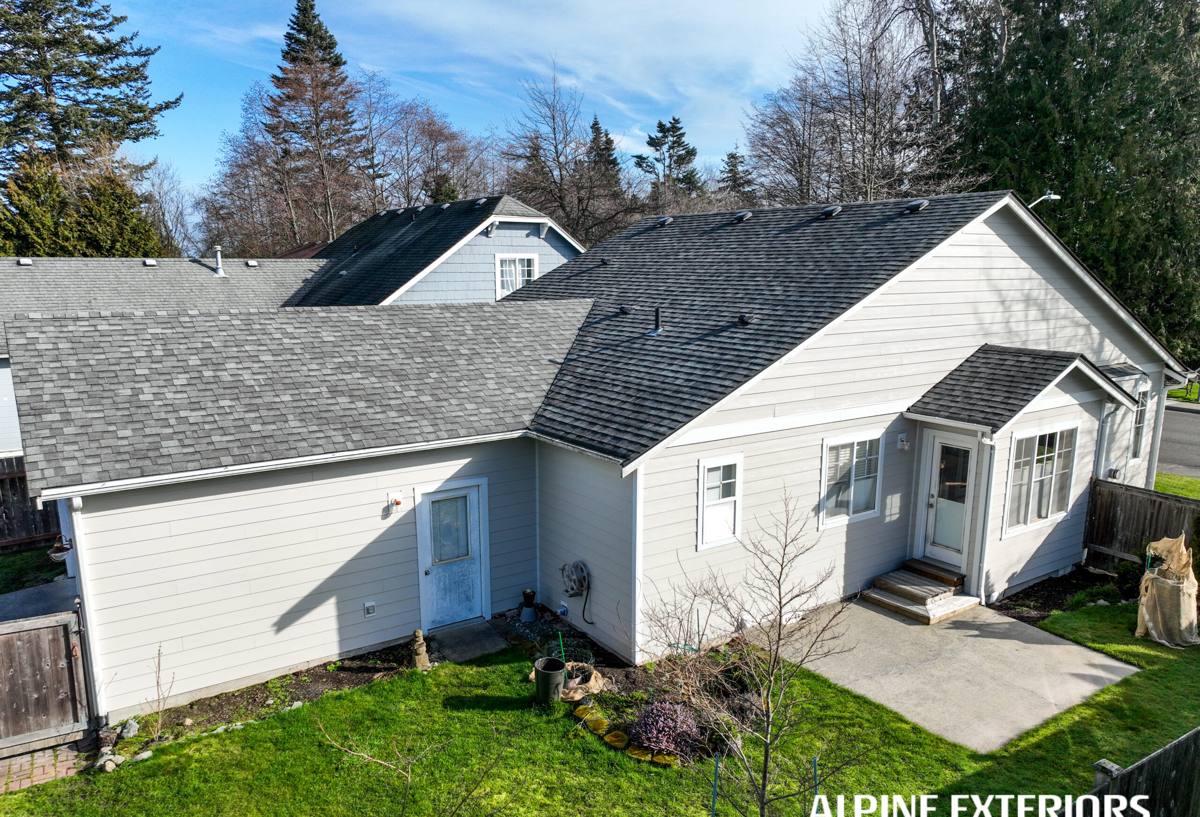
Why We Only Install James Hardie Fiber Cement
We get asked fairly often why we don't offer vinyl, LP SmartSide, cedar, or some of the other fiber cement brands on the market. The honest answer is that we've made a standard for our own installs, and it's based on what holds up over the long run in exactly the conditions Fairhaven sees: sustained moisture exposure, salt air, and long non-drying periods.
The Trade-Offs of the Alternatives
Vinyl siding is inexpensive and easy to install, and it does fine in a lot of climates. In a coastal, high-moisture environment, though, it expands and contracts more than fiber cement with temperature swings, seams can loosen over time, and it doesn't hold paint if a homeowner ever wants to change the color — you're stuck with the color it shipped in. Engineered wood products like LP SmartSide use a resin-treated wood strand core, which is a real improvement over old-school wood siding, but it's still an organic wood-based product at its core. If moisture gets behind it or into a cut edge that wasn't properly sealed, it's vulnerable to swelling and deterioration in a way that non-combustible fiber cement simply isn't. Cedar and primed spruce look great when new, but they demand a maintenance commitment — re-staining, re-caulking, re-painting — that most homeowners underestimate until they're a few years in, especially in a climate that keeps wood wet for extended stretches.
Other fiber cement brands, like Allura or Cemplank, are chemically similar to James Hardie's product — both are Portland cement-based composites. Where they tend to differ is in factory finish quality, product engineering for specific climates, and the depth of manufacturer support behind the warranty. We've standardized on Hardie because of its ColorPlus factory finish process, its HardieZone system engineered for specific regional climates, and a warranty structure we're comfortable standing behind.
What HardieZone HZ5 Means for This Area
James Hardie engineers its siding in different formulations for different climate zones across the country. The Pacific Northwest, including Whatcom County, falls into the HZ5 zone, which is formulated with moisture and freeze-thaw cycling in mind rather than the arid or high-heat conditions other zones are built for. That's a meaningful distinction — it means the product going on a Fairhaven home isn't a generic national siding, it's one matched to the specific way this region's weather behaves.
Why a Local Crew Matters More Than It Sounds
Siding installation is detail work, and the details that matter most in Fairhaven aren't the same ones that matter in a dry inland town. Flashing details at windows and doors, the gap left at the bottom of the siding for drainage, how trim is sealed against wind-driven rain, how the assembly handles a wall that stays damp for days — a crew that works this specific area regularly gets these details right by habit, not by reading a manual. Whatcom County's building department, permit requirements, and inspection expectations are also specific to the jurisdiction, and a crew that works locally knows what inspectors here are actually looking for.
There's also a simpler, practical reason local matters: if a question comes up two years after installation — a caulking line that needs attention, a question about warranty coverage — a local crew is the one that's still around, still reachable, and still familiar with your specific house.
Full Exterior Services for Fairhaven Homes
Siding rarely fails in isolation. The same climate factors that wear down siding — driving rain, salt air, prolonged moisture — put equal pressure on a roof, windows, and any exterior decking. We work across all four because they function as one connected system on a house, not four separate projects.
Roofing
A roof in poor condition undermines even the best siding installation, since water that gets past a compromised roofline often ends up running down behind the wall assembly. We look at the roof as part of any full exterior evaluation, not as a separate line item to upsell.
Windows
Window flashing and integration with the siding plane is one of the most common failure points on any home, coastal or not. When we replace siding, we pay close attention to how it terminates and seals around existing window openings — and where windows themselves are past their useful life, we can replace those as part of the same project.
Decks
Decks in this climate face the same driving-rain and prolonged-moisture exposure as siding, just horizontally instead of vertically, which means standing water and slower drying are the main enemies. We build and repair decks with the same attention to drainage and material selection that we bring to the rest of a home's exterior.
What Correct Siding Installation Looks Like Here
The product is only half the equation. James Hardie siding installed without attention to local conditions can still underperform, and installed correctly it's built to handle exactly what Fairhaven sees.
Key Installation Details We Hold To
- Proper clearance between the bottom edge of the siding and the ground, deck, or roofline to prevent constant moisture wicking
- Correct fastener type and spacing per Hardie's published installation specifications, not a generic approach borrowed from other siding types
- Weather-resistant barrier and flashing integration at every window, door, and penetration, sequenced so water sheds outward and down rather than behind the wall
- Factory-finished ColorPlus panels handled and cut in ways that preserve the factory edge seal wherever possible, minimizing exposed raw cut edges
- Caulking and joint treatment appropriate for a climate where materials are rarely bone-dry during installation
Comparing Siding Options for a Coastal Whatcom County Home
| Material | Moisture Behavior in This Climate | Maintenance Burden | Typical Longevity |
|---|---|---|---|
| Vinyl | Doesn't absorb moisture, but seams and panels can loosen with temperature cycling | Low, but not repaintable | Moderate, fades and becomes brittle over time |
| Cedar / primed spruce | Organic material, vulnerable to prolonged dampness without diligent upkeep | High — regular staining, sealing, or painting | Highly dependent on maintenance consistency |
| Engineered wood (LP SmartSide) | Improved over raw wood, but still wood-based and edge-sensitive | Moderate | Good with proper sealing and upkeep |
| James Hardie fiber cement | Non-combustible cement composite, engineered for this moisture zone (HZ5) | Low — factory finish reduces repainting needs | Long-term, backed by manufacturer warranty |
Signs a Fairhaven Home's Siding Needs Attention
Because of the moisture and moss factors specific to this area, siding problems here don't always look the way they would in a drier climate. Homeowners are often surprised at what turns out to be a siding issue versus what turns out to be something else entirely.
- Visible moss, algae, or dark streaking on north- or west-facing walls that doesn't wash off easily
- Soft spots or a spongy feel when pressed, especially near the bottom courses or around window trim
- Peeling or bubbling paint, which often signals moisture trapped underneath rather than just an aging paint job
- Visible gaps or separation at seams and corner trim
- A musty smell near exterior walls on the inside of the home, which can indicate moisture intrusion behind the siding
Maintenance Realities for a Salt-Air, High-Moisture Neighborhood
Even the lowest-maintenance siding benefits from basic upkeep in this environment. Periodic gentle washing to remove salt residue and organic growth, keeping gutters clear so water doesn't sheet down the wall face, and trimming back vegetation that keeps a wall shaded and damp all extend the life of any exterior system. This is one more reason James Hardie's factory-applied ColorPlus finish is worth the standard we hold to — it's engineered to resist the fading and moisture absorption that create more maintenance work in a climate like this one.
Getting Started
Every Fairhaven property faces this climate a little differently depending on how exposed it is to the water, how much shade it gets, and the age and condition of the existing exterior. If you're noticing moss buildup, aging siding, or you're just planning ahead, we're happy to take a look and talk through what your home actually needs — no pressure, no upsell, just a straight answer. Use the form below to request a free estimate.