 Bellingham
 Siding, Roofing, Windows, and Decks for Sehome
Sehome sits close to the heart of Bellingham, near Western Washington University and Sehome Hill, in a part of town with a mix of older bungalows, mid-century homes, and newer infill construction. That mix means exterior needs vary house to house: a 1940s home with decades of paint layers over old wood siding faces different problems than a 1980s build with its original vinyl or a newer house with a builder-grade fiber cement job. What ties them together is Whatcom County's climate, and it does not go easy on any exterior.
We're a local exterior contractor working across Bellingham and Whatcom County, and we handle siding, roofing, windows, and decks. This page is about siding specifically, since it's usually the first thing to show wear and the most expensive to get wrong — but the same climate logic applies to everything on the outside of a house.
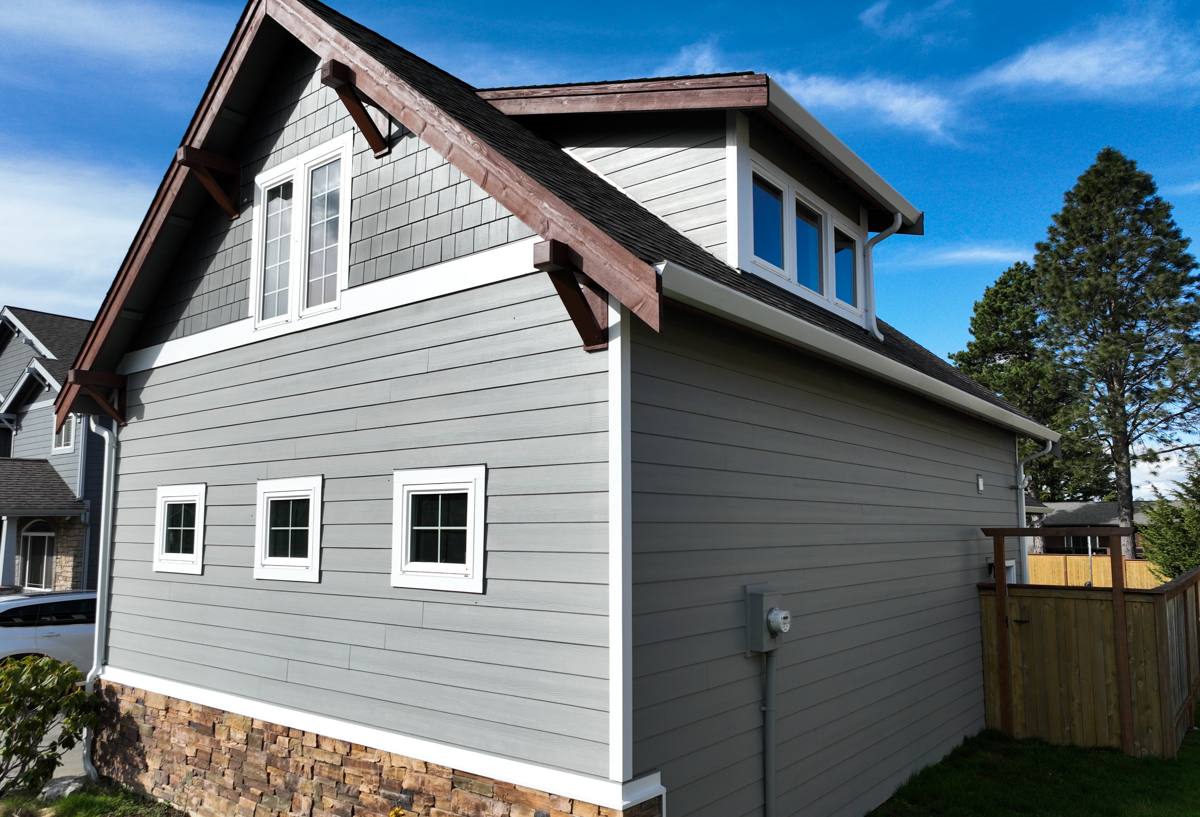
What the Climate Does to Sehome Homes
Bellingham sits on Bellingham Bay, and neighborhoods like Sehome get a steady dose of moist, salt-tinged marine air even without being right on the waterfront. Combine that with the region's driving rain — wind-blown rather than straight-down — and you get moisture finding its way into joints, laps, and fastener holes that a calmer climate would never test. Add a long, gray moss season that runs from fall through spring, and exterior surfaces stay damp and shaded for months at a stretch.
The three-part problem
- Salt air: accelerates corrosion on fasteners, flashing, and any metal trim that isn't properly rated or protected.
- Driving rain: pushes water sideways into siding laps, window flanges, and butt joints instead of letting it run straight off.
- Moss and algae: thrive on siding, roofing, and decking that stays damp in shade, holding moisture against the surface and, on wood-based products, feeding rot.
None of this is unusual for the area — it's just what Whatcom County exteriors deal with year-round. The problem is that a lot of siding products were engineered with a drier, milder climate in mind, and it shows over time.
Why We Install Only James Hardie Fiber Cement
We made a deliberate call as a company: we install James Hardie fiber cement siding, and we don't install vinyl, LP SmartSide, Cemplank, Allura, primed spruce, or cedar. That's not a marketing gimmick — it's a standard built around what actually holds up in a climate like Bellingham's.
Fiber cement is non-combustible, dimensionally stable, and doesn't rely on a paint film or wood substrate to keep water out. James Hardie's ColorPlus factory finish is baked on under controlled conditions, which gives it better adhesion and UV resistance than field-applied paint — and less maintenance is a real advantage in a place where ladder work in the rain isn't anyone's favorite job. Hardie also engineers regional product lines (HZ5 for colder, wetter climates) specifically for the kind of moisture cycling the Pacific Northwest sees.
What that means in practice for a Sehome home
- No swelling, rotting, or delaminating substrate the way wood-based or engineered wood products can experience when moisture gets behind them.
- A factory finish that resists fading and doesn't need repainting on the same schedule as field-painted wood trim.
- A material that doesn't feed mold or fungal growth the way organic substrates can once moss and algae take hold.
- A strong, transferable manufacturer warranty backing the product itself, on top of our installation workmanship.
Why We Don't Install the Alternatives
We're not going to tell you vinyl or LP SmartSide are junk — plenty of homes wear them without disaster. But here's the honest trade-off calculus that led us to standardize on Hardie:
| Product | Where it falls short here |
|---|---|
| Vinyl siding | Expands and contracts with temperature swings, can crack in cold snaps, and gives water an easy path behind panels at loose seams — a real issue under driving rain. |
| LP SmartSide | An engineered wood product — better than raw wood, but still wood-based, meaning any breach in the finish or caulk joints lets moisture attack the substrate over years of exposure. |
| Cemplank / Allura | Also fiber cement, but we've standardized on one manufacturer's system, finish process, and warranty structure rather than mixing brands across our crews and jobs. |
| Primed spruce / cedar | Beautiful, but high-maintenance — repainting cycles, vulnerability to moss and rot in shaded, damp spots, and ongoing upkeep costs that add up over the life of a home. |
Every one of these has a place in the market. We simply decided we'd rather stand behind one product system we trust fully than offer five and hedge our bets.
How a Siding Project Works in Sehome
1. Assessment
We look at the current siding condition, check for hidden moisture damage around windows, corners, and low-clearance areas (a common issue on older Sehome homes with mature landscaping close to the walls), and assess drainage, ventilation, and flashing details.
2. Water management first
Before a single piece of new siding goes up, the wall needs a proper weather-resistive barrier and flashing at every penetration — windows, doors, hose bibs, light fixtures. Driving rain punishes shortcuts here more than almost anywhere in the country.
3. Installation to spec
James Hardie siding has specific fastening patterns, clearances, and caulking requirements. Installed correctly, it performs as engineered. Installed loosely — wrong nail spacing, panels too close to grade or roofline, gaps at butt joints — even the best product can underperform. This is where a crew that installs Hardie daily, rather than occasionally, matters.
4. Finish and detail work
Trim, corners, and color-matched caulking finish the job so the whole system — not just the flat field of siding — resists the elements.
Roofing, Windows, and Decks Face the Same Climate
Since we handle the whole exterior, it's worth noting the same three stressors — salt air, driving rain, and moss — hit every component of a home's shell:
- Roofing: moss holds moisture against shingles and shortens their life; proper ventilation and moss-resistant materials matter more here than in drier regions.
- Windows: flashing integration between the window and the siding is one of the most common failure points we find on older homes — it's a detail, not an afterthought.
- Decks: exposed to the same driving rain and shade-driven moss growth, decking needs drainage and material choices that won't trap moisture against the structure.
Treating these as one connected system, rather than four separate trades, is part of why a coordinated local crew makes a difference.
Why a Local Crew Matters
A contractor who works across Bellingham and Whatcom County day in and day out has seen how a Sehome-area home ages differently than one out toward the county line or up in the foothills — microclimates here shift with elevation, tree cover, and proximity to the bay. That local pattern recognition shows up in small decisions: where to expect moss buildup first, which sides of a house take the worst of the driving rain, where flashing tends to fail on homes of a certain era. It's the kind of judgment that's hard to get from a crew passing through the region on a larger regional contract.
What to Look for When Hiring
- Manufacturer certification or documented training specific to fiber cement installation, not just general siding experience.
- A written scope that spells out flashing, house wrap, and fastening details — not just "install siding."
- Local references and a physical presence in Whatcom County, not just a sales office.
- Clear warranty terms in writing: what's covered by the manufacturer versus the installer.
- A straight answer when you ask why they do or don't install a particular product.
Cost Factors to Expect
| Factor | Why it affects your estimate |
|---|---|
| Existing siding removal | Tear-off and disposal of old material, especially multiple layers, adds labor time. |
| Substrate repair | Any rot or water damage found underneath needs to be repaired before new siding goes on. |
| Home size and complexity | Dormers, multiple stories, and detailed trim work all add installation time. |
| Product line and color | Hardie's HZ5 line and ColorPlus finish options vary somewhat in cost by style and color. |
| Access and site conditions | Mature landscaping, tight lot lines, and slope can affect staging and labor. |
If your Sehome home's siding is showing moss staining, soft spots, or you're just planning ahead before the next wet season sets in, we're happy to take a look. Reach out for a free, no-pressure estimate — the form below gets you started.