 Bellingham
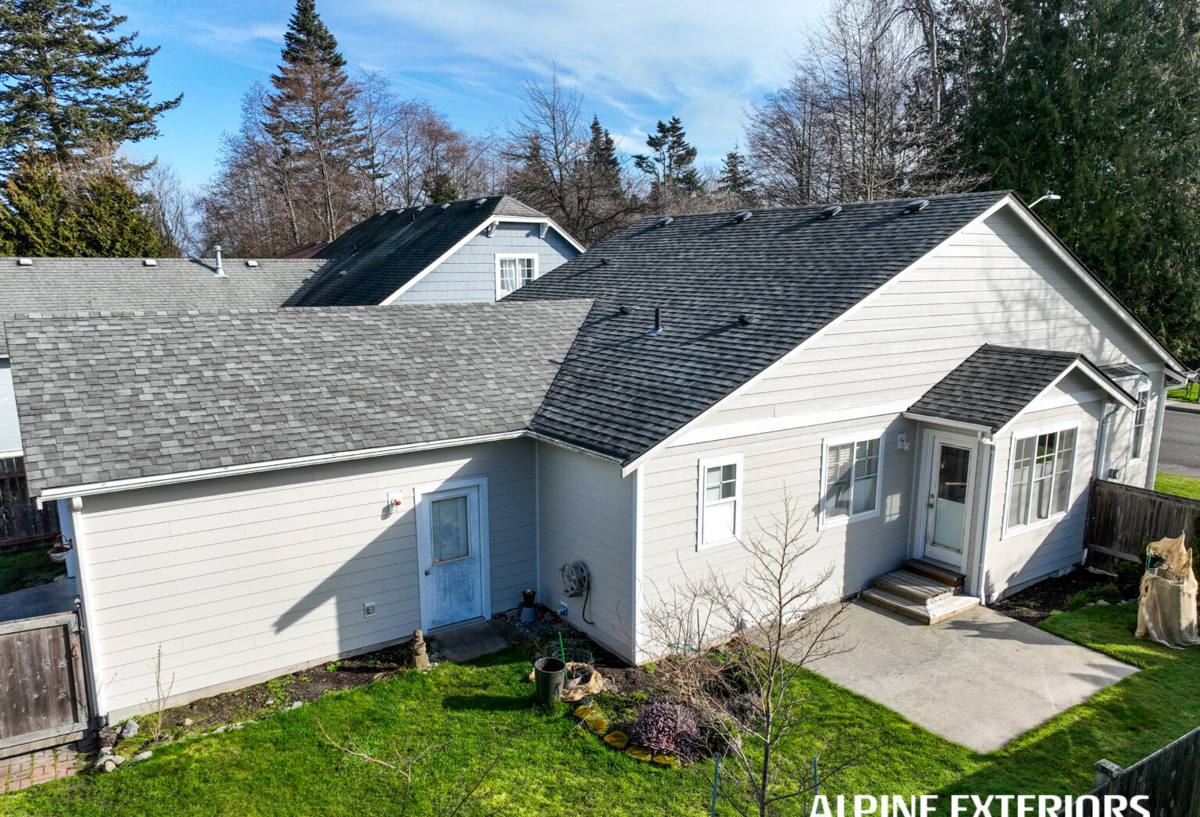
 Edgemoor sits along the water on Bellingham Bay, and that setting is exactly what makes the neighborhood beautiful — and exactly what makes it hard on a house. Homes here tend to sit under mature tree canopy, close to salt-laden air coming off the bay, and in the direct path of the wind-driven rain that rolls through Whatcom County most of the year. If you own a home in Edgemoor, you already know the drill: moss on the north side, green film creeping up the lower courses of siding, and trim that never seems to fully dry out between storms.
We're a Bellingham-based exterior contractor, and Edgemoor is squarely inside our regular service area. We install siding, roofing, windows, and decks, and we've standardized on one siding product for every home we side: James Hardie fiber cement. That's not a marketing angle — it's a decision we made after years of watching which products actually hold up in this specific climate, and which ones create years of maintenance headaches for homeowners who didn't know better going in.
What Edgemoor's Climate Actually Does to a House
Three things define exterior wear in this neighborhood, and they compound each other:
Salt Air Off the Bay
Proximity to Bellingham Bay means a steady, low-grade exposure to salt-laden moisture. It's not the same as a direct oceanfront property, but it's enough to accelerate corrosion on fasteners, hardware, and any exterior material that isn't engineered to resist it. Over years, this shows up as premature rust bleed at nail heads, pitting on lower-grade metal trim, and faster breakdown of finishes that weren't built for coastal-adjacent conditions.
Driving Rain
Whatcom County doesn't just get a lot of rain — a good portion of it comes in sideways, pushed by wind off the water. That matters because driving rain doesn't just fall on a wall, it gets forced into every seam, lap joint, and butt joint in the siding. A house can handle vertical rain with a mediocre water-resistive barrier and still be fine. Driving rain finds every weakness in the installation, not just the material.
A Long Moss Season
Heavy tree cover, shade, and near-constant moisture add up to a moss and algae season that runs most of the year in Edgemoor. Moss holds water against a surface far longer than open air ever would, which means whatever your siding is made of, it's dealing with sustained dampness for extended stretches — not occasional wetting.
Why We Only Install James Hardie
We get asked fairly often why we don't offer vinyl, LP SmartSide, or the various fiber cement alternatives like Cemplank or Allura. The honest answer: we used to install a broader range of products, and we kept ending up back at the same houses a few years later dealing with problems that traced back to the material, not the workmanship.
- Vinyl can warp, crack in cold snaps, and fade — and it doesn't hold paint well if a homeowner ever wants to change the color down the road.
- Engineered wood products (like LP SmartSide) perform fine in a lot of climates, but they rely on a wood-strand core and a factory treatment to resist moisture. In a place with this much sustained dampness and moss cover, any breach in that treatment — a scratch, a poorly sealed cut edge, a missed caulk joint — gives water a path into a wood-based core.
- Other fiber cement brands (Cemplank, Allura) are legitimate fiber cement products, and fiber cement as a category is the right call for this climate. Our decision to specialize in Hardie specifically comes down to their factory-applied ColorPlus finish, their HZ5 product engineering for wet Pacific Northwest conditions, and the depth of their installer network and warranty backing in this region.
James Hardie fiber cement is non-combustible, doesn't rot, doesn't feed moss growth the way wood-based products can, and holds its factory finish for a long time without the fading or chalking you see on lesser products after a decade of PNW weather.
The HardiePlank HZ5 Advantage for Waterfront-Adjacent Homes
Hardie engineers different product lines for different climate zones, and their HZ5 line is built specifically for regions like ours — high humidity, heavy rain, and freeze-thaw swings. For a neighborhood like Edgemoor, sitting close to the water with heavy tree cover, that climate engineering isn't a nice-to-have. It's the difference between siding that's designed for exactly these conditions and siding that's simply "compatible" with them.
What ColorPlus Finish Means for Maintenance
One of the biggest practical wins with Hardie is the factory-applied ColorPlus finish. It's baked on under controlled conditions rather than field-painted, which gives it much better resistance to fading and better adhesion over time. For a homeowner, that translates to fewer repaint cycles — a real consideration when your house is shaded, damp, and growing moss for most of the year.
How We Approach a Siding Project in Edgemoor
Every home in this neighborhood is a little different depending on how close it sits to the water, how much tree cover it has, and its age and construction. Our process starts with an honest look at the house, not a sales pitch.
| Step | What We're Checking |
|---|---|
| Exterior inspection | Existing siding condition, moss/algae buildup, signs of moisture intrusion at trim and penetrations |
| Sheathing check | Soft spots, rot, or water staining once old siding is removed |
| Water-resistive barrier | House wrap condition and whether it needs full replacement |
| Flashing detail review | Windows, doors, deck ledgers, and roof-to-wall transitions — the spots driving rain exploits first |
| Product and color selection | Hardie plank profile, exposure, and ColorPlus color matched to the home |
Installation Details That Matter More Here Than Elsewhere
Fiber cement is only as good as the installation behind it, and in a climate like this, sloppy detailing shows up fast. A few specifics we hold to on every job:
- Proper starter strip and rain-screen gap where the design calls for it, so water that does get behind the cladding can drain and dry
- Correct fastener type and placement to avoid the corrosion issues that come from mismatched hardware near salt air
- Factory-mitered and caulked joints at butt seams, since these are the weak points driving rain will find first
- Flashing integration at every window, door, and penetration — not just caulk as a substitute for flashing
- Proper clearance between siding and grade, decks, and roof lines to keep the bottom courses from sitting in standing moisture
Roofing, Windows, and Decks in the Same Climate
Siding doesn't work in isolation. A roof that's shedding granules or has failing flashing will feed water down behind good siding just as easily as bad siding will. Old single-pane or poorly sealed windows are a common source of the rot we find when we open up a wall. And decks — especially ledger boards and any wood in contact with a shaded, damp yard — are one of the most common places we find hidden moisture damage in this neighborhood. Because we handle all four trades, we look at the whole envelope of the house, not just the walls, and we can flag a roof or window issue before it undermines a new siding job.
Cost Factors Homeowners Should Understand
Every project is priced based on the specific house, but a few factors consistently move the number up or down:
| Factor | Why It Matters |
|---|---|
| Extent of hidden rot | Sheathing replacement adds cost but is non-negotiable if we find compromised wood |
| Home size and complexity | Dormers, multiple gables, and waterfront-facing elevations take more labor and detail work |
| Siding profile and accessories | Trim boards, corner details, and batten styles affect material cost |
| Access and site conditions | Slopes, tree cover, and proximity to the water can affect staging and protection measures |
| Existing barrier condition | A failed house wrap that needs full replacement adds scope beyond just the visible siding |
What to Look for in Any Contractor You Hire
Whether or not you end up working with us, a few things are worth confirming with any exterior contractor bidding on your Edgemoor home:
- Are they factory-trained or certified on the specific siding product they're proposing?
- Will they show you the sheathing before it's covered, or is "we'll handle it" the answer to rot questions?
- Do they specify fastener type and flashing details in writing, or leave it vague?
- Is the warranty backed by the manufacturer, the installer, or both — and what voids it?
- Do they have local references and a physical presence in Whatcom County, not just a regional franchise?
Edgemoor homes deserve exterior work that respects what this specific location does to a building — the salt air, the driving rain, and a moss season that doesn't really end. If you'd like an honest look at your home's siding, roofing, windows, or decks, we're happy to come out for a free, no-pressure estimate and walk through what we see.