 Bellingham
 Siding, Roofing, Windows, and Decks for Birchwood Homes
Birchwood sits in one of Bellingham's older, well-established residential pockets, with a housing stock that spans mid-century ramblers, split-levels, and newer infill construction along Birchwood Avenue and the surrounding streets. Homes here face the same exterior stresses as the rest of Whatcom County — but Birchwood's mix of mature tree canopy and proximity to Bellingham Bay means shade, moisture, and salt air all show up on siding, trim, and roofing at once. We've worked on exteriors throughout this neighborhood and the broader Bellingham area, and we size up every job the same way: what is this specific house, on this specific lot, actually up against?
This page covers what we look for on a Birchwood exterior, how our siding, roofing, window, and deck work fits together, and why we install exclusively James Hardie fiber cement siding rather than the vinyl, LP SmartSide, or wood products still common on older homes in the area.
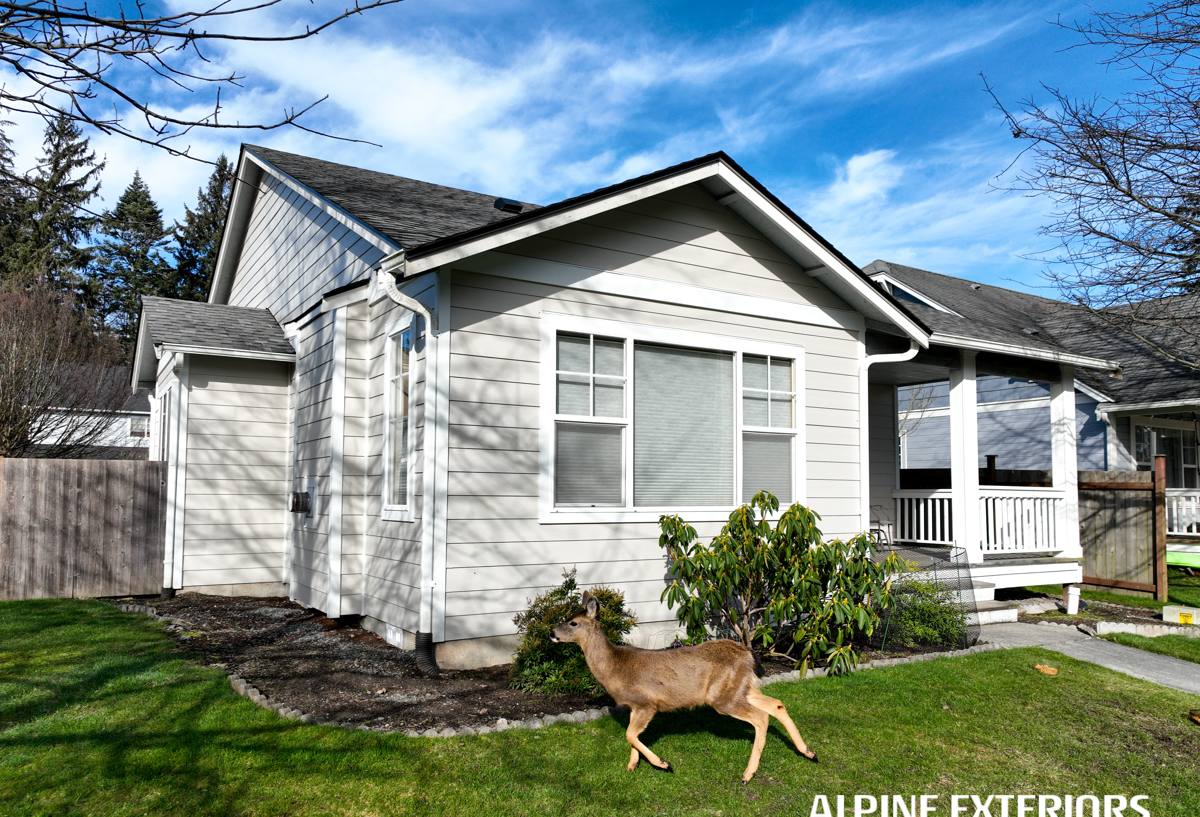
What Birchwood's Climate Does to Exteriors
Bellingham sits on Bellingham Bay, and Whatcom County's marine climate means Birchwood homes deal with a long, wet fall-through-spring stretch, moderate but persistent salt-laden air off the water, and enough shaded, tree-lined lots that siding and roofing rarely get a chance to dry out quickly after a storm. None of that is dramatic on its own — this isn't a hurricane zone — but it's relentless. Materials that aren't built for sustained moisture exposure fail slowly, from the inside out, long before the damage is obvious from the curb.
Salt Air
Bellingham Bay isn't the open ocean, but airborne salt still travels inland on wind and fog, especially on homes with more exposure toward the water. Salt-laden moisture accelerates corrosion on fasteners, flashing, and metal trim, and it degrades cheaper paint and coatings faster than a dry-climate finish would predict. It's a slow, cumulative effect — the kind that shows up as chalking, fading, and soft spots years before anyone budgeted for a repaint.
Driving Rain
Whatcom County rain isn't usually torrential, but it's frequent and often wind-driven, which pushes water sideways into seams, laps, and joints that a straight-down rain would never reach. Siding systems and window flashing have to be detailed for that reality — a product or installation that only handles vertical rainfall will eventually let water find its way behind the cladding.
Moss Season
Between the shade from mature trees and the long stretch of damp, mild weather, Birchwood roofs and north-facing siding runs deal with a genuine moss season — not just an occasional patch, but sustained growth that holds moisture against the surface for months at a time. On roofing, that means accelerated shingle wear and, if left unchecked, moisture tracking under the roofline. On siding, moss and algae growth on wood-based or poorly finished products can trap water against the substrate, which is exactly the condition that leads to rot.
Siding: Why We Install James Hardie and Nothing Else
We install James Hardie fiber cement siding exclusively. We don't install vinyl, LP SmartSide, Cemplank, Allura, primed spruce, or cedar. That's not a marketing position — it's a standard we hold because of what we've seen these products do (and not do) in exactly the climate Birchwood sits in.
Wood and Engineered Wood Siding
Cedar and primed spruce have real appeal — natural grain, a traditional look, and a long history in the Pacific Northwest. But wood siding needs consistent maintenance to survive a marine climate: repainting or resealing on a schedule, careful caulking, and vigilance about the shaded, damp spots where moss and mildew take hold first. LP SmartSide, an engineered wood product, improves on some of raw wood's weaknesses with resin-treated strand board, but it's still a wood-based substrate — if the factory finish is compromised at a cut edge, fastener hole, or seam, moisture can get into the core and cause swelling or delamination. In a neighborhood with as much shade and sustained dampness as Birchwood, that's a real risk over the life of the siding, not a hypothetical one.
Vinyl Siding
Vinyl is inexpensive and low-maintenance in the sense that it doesn't need repainting, but it's a thin, flexible plastic product that can warp in temperature swings, crack on impact in colder weather, and fade unevenly over time — especially on south- or west-facing walls that get more UV exposure. It also relies on overlapping panels rather than a continuous, factory-finished surface, which gives wind-driven rain more opportunities to work behind the cladding over the years.
Cemplank and Allura
Cemplank and Allura are both fiber cement products and share James Hardie's basic material advantages over wood and vinyl — they're non-combustible, dimensionally stable, and resistant to moss and rot in a way organic materials aren't. Where we've drawn the line is on the factory finish system, engineering specific to Pacific Northwest climate conditions, and the depth and transferability of the warranty. James Hardie's ColorPlus finish and HZ product lines are engineered specifically for high-moisture, temperature-variable climates like ours, and that engineering — plus a track record we can stand behind — is why it's the one product we put our name on.
James Hardie: What You're Actually Getting
- Non-combustible core — fiber cement doesn't feed a fire the way wood-based siding can.
- ColorPlus factory finish — baked-on color that resists fading and chalking far longer than field-applied paint, with touch-up product available for the rare nick or scratch.
- HZ5 engineering — Hardie's climate-specific product line built for regions with sustained moisture and temperature swings, which describes Whatcom County well.
- Dimensional stability — fiber cement doesn't swell, warp, or rot the way wood and engineered wood products can when moisture gets past the surface.
- Transferable warranty — a real, documented warranty that follows the house if it sells, which matters for resale value in a neighborhood like Birchwood.
None of that means James Hardie is maintenance-free forever — it still needs proper caulking upkeep and the occasional wash — but the maintenance burden and the failure modes are fundamentally different from wood, engineered wood, or vinyl, and that difference matters most in exactly the kind of shaded, damp, salt-air-adjacent conditions Birchwood sees.
Siding Material Comparison
| Material | Moisture Resistance | Maintenance | Fire Resistance | Typical Lifespan |
|---|---|---|---|---|
| James Hardie Fiber Cement | Excellent | Low | Non-combustible | 30-50+ years |
| Cedar / Primed Spruce | Fair (needs upkeep) | High | Combustible | 15-30 years with maintenance |
| LP SmartSide (Engineered Wood) | Good if finish intact | Moderate | Combustible | 20-30 years |
| Vinyl | Good, but seams leak over time | Low | Combustible (melts/warps) | 20-30 years |
| Other Fiber Cement (Cemplank, Allura) | Good | Low | Non-combustible | 25-40 years |
Roofing for Birchwood's Moss and Rain
Roofing in a moss-prone neighborhood like Birchwood is as much about prevention as installation. Proper attic and roof ventilation reduces the temperature and moisture differential that helps moss take hold in the first place, and correct flashing at every valley, penetration, and roof-wall intersection is what actually keeps wind-driven rain out — not the shingle field itself. We install roofing systems suited to the sustained damp conditions here, with attention to the details that matter most in this climate: ice-and-water shield at vulnerable areas, properly lapped underlayment, and flashing details that account for how water actually moves on a shaded, moss-prone roof.
Windows That Hold Up to Wind-Driven Rain
Older Birchwood homes often still have original or early-replacement windows that were never sealed or flashed to modern standards. When wind-driven rain is a regular occurrence, window flashing integration with the surrounding siding is what actually prevents leaks — not just the window unit itself. When we replace windows, we integrate the flashing with the siding installation so water is directed out and away at every sill and head, rather than relying on caulk alone to do that job over the long run.
Decks: Built for a Damp, Shaded Climate
Decks in Birchwood's shadier lots deal with the same slow-moisture problem as siding: wood that doesn't get much direct sun stays damp longer, which accelerates rot at ledger boards, joists, and anywhere two pieces of wood meet. Proper flashing at the ledger connection, adequate spacing between deck boards for drainage and airflow, and material choices suited to a low-sun exposure all matter more here than in a drier, sunnier climate. We build and repair decks with those specifics in mind rather than a one-size-fits-all approach.
Why a Local Crew Matters in Whatcom County
Exterior work in Bellingham isn't the same job as exterior work in a dry inland climate, and it shows in the details — flashing laps, ventilation calculations, caulking product selection, and how aggressively a crew accounts for moss and shade when planning a project timeline. A crew that works Whatcom County regularly knows which Birchwood lots run shadier and damper than others, understands how Bellingham's permitting and inspection process works, and isn't guessing at how a product will hold up here because they've already watched it hold up — or not — on other homes nearby.
What to Look for When Hiring an Exterior Contractor
- Washington state contractor license in good standing, plus proof of liability insurance
- Manufacturer certification for the specific siding product being installed (not just "experience with siding")
- A written scope of work that specifies flashing details, not just materials and color
- Willingness to explain trade-offs between products rather than pushing the cheapest option
- References or completed work you can actually see, ideally in a similar climate exposure
- A clear warranty explanation — both the manufacturer's product warranty and the contractor's workmanship warranty
Planning an Exterior Project in Birchwood
Most Birchwood exterior projects start with a straightforward question: is this a repair, a partial replacement, or a full re-side or re-roof? A house with isolated moisture damage on a shaded north wall might only need targeted repair and better ventilation, while a home with original siding or roofing from a prior decade is often past the point where patching makes financial sense. We walk the exterior, look at the specific exposure and shade patterns on your lot, and give you a straight answer about what the house actually needs — not an upsell.
If you're weighing a siding, roofing, window, or deck project on a Birchwood home, we're glad to take a look and put together a free, no-pressure estimate based on what your specific house and lot are dealing with.