 Bellingham
 Happy Valley sits close enough to Bellingham Bay to catch salt-laden marine air, close enough to the surrounding hillsides and tree canopy to stay damp and shaded much of the year, and squarely in the path of the wind-driven rain that rolls off the Salish Sea every fall and winter. That combination is exactly what wears out siding before its time, and it's why a siding replacement in this neighborhood needs to be planned differently than the same job in a drier, more exposed part of Whatcom County. This page covers what Happy Valley homes actually need from a siding replacement, what a correctly done job involves, and how our process works when we're on your street.
Why Happy Valley's Climate Is Hard on Siding
Three things work against exterior siding here at the same time. Salt air off Bellingham Bay is corrosive to fasteners, staples, and any metal trim that isn't properly rated or protected, and it accelerates the breakdown of coatings that aren't built for coastal exposure. Driving rain — wind-pushed rather than falling straight down — finds every gap in flashing, every under-caulked seam, and every place where siding was nailed too tight against the wall. And the moss season that defines a Pacific Northwest fall through spring turns shaded, tree-lined lots like the ones common in Happy Valley into ideal growing conditions for moss, algae, and mildew on anything that stays damp too long.
None of these factors are dramatic on their own. The damage they cause is slow and cumulative — a little bit of trapped moisture behind a panel this year, a little more paint failure next year, a fastener that starts weeping rust the year after. By the time it's visible from the sidewalk, the sheathing underneath has often been wet for longer than the homeowner realizes.
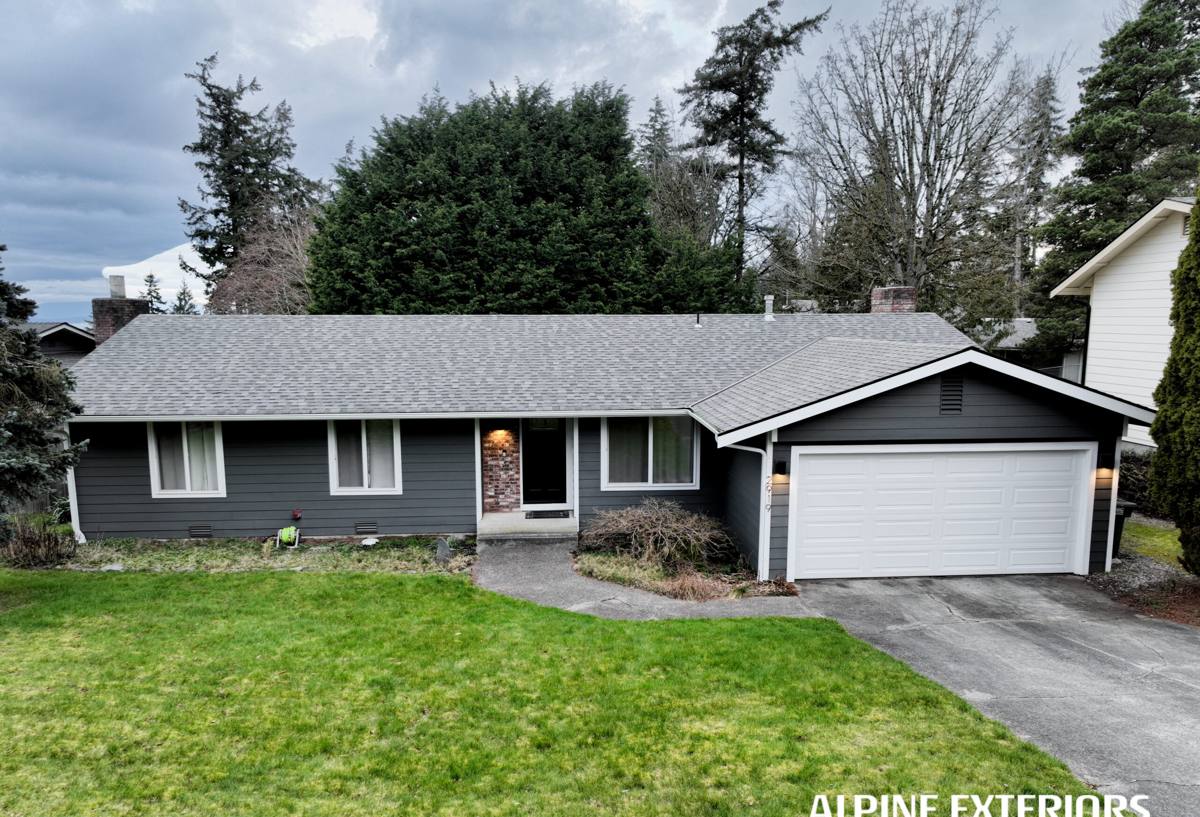
Signs Your Happy Valley Home Needs Siding Replacement
Not every issue means a full tear-off. But in this climate, waiting too long on the signs below usually turns a siding job into a siding-plus-sheathing job.
- Paint that's peeling, bubbling, or failing in the same spots year after year, especially on north- and west-facing walls that stay shaded and wet longest
- Soft or spongy spots when you press on the siding, particularly near the bottom courses, around window and door trim, and at any butt joints
- Persistent moss or dark streaking that comes back within a season or two of cleaning
- Visible cracking, warping, or delamination in the siding material itself
- Rust staining below nail heads or metal flashing — a sign the fasteners or flashing are corroding, not just the siding surface
- A musty smell or visible staining on interior walls that back up to exterior siding
- Siding that was installed directly over old siding, hiding whatever condition the original layer and sheathing are actually in
If you're only seeing one or two of these on an otherwise sound wall, a repair or targeted panel replacement may be enough. If you're seeing several, or if a moisture reading confirms the sheathing has been absorbing water, replacement is the honest recommendation — patching over a wet wall assembly just delays a bigger repair.
Repair vs. Replace: A Quick Gut Check
A single damaged panel from an isolated impact is a repair. Soft sheathing, chronic moss regrowth across multiple walls, and paint failure that keeps coming back after cleaning and repainting point to a wall assembly problem that repair alone won't fix.
What a Correct Siding Replacement Job Actually Involves
The visible siding is the last piece installed and the first thing anyone notices, but it's the layers underneath that determine whether the job holds up through another twenty Bellingham winters.
Tear-Off and Sheathing Inspection
Removing the old siding is also the only real chance to see what's happening behind it. We check the sheathing for soft spots, rot, and staining, and we replace any compromised sheathing before anything new goes back on the wall. Skipping this step and re-siding over damaged sheathing is one of the most common corners cut in this trade, and it's the fastest way to end up redoing the same wall in a few years.
Weather-Resistive Barrier and Flashing
Given how much wind-driven rain Happy Valley sees, the weather-resistive barrier (WRB) and flashing details matter as much as the siding itself. Housewrap or building paper needs to be lapped correctly — upper courses over lower ones, so water sheds down and out rather than working its way behind a seam. Window and door flashing needs to integrate with the WRB in the right order, and every penetration (hose bibs, vents, light fixtures, deck ledgers) needs its own flashing or sealant detail rather than a bead of caulk asked to do all the work.
Fastening, Clearances, and Drainage
Fiber cement siding needs to be fastened correctly — not too loose, not driven so tight it cracks the board or restricts the drainage plane behind it. It also needs proper clearance from grade, roof lines, decks, and hardscaping so water has somewhere to go instead of wicking up into the bottom edge of the siding. In a neighborhood with mature landscaping and shaded lots, we also pay attention to clearance from shrubs and trees that hold moisture against the wall longer than an open, sunny wall would ever see.
Why We Install Only James Hardie Fiber Cement in Happy Valley
We standardized on James Hardie fiber cement and don't install vinyl, LP SmartSide, primed wood, or other fiber cement brands, and Happy Valley's climate is a good example of why. Fiber cement doesn't rot, doesn't feed moss and mildew the way untreated wood-based products can, and doesn't warp or buckle the way vinyl does when it's exposed to repeated wetting and temperature swings. Hardie's ColorPlus factory finish is baked on under controlled conditions rather than field-applied, which matters in a climate where field-applied paint has to cure and adhere under damp, cool conditions more often than not. Hardie also offers HZ5 product engineered for the freeze-thaw and moisture exposure typical of the Pacific Northwest, backed by a strong transferable warranty — but only when it's installed to spec, which is the part that depends entirely on the crew doing the work, not just the product in the truck.
What Drives the Cost of a Happy Valley Siding Replacement
Every home is different, but the factors below are what actually move the price on a project in this neighborhood — not a flat per-square-foot number pulled from somewhere else in the country.
| Cost Factor | Why It Matters Here |
|---|---|
| Sheathing condition | Moisture-damaged sheathing found during tear-off adds repair scope that can't be quoted until the old siding is off |
| Home size and number of stories | More wall area and taller walls mean more material, more labor, and more staging/access equipment |
| Existing siding type | Removing old fiber cement, wood, or multiple stacked layers takes longer than removing vinyl |
| Tree cover and moss buildup | Heavily shaded walls with established moss or algae growth need more prep before new siding goes up |
| Trim, window, and door count | More openings mean more flashing details and more cut-and-fit trim work |
| Siding profile and accessories | Lap width, shingle-style panels, and trim boards vary in material cost and install time |
We won't quote a number until we've actually seen your walls, but this table is a fair starting point for understanding why two houses of similar size can land at different prices.
Our Process, Start to Finish
- On-site assessment: We walk the exterior, check for soft spots and moisture, and look at drainage, grading, and tree cover specific to your lot.
- Written scope and estimate: You get a clear breakdown of what's being replaced, what siding line and color are proposed, and what's included — no vague allowances.
- Tear-off and sheathing repair: Old siding comes off, sheathing is inspected, and any compromised sections are replaced before anything new is installed.
- Weather barrier and flashing: WRB, flashing, and penetration details go in correctly the first time, since this is the layer that actually stops water.
- Hardie installation: Fastened, spaced, and finished to manufacturer specification so the warranty stays intact.
- Final walkthrough: We review the finished work with you and make sure trim, caulking, and paint touch-ups meet the standard we hold ourselves to.
Why Local Experience in Happy Valley Matters
A crew that already works this part of Bellingham knows what to expect before they even set up scaffolding. That means recognizing which walls will need extra moss and mildew prep because of shading, planning around wet-weather work windows that are longer here than in drier parts of Whatcom County, and knowing how the older housing stock in neighborhoods like this was originally built — which affects what's likely to be found once the old siding comes off. It also means understanding local permitting expectations and working efficiently within the tighter lots and mature landscaping typical of an established neighborhood, instead of treating every job like it's the first time we've worked in this kind of setting.
Living With Your New Siding: Moss and Maintenance in This Climate
Fiber cement dramatically reduces the maintenance burden compared to wood or vinyl, but no siding in this climate is maintenance-free. A little routine attention keeps a Happy Valley installation looking and performing the way it should for the long run.
- Rinse siding annually, and more often on shaded, north-facing walls prone to moss and algae
- Keep gutters clear so overflow doesn't run down the face of the siding
- Trim back branches and shrubs that hold moisture against the wall
- Re-caulk trim joints and penetrations if you notice gaps opening up over time
- Address any new soft spots or staining promptly rather than waiting for the next scheduled cleaning
If you're seeing signs of wear on your current siding, or you just want an honest read on whether your home needs repair or full replacement, we're happy to take a look. The estimate is free, there's no pressure, and you'll get a straight answer about what your home actually needs — fill out the form below to get started.