 Bellingham
 Storm Damage Roof Repair Built for Sudden Valley's Conditions
Sudden Valley sits in a pocket of Whatcom County where the roof over your head works harder than most people realize. The lakeside setting, the tree cover, and the wet Pacific Northwest weather pattern combine to create a specific set of roofing problems that don't show up the same way on a roof out on open ground closer to Bellingham proper. If you've had a windstorm come through, a heavy limb come down, or you've just noticed a leak after a hard rain, the repair needs to account for how this neighborhood's roofs actually fail — not a generic checklist.
This page covers what storm damage looks like on Sudden Valley homes, what a correct repair actually involves, and how we handle the job from the first call to the final inspection.
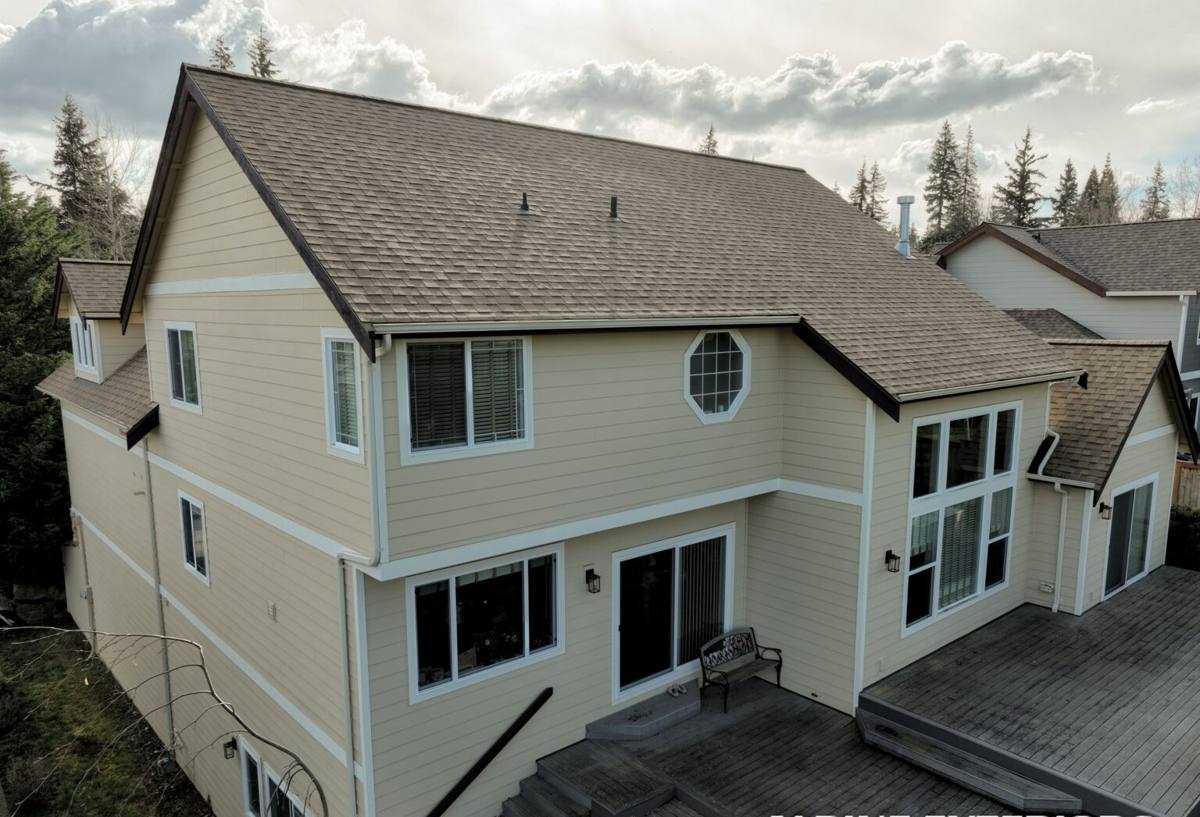
Why Storm Damage Hits This Area Differently
Three things stack up against roofs in and around Sudden Valley, and they compound each other rather than acting alone.
Wind Off the Water and Through the Trees
Being close to Lake Whatcom means wind doesn't always move in a straight line — it funnels, gusts, and shifts direction as it comes off the water and through wooded lots. That kind of turbulent wind is worse for shingles than a steady blow from one direction, because it works edges and ridgelines loose from multiple angles instead of just one.
Heavy Tree Cover
Many homes here sit under or near mature conifers. Trees do a lot of good — they block some wind and add privacy — but they also mean falling limbs, needle and cone buildup in valleys and gutters, and constant shade that keeps roof surfaces from drying out between storms. Wet debris sitting on a roof for days at a time is a slow, steady contributor to damage that a lot of homeowners don't connect to the storm that actually caused the initial problem.
A Long Moss Season
Whatcom County's wet fall-through-spring stretch gives moss months to establish itself, and shaded, tree-covered lots like the ones common in Sudden Valley are exactly where it thrives. Moss isn't just cosmetic — it holds moisture against the shingle surface, lifts shingle edges as it grows, and can turn a small storm-caused crack or lifted tab into a much bigger leak by keeping that spot wet long after the rain has stopped.
What Storm Damage Actually Looks Like Here
Not all storm damage is obvious from the ground, and not everything that looks dramatic is actually the most urgent problem. Here's what we typically find when we're called out after a storm in this area:
- Wind-lifted or missing shingles — usually along ridges, edges, and any place the roofline breaks (dormers, valleys, chimneys)
- Impact damage from falling limbs or cones — anything from cracked shingles to punctured decking, depending on the size of what came down
- Flashing pulled loose or bent — around chimneys, skylights, and roof-to-wall transitions, often the actual source of a leak that seems to be coming from "the roof" generally
- Gutter and downspout damage or blockage — needle and debris buildup that overflows during heavy rain and drives water up under the roof edge
- Moss-related lifting — shingle tabs that have been pried up gradually by moss growth, then finished off by wind
- Saturated or soft decking — the underlying wood sheathing has absorbed water, usually from a leak that's been active longer than the homeowner realized
A lot of these overlap. A windstorm might be the event that finally causes a leak, but the real cause is months of moss growth or debris buildup that had already compromised that section of roof. A proper repair addresses both — the storm damage itself and whatever made that spot vulnerable in the first place.
What a Correct Storm Damage Repair Involves
Storm repair work gets rushed more than almost any other roofing job, because homeowners understandably want the leak stopped immediately. That urgency is legitimate, but it shouldn't skip steps. A repair done right includes:
1. A Full Inspection, Not Just a Spot Check
We look at the whole roof, not just the area you can see the damage from the ground or attic. Wind and falling debris rarely damage just one spot — if one section took a hit, nearby areas usually have loosened material too, even if it hasn't failed yet.
2. Checking the Decking, Not Just the Shingles
If water has been getting in for any length of time, the plywood or OSB decking underneath may be soft or delaminating. Replacing shingles over compromised decking is a short-term fix that fails again quickly — the decking has to be sound before new roofing goes down over it.
3. Matching Materials Correctly
Patch repairs should use shingles that match the existing roof as closely as possible in style, weight, and color so the repair doesn't stand out or perform differently than the surrounding material. If your roof is older and the exact shingle is no longer made, we'll tell you honestly what the closest match looks like rather than guessing.
4. Flashing and Underlayment, Not Just Surface Shingles
Most leaks that look like "shingle problems" actually trace back to flashing or underlayment. A repair that only replaces visible shingles without checking the flashing underneath is treating the symptom, not the cause.
5. Addressing the Contributing Factor
If moss or debris buildup contributed to the damage, we'll flag it and recommend a treatment or cleaning plan so the same spot doesn't fail again next storm season.
Temporary Protection vs. Permanent Repair
If a storm has left your roof actively leaking, the first priority is stopping water intrusion — not necessarily the final repair. Here's how we think about the two stages:
| Stage | Purpose | Typical Timeline |
|---|---|---|
| Emergency tarp or temporary seal | Stop active water intrusion and prevent interior damage while materials or scheduling are sorted out | Same day to next day |
| Permanent repair | Replace damaged shingles, decking, and flashing with matching, properly installed materials | Typically within a few days to a week, weather permitting |
We're upfront that a tarp is a stopgap, not a fix. If a contractor tarps a roof and disappears for weeks, that's not a repair — it's a delay. We schedule the permanent work as soon as materials and weather allow, and we'll tell you honestly if a full section replacement makes more sense than patching, based on the age and condition of the surrounding roof.
What Drives the Cost of a Storm Repair
Every roof and every storm event is different, so we won't quote a number without seeing the damage. But these are the main factors that move a repair estimate up or down:
| Factor | Why It Matters |
|---|---|
| Extent of damage | A few lifted shingles is a small job; damaged decking or multiple sections raises material and labor cost |
| Roof access and pitch | Steep roofs, tall homes, or limited access around trees and landscaping take more time and equipment |
| Material match | Older or discontinued shingle lines can require sourcing a close match, which affects cost and lead time |
| Decking condition | Soft or rotted sheathing has to be replaced before new roofing goes on, which adds material and labor |
| Number of penetrations involved | Chimneys, skylights, and vents each need their own flashing work if they're near the damaged area |
Simple, localized shingle and flashing repairs are generally a modest expense measured in a few hundred dollars; jobs involving decking replacement or larger sections of roof climb from there. We'll walk you through exactly what's driving your number before any work starts.
Insurance and Storm Claims
Many storm repairs in this area do get covered, at least partially, by homeowner's insurance — but coverage depends on your policy and the cause of damage, and we're not the ones who make that determination. What we can do is document the damage clearly with photos and a written scope of work that you can hand to your adjuster, and describe honestly what we found and what caused it. We won't inflate a scope to chase a bigger payout, and we won't tell you something is storm-related if it looks like ordinary wear or long-term neglect instead. That honesty is worth more to you long-term than a claim that gets kicked back for overreach.
Preventing Repeat Damage
Because of the tree cover and moisture here, a one-time repair without any follow-up maintenance tends to have a shorter lifespan than the same repair on a more exposed, sunnier roof elsewhere in the county. A few habits make a real difference:
- Keep gutters and valleys clear of needles and debris, especially heading into fall
- Have moss treated before it establishes heavily, not after shingles are already lifting
- Trim back branches that overhang or brush against the roof surface
- After any significant windstorm, do a visual check from the ground for obviously missing or shifted shingles
- Get a roof inspected every couple of years even without an obvious problem, since slow leaks under shaded, moss-prone areas aren't always visible from inside the attic until they've been active for a while
Why Local Experience in Sudden Valley Matters
A repair crew that already works this neighborhood knows a few things that save time and prevent mistakes: how tree-heavy lots affect access and staging, how lake-driven wind patterns tend to hit certain roof orientations harder than others, and how aggressively moss establishes on shaded roofs here compared to more open parts of Bellingham. That familiarity means less guesswork, a more accurate first estimate, and a repair plan that accounts for what's likely to happen to that roof over the next few wet seasons — not just what's damaged today.
It also means faster response after a storm. When wind or falling debris hits a whole area at once, contractors who already know the neighborhood and its access points can get to your home and start assessing damage without wasting time.
When to Call Right Away vs. When to Schedule an Inspection
Not every storm-related issue is an emergency, but some are. As a general guide:
- Call immediately if you have active water coming into the house, visible daylight through the roof deck, or a large limb has struck the roof
- Schedule an inspection soon if you've noticed missing shingles from the ground, granules collecting in gutters after a storm, or a musty smell in the attic without an obvious leak
- Worth a look, not urgent if you simply want a post-storm check as a precaution after a significant windstorm passed through the area
If you're not sure which category your situation falls into, describe what you're seeing and we'll help you figure out how quickly it needs attention.
If a recent storm has left your Sudden Valley roof damaged — or you just want an honest look after a hard windstorm — we're happy to come out, inspect it, and give you a straight answer about what's needed. Use the form below to request a free, no-pressure estimate.