 Bellingham
 Roofing in Sudden Valley: A Different Set of Problems
Sudden Valley sits close to Lake Whatcom, tucked into tree cover and hillside terrain that shapes almost every roofing decision homeowners here make. It's a different environment than a roof out on open ground closer to Bellingham Bay. Shade from mature trees keeps moisture sitting on the roof deck longer after a storm, needles and debris build up in valleys and behind chimneys, and the combination of shade and humidity gives moss a long runway to establish itself. Add in the marine air that moves through Whatcom County off the Salish Sea, and you've got a roof that's dealing with salt-laden moisture, driving rain off the water, and a moss season that can run most of the year if nothing is done about it.
None of that is exotic — it's normal Pacific Northwest roofing. But it does mean a roof replacement here isn't a generic job. The right materials, the right ventilation setup, and the right detailing around valleys and penetrations matter more in Sudden Valley than they would in a drier, more exposed part of the county.
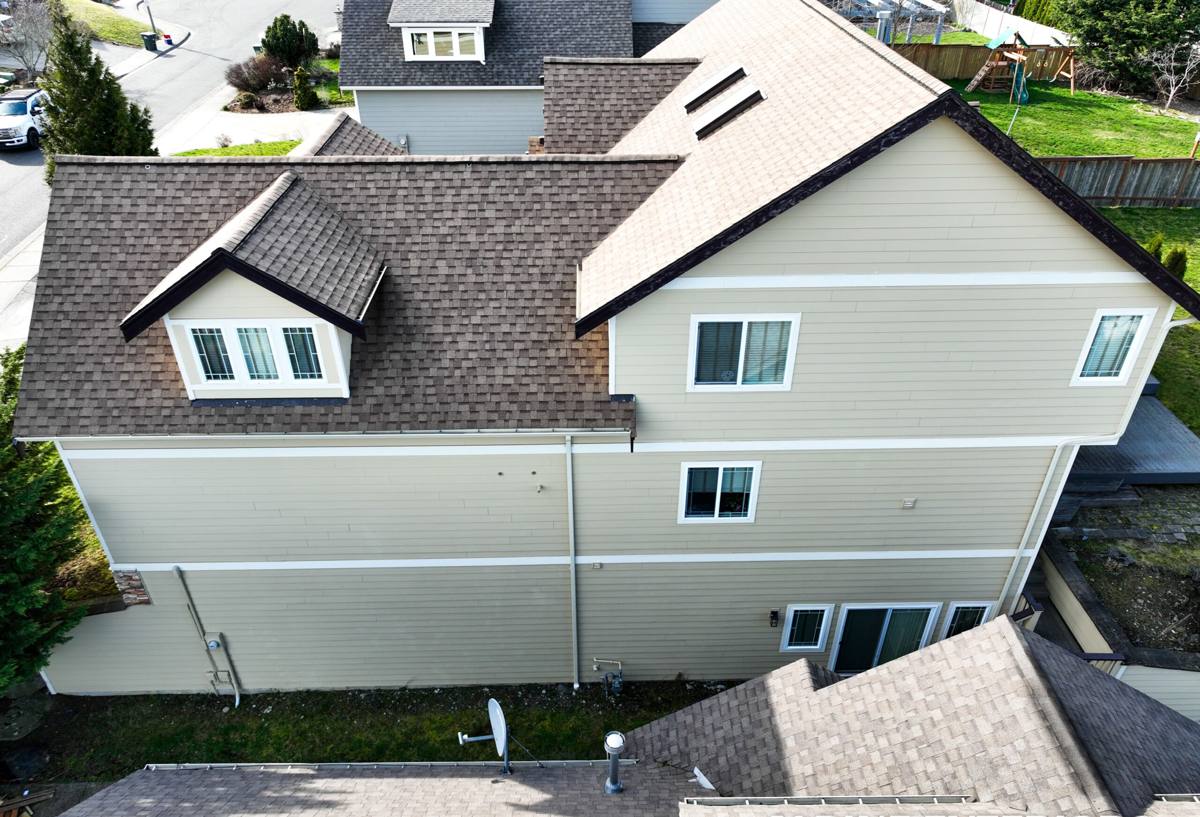
What Bellingham's Climate Does to a Roof Over Time
Moss and Organic Growth
Moss is the single biggest cosmetic and functional issue we see on roofs in this part of Whatcom County. It's not just unsightly — moss holds moisture against the roofing material, works its way under shingle tabs and shakes, and over years it lifts edges and accelerates granule loss on asphalt shingles. On shaded lots like many in Sudden Valley, moss can return within a season or two of cleaning if the roof isn't replaced with growth-resistant materials and proper airflow underneath.
Driving Rain and Wind-Driven Moisture
Storms coming off the water don't just drop rain straight down — wind pushes it sideways and up under laps, ridge caps, and flashing that would be fine in a calmer climate. Underlayment quality and flashing detail work harder here than they do in most of the country.
Salt Air and Metal Components
Even set back from the immediate shoreline, homes in this area get enough salt-laden air moving through to accelerate corrosion on unprotected metal — flashing, fasteners, vent caps, and gutter hardware. Cheap or bare metal components show rust and pitting years before they should.
Signs a Sudden Valley Roof Needs Replacing, Not Patching
- Moss covering more than isolated patches, especially on north-facing or shaded slopes
- Granules collecting in gutters or at downspout outlets
- Shingles that are cupping, curling, or have lifted tabs
- Soft spots or sagging felt underfoot on the roof deck
- Daylight visible through the attic roof boards
- Repeated leaks around the same valley, chimney, or skylight despite prior repairs
- Roof is 20+ years old (asphalt) or showing widespread wear regardless of age
- Rising energy bills tied to poor attic ventilation or insulation loss through the roof deck
A roof with a few of these issues in one spot might just need a repair. A roof showing several of them across multiple areas is usually past the point where patching makes financial sense.
What a Correct Roof Replacement Involves Here
Tear-Off and Deck Inspection
We remove the existing roofing down to the deck rather than layering over it. That's the only way to actually see what's underneath — soft or rotted decking, especially near valleys and eaves where moisture collects longest under tree cover, has to be found and replaced before anything new goes down. Roofing over a compromised deck just hides the problem for a few more years.
Underlayment Built for Wet Climates
Given how much wind-driven rain this area sees, we don't treat underlayment as an afterthought. Ice-and-water shield or a comparable self-adhering membrane goes in valleys, around penetrations, and along eaves — the spots where wind-driven moisture is most likely to find a way in.
Ventilation That Actually Moves Air
Balanced intake and exhaust ventilation is one of the most overlooked parts of a roof system, and it matters more under tree cover where the roof deck doesn't get much sun to dry out. Proper ventilation reduces the moisture sitting under the roofing material, which directly slows moss and mildew growth and extends the life of the materials above it.
Flashing and Metal Detail Work
Given the salt air exposure, we use corrosion-resistant flashing and fasteners rather than the bare minimum. Step flashing at walls, proper valley metal, and sealed penetrations around vents and chimneys are where most roof leaks actually originate — not in the field of the roof itself.
Material Selection for Shade and Moss Exposure
For heavily shaded, moss-prone properties, we'll walk through options that include algae- and moss-resistant shingle lines, and where it fits the home and budget, metal roofing, which sheds moss and debris far more effectively than a textured surface. There's no single right answer for every roof — it depends on the home's exposure, roof pitch, and the owner's budget and maintenance appetite.
Comparing Roofing Options for a Shaded, Moss-Prone Lot
| Material | Moss Resistance | Typical Lifespan | Maintenance | Notes for This Area |
|---|---|---|---|---|
| Standard asphalt shingle | Low without treatment | 15-25 years | Periodic moss treatment/cleaning | Budget-friendly; needs algae-resistant granules to hold up under shade |
| Algae/moss-resistant shingle | Moderate to good | 20-30 years | Lower, but not maintenance-free | Worth the upcharge on shaded Sudden Valley lots |
| Metal roofing | Best | 40-50+ years | Low | Sheds moss and debris well; higher upfront cost |
| Cedar shake | Poor without upkeep | 20-30 years with maintenance | High | Attractive but demands regular treatment in this climate |
We'll talk through where your home falls on this table based on tree cover, roof pitch, and how much upkeep you actually want to do. There's no obligation to pick the most expensive option — plenty of Sudden Valley homes do fine on a well-installed algae-resistant shingle roof with good ventilation.
Our Process for a Sudden Valley Roof Replacement
- On-site inspection — we walk the roof and attic, check for deck damage, ventilation gaps, and the extent of moss or moisture issues specific to your lot's tree cover and exposure.
- Written estimate — a clear breakdown of material options, scope, and cost so you can compare choices without guesswork.
- Scheduling around weather — we plan tear-off and dry-in around Bellingham's rain patterns to minimize the window your home is exposed.
- Tear-off and deck repair — full removal, deck inspection, and replacement of any compromised sheathing.
- Underlayment, flashing, and ventilation install — the layers that do the real work of keeping water and moisture out over time.
- Final roofing material installation — installed to manufacturer spec so warranty coverage stays intact.
- Cleanup and walkthrough — site cleared of debris and nails, and we go over the finished roof and any maintenance recommendations with you.
Why a Crew That Already Works Sudden Valley Matters
Roofing crews that mostly work drier, more exposed parts of the county sometimes underbuild for conditions here — lighter underlayment, standard ventilation calculations that don't account for heavy tree shade, or flashing hardware that isn't rated for salt air exposure. None of that shows up as a problem on day one. It shows up in year three or four as a leak, premature moss return, or corroded flashing.
Working this neighborhood regularly means we already know how tree cover and lake-adjacent humidity behave on a roof deck, what ventilation setups actually keep moss from coming back fast, and which flashing and fastener grades hold up against the salt air moving through this part of Whatcom County. That's not a marketing point — it's the difference between a roof that needs attention again in a few years and one that goes the distance.
What This Typically Costs
Roof replacement pricing depends on roof size, pitch, tear-off complexity, deck condition, and material choice, so we won't quote a number without seeing the roof. In general terms, a straightforward asphalt shingle replacement on an average-size home runs toward the lower to middle end of the roofing cost spectrum, while metal roofing or complex rooflines with multiple valleys and steep pitches — common on hillside lots in this area — run higher. We'll give you a specific, itemized number after the inspection, not a ballpark pulled out of thin air.
Maintenance After Your New Roof Goes In
- Schedule a moss treatment or gentle cleaning roughly once a year on shaded slopes
- Keep gutters clear of needles and debris so water isn't backing up under the eaves
- Trim back overhanging branches where practical to reduce shade and debris load
- Have the roof and attic ventilation checked every few years, especially after major storms
- Address small leaks or lifted shingles right away rather than waiting for the next inspection cycle
A well-installed roof still needs basic upkeep in this climate — skipping it is the fastest way to shorten the lifespan of even a good roofing job.
If your Sudden Valley roof is showing moss, wear, or age, we're happy to come take a look and give you a straight assessment — no pressure, no upsell, just what we see and what it would take to fix it right. Use the form below to request a free estimate.