 Bellingham
 Building a Deck That Can Actually Handle Bellingham Weather
A deck in Barkley has to earn its keep. This part of Whatcom County sits close enough to Bellingham Bay that salt-laden air reaches yards year-round, and the region's long, wet stretch of fall-through-spring weather means any deck here spends more months damp than dry. Add in a moss season that can run six months or longer in shaded yards, and you've got a structure that's under constant low-grade attack from the day it's built. A deck that would hold up fine in a drier inland climate can start showing problems in Bellingham within a couple of seasons if it wasn't built with this specific combination of moisture, salt, and shade in mind.
That doesn't mean building here is complicated — it means it has to be done deliberately. The framing, fasteners, flashing details, and material choices that work in Barkley aren't exotic, but skipping any one of them is exactly how decks end up with soft joists, rusted hardware, or slick, moss-covered boards well before their time.
Barkley's Housing Mix Creates Its Own Deck Challenges
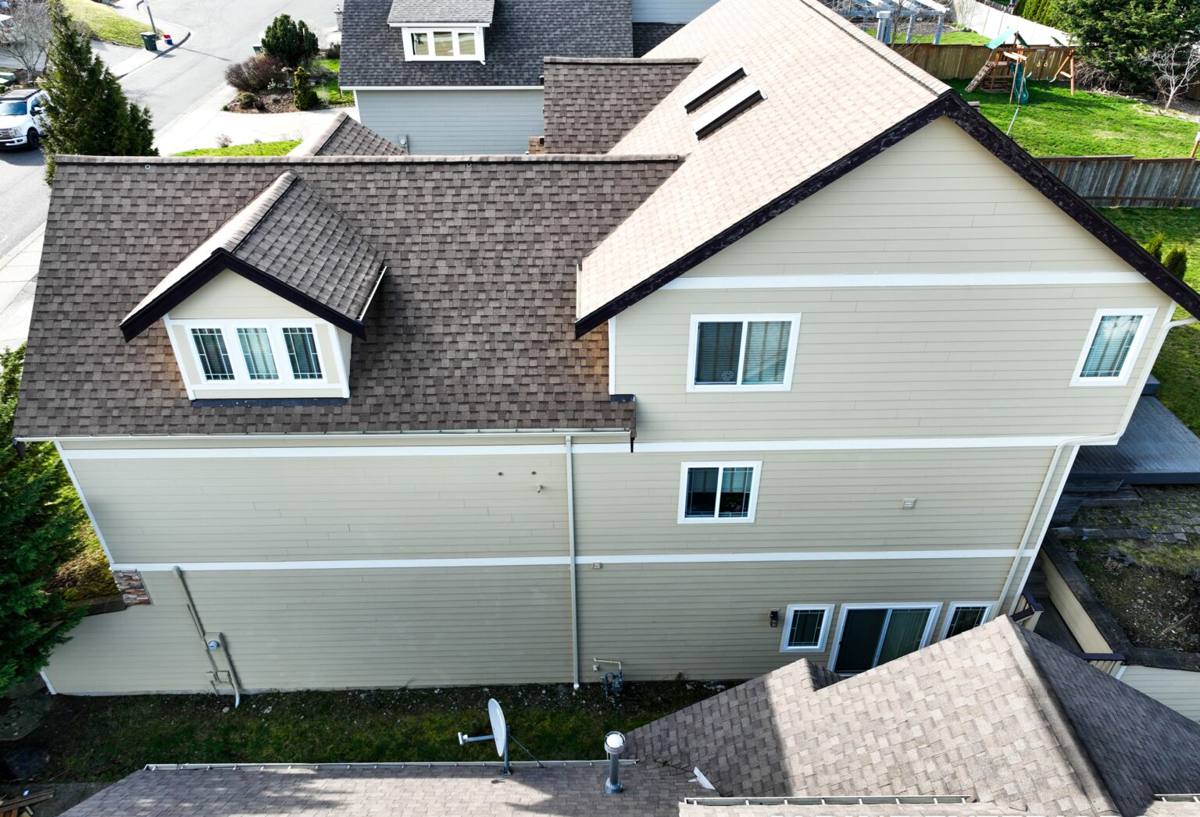
Barkley is one of Bellingham's newer planned neighborhoods, developed over the past couple of decades with a mix of single-family homes, townhomes, and multi-family buildings. That mix matters for deck work in a few practical ways. Newer homes often have smaller, more defined backyards, which means deck footprints need to be planned tightly around property lines, utility easements, and sometimes shared fencing or HOA guidelines. Many lots also carry mature or maturing landscaping now that the neighborhood has had time to grow in, and shade from trees and neighboring structures is a major driver of moss and mildew buildup on decking, railings, and stair treads.
If your property is part of a homeowners' association, there may be design guidelines around railing style, decking color, or fence-line structures that need to be checked before a project starts. We'd rather catch that in the planning stage than after materials are ordered.
What This Means for Design
- Orientation and shade patterns should factor into material choice, not just aesthetics
- Drainage needs to be planned around existing grading, since many newer lots have limited natural runoff paths
- Railing and fascia choices may need to match neighborhood or HOA expectations
- Smaller lots often benefit from multi-level or built-in-seating designs that maximize usable space
Decking Materials: What Holds Up in This Climate
There's no single "best" decking material — there's a best material for your budget, your sun/shade exposure, and how much upkeep you're willing to do. In a climate like ours, the honest trade-offs are worth laying out plainly rather than pushing whatever has the highest margin.
Wood (Cedar and Pressure-Treated)
Cedar is a strong regional choice — it's naturally rot- and insect-resistant and has the classic Pacific Northwest look, but it still needs regular sealing to fight moss growth and UV graying, especially on shaded lots common in Barkley. Pressure-treated fir or hem-fir is more budget-friendly and structurally solid, but it's less naturally resistant to moisture and needs a consistent maintenance schedule to avoid checking, splintering, or fungal staining.
Composite Decking
Composite boards resist moisture absorption and won't rot, which takes one major maintenance headache off the table. The trade-off is that composite can still grow moss or algae film on its surface in heavily shaded, damp spots — it just won't degrade the board underneath the way wood can. It also costs more upfront, and lower-quality composite can fade or become brittle over time, so product selection matters.
PVC / Capped Polymer Decking
Fully capped PVC decking is the most moisture-indifferent option and holds up well to salt air, but it's the highest upfront cost and can have a different feel underfoot than wood or composite. For homeowners who want to minimize maintenance for the long haul and don't mind the price difference, it's a legitimate option — we just make sure clients understand the cost-to-maintenance trade-off before committing.
| Material | Upfront Cost | Moisture Resistance | Moss/Algae Resistance | Maintenance |
|---|---|---|---|---|
| Cedar | Moderate | Good, needs sealing | Fair — needs cleaning/treating | Annual sealing recommended |
| Pressure-Treated Wood | Lowest | Fair, treatment-dependent | Fair — needs cleaning/treating | Regular sealing/staining |
| Composite | Moderate-High | Very good | Good, surface cleaning still needed | Periodic washing |
| Capped PVC | Highest | Excellent | Good, surface cleaning still needed | Minimal |
What a Correctly Built Deck Involves
The decking surface gets all the attention, but the structure underneath is what determines whether a deck lasts ten years or thirty in this climate. A few details we treat as non-negotiable:
Footings and Framing
Footings need to be sized and set to local frost and load requirements, on undisturbed or properly compacted soil — not just poured into whatever hole is convenient. In a region that gets sustained wet weather, footing drainage and concrete quality matter as much as depth.
Ledger Board Flashing
Where a deck attaches to the house, the ledger board connection is the single most common failure point we see on older or poorly built decks in wet climates. Proper flashing — not just caulk — is what keeps water from working its way behind the siding and into the rim joist. This is one detail that's invisible once the deck is finished, but it's the difference between a deck that lasts and one that causes rot damage to the house itself.
Fasteners and Hardware
Salt air accelerates corrosion on standard hardware. We use stainless steel or heavy hot-dip galvanized fasteners and connectors rated for ground contact and coastal exposure, not the cheapest hardware that happens to fit.
Airflow and Drainage
Boards need proper gapping for water to shed and air to circulate underneath — tight, poorly spaced decking traps moisture and speeds up both rot and moss growth. Overall deck slope away from the house also matters more here than in drier climates, since there's simply more water to move.
Our Process for a Barkley Deck Project
- Site visit and assessment — we look at your yard's sun/shade pattern, drainage, soil, and how the deck will connect to the house before we talk materials.
- Design and material selection — we walk through the honest trade-offs above based on your budget, maintenance appetite, and how the space will be used.
- Permitting — most new decks and many replacement decks in Bellingham require a building permit; we handle the application and inspections so you don't have to chase paperwork.
- Construction — footings, framing, flashing, and decking are installed in sequence, with each stage built to hold up to the specific demands of this climate.
- Final walkthrough — we go over the finished deck with you, including what maintenance it actually needs and on what schedule.
What Affects the Cost of a Custom Deck
Every deck project is different, but the same handful of factors drive most of the cost difference between a modest deck and a larger custom build. We give straight numbers during the estimate rather than a vague range — the table below is meant to help you understand what you're pricing, not to replace an actual quote.
| Cost Factor | Why It Matters |
|---|---|
| Square footage | The single biggest driver of material and labor cost |
| Decking material | Wood, composite, and PVC carry very different price points |
| Height off grade | Taller decks need more substantial footings, framing, and often guardrails |
| Railing style | Cable, glass, and custom railing systems cost more than standard baluster railing |
| Site access | Difficult access or steep/sloped yards increase labor time |
| Add-ons | Built-in seating, lighting, or multi-level layouts add cost but also usability |
| Permit requirements | Permit and inspection fees vary by scope and are part of an honest estimate |
Maintaining a Deck Through a Whatcom County Winter
Even the best-built deck needs some seasonal attention in this climate. Most of it is simple, but skipping it is how moss gets a foothold and moisture starts working into places it shouldn't.
- Clear leaves and debris from between boards regularly in fall — trapped organic material holds moisture and feeds moss
- Sweep or rinse shaded areas of the deck more often than sun-exposed areas, since they dry out slower
- Check and clear gaps around the ledger board and any flashing at least once a year
- Inspect fasteners and hardware periodically for rust staining, especially on decks closer to the water
- Reseal or restain wood decking on the manufacturer-recommended schedule — don't wait until it looks obviously weathered
- Wash composite or PVC decking with a mild cleaner in spring to remove winter algae film before it gets slick
- Keep an eye on drainage paths under and around the deck so water isn't pooling against footings or the house foundation
Permits and Local Code Considerations
Bellingham and Whatcom County have building code requirements that apply to most new decks and many deck replacements, covering things like footing depth, guardrail height on elevated decks, and stair rail requirements. These aren't optional extras — they're there because a deck that's structurally undersized or missing guardrails is a real safety issue, not just a code technicality. We handle the permit application and coordinate inspections as part of the build, so the process stays off your plate.
Why a Crew That Already Works in Barkley Makes a Difference
Deck-building know-how in the abstract only gets you so far. A crew that already works in Barkley has a feel for how the neighborhood's newer lots drain, which yards run shadier than they look, and what kind of soil conditions to expect when digging footings in this specific area. That local familiarity shortens the guesswork in the design phase and helps avoid surprises once digging starts. It also means we're a known, reachable local business if a warranty question or maintenance question comes up years down the road — not a crew that did one job in the area and moved on.
If you're thinking about a new deck or replacing one that's past its prime, we're happy to come take a look at your yard and talk through honest options. There's a free, no-pressure estimate form below — reach out and we'll walk the site with you and give you a straight answer on what it would take.