 Bellingham
 Why Cordata's Climate Is Harder on Siding Than It Looks
Cordata sits in the same marine-influenced weather pattern that covers all of north Bellingham and Whatcom County: long stretches of steady, low-intensity rain from fall through spring, humidity that rarely lets up, and salt-tinged air drifting in off the Puget Sound and Bellingham Bay. None of that is dramatic weather. There's no hail damage or hurricane story here. The damage this climate does is slower and quieter — and that's exactly why so many homeowners don't notice a siding problem until it's already expensive.
Driving rain, especially the wind-driven kind that comes through in fall storms, doesn't just hit siding — it gets pushed sideways into every seam, joint, and fastener hole that isn't detailed correctly. Add a moss season that can run eight or nine months out of the year on shaded, north-facing walls, and you've got a combination that punishes any siding material with weak points at the seams or a finish that can't shed moisture. Salt air adds a slower, corrosive layer on top of that, working on fasteners, trim, and any exposed metal flashing.
None of this means Cordata homes need anything exotic. It means they need siding installed by people who understand what this specific climate does over ten, fifteen, twenty years — not just what looks right on install day.
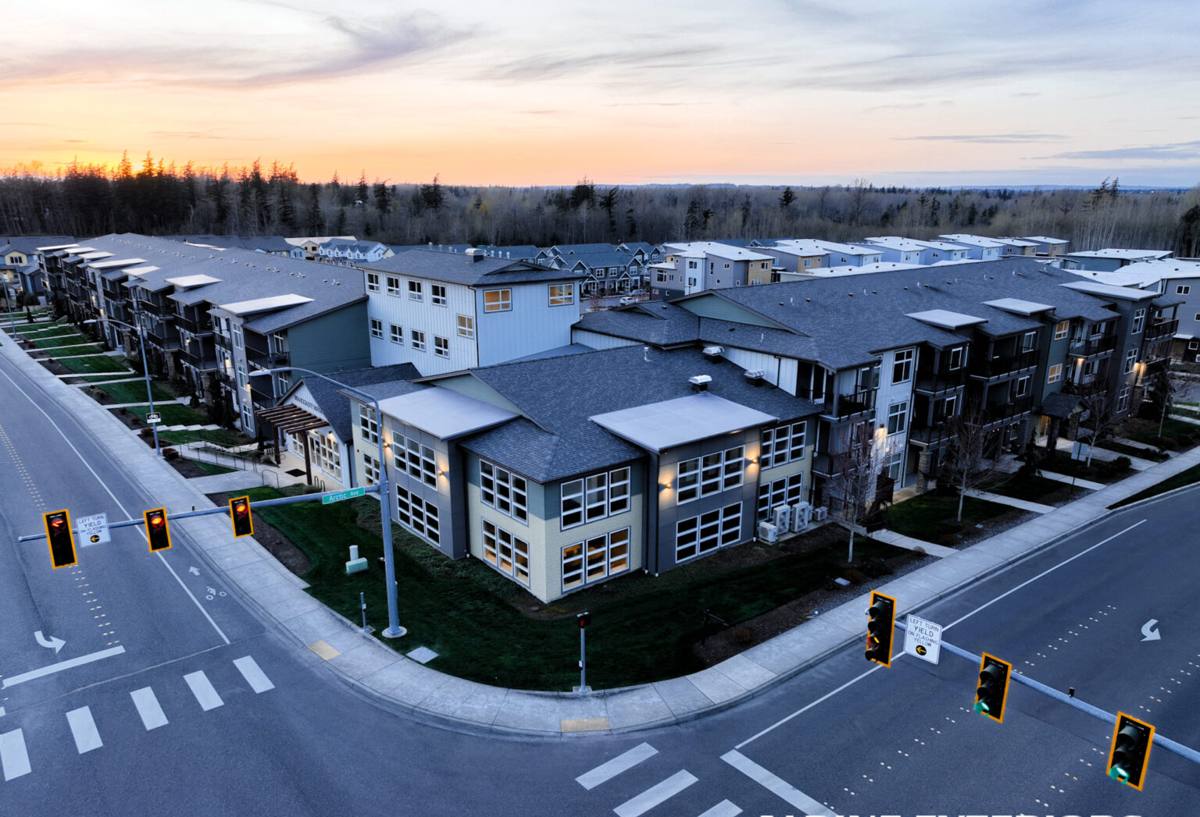
What "Correct" Siding Replacement Actually Means Here
Siding replacement is not just removing old boards and nailing up new ones. In this climate, most of what determines whether a job lasts is stuff you can't see once it's done. A correct replacement includes:
- Full tear-off, not overlay. Installing new siding over old siding or over damaged sheathing traps moisture and hides problems instead of solving them.
- Sheathing inspection and repair. Once the old siding is off, we check the wall sheathing for rot, soft spots, and prior water intrusion — especially around windows, doors, and any spot where trim used to meet siding.
- A proper weather-resistant barrier (WRB). This is the housewrap layer that manages any moisture that gets past the siding. It has to be installed with correct overlaps and sealed penetrations, not just stapled up quickly.
- Correct flashing at every penetration. Windows, doors, hose bibs, light fixtures, vents — every one of these needs flashing detailed to shed water down and out, not into the wall.
- Manufacturer-spec installation of the siding itself. Fastener type, spacing, clearance from grade and roof lines, and joint treatment all matter and are all spelled out by the manufacturer for a reason.
Skip any one of these steps and you can end up with a wall that looks finished but is already set up to fail in five to eight years — usually right around when the original installer is long gone.
Where Corners Get Cut Most Often
The two spots we see cut most often on prior installations in this region are the WRB overlaps and the clearance between siding and grade or hardscape. Both are invisible once the job is "done," and both are exactly where this region's rain and moss find their way in over time.
Why We Install Only James Hardie Fiber Cement
We don't install vinyl, LP SmartSide, primed spruce, cedar, or other fiber cement brands. That's a deliberate standard, not a sales pitch, and it comes directly from what holds up in this climate over the long run.
Fiber cement as a category resists moisture, rot, and pest damage far better than wood-based products, and it doesn't expand and contract with humidity swings the way vinyl does — which matters when a wall is damp more often than it's dry. Within fiber cement, we standardized on James Hardie specifically because of a few things that are hard to match:
- Climate-engineered product lines. Hardie makes HZ5 formulations specifically for wetter, colder climate zones, which the Pacific Northwest falls into.
- Factory-applied ColorPlus finish. A baked-on finish applied under controlled conditions holds color and resists the fading and cracking that field-applied paint is prone to, especially under near-constant moisture exposure.
- Non-combustible material. Fiber cement doesn't burn, which matters for insurance considerations as much as fire safety.
- A strong, transferable warranty — but only when the installation itself meets Hardie's specifications. A warranty on paper doesn't help if the install voids it.
We're not going to tell you other products are junk — vinyl is inexpensive and easy to find installers for, and engineered wood siding has real fans. But we've made a professional call that in a climate like Bellingham's, the maintenance burden, moisture behavior, and long-term cost of ownership favor Hardie clearly enough that it's the only thing we put our name behind.
Comparing What's Actually Used on Homes in This Climate
| Material | Moisture / Moss Resistance | Maintenance Over Time | Typical Lifespan Here |
|---|---|---|---|
| James Hardie fiber cement | Strong — engineered for wet, mixed climates | Occasional wash; ColorPlus finish resists fading | 30+ years with correct install |
| Vinyl siding | Sheds surface water but seams and expansion gaps trap moisture | Low, but prone to warping and fading over time | 15–25 years |
| Wood / engineered wood (LP SmartSide, cedar) | Vulnerable at cut edges and joints without diligent upkeep | Regular repainting/sealing required | 10–20 years depending on upkeep |
This table isn't meant to declare every alternative unusable — it's meant to show why, specifically in a climate defined by long wet seasons and moss pressure, the maintenance and moisture columns matter more here than they would in a drier region.
Our Replacement Process for Cordata Homes
- On-site assessment. We walk the exterior, check for soft sheathing, look at current siding condition, and identify moisture entry points around windows, trim, and roof lines.
- Scope and estimate. You get a clear written scope — what's being torn off, what repairs are anticipated, what Hardie product and profile fits the home, and a realistic cost range.
- Tear-off and sheathing repair. Old siding comes off, sheathing is inspected, and any rot or damage gets repaired before anything new goes up.
- WRB and flashing installation. This is the layer that does the real long-term moisture work, and we don't rush it.
- Hardie installation to spec. Correct fastening, clearances, and joint treatment, following manufacturer requirements so the warranty stays intact.
- Trim, caulking, and final finish check. Every seam and penetration gets reviewed before we call it done.
- Site cleanup and walkthrough. You see the finished work and get a chance to ask questions before we consider the job complete.
What Drives Cost on a Cordata Siding Replacement
| Cost Factor | Why It Matters |
|---|---|
| Home size and wall complexity | More square footage and more corners, gables, and dormers mean more material and labor time |
| Condition of existing sheathing | Hidden rot found during tear-off adds repair scope that can't be fully known until the old siding is off |
| Siding profile and plank width | Lap width, board-and-batten, or shingle-style Hardie products vary in material and labor cost |
| Trim and accessory work | Window trim, corner boards, and fascia detailing add labor beyond the flat wall area |
| Site access | Tight lot lines, fencing, or landscaping close to the house can slow tear-off and staging |
We won't quote a number without seeing the home, but we'll always walk you through which of these factors are driving your specific price — no vague allowances, no surprise change orders for things we could have identified up front.
Why Hiring a Crew That Already Works This Area Matters
Siding installation isn't one-size-fits-all across climates. A crew that mostly works drier inland regions may not think twice about a WRB detail or a flashing clearance that's genuinely important here, because in their normal climate it rarely gets tested. A crew that regularly works Whatcom County homes has already seen what happens to a wall assembly after a decade of Bellingham winters, and builds accordingly — not out of extra caution, but because they've seen the alternative.
That local experience also shows up in smaller ways: knowing which sides of a home in this area take the worst wind-driven rain, understanding how much moss pressure a shaded north wall will realistically see, and sizing clearances and drainage details around what actually happens here rather than a generic spec sheet.
A Practical Checklist Before You Replace Your Siding
- Get a full tear-off quote, not a re-side-over-existing quote, if your current siding is more than 15–20 years old.
- Ask specifically whether sheathing inspection and repair is included or billed separately if damage is found.
- Confirm which Hardie product line and profile is being proposed, and why it fits your home.
- Ask how flashing will be handled at windows, doors, and other penetrations — get a real answer, not a general one.
- Check that the estimate specifies fastener type and installation method, not just "Hardie siding" as a line item.
- Ask what the warranty covers and what installation requirements it depends on.
Signs Your Cordata Home May Already Need Replacement
A few signals worth acting on rather than watching: siding that stays visibly damp or moss-covered for days after rain stops, soft or spongy spots when you press on the wall near the bottom courses, paint that's bubbling or peeling in patches rather than evenly, and visible gaps or warping at seams. Any one of these, especially in combination, usually means moisture has already gotten past the surface layer — which is worth having looked at before it becomes a sheathing repair rather than a straightforward re-side.
If you're weighing a siding replacement for a home in Cordata, we're happy to take a look and give you a straightforward, no-pressure estimate — what we'd recommend, why, and a realistic cost range based on your home specifically. There's a form below to get that started.