 Bellingham
 Siding Installation for Barkley Homes
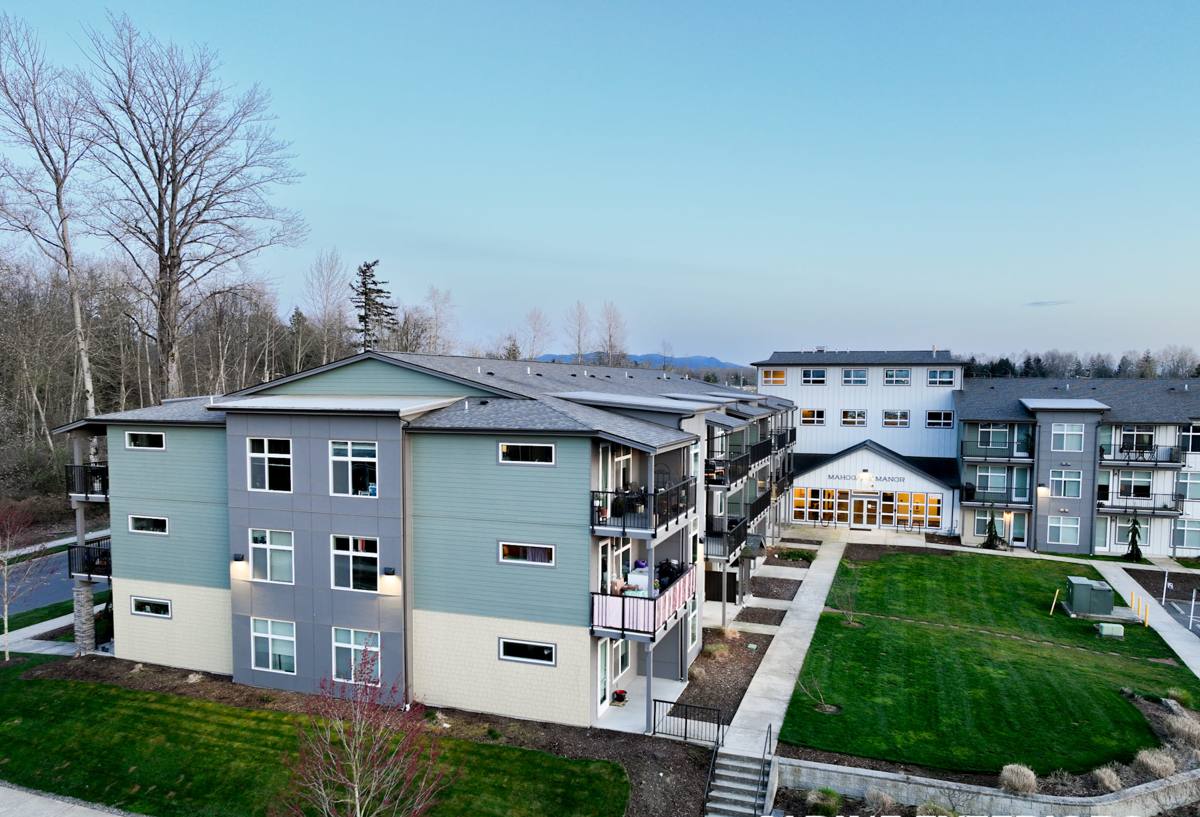
Barkley is one of Bellingham's newer planned neighborhoods, and that shows in the housing stock: a mix of newer single-family homes, townhomes, and condos built out over recent decades rather than the older mixed-vintage housing you'll find closer to the water or in Bellingham's original hillside neighborhoods. That difference matters when it comes to siding. In an older part of the city, a siding call is often about a wall assembly that's fifty or sixty years old and simply worn out. In Barkley, we're usually looking at builder-installed siding that's now old enough to be reaching the end of its realistic service life, sometimes without the homeowner realizing it, because newer construction carries an assumption of durability that doesn't always hold up against Whatcom County's weather.
We install siding across Bellingham and the surrounding area, and Barkley gets the same attention to climate detail as every other neighborhood we work: salt-tinged marine air, wind-driven rain, and a moss season that runs most of the year on shaded walls. The neighborhood's newer construction doesn't change those weather facts, it just changes what we're usually finding underneath the existing siding when we pull it off.
What Bellingham's Climate Does to Siding in Barkley
Marine Air and Salt Exposure
Barkley sits inland of Bellingham Bay, but the marine air that moves through this part of Whatcom County doesn't stop at the water's edge. Salt-tinged moisture in the air is a slow, steady stressor on fasteners, trim, and lower-grade finishes, and it doesn't announce itself the way a storm does. It just accumulates, year after year, until a finish that looked fine for a decade starts failing all at once.
Wind-Driven Rain
Rain in this region rarely falls straight down. Wind pushes it sideways, which means it's testing lap joints, trim seams, and wall penetrations from angles a purely vertical rainfall assumption doesn't account for. A siding system that would perform fine somewhere calmer and drier can still let water in here, specifically because of that wind-driven angle of attack.
A Long Moss Season
Mild, wet weather for most of the year means moss and mildew get a long runway on shaded and north-facing walls. Any siding material that holds even a little moisture against the substrate, instead of shedding it cleanly, becomes a growth surface. In a neighborhood with newer landscaping and maturing trees, shaded exposures are common, and that's exactly where we look first.
Why Newer Construction in Barkley Isn't Immune
It's a reasonable assumption that a home built in the last twenty or twenty-five years shouldn't need a full re-side yet, but that assumption doesn't always hold. A lot of production-built homes from that era went up with lower-grade siding materials chosen for the original build budget, not for a thirty-year service life in a marine climate. Engineered wood siding and vinyl were both common builder-grade choices in that window, and both have known weak points when they've spent two decades absorbing this region's rain and moisture cycles.
What we typically find on these homes is siding that still looks passable from the curb but is failing at the seams, edges, and fastener points where moisture has had the most time to work. Because Barkley includes planned developments with community design guidelines in some sections, it's also worth checking whether your home falls under an HOA or covenant before finalizing a siding color or profile — something we're glad to help you sort out before ordering material rather than after.
Why We Only Install James Hardie Fiber Cement
We install one siding system: James Hardie fiber cement. Not because it's the only decent product on the market, but because it's the one we've found consistently holds up to this specific combination of salt air, wind-driven rain, and near-constant moisture without shifting maintenance risk onto the homeowner a few years down the road.
- Non-combustible core: Fiber cement doesn't feed a fire the way wood-based siding products can.
- Factory-applied ColorPlus finish: The color coat is cured under controlled factory conditions, not brushed on at the job site, so it resists fading and moisture intrusion far longer than field-applied paint.
- Climate-engineered HZ product lines: Hardie's HZ5 formulation is built for regions with sustained moisture and freeze-thaw cycling, which fits this part of Whatcom County.
- Dimensional stability: Fiber cement doesn't swell, cup, or warp the way engineered wood products can after repeated wet-season cycles, which is exactly the failure mode we see on aging builder-grade siding in Barkley.
- Strong transferable warranty: Hardie backs its products with a substantial warranty structure, provided the installation follows spec.
We don't install LP SmartSide, vinyl siding, Cemplank, Allura, primed spruce, or cedar. Those are legitimate products, and other contractors install them competently. We made a professional decision that standing behind one system we trust completely serves our customers better than offering a cheaper alternative with trade-offs we'd have to explain away later.
What a Correct Siding Installation Actually Involves
The material is only half the job. A James Hardie installation performs the way it's engineered to only when the install follows spec at every step, and that's true whether the home is on a Barkley cul-de-sac or a hillside lot closer to downtown:
- House wrap or weather-resistive barrier installed and lapped correctly before any siding goes up
- Correct clearance from grade, roofline, and any decking or hardscape so siding isn't sitting in standing moisture
- Fastening pattern that matches Hardie's specification for this climate zone, not a generic national standard
- Joints lapped and sealed correctly so water sheds outward instead of tracking behind the panel
- Flashing at windows, doors, and trim transitions that works as one integrated system with the house wrap, not as separate steps done in isolation
- Factory-cured ColorPlus finish preserved by cutting boards face-down and priming any field-cut edges
Rushed or corner-cut installation is one of the most common reasons a genuinely good product develops problems, and on newer Barkley homes where we're often removing siding that was installed to a production-builder budget rather than a climate-first standard, we see firsthand what happens when these details get skipped.
Our Installation Process
Walkthrough and Assessment
We start by looking at the actual walls: which ones face prevailing weather directly, which are shaded and slow to dry, and whether there's already evidence of moisture behind the existing siding. On a newer home, we're also checking whether the original wall assembly was built to a standard that supports a long-term Hardie installation or needs some correction first.
Tear-Off vs. Overlay
Not every project needs a full tear-off, but in a climate this wet, we lean toward exposing the substrate rather than installing over unknown conditions. Tear-off lets us catch hidden moisture damage before it's sealed behind new siding for another twenty years, which matters most on homes where the original siding has already been quietly failing at the seams.
Installation to Manufacturer Spec
Every fastener, clearance, and flashing lap follows James Hardie's published requirements for this climate zone. That's what keeps the manufacturer's warranty intact and what actually determines whether the wall performs for decades rather than years.
Final Walkthrough
We walk the finished job with you, cover what little maintenance Hardie siding actually requires, and make sure you know what to look for if you ever want to check the wall yourself down the road.
Cost Factors for Siding Installation in Barkley
| Factor | What It Affects | Why It Matters in Barkley |
|---|---|---|
| Existing siding type | Tear-off labor and disposal | Removing older builder-grade vinyl or engineered wood siding takes different handling than removing fiber cement or wood |
| Substrate condition | Repair costs before new siding goes on | Moisture that's been trapped behind failing siding for years can soften sheathing before it's visible from outside |
| Home size and wall complexity | Total material and labor | Newer homes with more dormers, gables, or window trim add flashing detail and cutting time |
| Trim and color selection | Material cost and finish longevity | ColorPlus factory finishes outlast field-applied paint against salt air and UV exposure |
| HOA or design guidelines | Approved color and profile options | Some Barkley properties fall under community design standards worth checking before ordering material |
Real numbers depend on the specific house and what we find once tear-off starts, which is why we walk the property before quoting rather than pricing off square footage alone.
Signs Your Barkley Home May Need New Siding
- Moss or dark staining that returns quickly after cleaning, especially on shaded or north-facing walls
- Soft or spongy siding near the base of the wall or around window and door trim
- Peeling paint, bubbling, or visible warping, particularly on siding installed during the original build
- Cracked, chipped, or missing sections after storms or wind events
- Visible gaps at seams, corners, or trim joints where water can track in
- Siding that's approaching or past twenty years old without a full inspection, even if it still looks fine from the street
Why Hire a Crew That Already Works Barkley
A crew that regularly works this neighborhood has seen how the builder-grade siding common to Barkley's construction era actually ages here, not just how it performs on paper. That shows up in practical judgment on install day: which original wall assemblies need extra correction before new siding goes on, which orientations hold moss longest given the neighborhood's tree cover and lot layout, and where a homeowner association's design guidelines might affect color or profile choices before material gets ordered. Whatcom County's marine climate treats every neighborhood the same way, but the housing stock in Barkley presents a different starting point than an older part of Bellingham, and a crew with hands-on experience in both accounts for that instead of applying one approach everywhere.
If your Barkley home needs a siding replacement or you're not sure whether what you have will hold up much longer, we're glad to take a look. Reach out using the form below to schedule a free, no-pressure estimate.