 Bellingham
 Board & Batten in Silver Beach: A Style That Has to Earn Its Keep
Board and batten shows up a lot in Silver Beach — it fits the mix of older lake-community cottages, mid-century remodels, and newer builds that lean into a clean, vertical, Pacific Northwest look. The wide flat boards with narrow battens covering the seams read as simple and timeless, which is exactly why it gets specified so often on this side of Bellingham. But vertical siding is not just a style choice. Every seam runs top to bottom instead of overlapping shingle-style, which changes how water moves across the wall. Done right, board and batten sheds water as well as any lap siding. Done wrong, it's one of the faster ways to get moisture behind a wall in a climate like ours.
This page is about that one product, in this one neighborhood, for homeowners who want to understand what a correct board and batten job actually requires here — not a general overview of siding options.
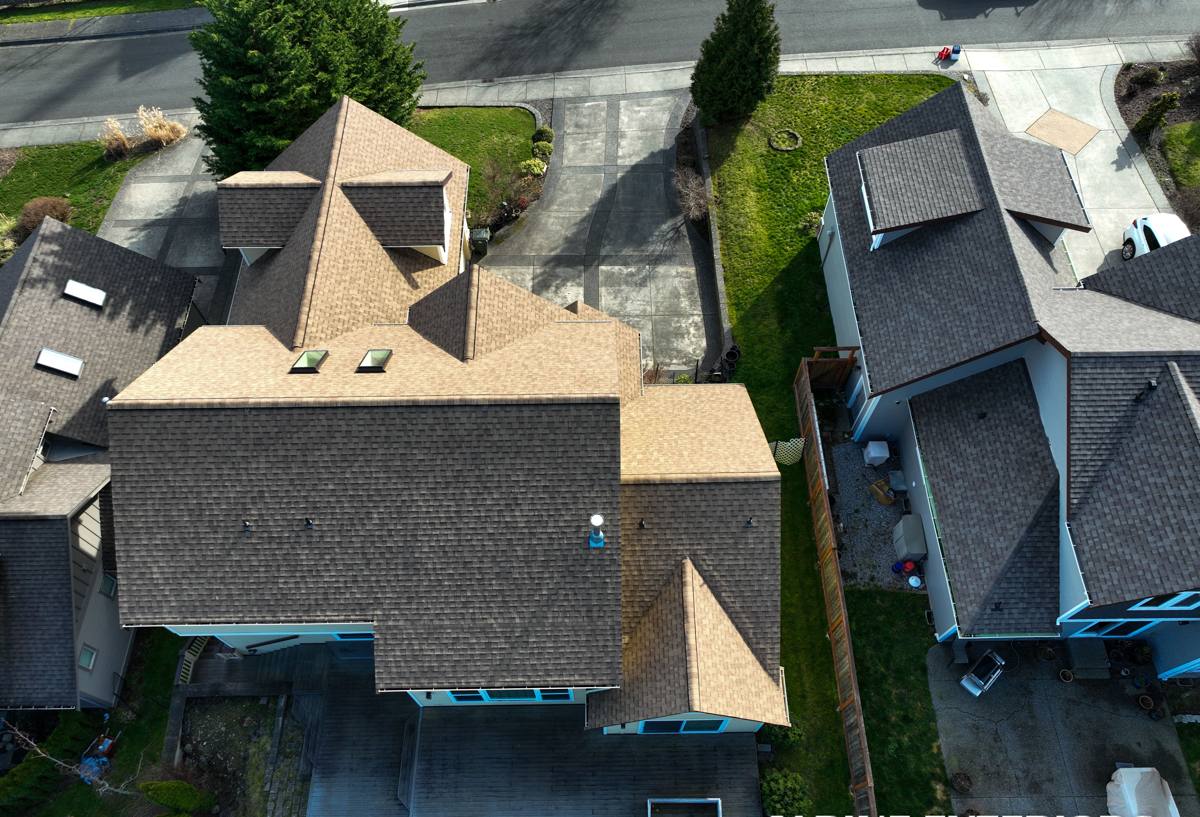
What Whatcom County's Climate Does to Vertical Siding
Bellingham sits in a marine climate, and Silver Beach gets the full effect of it: months of low-intensity rain, wind-driven storms off the water, heavy tree cover in a lot of yards, and short winter days that keep siding damp for long stretches at a time. That combination is hard on any exterior, but it's particularly unforgiving on vertical board profiles if the install skips steps.
Driving Rain and Wind-Loaded Walls
Storms coming off Puget Sound don't just fall straight down — wind pushes rain sideways into west- and south-facing walls, which is usually the exposure that takes the most abuse on Silver Beach lots. Vertical battens create more seams for wind-driven water to find than a horizontal lap profile does, which is exactly why the flashing and drainage plane behind the boards matter more here than the boards themselves.
A Long Moss and Algae Season
Between the marine humidity and the shade a lot of these lots get from mature trees, moss and algae have a long growing season in Bellingham — longer than most of the products on the market were designed around. Wood-based and cheaper composite sidings absorb moisture and stay damp longer, which gives moss more time to establish and start working into the surface.
Salt and Marine Air
Homes closer to Bellingham Bay and the broader waterfront pick up marine air that accelerates corrosion on fasteners, flashing, and any unprotected metal trim. It's a slower process than the rain damage, but it's a real factor in what hardware and finish choices hold up over a 20- or 30-year siding life in this area.
What a Correct Board & Batten Installation Actually Involves
Most board and batten problems we get called out to inspect trace back to the same handful of shortcuts, not the material itself. A correct install has a few non-negotiable steps regardless of what siding product goes on top:
A Real Drainage Plane
Vertical siding needs a water-resistive barrier and, ideally, a rainscreen gap — vertical furring strips that hold the siding off the sheathing so any water that gets past the boards has somewhere to drain and dry instead of sitting against the wall. Skipping the furring strips and nailing straight to the sheathing is the single most common shortcut we see, and it's the one that causes the most rot.
Batten Spacing and Fastening
Battens need consistent spacing over the panel joints, and fasteners need to land in solid framing at the depth and pattern the manufacturer specifies — not just "close enough." Over-driven or under-driven fasteners are a quiet failure point; they don't show up as a problem for years, then show up as a cracked panel or a loose batten all at once.
Flashing at Every Transition
Windows, doors, roof lines, deck ledgers, and the bottom termination at the foundation are where board and batten actually fails or succeeds. Each of those transitions needs proper flashing and kickout details, not just caulk. Caulk is a maintenance item; flashing is the actual water management system.
Why We Only Install James Hardie for This Application
We standardized on James Hardie fiber cement, and board and batten is one of the applications where that decision matters most. Hardie's vertical siding is engineered as a system — panels, battens, and trim designed to work together — with the HZ5 product line specifically formulated for the wetter, cooler climate zones the Pacific Northwest falls into. A few things that matter for a wall that's going to face Silver Beach's weather year after year:
- Non-combustible core — fiber cement doesn't feed a fire the way wood-based products can, which matters as wildfire smoke seasons have become a more regular part of Western Washington summers.
- Dimensionally stable — Hardie panels don't swell, cup, or split the way wood and some composite sidings do when they take on repeated wet-dry cycles.
- Factory-applied ColorPlus finish — a baked-on finish that resists the moss, mildew, and UV fading that show up faster on field-painted surfaces in a shaded, damp lot.
- Moisture resistance — fiber cement doesn't absorb and hold water the way wood or wood-composite panels do, which directly reduces the moss and rot risk this climate creates.
- Transferable warranty — backed by a manufacturer warranty that protects the actual homeowner, not just whoever bought the house first.
None of that replaces good install technique — the furring strips, flashing, and fastening still have to be done right. But it means the material itself isn't working against the installer in a climate that's already asking a lot of the wall.
Board & Batten Material Comparison
| Material | Behavior in Wet, Shaded Conditions | Maintenance Burden | Typical Longevity Here |
|---|---|---|---|
| James Hardie fiber cement | Doesn't absorb moisture; resists moss adhesion with factory finish | Occasional wash; no repainting cycle needed | 30+ years with correct install |
| Cedar board & batten | Absorbs moisture, prone to cupping and checking; moss takes hold faster in shade | Regular refinishing, sealing, and moss treatment | 15–25 years, heavily dependent on upkeep |
| LP SmartSide vertical panel | Engineered wood core; edge and cut-end sealing is critical or moisture wicks in | Field-painted finish needs repainting over time | 20–30 years if maintained closely |
| Vinyl vertical panel | Doesn't rot, but flexes and can bow; seams can trap moisture behind panels | Low, but limited repair options if damaged | 20–30 years, color fades over time |
We don't install the last three rows of that table — not because they can't be installed correctly by someone, but because we've made fiber cement our standard for exactly the failure modes shown above.
Our Process for a Silver Beach Project
- On-site assessment — we look at wall exposure, shade, existing moisture damage, and how the current siding is performing before recommending anything.
- Tear-off and sheathing check — old siding comes off and we inspect the sheathing underneath for rot or soft spots before anything new goes on. This is where hidden problems get found, not hidden further.
- Water-resistive barrier and rainscreen — a proper WRB and furring strip system goes on before any panel touches the wall.
- Flashing at every penetration — windows, doors, and roof transitions get flashed to shed water outward, not into the wall.
- Panel and batten install — Hardie panels and battens go up to manufacturer fastening specs, not shortcuts.
- Trim, caulk, and final inspection — trim details finished and every seam checked before we call it done.
What Drives Cost on a Board & Batten Job
We don't quote pricing without seeing the house, but a few factors consistently move the number on jobs like this in Bellingham:
- How much of the existing sheathing needs repair once old siding comes off — this is the biggest wildcard on any tear-off.
- Wall height and roofline complexity — steep gables and multiple stories add labor and staging time.
- Whether a rainscreen gap already exists or needs to be built in from scratch.
- Trim complexity around windows, doors, and corners.
- Full replacement versus siding one accent wall or gable in board and batten while other walls stay lap siding.
Living With Board & Batten in a Moss-Prone Climate
Even with the right material and a correct install, board and batten in this climate benefits from a light annual check. This is a short list, not a heavy maintenance schedule:
- Rinse off accumulated moss or algae growth once a year, especially on shaded north- and east-facing walls.
- Keep gutters clear so overflow isn't running down the wall face.
- Trim back vegetation and tree limbs that keep a wall section shaded and damp longer than the rest of the house.
- Check caulking at trim joints periodically — caulk is a maintenance item and will need occasional touch-up over the years, even on a well-installed system.
- Look at the bottom few inches of siding near grade and decks after major storms — that's the zone most likely to show early water staining.
Why a Local Crew Matters for This Job
Board and batten failures are rarely visible until they're expensive — the panel looks fine while the wall behind it is taking on water. A crew that already works Silver Beach and the surrounding Bellingham neighborhoods has seen how the local exposure, tree cover, and rain patterns actually play out on walls in this area, not just in a general training manual. That local pattern recognition is what catches a missing rainscreen gap or a bad flashing detail before it becomes a wall you have to open back up.
If you're weighing board and batten for a Silver Beach home, we're happy to take a look and give you a straight read on what your walls need — no pressure, no sales script, just a free estimate and an honest answer.