 Bellingham
 Silver Beach Homes Face a Specific Kind of Wear
Silver Beach is one of the older, established residential pockets in Bellingham, and that means a lot of the housing stock here has already been through several decades of Whatcom County weather. That's not a small thing when it comes to siding. This part of Washington doesn't get brutal winters, but it gets something arguably harder on a building envelope: long stretches of damp, mild weather where wood-based materials never fully dry out, moss and algae get a running start every fall, and wind-driven rain off the water finds every gap in a wall assembly that wasn't detailed correctly the first time.
When we look at a siding replacement in this neighborhood, we're not just matching a color or a plank profile. We're thinking about how the assembly behind the siding will perform through another 20-30 years of that cycle. A correct installation here looks a little different than it would in a drier inland climate, and the material choice matters just as much as the workmanship.
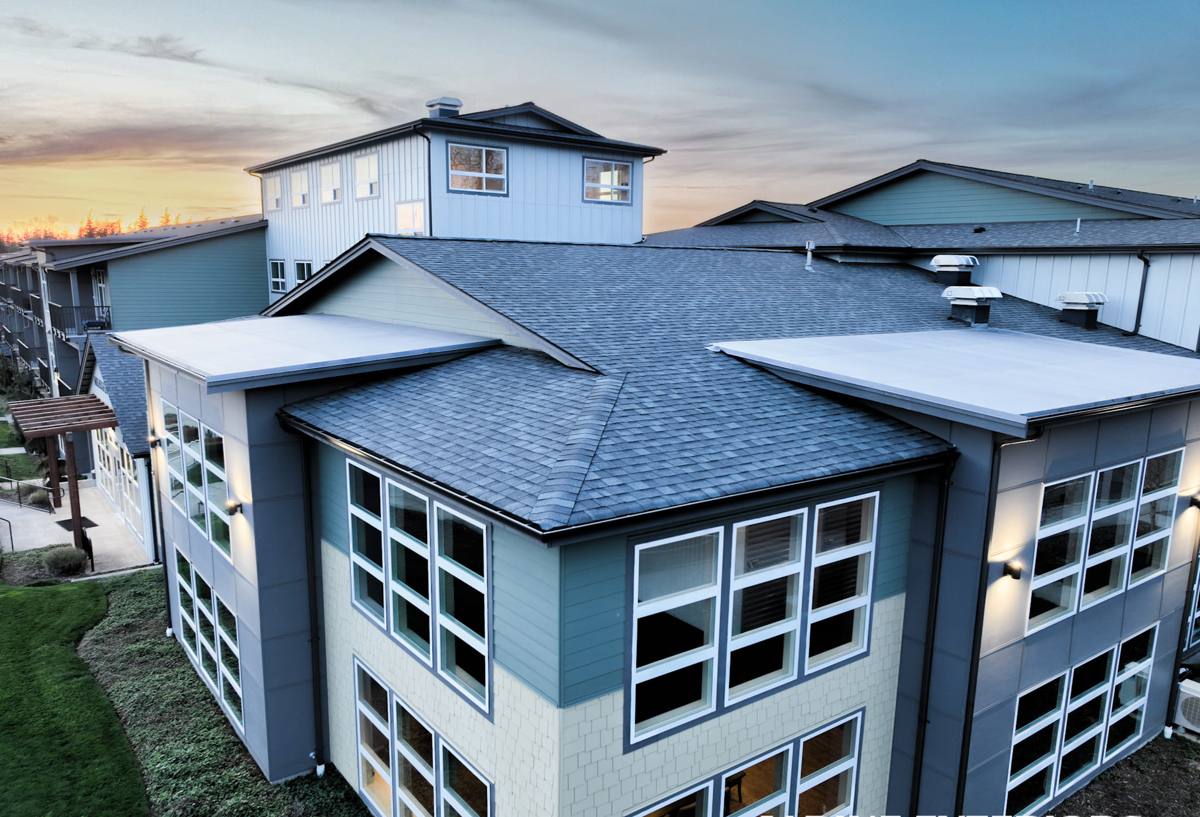
What Salt Air, Rain, and Moss Actually Do to a Wall
Each of these three stressors attacks siding in a different way, and understanding the mechanism is the difference between a repair that lasts and one that fails again in five years.
Salt-influenced marine air
Bellingham sits close enough to the water that homes throughout the area, including Silver Beach, get some exposure to salt-laden air carried inland on marine winds. Salt air accelerates corrosion on exposed metal fasteners, flashing, and hardware, and it's abrasive to painted finishes over time — chalking and fading paint faster than the same product would fade further inland. Any siding material with an unstable factory finish or fasteners that aren't corrosion-resistant is going to show that wear early.
Driving, wind-blown rain
Rain that falls straight down is easy to shed. Rain that's being pushed sideways by wind is a different problem — it gets forced up and under lap joints, around window and door trim, and into any seam that relies on caulk alone rather than proper flashing and water-shedding overlap. This is where most siding failures we see actually start: not from rot in the field of the wall, but from water finding a horizontal joint, a butt seam, or a penetration that wasn't flashed to shed water downward and outward.
A long moss and algae season
Shaded, north-facing, and tree-adjacent walls in Whatcom County stay damp for months at a stretch, which is exactly what moss and algae need to take hold. On some materials that's a cosmetic nuisance you can pressure-wash off. On others, sustained moisture at the surface works its way into the material itself, and by the time you see staining, there may already be swelling or softening happening underneath.
Why the Siding Material You Choose Changes the Outcome
This is the part of the conversation most siding quotes skip. The install detailing matters, but the material itself sets the ceiling on how well those details hold up over time. We install James Hardie fiber cement exclusively, and in a climate like this the reasons are practical, not brand loyalty.
James Hardie's HardiePlank and related lap and panel products are fiber cement — a mix of cement, sand, and cellulose fibers, engineered specifically to resist moisture absorption and dimensional movement. Hardie also manufactures a version of its product line, HZ5, specifically formulated for regions with more moisture exposure and freeze-thaw cycling, which fits the Pacific Northwest better than the standard HZ10 line meant for hot, dry climates. The ColorPlus factory finish is baked on under controlled conditions rather than field-applied, which matters directly for the salt-air fading and chalking issue above — a factory finish holds color and sheen longer than most site-applied paint jobs, and touch-up product is available for the inevitable ding or scratch.
Fiber cement also doesn't feed moss and algae growth the way wood-based sidings can, and it won't swell, delaminate, or rot at cut edges and butt joints the way engineered wood products can when a seam takes on water over a wet winter. That's a meaningful advantage on a shaded lot or a wall that doesn't get much sun to dry out between storms.
What a Correct Installation Looks Like Here
The product is only half the equation. A Hardie installation done to spec, and one that's done to just pass a walk-by inspection, can look identical on the day it's finished and perform very differently five winters later. In this climate, a handful of details matter more than they would elsewhere:
- Weather-resistive barrier, installed correctly — lapped shingle-style, sealed at seams and penetrations, so any water that gets past the siding still drains down and out rather than into the sheathing.
- A drainage gap behind the siding — a rainscreen or furring strategy that lets bulk water and incidental moisture drain and lets the wall assembly dry, rather than trapping dampness directly against the sheathing.
- Correct fastener type and placement — corrosion-resistant fasteners driven per Hardie's specification, not just "close enough," since fastener failure at the face of the board is one of the most common causes of early lap movement and water entry.
- Flashing at every horizontal transition — window heads, trim boards, deck ledgers, roof-to-wall intersections — detailed to shed water outward, not just caulked and hoped for.
- Proper clearance from grade, roof lines, and horizontal surfaces so the bottom edge of the siding isn't sitting in standing water or constant splash-back.
- Factory-cut edges sealed wherever field cuts expose raw fiber cement, per manufacturer instructions, to preserve the moisture resistance at every seam.
Skipping any one of these doesn't necessarily show up on day one. It shows up in year six or seven, as staining, soft trim, or a lap that's started to cup — usually right around the time a homeowner assumed they had another decade before needing to think about it again.
What Drives Cost on a Silver Beach Project
Every siding job is priced on its own specifics, but the factors that move the number are consistent. This isn't a quote — it's what to expect a contractor to actually be pricing when they walk your property.
| Cost Factor | Why It Matters |
|---|---|
| Tear-off and disposal of existing siding | Older homes in this neighborhood may have layers, or siding installed over original material, which adds labor and haul-away volume. |
| Sheathing and moisture condition underneath | Given the climate, hidden moisture damage at window openings or lower wall sections is common enough that we budget for the possibility of repair before re-siding. |
| Wall complexity and trim detail | Dormers, multiple gables, and extensive trim increase both material cuts and flashing work. |
| Access and height | Two-story sections, tight side yards, or steep grade changes affect staging and labor time. |
| Product line and profile | HardiePlank lap, board-and-batten, and shingle-style profiles carry different material and labor costs. |
| ColorPlus vs. field-painted finish | Factory-finished ColorPlus costs more up front but removes an entire maintenance cycle down the road. |
Our Process for Silver Beach Homeowners
Because we work in this neighborhood regularly, our estimate process here isn't generic — we already know what to look for on homes of this age and exposure.
- On-site inspection — we look at existing siding condition, trim, flashing, and any visible staining or soft spots, and we'll flag areas that likely need sheathing repair before new siding goes on.
- Material and color selection — walking through Hardie's board profiles and ColorPlus palette options against your home's exposure and trim.
- Written scope and timeline — what's being removed, what's being replaced, how water management details will be handled, and a realistic schedule given the season.
- Installation to manufacturer spec — weather barrier, flashing, fastening, and clearances handled per Hardie's requirements, not shortcuts.
- Final walkthrough and warranty registration — documenting the completed install so your Hardie product warranty is properly on file.
Signs Your Current Siding Is Already Behind Schedule
Most homeowners don't call about siding until something visible prompts it. Here's what we'd want you to catch earlier rather than later:
- Persistent moss or dark staining that returns within weeks of cleaning
- Soft or spongy spots when you press on siding, especially near the bottom courses or under windows
- Visible cupping, warping, or separation at lap joints
- Paint that's chalking, peeling, or fading noticeably faster on one side of the house
- Caulk lines that have cracked or pulled away at trim and window edges
- Interior signs — musty smell, peeling interior paint, or staining on walls that share an exterior wall
Why Local Experience in This Neighborhood Matters
A siding crew that's worked Silver Beach and the surrounding Bellingham neighborhoods knows the housing ages, the typical exposure patterns on shaded versus open lots, and how the wall assemblies behind older siding tend to be built. That translates into fewer surprises once tear-off starts, a more accurate estimate up front, and a crew that isn't guessing at how Whatcom County's weather has already treated the structure underneath. It also means we're set up to respond quickly if a warranty question or a minor repair comes up years down the line, rather than a homeowner trying to track down a contractor from out of the area.
What Happens After Installation
A correctly installed Hardie siding job is low-maintenance, but it isn't zero-maintenance. We recommend periodic visual checks — after major storms and at least once a year — for caulk integrity at trim and penetrations, any moss buildup on shaded walls, and general condition of the ColorPlus finish. Hardie's factory finish is durable, but gentle washing (never high-pressure blasting directly at seams) keeps it looking right and lets you catch small issues, like a piece of trim caulk that's failed, before they turn into a water intrusion problem.
If your Silver Beach home's siding is showing its age, or you're planning ahead rather than reacting to a problem, we're happy to walk the property, look at what's actually going on behind the existing siding where we can, and put together a straightforward, no-pressure estimate for a James Hardie installation built for this exact climate.