 Bellingham
 Why Ferndale Siding Wears Differently Than It Does Inland
Ferndale sits close enough to Puget Sound and the salt-influenced air moving off Whatcom County's coastline that siding here takes a different kind of beating than siding on a home twenty miles inland. It's not one dramatic event that causes trouble — it's the accumulation. Salt-laden air speeds up corrosion on fasteners and trim metal. Driving rain, pushed sideways by wind off the water, finds every gap in flashing and caulking that a calmer climate would never test. And the long moss season — realistically most of the year here — means anything organic-based on your exterior has a standing invitation to grow something on it.
None of this means Ferndale homes need exotic materials. It means they need siding that's engineered for moisture and installed by people who understand how water actually moves across a wall in this specific climate, not a generic install done the same way it would be in Phoenix or Denver.
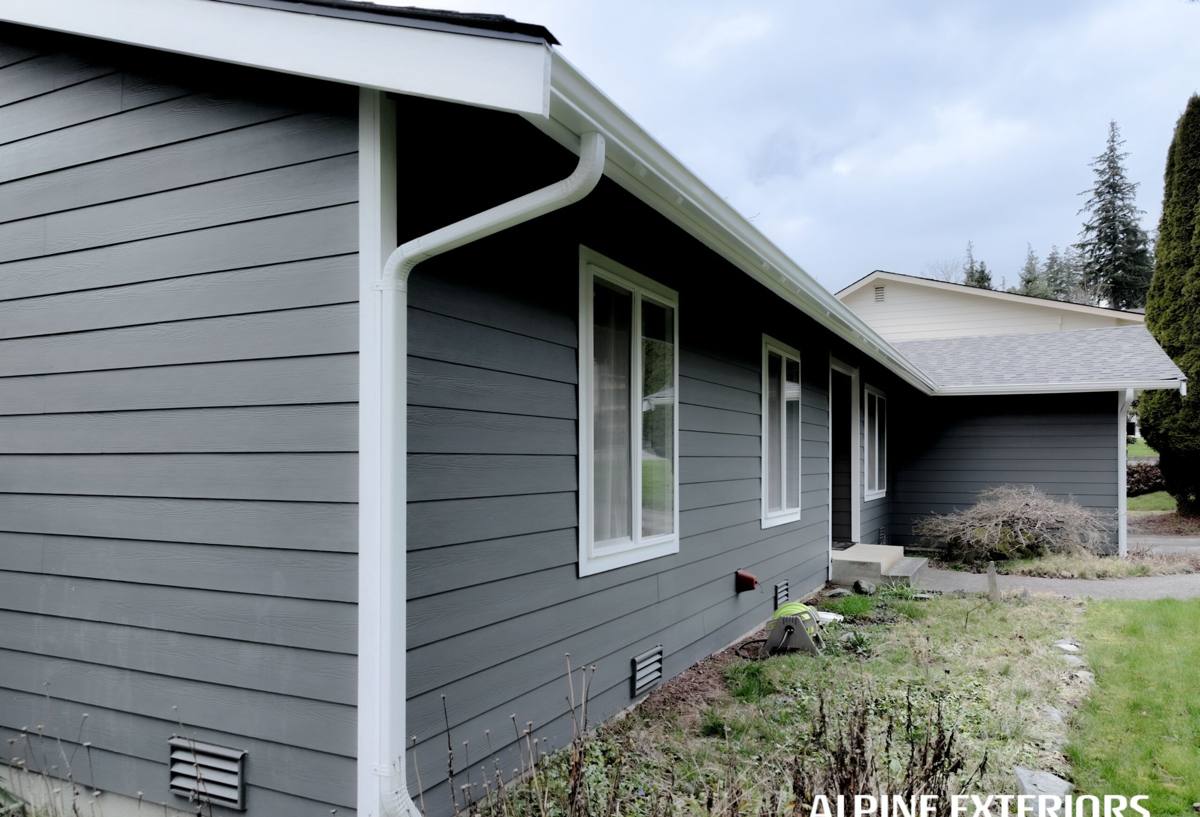
Signs a Ferndale Home Needs Siding Replacement, Not Just Repair
A lot of siding problems in this area get patched over and over instead of replaced, which usually costs more in the long run. Here's what typically separates a repair situation from a replacement situation:
- Soft or spongy spots when you press on the siding, especially near the bottom courses and around windows
- Persistent moss or algae growth that returns within weeks of cleaning
- Visible cupping, warping, or delamination on wood or engineered wood siding
- Paint that won't hold — bubbling, peeling, or needing a repaint every 2-3 years
- Gaps opening up at seams, corners, or trim that weren't there a few years ago
- Rising energy bills that don't match your home's age or insulation upgrades
- Visible rot at the bottom of walls, around hose bibs, or below window sills
One or two of these on their own might be a repair job. Several at once, especially combined with siding that's already 15-20+ years old, usually means the material itself has reached the end of its useful life in this climate and repair is just delaying the inevitable.
What a Correct Siding Replacement Actually Involves
Siding replacement isn't just pulling off old boards and nailing up new ones. In a climate like Ferndale's, the layers you don't see matter as much as the material you do see. A proper job includes:
Full Tear-Off and Inspection
We remove the old siding down to the sheathing, which is the only way to actually see what's happening underneath. This is often where hidden rot, past water intrusion, or failed old flashing gets discovered — problems that get sealed in, not fixed, when a crew sides over existing material.
Sheathing Repair
Any water-damaged or compromised sheathing gets replaced before anything new goes up. Installing new siding over soft sheathing just guarantees a repeat problem in a few years.
Weather-Resistive Barrier
A correctly lapped and sealed water-resistive barrier goes on next. This layer, not the siding itself, is your home's real defense against driving rain getting into the wall assembly. Every seam, penetration, and transition needs to be detailed correctly — this is where a lot of lower-quality installs cut corners that don't show up as a problem for years.
Flashing at Every Vulnerable Point
Windows, doors, deck ledgers, and any wall penetration need proper flashing that directs water out and down, never letting it collect behind the cladding. In a driving-rain climate this detail work matters more than the siding brand.
Fastening and Clearances
Corrosion-resistant fasteners, correct nailing patterns, and proper clearance between the siding's bottom edge and grade, decks, or roof lines all affect how long the job lasts. Ground clearance in particular is something we pay close attention to on Ferndale properties, since moisture wicking up from grade is a common failure point in this region.
Why We Only Install James Hardie Fiber Cement
We don't install vinyl, LP SmartSide, primed wood, cedar, or other fiber cement brands. That's a deliberate standard, not a limitation in what we're capable of installing. James Hardie fiber cement is non-combustible, dimensionally stable in wet-dry cycling, and available in HZ product lines specifically engineered for climate zones like ours — meaning the manufacturer has already accounted for the moisture exposure Ferndale homes deal with. The factory-applied ColorPlus finish also matters here specifically: it resists the fading and moss-friendly surface texture that plagues field-painted materials in a climate this damp.
We're not going to tell you every other product is unusable — plenty of homes around the country wear vinyl or engineered wood just fine. But for the specific combination of salt air, near-constant rain exposure, and moss pressure that Ferndale homes face, we've made the call that fiber cement installed correctly gives homeowners the best long-term outcome, and we'd rather stand behind one product system we trust completely than offer several we have reservations about.
How Materials Actually Hold Up in Ferndale's Climate
| Material | Moisture Behavior | Moss/Algae Resistance | Maintenance Burden |
|---|---|---|---|
| James Hardie Fiber Cement | Dimensionally stable, doesn't rot or swell | Factory finish resists organic growth better than field-painted surfaces | Low — occasional wash, no repainting for years |
| Vinyl | Doesn't rot, but can warp or crack in temperature swings and impacts | Textured surfaces can hold moss; smooth vinyl sheds it better | Low, but replacement of damaged panels can be visually mismatched |
| Primed Wood/Cedar | Absorbs moisture, prone to swelling and rot without diligent upkeep | High — organic material is moss's preferred surface | High — repainting, caulking, and moisture monitoring needed regularly |
| Engineered Wood (LP SmartSide) | Resin-treated but still wood-based; edge and cut-end sealing is critical | Moderate — better than raw wood, worse than fiber cement | Moderate — field-applied finishes need more attention over time |
Our Process for a Ferndale Siding Replacement
1. On-Site Assessment
We walk the property, check for hidden moisture damage around windows, decks, and the foundation line, and talk through what you're seeing and what you're hoping to fix — whether that's a maintenance headache, an aesthetic update, or storm damage.
2. Detailed Estimate
You get a clear, written scope: what's being torn off, what sheathing repair is anticipated, the water-resistive barrier and flashing plan, the Hardie product line and color, and the timeline.
3. Tear-Off and Prep
Old material comes off, sheathing gets inspected and repaired as needed, and the property is protected — landscaping, walkways, and windows covered before work begins.
4. Weather Barrier, Flashing, and Installation
Each layer goes on in the correct sequence, with flashing details checked at every window, door, and penetration before the finish siding goes up.
5. Final Walkthrough
We walk the finished job with you, check trim and caulking lines, and make sure the site is cleaned up before we consider the job done.
What Drives the Cost of a Ferndale Siding Job
| Factor | Why It Matters |
|---|---|
| Home size and wall complexity | More corners, dormers, and roof lines mean more cutting, flashing, and labor time |
| Extent of hidden damage | Rotted sheathing found during tear-off adds repair scope that isn't visible in an estimate walk-through |
| Siding profile and accessories | Lap width, trim style, and corner details all affect material and labor cost |
| Access and site conditions | Tight lots, multi-story sections, or landscaping that needs protecting can add time |
| Tear-off vs. re-side | Full tear-off costs more upfront than covering existing siding, but it's the only way to address what's underneath |
What to Ask Before Hiring a Siding Contractor in Ferndale
- Do you do a full tear-off, or do you side over the existing material?
- What weather-resistive barrier and flashing details do you use, and can you explain why?
- Are you a certified installer for the siding product you're recommending?
- How do you handle sheathing repair if you find rot during tear-off?
- What's your experience with homes specifically in Ferndale or nearby coastal Whatcom County?
- What warranty covers the material, and what warranty covers your installation labor?
- Can you walk me through your fastening and clearance standards for wet climates?
Why Local Ferndale Experience Matters
A siding crew that mostly works drier inland regions can install a technically fine job that still underperforms here, because they're not used to detailing for wind-driven rain off the water or accounting for how fast moss establishes itself on north-facing walls in this area. Crews who regularly work Ferndale and the surrounding Whatcom County coastline know to pay extra attention to ground clearance, flashing laps, and finish selection, because they've seen firsthand what happens when those details get skipped in this specific climate. That local pattern recognition is hard to replace with a generic install checklist.
Ready to Talk Through Your Ferndale Home's Siding?
If your siding is showing its age, holding moisture, or just needs more upkeep than it should, we're happy to take a look and give you an honest read on repair versus replacement. Reach out for a free, no-pressure estimate — we'll walk the property, answer your questions, and lay out exactly what a correct job would involve for your home.