 Bellingham
 Why Sehome's Climate Is Harder on Siding Than It Looks
Sehome sits close enough to the water and to Whatcom County's tree cover that homes here take a slower, quieter kind of beating than homes further inland. It's rarely a single dramatic storm that does the damage — it's the combination of salt-laden air drifting off Bellingham Bay, driving rain that hits siding at an angle instead of falling straight down, and a moss season that can stretch from October well into spring on shaded, north-facing walls. Individually, none of those are extreme. Together, over ten or fifteen years, they find every weak point in a siding system: unsealed cut edges, undersized flashing, caulk joints that were never meant to be a primary water barrier, and paint films that were only ever rated for a drier climate.
Wood and engineered-wood sidings struggle here because they're organic materials competing against near-constant moisture. Vinyl holds up better against water itself but moves a lot with temperature swings and can look tired fast once algae and moss start finding a foothold in its seams and J-channels. Fiber cement, installed correctly, is the one material category built to shrug off all three factors at once — moisture, salt, and biological growth — without asking a homeowner to repaint or reseal every few years.
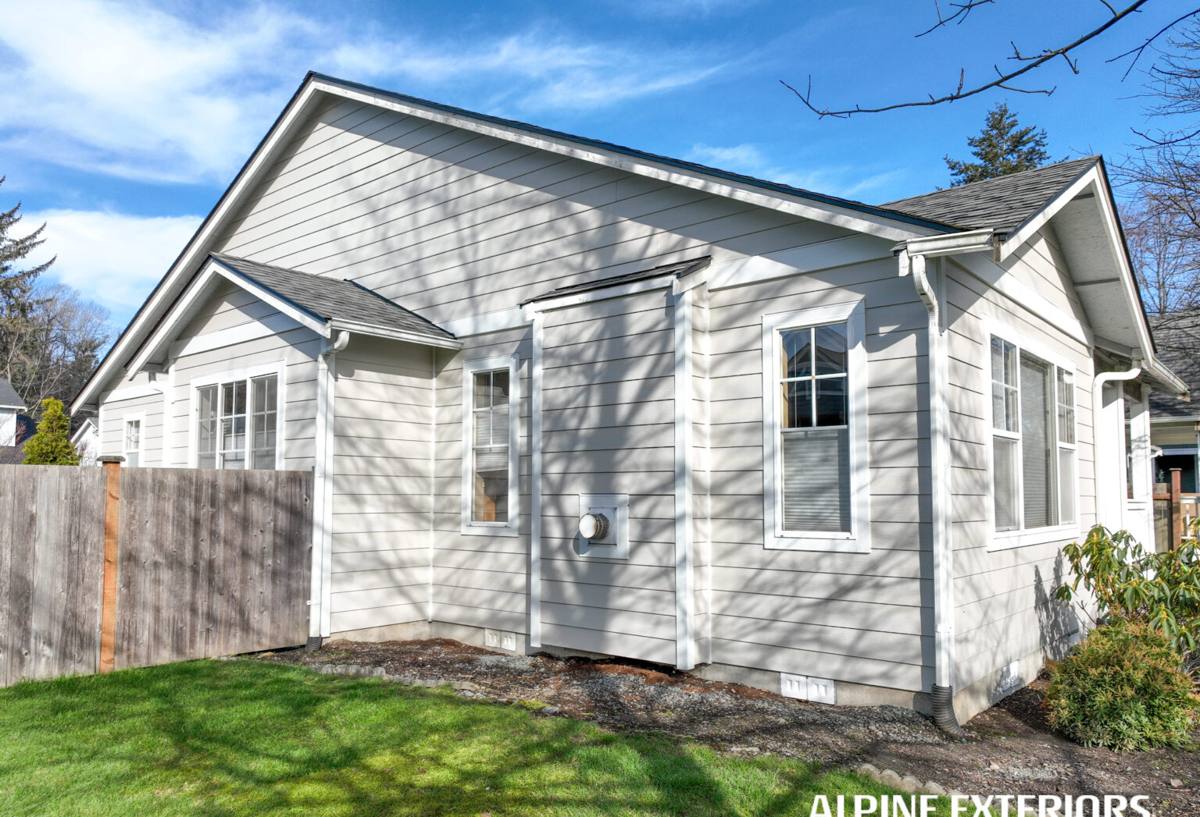
What "Correct" Fiber Cement Installation Actually Means
Fiber cement siding is only as good as the details underneath it. James Hardie's own installation instructions are specific for a reason — this product performs the way it's rated to perform only when the water-management system behind it is done right. On a Sehome home, that means:
- A code-compliant weather-resistive barrier (house wrap) installed shingle-style, lapped correctly at every seam so water sheds down and out, never in
- Proper flashing at every window, door, deck ledger, and roof-to-wall intersection — the points where most real-world leaks actually start
- A minimum 1/4-inch rain screen gap or drainage plane where conditions call for it, so any moisture that gets behind the cladding can drain and dry instead of sitting against sheathing
- Correct fastener type, size, and placement — Hardie specifies this closely, and getting it wrong is one of the most common causes of early siding failure
- Sealed and primed cut edges on every field cut, because an unsealed factory edge is the fastest way to introduce water into the panel itself
- Manufacturer-minimum clearances from grade, roofing, and decking, so splash-back and ponding water don't sit against the bottom course
None of this is visible once the job is finished and painted. That's exactly why it matters — a rushed or corner-cut install can look identical to a correct one for the first year or two, then start showing streaking, staining, or panel movement right around the time a homeowner has stopped thinking about it.
Why We Only Install James Hardie
We don't install LP SmartSide, vinyl, Cemplank, Allura, primed spruce, or cedar, and we're upfront about why. Hardie's fiber cement is non-combustible, dimensionally stable in wet climates, and comes with a factory-applied ColorPlus finish that's baked on under controlled conditions rather than field-painted on site — which matters enormously in a place where a field-applied coating has to cure through unpredictable rain windows. Hardie also builds climate-specific HZ product lines engineered for exactly the moisture and temperature range the Pacific Northwest sees, backed by a strong transferable warranty. Other products get parts of this right — LP SmartSide is a real engineered-wood option with its own fans, and vinyl is inexpensive and low-maintenance in drier climates — but none of them combine fire resistance, factory-cured color retention, and long-term moisture performance the way Hardie does. That's the standard we hold every job to, and it's why we don't put anything else on a home.
How We Approach a Sehome Job, Start to Finish
1. Inspection and Scope
We walk the full exterior, not just the visibly damaged sections. On homes near mature tree cover — common throughout Sehome and much of Bellingham — we pay particular attention to shaded, north- and east-facing walls where moss and mildew take hold first, and to any spot where a roofline or deck dumps extra water onto a wall below it.
2. Tear-Off and Sheathing Check
Old siding comes off down to the sheathing, and we check what's underneath before covering anything back up. Soft or water-damaged sheathing gets flagged and repaired — installing new siding over compromised sheathing just locks the existing problem in for another decade.
3. Water Management Layer
House wrap and flashing go in first, with special attention to every penetration — windows, doors, hose bibs, vents, light fixtures. This layer is the actual waterproofing system; the siding itself is the second line of defense, not the first.
4. Fiber Cement Installation
Panels or plank go up to Hardie's fastening schedule and clearance specs, with all field-cut edges primed before they go on the wall. Corners, trim, and butt joints are detailed to shed water rather than trap it.
5. Final Walkthrough
We inspect caulking, trim lines, and clearances with the homeowner before calling the job done, and explain what routine care (if any) the finished siding needs going forward.
Fiber Cement vs. Other Siding Materials in This Climate
| Material | Moisture & Rot Resistance | Fire Resistance | Ongoing Maintenance |
|---|---|---|---|
| James Hardie Fiber Cement | Excellent — cement-based, engineered for wet climates | Non-combustible | Occasional rinse; factory finish resists fading and peeling |
| Vinyl | Good against rot, but seams trap moss/algae; can warp with heat | Combustible, can melt/deform | Low, but seams and channels need periodic cleaning |
| Engineered Wood (e.g. LP SmartSide) | Wood-based; performs well when sealed edges stay intact, vulnerable if compromised | Combustible | Periodic repainting/resealing to maintain moisture protection |
| Cedar / Primed Spruce | Natural material; absorbs moisture, prone to rot without diligent upkeep | Combustible | Frequent staining or painting; highest upkeep of the group |
What Drives the Cost of a Sehome Siding Job
Every home is different, and we'll give you real numbers after a walkthrough rather than a phone-quote guess. But these are the factors that consistently move a project's price up or down:
| Factor | Why It Matters |
|---|---|
| Total square footage and home height | More surface area and multi-story access both add labor time |
| Condition of existing sheathing | Water-damaged sheathing found during tear-off adds repair scope |
| Trim and architectural detail | Homes with more corners, gables, and window/door trim take more precise cutting and detailing |
| Plank vs. panel selection and ColorPlus color | Product line and finish choice affect material cost |
| Site access and tree/landscape clearance | Tight lots or overgrown plantings near the house can slow staging and cleanup |
Why a Crew That Already Works Sehome Matters
Siding crews that mostly work drier climates east of the Cascades tend to under-detail flashing and rain-screen gaps, because they can get away with it there. That approach doesn't hold up on the west side of Whatcom County. A crew that regularly works Bellingham neighborhoods like Sehome already knows which wall orientations need the most moss and moisture attention, understands local permitting expectations, and isn't learning the region's weather behavior on your home. That local repetition is also what keeps a crew fast and clean on site — fewer surprises, fewer callbacks, and a finished product that's actually built for what Bellingham weather does to it year-round.
Signs Your Current Siding Is Already Behind on Maintenance
- Persistent moss or dark staining on shaded walls that comes back within weeks of cleaning
- Soft spots, bubbling, or visible warping in the siding surface
- Paint that's peeling, chalking, or has faded unevenly wall to wall
- Gaps opening up at seams, corners, or trim boards
- Rising energy bills with no other explanation — often a sign the water-resistive barrier behind old siding has failed
- Visible daylight or drafts at outlets and switch plates on exterior walls
Any one of these on its own isn't an emergency. Several of them together, especially on a home more than fifteen to twenty years old, usually means the siding system — not just the surface paint — is due for a real evaluation.
A Practical Checklist Before You Sign With Any Contractor
- Ask specifically what house wrap, flashing details, and rain-screen approach they'll use — not just what siding brand they sell
- Confirm they'll check and repair sheathing during tear-off, not just install over whatever is already there
- Ask how they handle field-cut edge sealing — this is an easy step to skip and a common failure point
- Get manufacturer warranty terms in writing, including whether it's transferable if you sell the home
- Ask how many jobs they've completed in your specific neighborhood or similar coastal-exposure conditions
Living With Hardie Siding After Installation
Once a Hardie system is installed correctly, upkeep is genuinely light. An occasional gentle rinse to knock off pollen, dust, or early moss growth on shaded walls is usually all that's needed — there's no repainting cycle to plan around, because the ColorPlus finish is baked on at the factory and warranted separately from the substrate. Homeowners in Sehome and elsewhere around Bellingham who've made the switch from wood or aging vinyl typically notice the biggest difference after their first full wet season: no fresh moss lines forming along butt joints, no soft spots developing near ground level, and no need to schedule an exterior repaint the way older siding demanded.
Get a Straight Answer About Your Home
If you're weighing a siding replacement in Sehome, we're happy to walk the exterior with you, point out what's actually driving the wear you're seeing, and give you a clear, no-pressure estimate for doing it right with James Hardie fiber cement. Use the form below to get started.