 Bellingham
 Why Roofs Take a Beating in Sehome
Sehome sits close enough to the water and up against enough tree cover that its roofs deal with a specific combination of stress: salt-laden air off the bay, long stretches of driving rain in the fall and winter, and a moss season that can run most of the year in shaded spots. None of these on their own is unusual for a Pacific Northwest roof. Together, over years, they're what separates a shingle roof that makes it to 25-plus years from one that starts failing at year twelve.
Salt air accelerates corrosion on exposed metal — nails, flashing, vent stacks — long before most homeowners notice anything wrong with the shingles themselves. Driving rain, especially when it comes sideways in a windstorm, finds every weak lap, short nail, or gap in flashing and pushes water where it doesn't belong. And moss doesn't just look bad; it holds moisture against the shingle surface and works its way under tabs, lifting them and shortening the life of the roofing underneath. A roof built for a drier climate, or installed by a crew that doesn't normally deal with these conditions, tends to show its age fast here.
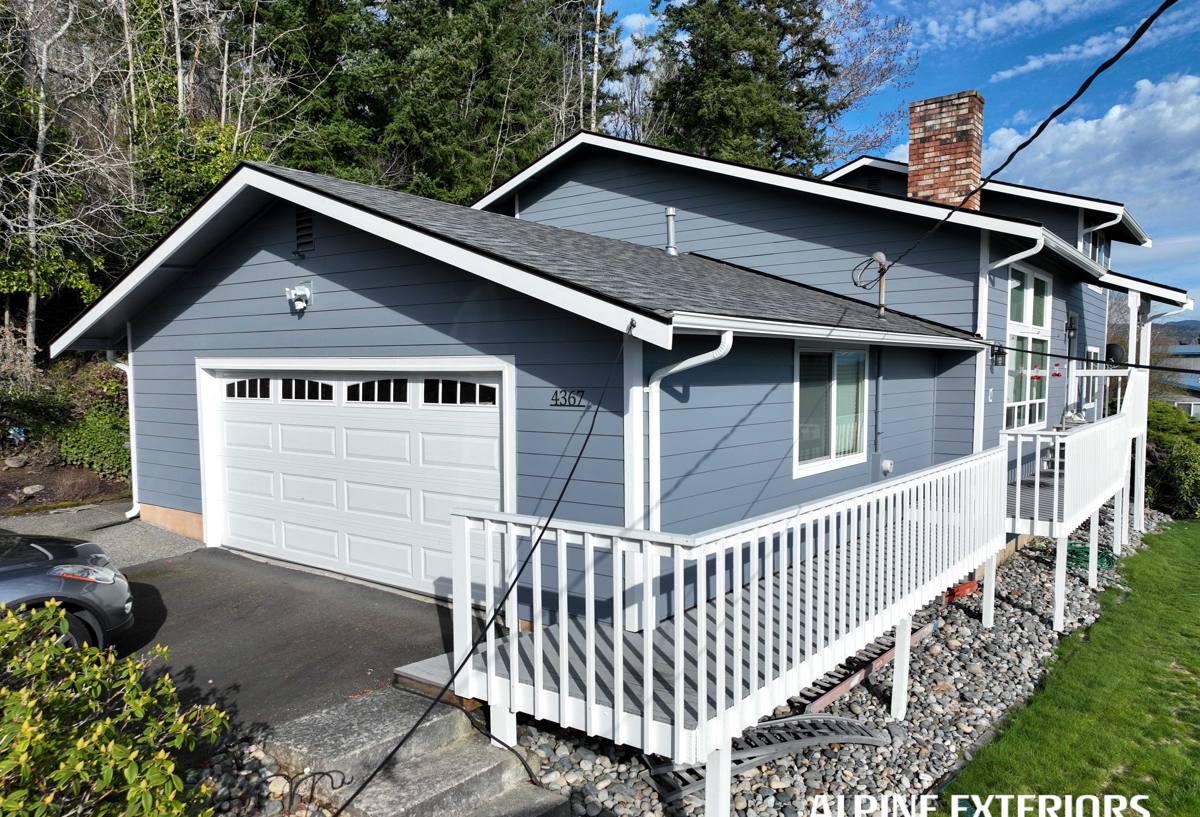
What a Correct Asphalt Shingle Roof Looks Like in This Neighborhood
"Correct" isn't just nailing shingles to plywood in rows. In a neighborhood like Sehome, where homes range from older builds to newer construction, a properly installed asphalt shingle roof accounts for water management first and appearance second — though a well-installed roof looks better too, because the lines stay straight and the tabs stay flat.
Underlayment and Ice/Water Protection
Every roof we put on gets a synthetic underlayment as a secondary water barrier, with self-adhering ice-and-water membrane at the eaves, valleys, and any roof-to-wall transitions — the spots where wind-driven rain and ponding are most likely to find a way in. This isn't an upgrade; on a roof exposed to regular driving rain, it's the difference between a leak that shows up in five years and one that never does.
Ventilation
A shingle roof that isn't ventilated correctly traps moisture in the attic, which shortens shingle life from underneath and can lead to rot in the decking — problems you won't see from the ground. We check intake at the soffits and exhaust at the ridge or roof vents and balance the two, rather than just adding vents wherever it's convenient.
Flashing and Valleys
Step flashing at walls and chimneys, and either woven or open metal valleys depending on the roof design, get done in materials that hold up to salt air — not the thinnest galvanized stock available. Flashing is where most roof leaks actually start, and it's also the part of the job that's easiest to shortcut if a crew is moving fast.
Choosing a Shingle for Whatcom County Weather
Not every asphalt shingle is built the same, and the right choice depends on budget, the roof's exposure to shade and moisture, and how long you want to go before thinking about the roof again. Here's how the common options compare for a home in this area:
| Shingle Type | Typical Lifespan | Moss/Algae Resistance | Best Fit |
|---|---|---|---|
| 3-tab asphalt | 15-20 years | Standard; needs regular cleaning | Budget-conscious re-roofs, simple roof lines |
| Architectural (laminate) asphalt | 25-30 years | Better with algae-resistant granules | Most homes; better wind rating for storm season |
| Premium/impact-rated asphalt | 30+ years | Algae-resistant granules standard on most lines | Shaded lots, homes near mature trees, longer-term owners |
For a shaded lot with a lot of tree cover — common in parts of Sehome — we generally steer homeowners toward shingles with algae-resistant (copper-infused) granules. It's not a cure for moss, but it slows the growth cycle enough to meaningfully stretch the time between cleanings. We'll walk through the actual options and trade-offs during the estimate rather than pushing one line — the right shingle depends on your roof's exposure and your budget, not on what's most profitable for us to sell.
Our Process, Start to Finish
- Inspection. We get on the roof, not just in the attic or on a ladder from the driveway, and check the decking, flashing, ventilation, and shingle condition before quoting anything.
- Written estimate. You get a clear scope — materials, labor, what's included — with no vague allowances that turn into change orders later.
- Scheduling around the weather. Roofing in Whatcom County means working around rain windows. We plan tear-off and dry-in for days we can actually complete them, not just whatever's next on the calendar.
- Tear-off and decking check. Old material comes off down to the deck so we can see what's actually underneath — soft or delaminated plywood gets replaced, not covered up.
- Underlayment, flashing, and shingle installation. Done in the order and to the nailing pattern the shingle manufacturer specifies, which is what keeps the warranty valid if you ever need it.
- Cleanup and magnetic sweep. Old material, nails, and debris hauled off — we don't leave a job site for you to finish cleaning.
- Final walk-through. We show you the finished roof and go over care and warranty coverage before we consider the job done.
Moss, Algae, and Salt Air: Keeping It Under Control
A well-installed roof still needs some ongoing attention in this climate. Moss and algae growth isn't a sign the roof was done wrong — it's a normal part of owning a shingle roof under Pacific Northwest tree cover, and it's manageable if you stay ahead of it rather than letting it build up for years.
- Have moss physically removed (not just chemically killed and left in place) every year or two, depending on shade — dead moss still holds moisture against the shingle.
- Keep gutters and valleys clear so water isn't sitting against the shingle edge, which is where moss tends to establish first.
- Trim back branches that overhang the roof — less shade and less debris means slower moss growth and fewer granules knocked loose.
- Avoid pressure washing shingles directly; it strips granules and shortens the roof's life faster than the moss would on its own.
- Have zinc or copper strips considered at the ridge during a re-roof if moss has historically been heavy — they release trace metal with rain that slows regrowth over time.
Signs Your Sehome Roof Needs a Closer Look
Most roof problems in this climate develop slowly, which is exactly why they go unnoticed until there's water somewhere it shouldn't be. Worth checking for, or having us check for:
- Granules collecting in gutters or at downspout outlets — a sign shingles are wearing thin
- Shingle tabs that are cupped, curling, or visibly lifted at the edges
- Moss buildup thick enough that you can't see the shingle surface underneath it
- Dark streaking that doesn't wash off with normal rain — algae staining rather than dirt
- Soft spots or discoloration on interior ceilings, especially after a heavy rain
- Flashing around chimneys or vent stacks that looks rusted, lifted, or gapped
- Daylight visible through the roof deck from inside the attic
Any one of these on its own isn't necessarily an emergency, but it's worth a look before the next storm season rather than after a leak shows up on the ceiling.
What Asphalt Shingle Roofing Costs in Sehome
Pricing depends on more than square footage. The factors that actually move the number on a bid:
| Factor | Why It Matters |
|---|---|
| Roof pitch and complexity | Steep or cut-up roofs (multiple valleys, dormers) take longer and need more safety setup than a simple gable |
| Tear-off vs. layover | Removing old layers costs more up front but lets us actually inspect and fix the decking |
| Decking condition | Rotted or soft plywood found during tear-off adds material and labor to replace |
| Shingle grade | 3-tab, architectural, and premium/impact-rated lines carry different material costs |
| Access and site conditions | Tight lots, tall trees, or difficult staging areas affect labor time |
| Ventilation and flashing upgrades | Bringing an older roof's ventilation or flashing up to current standards adds scope but reduces future problems |
We won't quote a number without seeing the roof — anyone who does is either guessing or leaving room to pad the invoice later. What we can say honestly: the cheapest bid on paper is rarely the cheapest roof over 20 years, especially once you factor in what a shortcut on flashing or underlayment costs to fix after the fact.
Why Hire a Crew That Already Works in Sehome
A roofing crew that regularly works Bellingham neighborhoods knows how this climate actually behaves on a roof — not from a training manual, but from having pulled off enough tear-offs to know where moisture tends to collect on a shaded lot, how much salt-air exposure a given side of town gets, and which details actually matter versus which are just extra line items. That local familiarity also means we're not guessing on permitting or working around Whatcom County's weather windows for the first time.
It also means we're around after the job is done. A roof warranty is only as good as the contractor who's still in business — and reachable — to honor it. A crew based here, working here regularly, has a reason to stand behind the work beyond the invoice getting paid.
If you're weighing a repair against a full re-roof, or just want an honest read on how much life is left in your current roof, we're happy to take a look. The estimate is free, there's no pressure attached to it, and you can use the form below to get one scheduled.