 Bellingham
 Window Installation Built for Lynden's Weather
Lynden sits out in the Nooksack lowlands, away from the bluffs and waterfront of Bellingham proper, but the weather that reaches it is still the same Whatcom County pattern: wet, gray, and persistent for much of the year. Marine air off Puget Sound and the Strait of Georgia pushes moisture inland, winter storms bring driving rain at an angle rather than straight down, and the region's long, cool, damp season keeps moss and mildew active on north- and west-facing walls for months at a time. Windows are one of the first places that weather finds a way in.
A window opening is a hole cut in your building envelope. Everything about how well it performs — draft resistance, condensation control, whether water tracks in around the frame during a hard rain — comes down to how that opening was flashed, sealed, and fitted, not just what brand of window sits in it. In a climate like ours, installation quality matters as much as the window itself, sometimes more.
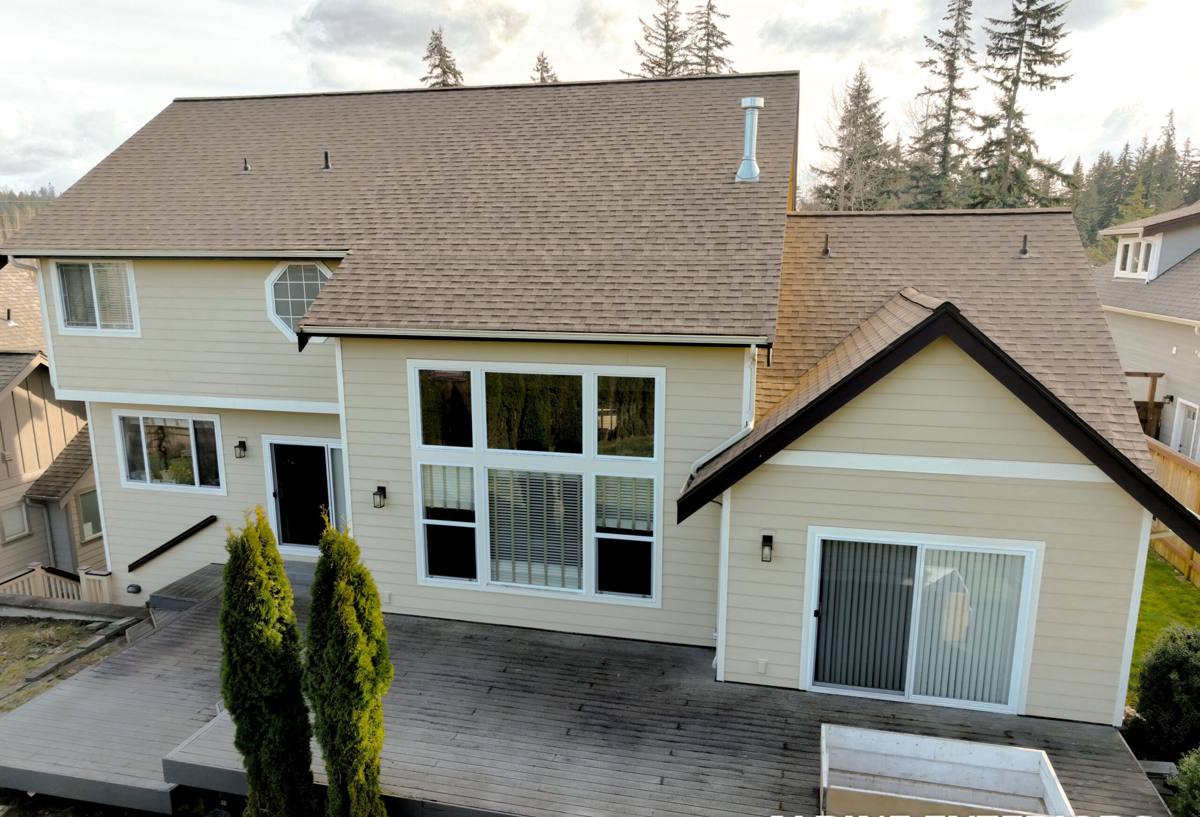
Signs a Lynden Home Needs Window Work
Windows rarely fail all at once. Usually there's a stretch of small warning signs before a homeowner calls, and catching them early keeps a window repair from turning into a wall repair.
- Fogging or moisture trapped between panes — the seal on a double-pane unit has failed
- Soft or discolored trim, sill, or drywall below a window after a rainy stretch
- Visible daylight or a draft you can feel with your hand along the frame
- Windows that are painted or swollen shut, or that need force to open and close
- Moss, black staining, or algae building up on the exterior casing or sill
- A noticeable rise in heating costs with no other explanation
- Single-pane or original-to-the-house windows on an older Lynden home that's never been updated
Any one of these on its own might just mean a caulking touch-up. Two or three together, especially with visible water staining, usually means the flashing or seal has already let go and it's worth having someone look before it spreads into the framing.
What a Correct Installation Actually Involves
Flashing and moisture management come first
The window itself is the easy part. The part that actually keeps a Lynden home dry through a wet winter is the sequence of flashing tape, house wrap integration, and sill pan work that happens before the window ever goes into the opening. Water that gets behind a window has to have somewhere to go — a proper sill pan and correctly lapped flashing (each layer overlapping the one below it, shingle-style) route it back out instead of into the wall cavity. Skip or rush this step and a window can look fine for a year or two before rot shows up where nobody can see it.
Old construction vs. new construction methods
Most window replacement work in an established town like Lynden is "old construction" or "pocket" replacement — the new window goes into the existing frame, which is faster and less invasive but depends entirely on that existing frame being sound. If we find rot, soft wood, or a frame that's out of square once the old window is out, the right call is a full-frame ("new construction") replacement that removes the old frame down to the rough opening and rebuilds the flashing from scratch. It costs more and takes longer, but installing a new window into a compromised frame just locks the problem behind a fresh sash and lets it keep going.
Frame Material Options
There's no single "best" window material — the right choice depends on the home, the exposure, and what the homeowner wants to maintain. Here's how the common options actually compare for a marine climate like ours.
| Material | Moisture behavior | Maintenance | Typical fit |
|---|---|---|---|
| Vinyl | Won't rot or corrode; expands/contracts with temperature | Low — no painting, occasional cleaning | Most homes; best value |
| Fiberglass | Dimensionally stable, handles our wet/dry cycling well | Low | Higher-end replacements, larger openings |
| Wood | Needs a well-maintained exterior finish to resist our rain and moss exposure | High — periodic painting/sealing | Historic or architecturally matched homes |
| Wood-clad (wood interior, clad exterior) | Cladding protects the exterior; interior still needs normal wood care | Moderate | Homeowners who want a wood look inside with less outdoor upkeep |
We install vinyl and fiberglass as our everyday standard because they hold up to Whatcom County's wet season without the ongoing paint and seal maintenance that solid wood exteriors demand out here. That's a maintenance and moisture-management call, not a knock on wood windows generally — a well-built, well-maintained wood window performs fine, it just asks more of the homeowner over time in a climate that stays damp as long as ours does.
Energy Performance Worth Paying For
Lynden winters aren't brutally cold by national standards, but they're long, and a leaky or single-pane window keeps bleeding heat for months at a stretch. Look for these factors rather than shopping on price alone:
- U-factor — lower is better; this measures how much heat the window loses
- Double or triple glazing — double-pane is standard here; triple-pane adds cost but helps on north-facing or particularly exposed walls
- Low-E coating — reflects heat back into the room in winter and blocks some solar heat in summer
- Argon or krypton gas fill — improves insulation between panes over plain air
- NFRC label — an independently tested rating, not a manufacturer's marketing number
Check with your utility before you start — some offer efficiency rebates or incentives for qualifying replacement windows, and it's worth a phone call to see what applies before you finalize a quote.
Our Installation Process
- On-site assessment — we look at each opening individually, not just the window count, and check for existing rot or moisture damage
- Product selection — we walk through material, glazing, and grille options that fit the home and the budget, no upsell pressure
- Removal — old windows come out carefully to protect siding and interior trim
- Frame inspection — every opening gets checked before the new window goes in; if we find damage, we flag it and explain options before proceeding
- Flashing and sealing — sill pan, flashing tape, and sealant applied in the correct sequence for a wet climate
- Setting and shimming — window is leveled, squared, and secured so it operates correctly for years, not just on day one
- Interior and exterior finish work — trim, caulking, and touch-up so the job looks finished, inside and out
- Final walkthrough — we test operation on every window before we call the job done
Cost Factors to Expect
Every home is different, but the main variables that move a window job's price up or down are consistent:
| Factor | Why it matters |
|---|---|
| Pocket vs. full-frame replacement | Full-frame costs more but is sometimes the only correct fix if the existing frame is compromised |
| Window size and count | Larger openings and whole-house jobs have per-unit efficiencies but higher total cost |
| Frame material | Vinyl is typically the most budget-friendly; fiberglass and wood run higher |
| Glazing package | Triple-pane and upgraded Low-E coatings add cost but pay back in comfort and efficiency |
| Access and second-story work | Harder-to-reach openings take more time and equipment |
| Existing damage | Rot or water damage found during removal adds repair time before the new window can go in |
We give straight, itemized estimates so a homeowner can see exactly what's driving the number — not a flat per-window price that hides what's actually being done.
Why a Crew That Already Works Lynden Matters
Window installation isn't a one-size-fits-all job, and it shows the most on homes built decades apart with different construction methods, in a town that's grown from its farming roots into a mix of older homes and newer development. A crew that regularly works Whatcom County knows what to expect opening up an older Lynden home versus a newer build — where moisture tends to collect, how local framing was typically done, and what it takes to get flashing right in a climate that doesn't give a house much of a dry season to work in. That local pattern recognition is the difference between a window that looks right on install day and one that's still performing correctly five wet winters later.
It also means we're not guessing at permitting or code requirements for the area, and we're a call away if something needs a follow-up look after the job is done — not a crew that installed windows here once and moved on to the next region.
Ready for a Free Estimate?
If your Lynden home has drafty, foggy, or hard-to-operate windows — or you just want an honest read on whether it's time — we're happy to take a look. Fill out the form below for a free, no-pressure estimate, and we'll walk the property, answer questions, and give you a clear picture of what the job actually involves before you decide anything.