 Bellingham
 Why Metal Roofing Gets a Second Look in Lynden
Lynden sits far enough inland from the Sound that homeowners sometimes assume salt air isn't a factor. It still is — moisture off the water and off the Nooksack lowlands moves through this whole corner of Whatcom County, and it settles on roofs the same way it settles on everything else outdoors here: quietly, over years, until a fastener or a flashing seam gives out. Add the region's long stretch of wet, low-sun months and you get conditions that are hard on any roofing material, but that metal roofing — installed correctly — handles better than most alternatives.
We're not going to tell you metal roofing is right for every house or every budget. It isn't. But for homeowners in Lynden looking at a 40-to-60-year roofing decision instead of a 20-to-25-year one, and who want less maintenance during the wet season, it's worth understanding what the material actually needs from an installer in this specific climate.
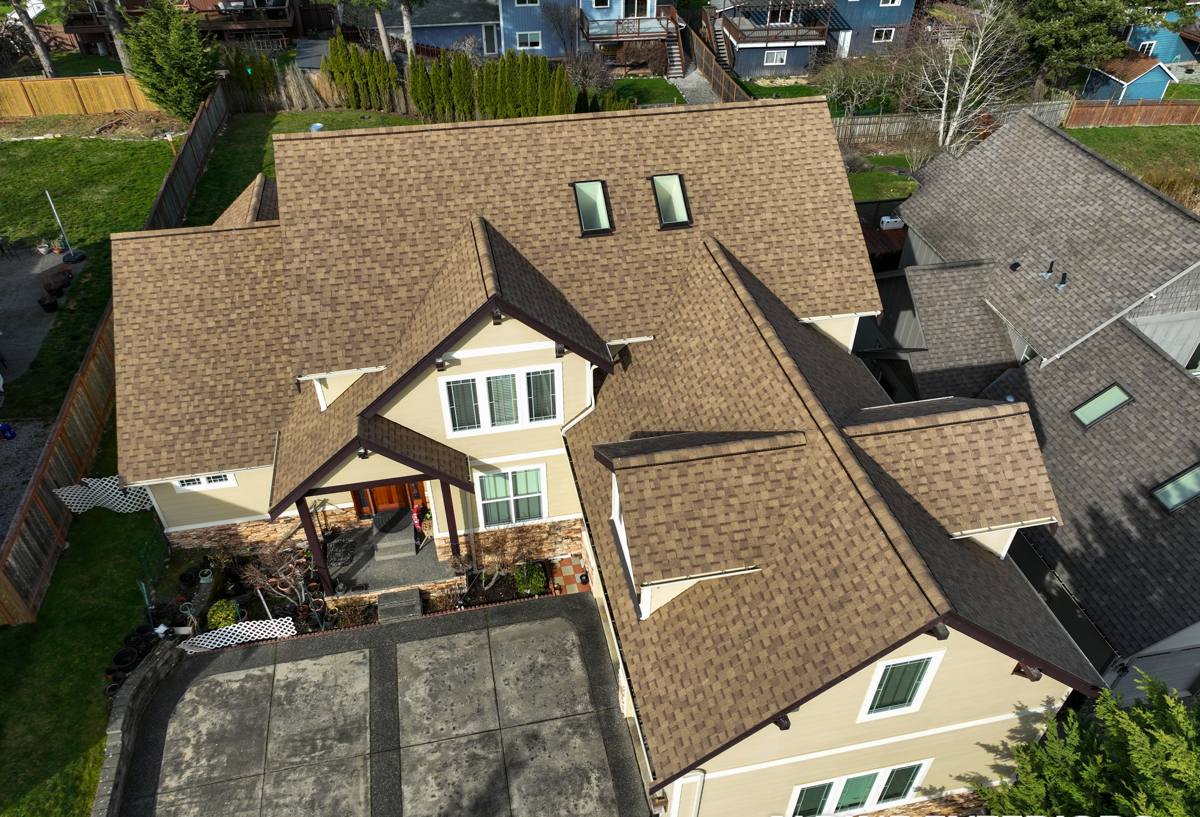
What This Climate Actually Does to a Roof
Three things drive most of the roofing problems we see in this area, and they all show up on a Lynden roof eventually:
Driving Rain
Wind-driven rain doesn't just fall on a roof, it pushes sideways into laps, seams, and fastener penetrations. A roof that's watertight in a light, straight-down rain can still leak in a Pacific storm system if the underlayment and flashing details weren't built for wind-driven moisture from the start.
Moss and Organic Growth
Whatcom County's moss season runs long — shaded, north-facing slopes and anything under overhanging trees can stay damp for months at a stretch. Moss holds water against a roofing surface, and on some materials that trapped moisture works its way under the surface layer over time. Metal doesn't feed moss growth the way organic shingle surfaces can, but moss and debris can still collect in valleys, at panel laps, and around penetrations if a roof isn't designed to shed water and debris cleanly.
Salt Air and Corrosion
Even at Lynden's distance from open water, airborne salt combined with near-constant humidity accelerates corrosion on unprotected or poorly coated metal, especially at cut edges, fasteners, and flashing joints. This is one of the biggest reasons coating quality and installation detailing matter more here than they would in a dry inland climate.
Choosing the Right Metal Roofing System
"Metal roofing" covers a range of products, and the right choice for a Lynden home depends on the roof's pitch, exposure, and how long you plan to own the house.
Standing Seam vs. Exposed-Fastener Panels
Standing seam panels use concealed clips and interlocking seams with no exposed fasteners on the field of the roof. That matters here specifically because every exposed screw head is a future maintenance point — over enough wet seasons, exposed fasteners can loosen, their washers can degrade, and each one becomes a potential entry point for wind-driven rain. Standing seam costs more up front but removes that failure point almost entirely, which is why we recommend it as our default for this climate on most roof types.
Exposed-fastener (screw-down) panels are a legitimate, lower-cost option for outbuildings, shops, and some lower-pitch or budget-driven projects, but they require periodic fastener inspection and eventual re-torquing or gasket replacement — maintenance that's easy to defer and easy to forget in a busy household.
Coatings and Finishes
The steel or aluminum substrate matters less to long-term performance than the coating on top of it. Baked-on paint systems (PVDF-type finishes) hold color and resist chalking far longer than lighter-duty coatings, and a good coating is what actually stands between the panel and years of coastal-adjacent humidity. This is a place where it's worth spending on the coating spec rather than saving a little per square foot — the coating is doing the corrosion-resistance work, not just the color.
What a Correct Installation Actually Involves
Metal roofing has a reputation for being "maintenance-free," and largely it is — but only when it's installed correctly the first time. A rushed or under-detailed metal roof will fail faster than a well-installed asphalt roof, because water that gets past a metal roof's surface often has fewer forgiving layers underneath to catch it.
Underlayment and Moisture Barrier
We install a high-temperature, self-adhered or synthetic underlayment rated for use under metal, with extra layers at eaves, valleys, and any low-slope transitions. In a climate with this much sustained wet weather, the underlayment is the actual waterproofing backstop — the metal panel is the first line of defense, not the only one.
Flashing and Penetrations
Every chimney, vent pipe, skylight curb, and wall transition is a place where two different materials meet, and that's where most roof leaks actually originate — on metal roofs even more than on shingle roofs, because the panel itself is rigid and can't flex around an imperfect flashing detail. Custom-formed flashing, proper counterflashing, and butyl or sealant systems rated for metal (not general-purpose caulk) are non-negotiable in this climate.
Fastening, Expansion, and Panel Layout
Metal panels expand and contract with temperature swings, and clips or fasteners need to allow for that movement or the panel can oil-can, buckle, or eventually work fasteners loose. Panel runs, seam layout, and starter/ridge details also need to be planned so water is shed continuously downhill with no back-lapped seams facing into prevailing wind and rain direction — a detail that matters more on exposed Whatcom County lots than in sheltered settings.
Metal Roofing vs. Other Materials for a Lynden Home
| Factor | Standing Seam Metal | Asphalt Composition Shingle | Cedar Shake |
|---|---|---|---|
| Typical lifespan here | 40–60+ years with correct install | 20–30 years, less in heavy moss areas | 20–30 years, needs regular treatment |
| Moss/organic growth resistance | High — non-porous surface | Moderate — granules trap moisture | Low — wood is an organic growth medium |
| Wind-driven rain performance | Very good with correct flashing | Good with proper underlayment | Fair — more seams, more entry points |
| Ongoing maintenance | Low — periodic gutter/valley clearing | Moderate — moss treatment, granule loss | High — treatment, replacement of split shakes |
| Upfront cost | Highest | Lowest | Mid-to-high |
None of these materials is universally "best" — the table above is about trade-offs, not a verdict. A lower-cost asphalt roof installed well will outperform a poorly installed metal roof every time. The material matters less than the installation quality behind it.
Our Process, Start to Finish
For a Lynden metal roofing project, our process generally runs:
- On-site inspection of the existing roof deck, ventilation, and any current moisture or moss issues
- Written estimate outlining panel type, coating spec, underlayment, and flashing plan — no vague "roofing package" language
- Deck repair or re-sheathing where the existing substrate has moisture damage (common on older Whatcom County homes with past moss issues)
- Underlayment and flashing installation, inspected before panels go on
- Panel installation with attention to seam direction relative to prevailing wind and rain
- Final walk-through covering gutters, valleys, and any maintenance points specific to your roof's shading and exposure
We flag deck problems honestly before covering them up. A new metal roof over a rotten or under-ventilated deck just hides a moisture problem for a while — it doesn't solve it.
Living With a Metal Roof Here: Realistic Maintenance
Metal roofing is genuinely low-maintenance, but "low" isn't "none" — especially with this area's moss season and tree cover. A simple seasonal routine covers most of it:
- Clear gutters and valleys of needles, leaves, and moss debris at least twice a year, more often under heavy tree cover
- Check for moss or algae buildup on shaded, low-pitch sections and remove it with a soft-wash approach rather than pressure washing, which can damage coatings and seams
- Inspect flashing around chimneys, vents, and skylights annually for sealant wear
- Trim overhanging branches that keep sections of the roof shaded and damp longer than the rest
- Watch for any panel fastener issues after major wind events, especially on exposed-fastener systems
None of this is heavy work compared to what a shingle or shake roof needs in this climate, which is a big part of the appeal for homeowners tired of yearly moss treatments.
Why a Crew That Already Works in Lynden Matters
Metal roofing installation quality varies enormously between crews, and the details that matter most — flashing work, underlayment choice, seam direction relative to weather exposure — are exactly the things that are invisible once the roof is finished and easy to get wrong without anyone knowing until years later. A crew that regularly works roofs in Lynden and the surrounding Whatcom County area has already seen how local wind patterns, moss exposure, and rainfall intensity play out on real roofs nearby, and builds those lessons into every flashing detail and panel layout from the start, rather than treating this as a generic install.
That local pattern recognition — knowing which roof orientations collect moss fastest, which valley designs actually shed this area's rain volume, which flashing approaches hold up over a full Whatcom County wet season — is the difference between a metal roof that performs for decades and one that needs early repairs.
If you're weighing metal roofing for a home in Lynden, we're happy to take a look and give you a straight, no-pressure estimate — what your roof actually needs, what it would cost to do correctly, and whether metal is the right fit for your situation. Use the form below to get started.