 Bellingham
 James Hardie Siding for Cordata Homes
Cordata is one of the faster-changing corners of Bellingham — a mix of subdivisions built over the last few decades, newer construction still filling in around it, and mature trees and green space woven through many of the streets in between. That combination matters more than most homeowners realize when it comes to siding. A lot of the housing stock here is old enough that original siding is nearing the end of its useful life, but not so old that anyone's thought hard about what should replace it. The easy answer is "whatever's cheapest" or "whatever the builder used the first time." We think that's the wrong answer for this climate, and we've built our business around one alternative: James Hardie fiber cement siding, installed correctly, every time.
We don't install LP SmartSide, vinyl, Cemplank, Allura, primed spruce, or cedar. That's not a marketing line — it's a standard we hold ourselves to because we've seen what Whatcom County weather does to a wall over ten, twenty, and thirty years, and we'd rather stand behind one system we trust completely than offer a menu of options with different failure points.
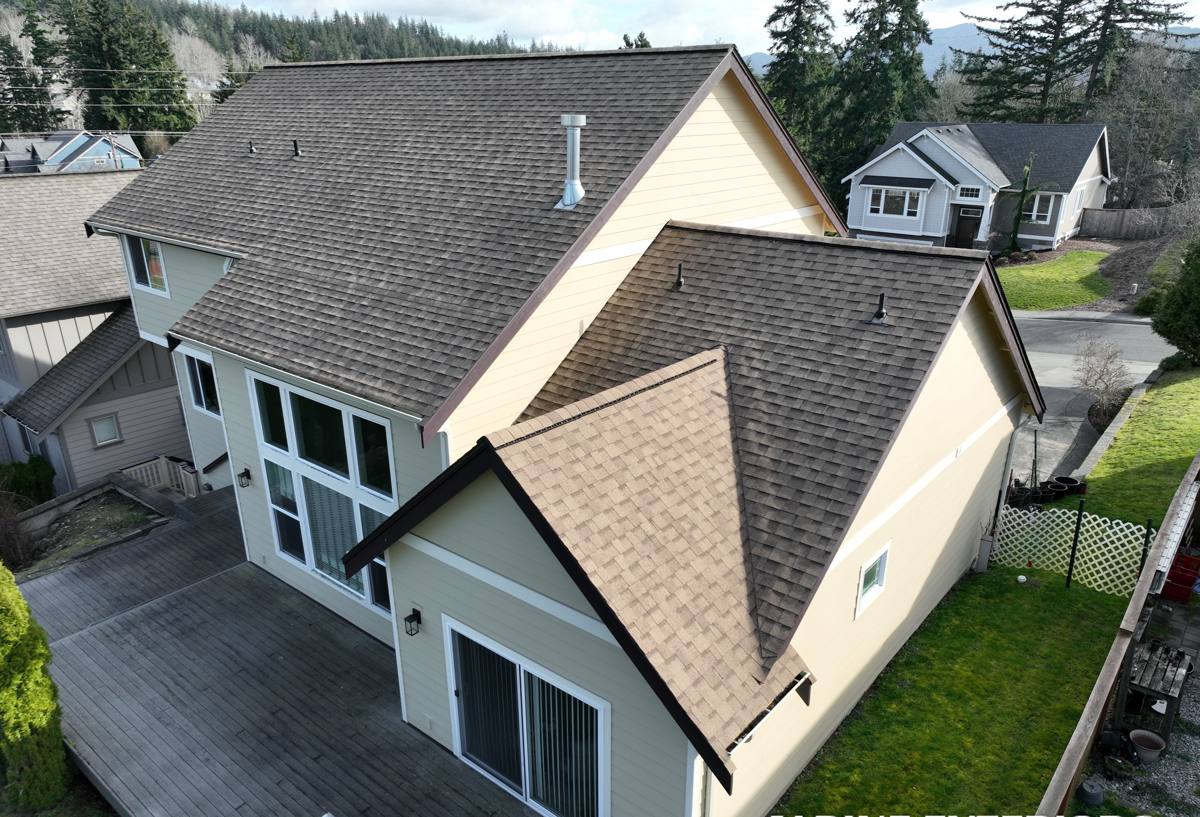
What Cordata's Climate Asks of a Siding Job
Driving Rain Without Much Windbreak
Cordata sits a bit further from the water than Bellingham's bayfront neighborhoods, but that doesn't mean it's sheltered. Newer subdivisions often have younger, shorter trees and more open sightlines between homes, which gives wind-driven rain a fairly clear path to hit siding at an angle instead of falling straight down. That matters for how a wall is built, not just what it's built from — laps, joints, and butt seams all need to be detailed as if rain is going to hit them sideways, because in this part of Whatcom County, it regularly does.
A Long Moss Season Under Mature Tree Cover
The older, tree-lined streets in and around Cordata create exactly the conditions moss and mildew like best: shade, dampness that lingers, and walls that don't get a lot of direct sun to dry out between storms. Bellingham's moss season isn't a two-month event — on a shaded, north-facing wall it can be most of the year. Siding that holds moisture at the surface or behind poorly sealed joints gives moss and mildew a foothold that spreads and stains faster than most homeowners expect.
Salt-Tinged Marine Air, Even Set Back From the Bay
You don't have to live on the water to feel Whatcom County's marine climate. The air moving across this whole area carries some salt content, and that steady low-grade exposure is harder on exposed fasteners, trim, and unprotected wood over the decades than most people assume. It's a slower process than what a bayfront home deals with, but it adds up the same way — which is one more reason we don't cut corners on fastener spec or flashing detail just because a home isn't sitting right on the shoreline.
Why We Standardized on One Product for This Area
LP SmartSide, vinyl, Cemplank, Allura, primed spruce, and cedar are all legitimate products, and other contractors install them competently. Each one asks something different of a homeowner: vinyl can warp and fade and doesn't hold paint well if you ever want to change the color; primed spruce and cedar need real, ongoing maintenance to keep moisture out of the wood; engineered wood products can be sensitive to how well field cuts and seams are sealed. None of that makes those products bad — it makes them a maintenance commitment that a lot of Cordata homeowners, especially those juggling a growing household or a busy schedule, don't want to sign up for.
James Hardie fiber cement doesn't rot, doesn't support moss growth the way wood-based products can, and holds up to sustained rain exposure without the swelling or warping risk that comes with wood or wood-composite siding. It's also non-combustible, which matters more each year as wildfire smoke and dry-season risk become a bigger part of life in the Pacific Northwest, even on the wet side of the Cascades.
The Right Hardie Product Line for This Area
James Hardie makes climate-specific product lines, and the HZ5 line is engineered for regions like ours — freeze-thaw cycling, sustained moisture, and wind-driven rain. We don't treat that as a marketing detail; it's the baseline we install to on every Cordata project. Beyond the engineering spec, Hardie's ColorPlus finish is a factory-baked color coat, not a field-applied paint job, which means the color and the moisture barrier are cured under controlled conditions instead of on a ladder on a rainy job site. That's a meaningful difference in a climate where a freshly painted wall doesn't always get a dry week to cure properly.
Lap, Shingle, or Panel — Matching the Home
Cordata's mix of housing styles means we see everything from traditional lap siding on older ranch-style homes to more modern panel and shingle combinations on newer builds. Hardie makes all three, and the right choice depends on the home's existing lines, roof style, and how the homeowner wants it to read from the street — not on which profile happens to be cheaper to install.
What Correct Installation Actually Involves
Flashing and Water Management First
Siding is the last thing water sees, not the first line of defense. Before a single board goes up, the flashing at windows, doors, and roof intersections has to be correct, because that's what actually keeps water out of the wall assembly. We've corrected enough poorly flashed walls on older Cordata homes to know that skipping this step is the single most common reason a otherwise fine-looking siding job fails early.
Fastening, Clearance, and Butt Joints
Hardie siding has a published fastening schedule for a reason — nail spacing, placement, and depth all affect how the board performs over time. So does keeping proper clearance off grade, decks, and roof lines, so water has somewhere to go instead of wicking up into the bottom edge of the siding. Butt joints between boards need to be sealed or flashed correctly, not just caulked and hoped for.
Field Cuts and Cut-Edge Sealing
Every cut edge on a fiber cement board exposes raw material that isn't factory-finished. Sealing those cut edges properly — especially around windows, corners, and outlets — is a small step that's easy to rush and expensive to ignore, because an unsealed cut edge is a direct path for moisture into the board itself.
A Working Checklist for Any Siding Crew You Hire
- Do they follow James Hardie's published fastening and clearance specs, or improvise based on habit?
- Do they seal every field-cut edge, not just the ones that are visible from the street?
- Do they check and correct flashing at windows, doors, and roof lines before siding goes up?
- Can they explain how they handle butt joints and corners in a wet, wind-driven climate?
- Do they carry manufacturer certification or documented Hardie installation experience?
What Drives Cost on a Cordata Siding Project
Every home is different, and we'll give you real numbers after walking your property rather than a rough figure off square footage alone. That said, a few factors consistently move the price on projects in this area.
| Factor | Why It Matters |
|---|---|
| Existing siding condition | Rotted sheathing or water damage found during tear-off adds repair scope before new siding can go on |
| Home size and wall complexity | More corners, gables, and dormers mean more cutting, flashing, and labor time |
| Siding profile chosen | Lap, shingle, and board-style profiles differ in material use and installation time |
| Trim and window count | Each opening needs flashing and finish work, so more windows and doors add labor |
| Site access | Tight lots, fencing, or limited driveway access can slow material staging and add time |
Our Process for Cordata Homeowners
We keep the process straightforward because siding replacement is disruptive enough without adding confusion on top of it.
- Walkthrough and assessment — we look at your existing siding, sheathing condition where it's exposed, and the specific exposure your walls get from rain, sun, and shade.
- Written plan and product selection — we recommend the Hardie profile and color that fits the home, and walk you through exactly what the scope includes.
- Tear-off and inspection — removing the old siding tells us the real condition of the wall underneath, and we flag anything that needs repair before moving forward.
- Installation to spec — flashing, fastening, clearances, and cut-edge sealing done to Hardie's published requirements, not shortcuts.
- Final walkthrough — we go over the finished job with you before we consider it done.
Why Local Experience in Cordata Matters
A crew that's worked this specific part of Bellingham knows things a crew from outside the area has to learn on your dime — which walls in a given neighborhood tend to hold moisture longest, how a particular street's tree cover affects moss growth, what the older housing stock in this area typically has hiding behind the existing siding once it comes off. That familiarity doesn't replace following the manufacturer's spec sheet, but it does mean fewer surprises and a faster, more accurate assessment before work even starts.
It also means accountability. A contractor who plans to keep working in Cordata for years has every incentive to get the flashing, fastening, and sealing details right the first time, because a callback on a bad install costs more than doing it correctly costs upfront.
If you're weighing a siding replacement for a home in Cordata, we're glad to come take a look, walk you through what your specific walls need, and give you a straightforward, no-pressure estimate. There's a form below — reach out and we'll set up a time.