 Bellingham
 Storm Damage Roof Repair Built for Happy Valley's Weather
Happy Valley sits close enough to Bellingham Bay that homes here take on a specific mix of punishment: salt-laden air off the water, driving rain that comes in sideways during winter storms, and a moss season that runs longer than most homeowners realize. None of these things show up as a single dramatic event most of the time. Instead, they compound — a windstorm loosens a few shingles in November, moss holds moisture against that same spot all winter, and by March you've got a soft patch of decking you didn't know was there. Storm damage roof repair in this neighborhood isn't just about patching what broke during the last blow; it's about understanding how Whatcom County's climate turns small storm damage into bigger problems if it sits unaddressed.
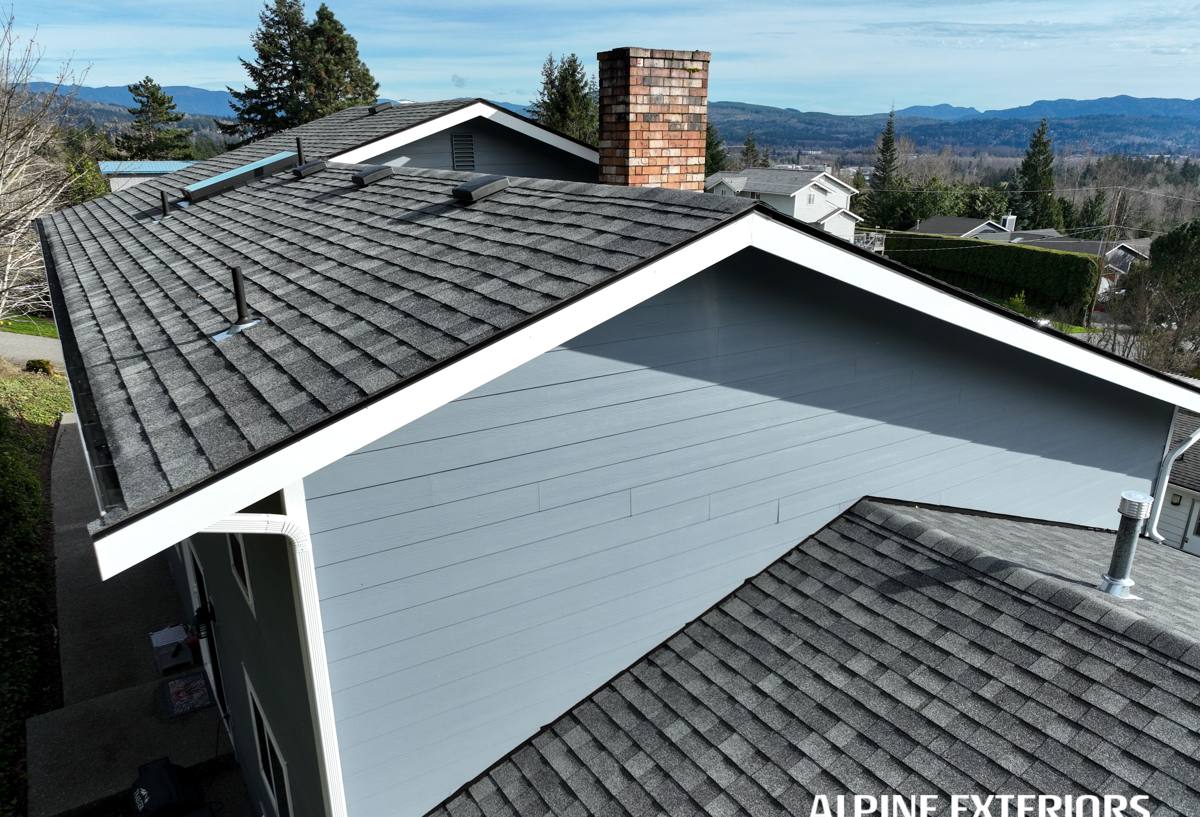
What Actually Counts as Storm Damage
Homeowners often assume storm damage means something obvious — a tree limb through the roof, or shingles scattered across the lawn. Real storm damage is usually quieter than that, and it's worth knowing what to look for before it turns into a leak.
Wind-related damage
Bellingham's storms tend to bring sustained wind rather than short violent gusts, and that matters for roofs. Sustained wind works shingle tabs loose gradually, lifting the seal strip without necessarily tearing the shingle off. The roof can look intact from the ground while individual shingles are no longer sealed down — which means the next rain gets underneath them.
Wind-driven rain intrusion
Rain that comes in at an angle finds every weak point in flashing, vent boots, and roof-wall transitions. A lot of what gets called a "storm leak" is actually rain being pushed sideways into a flashing detail that was already marginal — the storm just exposed it.
Debris impact
Fir and cedar limbs coming down in wind is common around here, and even a small branch strike can crack a shingle, dent metal flashing, or knock granules loose in a way that isn't visible unless someone gets up on the roof to look.
Moss and moisture damage that follows a storm
This is the one that's easy to miss. After wind or impact damage opens a small gap, moss and organic growth move in fast in our climate. By the time a stain shows up on a ceiling, the moss has often been holding water against that spot for months.
Our Storm Damage Roof Repair Process
A storm damage repair only holds up if the assessment behind it is thorough. Here's how we approach it on Happy Valley homes:
1. Full-roof inspection, not just the obvious spot
We don't just look at the area where you noticed a drip or missing shingle. Wind damage is rarely isolated to one spot, so we walk the whole roof plane, check flashing at every penetration, and look at valleys and edges where wind-driven rain concentrates.
2. Photo documentation
Every area of damage gets photographed before any repair work starts. This protects you if you're filing an insurance claim, and it gives us a clear record of the roof's condition going in.
3. Deck check where moisture is suspected
If there's any sign that water has been sitting against the sheathing — soft spots, discoloration, or moss growth at a repair area — we check the decking itself, not just the shingles above it. Replacing shingles over compromised decking doesn't hold.
4. Matched materials, proper sequencing
Repairs get tied into the existing roof system correctly — shingles woven in under the course above, flashing lapped the right direction for water flow, sealant used as a backup, not a substitute for proper technique.
5. Follow-up on flashing and vents
Since wind-driven rain problems are so often a flashing issue rather than a shingle issue, we specifically check pipe boots, chimney flashing, and roof-wall intersections as part of every storm repair, even if that's not where you noticed the leak.
Repair or Replace? How We Help You Decide
Not every storm-damaged roof needs to come off. But a repair that's patched onto a roof near the end of its life is money spent twice. Here's how we walk homeowners through that decision:
| Factor | Leans toward repair | Leans toward replacement |
|---|---|---|
| Age of roof | Under 15 years, asphalt shingle | Approaching or past manufacturer lifespan |
| Extent of damage | Isolated area, one or two roof planes | Scattered damage across multiple planes |
| Decking condition | Solid, dry sheathing found on inspection | Soft or delaminated decking in multiple spots |
| Moss/moisture history | First significant issue | Repeated moss treatment and repair history |
| Shingle condition elsewhere | Granules intact, tabs still sealing | Widespread granule loss, brittle shingles |
We'll always tell you honestly which side of that table your roof falls on. If a targeted repair will genuinely hold for years, that's what we recommend — a full replacement isn't the answer to every storm call.
Insurance Claims: What We Can and Can't Do
Many storm damage repairs in this area get partially or fully covered by homeowner's insurance, depending on your policy and the cause of loss. We're not adjusters and we won't promise a claim outcome, but we can help by providing clear, dated photo documentation of the damage and a written scope of the repair work, which your adjuster will need. If you're filing a claim, get an inspection done before you sign off on any repair — once damage is patched, it's harder to document what was there.
Common Happy Valley Storm Damage Patterns
Every roof is different, but certain patterns show up repeatedly on homes in this part of Bellingham:
- North and west-facing slopes tend to show wind lift damage first, since storms typically push in off the water from that direction.
- Shaded roof sections under mature trees hold moss and moisture longer after a storm, slowing drying time and increasing rot risk.
- Metal flashing near chimneys and skylights shows corrosion faster in homes closer to the bay, due to the salt content in the air.
- Valleys collect wind-blown debris and needles, which can dam water during heavy rain and push it under shingles at the edges.
Why It Matters to Hire a Crew That Already Works This Neighborhood
Storm damage repair isn't a generic skill — it's shaped by what the local climate actually does to a roof over time. A crew that regularly works Happy Valley and the surrounding Bellingham area already knows which flashing details tend to fail first in wind-driven rain, how fast moss re-establishes on shaded roof planes here, and what a genuinely storm-damaged shingle looks like versus one that was already failing before the storm. That local pattern recognition is the difference between a repair that gets tied correctly into the existing system and one that's just a patch over a symptom. It also means a crew that can respond promptly after a storm, when temporary protection matters, rather than one working from out of the area on a delayed schedule.
Preventing Repeat Damage After the Repair
A good storm repair should reduce your risk of a repeat call, not just fix what's visible today. A few things we typically recommend alongside a repair:
Moss management
Given how long moss season runs in Whatcom County, a roof that's had storm damage in a shaded or north-facing area often benefits from moss treatment and, in some cases, zinc or copper strips to slow regrowth.
Gutter and valley clearing
Wind storms knock debris loose from surrounding trees, and that debris often lands in valleys and gutters right when heavy rain is also arriving. Keeping those clear reduces the chance of water backing up under shingles.
Periodic flashing checks
Since flashing is the most common quiet failure point in salt-air, wind-driven rain conditions, we recommend having flashing checked every couple of years even without an obvious leak.
What to Do Right After a Storm
If you suspect storm damage, a few simple steps help protect your home and your options before a repair crew arrives:
- Check the attic or top-floor ceilings for any new staining, dampness, or a musty smell.
- Look at the yard and gutters for shingle granules, shingle pieces, or flashing debris — a sign something came off the roof.
- Take photos from the ground of any visible missing or lifted shingles; avoid getting on the roof yourself.
- Note the date and general weather conditions of the storm for insurance purposes.
- Avoid tarping or DIY patching if possible until damage has been documented, unless active water intrusion makes it necessary.
- Call for an inspection sooner rather than later — small wind damage left through another rain cycle tends to get worse, not stay the same.
If a recent storm has left you with a missing shingle, a new leak, or just a nagging feeling that something came loose on the roof, we're glad to take a look. We offer free, no-pressure estimates for Happy Valley homeowners — just fill out the form below and we'll get an inspection scheduled.