 Bellingham
 Asphalt Shingle Roofing for York Homes
York is one of Bellingham's older, tree-shaded neighborhoods, and that combination of mature canopy and proximity to the water creates a specific set of demands on a roof. Asphalt shingles remain the most practical choice for most homes here — they're cost-effective, repairable, and widely available in styles that fit everything from a 1940s bungalow to a newer infill build. But "asphalt shingles" covers a wide range of quality, and a roof that's simply nailed down to code is not the same as one that's built to actually hold up under Whatcom County conditions for its full service life.
This page covers what an asphalt shingle roof needs to do in York specifically, what a correct installation or repair involves, and how we approach the work when we're on your roof.
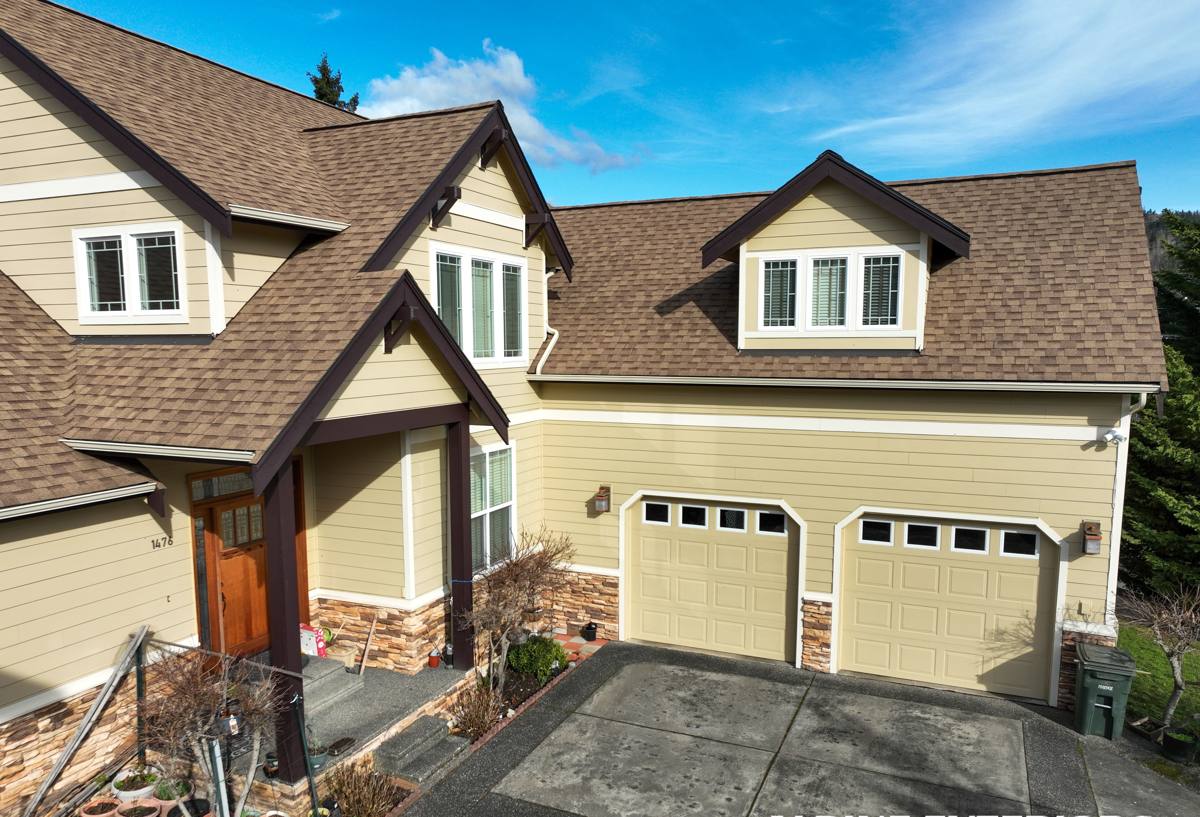
What York's Climate Actually Does to a Roof
Bellingham's weather isn't dramatic in the way hail or hurricanes are dramatic — it's a slow, grinding kind of wear. A few things matter more here than they would in a drier climate:
Salt Air
York's location within reach of Bellingham Bay means metal roof components — flashing, fasteners, vent caps — are exposed to a low but constant level of salt air. Over years, that accelerates corrosion on anything that isn't properly rated or coated. It's a slow process, but it shows up first at the metal details long before the shingles themselves fail.
Driving Rain
Whatcom County doesn't just get a lot of rain — it gets wind-driven rain that comes in at an angle instead of straight down. That matters because it pushes water sideways under shingle edges, into valleys, and around anything that penetrates the roof deck (vents, chimneys, skylights). A roof that would be fine in a calmer climate can leak here if the underlayment, flashing, and shingle overlap aren't done with that sideways water movement in mind.
Moss Season
The long, cool, damp stretch from fall through spring is prime moss and moisture-retention weather, especially on north-facing slopes and roofs shaded by trees — common in York. Moss holds water against the shingle surface, works its way under tabs, and can lift granules and shorten shingle life significantly if it's never addressed.
None of this means asphalt shingles are a poor fit for the area — they're used successfully on the majority of homes here. It means the details of the installation (underlayment choice, flashing quality, ventilation, and moss prevention) matter more in York than they would in a milder, drier climate.
What a Correct Asphalt Shingle Job Includes
A lot of roofing problems we see aren't shingle failures — they're installation shortcuts that only show up years later. Here's what we consider non-negotiable on a York roof:
- Full tear-off when needed: Layering new shingles over old is sometimes allowed by code, but it traps moisture, hides deck damage, and voids many manufacturer warranties. We evaluate the existing roof honestly rather than defaulting to the cheaper option.
- Deck inspection and repair: Once the old roofing is off, the plywood or plank decking underneath gets checked for soft spots, rot, and delamination — common where past leaks went unnoticed.
- Ice-and-water shield at vulnerable areas: Eaves, valleys, and roof-to-wall transitions get a self-adhering waterproof membrane, not just felt paper, because these are the spots where driving rain and ice dams (on the rare cold snap) cause the most damage.
- Synthetic underlayment across the field: More tear-resistant and more water-resistant than old-style felt, and it holds up better if there's any delay between tear-off and shingle install during our wetter months.
- Proper flashing at every penetration: Step flashing at walls and chimneys, new flashing at vents and skylights (not reused old flashing), and counter-flashing that actually sheds water rather than relying on caulk alone.
- Balanced attic ventilation: Intake at the eaves, exhaust at the ridge, sized to the attic volume. Poor ventilation traps moisture under the deck, which shortens shingle life from the underside — invisible until it's a real problem.
- Correct nailing pattern: Manufacturer-specified nail placement and count, not staples, not high-nailing — this is one of the most common shortcuts on rushed jobs and it directly affects wind resistance.
Choosing the Right Shingle for a York Roof
Given the moss and moisture pressure in this neighborhood, we lean toward algae-resistant shingles (the granules include a copper or zinc compound that discourages algae and moss growth over time) rather than standard shingles, especially on shaded or north-facing sections. The upfront cost difference is modest compared to the maintenance it can save over the roof's life.
| Shingle Type | Typical Lifespan | Best Fit for York |
|---|---|---|
| 3-tab (standard) | 15-20 years | Budget projects, sun-exposed roof sections with low moss risk |
| Architectural / dimensional | 25-30 years | Most York homes — better wind rating, better water shedding |
| Algae-resistant (Class A/architectural) | 25-30 years | Shaded lots, north-facing slopes, tree-heavy properties |
| Impact-resistant / premium | 30-50 years | Owners planning to stay long-term who want to minimize future re-roofs |
We don't push the most expensive option on every roof — a smaller, low-slope garage roof doesn't need the same product as a steep, exposed main roof. We'll walk through the honest trade-offs for your specific roof rather than a one-size answer.
Repair, Recover, or Replace?
Not every roof problem means a full replacement, and we'd rather tell you that upfront than sell a bigger job than you need.
When a Repair Makes Sense
Isolated damage — a section of wind-lifted shingles, a failed flashing detail, a leak traced to one specific spot — can usually be repaired if the rest of the roof is in reasonable shape and not near the end of its service life.
When Replacement Is the Honest Answer
Widespread granule loss, shingles that are curling or cracking across multiple slopes, repeated leaks in different locations, or a roof already past 20-25 years old are signs that patching is a short-term fix on a roof that's failing as a system. In those cases we'll say so directly rather than stacking small repairs on a roof that needs to come off.
Moss removal is its own category — moss on an otherwise sound roof doesn't require replacement, just careful removal (no aggressive pressure washing, which damages granules) and a plan to keep it from coming back.
Our Process on a York Job
- On-site inspection: We look at the roof from the ground, the attic (ventilation and any water staining on the underside of the deck), and up close where it's safe to walk the surface.
- Written estimate: Scope, materials, and price laid out clearly, including whether we recommend repair, recover, or full replacement and why.
- Scheduling around the weather: Bellingham's wet season means timing matters. We plan tear-off in windows where we can get a roof dried in the same day, and we don't leave a deck exposed overnight without protection.
- Tear-off and deck check: Old materials removed, decking inspected, any rot or soft spots repaired before anything new goes down.
- Underlayment, flashing, and shingle installation: Done in the sequence and to the specifications described above — not shortcut regardless of schedule pressure.
- Final walkthrough: We show you the completed work and go over any maintenance notes specific to your roof (moss-prone areas, gutter clearing needs, etc.).
Simple Maintenance That Extends Roof Life Here
- Keep gutters clear, especially in fall when leaf drop combines with the start of the wet season — clogged gutters back water up under the roof edge.
- Have moss growth addressed before it's heavy, not after — light moss is a quick job, established moss mats can lift shingles.
- Trim back overhanging branches where practical — less shade means faster drying between rain events and less debris buildup.
- After any major windstorm, a quick visual check (or a call to us) for lifted or missing shingles can catch a small problem before it becomes a leak.
- Don't ignore small ceiling stains — by the time water shows up inside, it's usually been getting in for a while.
Why Local Experience in York Matters
A roofing crew that regularly works this part of Bellingham already knows which details matter here: how much attic ventilation a typical York-era home actually needs, how aggressive the moss growth gets on shaded lots near the water, and how to sequence a tear-off around a wet forecast instead of guessing. That's not something a crew based somewhere with a drier, milder climate necessarily builds into their default process — and on a roof, the details you can't see (flashing, underlayment, ventilation) matter more than the shingle brand on the surface.
We also know this neighborhood's mix of home ages and roof pitches well enough to give you a realistic estimate on the first visit, not a lowball number that grows once the tear-off starts.
Get a Straightforward Estimate
If your York home needs a roof inspection, a repair, or you're weighing repair against replacement, we're glad to take a look and give you an honest answer — including telling you if the work can wait. Use the form below to request a free, no-pressure estimate.