 Bellingham
 Sunnyland Roofs Work Harder Than Most
Sunnyland sits close enough to Bellingham Bay that salt-laden air is a constant factor on every roof in the neighborhood, and it's shaded by enough mature tree cover that moisture and organic debris linger longer than they would on a more open lot. Add in Whatcom County's driving, sideways rain during fall and winter storms, and you've got a roofing environment that punishes shortcuts. A roof that was installed correctly for a drier climate, or installed quickly without attention to ventilation and flashing detail, tends to show it here first — moss in the north-facing valleys, soft spots near chimneys, and shingles that granulate out years before their rated life.
We install new roofs across Bellingham and Whatcom County, and Sunnyland's mix of older homes, mature landscaping, and coastal exposure means we treat every job here as its own case, not a template.
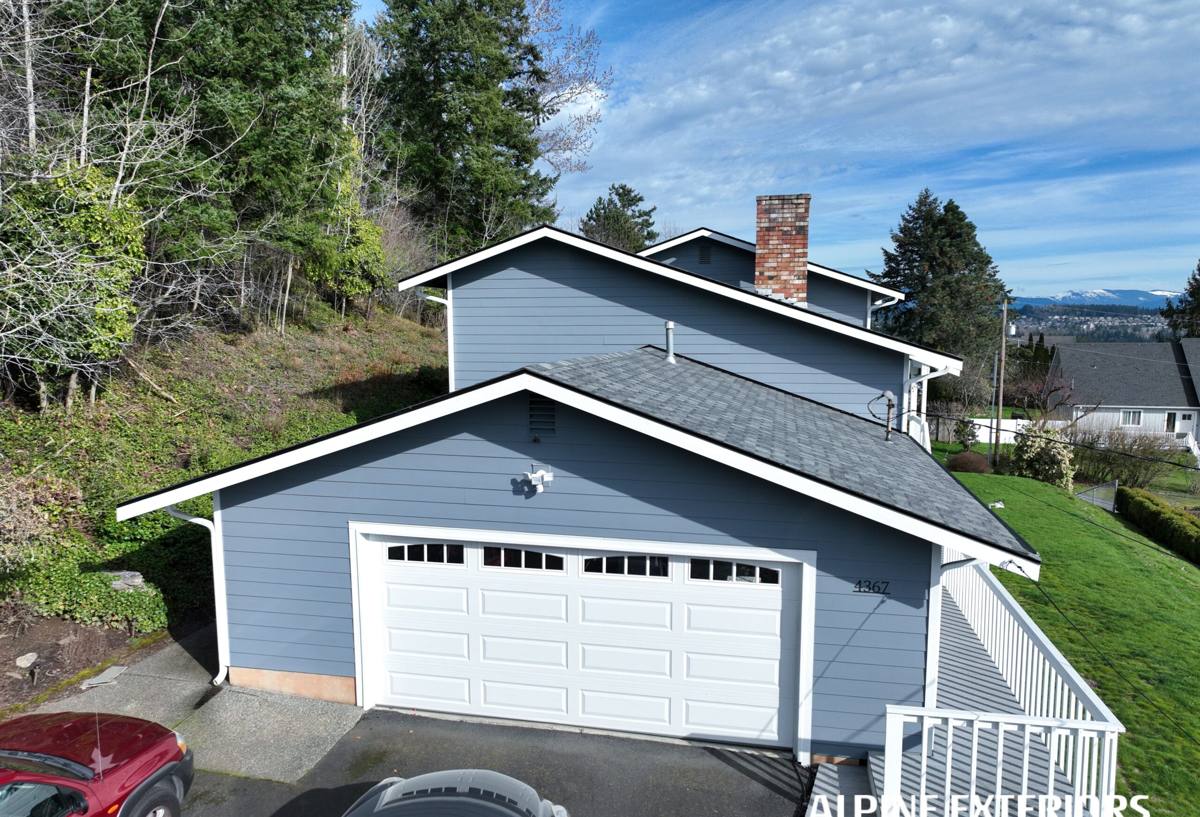
How to Tell a Sunnyland Roof Is Due
Most homeowners call us after noticing one or two symptoms, not because they've done a full inspection. Here's what actually tends to matter:
- Moss established in the shaded valleys or north slope, not just a light dusting — established growth lifts shingle edges and holds water against the roof deck
- Granule loss showing up in gutters or downspouts, especially after a windstorm
- Shingles that are curling, cupping, or cracking, particularly on south and west-facing slopes that get more sun-to-rain cycling
- Soft or spongy decking felt underfoot near valleys, chimneys, or skylights — usually a sign water has already gotten past the roofing layer
- Daylight visible through the attic roof boards, or water staining on attic insulation
- A roof age past 20-25 years for asphalt composition, or visible fastener corrosion on an older metal roof
Any one of these on its own might just mean a repair. Several together, especially on a roof already past its expected service life, usually means a full replacement is the more honest recommendation — patch work on a roof that's structurally tired just moves the next leak somewhere else.
What a Correct Roof Installation Actually Involves
A new roof is more than shingles on plywood. In a climate like ours, the layers underneath the visible roofing do most of the real work keeping water out.
Tear-off and deck inspection
We remove the old roofing down to the deck rather than layering over it. That's the only way to actually see the condition of the sheathing — rot, delamination, and soft spots don't show up until the old material is off, and Sunnyland's shaded, moisture-prone lots are more likely than most to have hidden deck damage around valleys and penetrations.
Underlayment and ice/water protection
Given the amount of driving rain Whatcom County sees, we don't treat underlayment as an afterthought. Self-adhered membrane goes in at eaves, valleys, and around every penetration — the places wind-driven rain is most likely to work its way sideways or backward under the shingle line.
Flashing
Chimneys, skylights, sidewalls, and roof-to-wall transitions are where the majority of leaks actually originate, not the open field of shingles. We install new flashing rather than reusing old metal, and we detail it so water is directed out and down at every step, never allowed to pool or wick backward.
Ventilation
Proper intake and exhaust venting keeps the underside of the deck dry and temperature-stable, which matters twice over here: it slows moss and mildew growth on the topside, and it protects against condensation-driven rot from the inside during our long, damp winters.
Material Choices for a Coastal, Shaded Lot
There's no single "best" roofing material — the right choice depends on sun exposure, tree cover, budget, and how much maintenance a homeowner wants to take on. Here's how the common options actually perform on a Sunnyland-type lot:
| Material | Salt air behavior | Moss resistance | Typical lifespan |
|---|---|---|---|
| Architectural asphalt composition | Good with quality fasteners and flashing | Moderate; benefits from copper/zinc strips | 25-30 years |
| Standing seam metal | Very good with coastal-rated coatings | Strong — sheds debris and dries fast | 40-50+ years |
| Cedar shake | Fair; needs regular treatment near salt air | Weak without diligent upkeep | 20-25 years with maintenance |
| Synthetic composite shingle | Good | Moderate to good depending on product | 30-40 years |
We don't install cedar shake as a first recommendation on shaded, moss-prone lots like many in Sunnyland — not because the material is bad, but because it demands a maintenance schedule most homeowners don't keep up with, and the moisture-retention problem that drives moss growth works directly against wood's long-term performance. We're happy to install it if that's what a homeowner wants and understands the upkeep, but we'll say so plainly up front.
Dealing With Moss and Algae for the Long Term
Whatcom County's moss season isn't a few weeks — on shaded roofs it's most of the year. A new roof installation is the best opportunity to build in moss resistance rather than fighting it after the fact:
- Zinc or copper control strips installed under the ridge cap, so rain naturally carries trace metals down the roof face
- Algae-resistant shingle products where sun exposure and budget allow
- Ventilation detailing that reduces the damp, still-air conditions moss spores need to establish
- Gutter and valley design that doesn't trap needles and leaf litter against the shingle surface
None of this eliminates the need for periodic roof cleaning on a heavily shaded lot, but it meaningfully slows how fast moss re-establishes and reduces how aggressively it needs to be removed later — aggressive moss removal on an old, brittle roof is itself a common cause of granule loss and shortened life.
Our Process for a Sunnyland Installation
- On-site assessment — we look at the whole roof system, not just the shingles: deck condition, ventilation, flashing points, and how the lot's tree cover and sun exposure will affect material choice
- Written estimate — a clear breakdown of material, labor, and scope, so there are no surprise line items once tear-off starts
- Scheduling around weather — we plan installations for realistic dry windows and keep the deck protected if conditions shift mid-job
- Tear-off and deck repair — full removal of old roofing, replacement of any damaged sheathing found underneath
- Underlayment, flashing, and ventilation installation — the layers that determine whether the roof actually performs in our climate
- Roofing material installation — installed to manufacturer specification, which is also what keeps the material warranty valid
- Final walkthrough — we review the completed roof with the homeowner and cover care and maintenance expectations
Permits, Timeline, and Working Around Our Weather
Most roof replacements in Bellingham require a permit, and we handle that as part of the job rather than leaving it to the homeowner to sort out. Timeline-wise, a typical single-family roof replacement runs one to a few days of active work once material is on site, but the surrounding schedule — permitting, material lead time, and waiting for a stable dry window — is usually the longer part. Because Whatcom County weather can turn with little warning, we build in contingency for tarping and protecting an open deck rather than assuming a job will finish in a single uninterrupted stretch.
Why Local Experience in Sunnyland Matters
A roofing crew that only occasionally works this far north tends to plan for generic Pacific Northwest conditions. A crew that regularly works Bellingham and Whatcom County neighborhoods like Sunnyland already knows which slopes on a given street orientation hold moss longest, how much tree litter to expect in gutters through fall, and which flashing details actually hold up against wind-driven rain off the bay. That familiarity shows up less in the sales pitch and more in the small decisions made on the roof — where extra membrane goes, how ventilation is balanced, which fasteners are rated for salt exposure.
What to ask any contractor before you hire
- Will the deck be inspected and repaired, not just covered, if damage is found?
- What underlayment and ice/water protection is included at eaves and valleys?
- Is old flashing being reused or replaced?
- How is ventilation being calculated for this specific roof, not a generic rule of thumb?
- What's covered under workmanship warranty versus the manufacturer's material warranty?
- Are they licensed and insured to work in Washington State, and can they provide proof?
A straight answer to every one of those questions, with nothing vague or brushed off, is a reasonable bar for any roofing contractor working on your home.
Get a Straight Answer on Your Roof
If your Sunnyland roof is showing moss, granule loss, or just age, it's worth getting an honest, no-pressure look before deciding between repair and replacement. We'll walk the roof, explain what we find, and give you a clear estimate — no upsell, no scare tactics. Fill out the form below to schedule a free estimate.