 Bellingham
 Storm Damage Roof Repair Built for Fairhaven's Coastal Weather
Fairhaven sits close enough to the water that its homes take a different kind of beating than roofs a few miles inland. Salt-laden air off Bellingham Bay works on metal fasteners and flashing year-round, driving rain off winter storms finds every weak seam, and a long, damp moss season keeps roof surfaces wet and soft for months at a time. A roof that would hold up fine in a drier part of Whatcom County can develop real problems here faster than most homeowners expect. Storm damage repair in this neighborhood isn't just patching a leak — it's understanding why that leak started and fixing the underlying exposure, not just the symptom.
This page covers what storm damage repair actually looks like for a Fairhaven home: what to check after a wind or rain event, what a correct repair involves, how our process works, and why using a crew that already works this specific area — not just Bellingham generally — makes a real difference in how long the fix lasts.
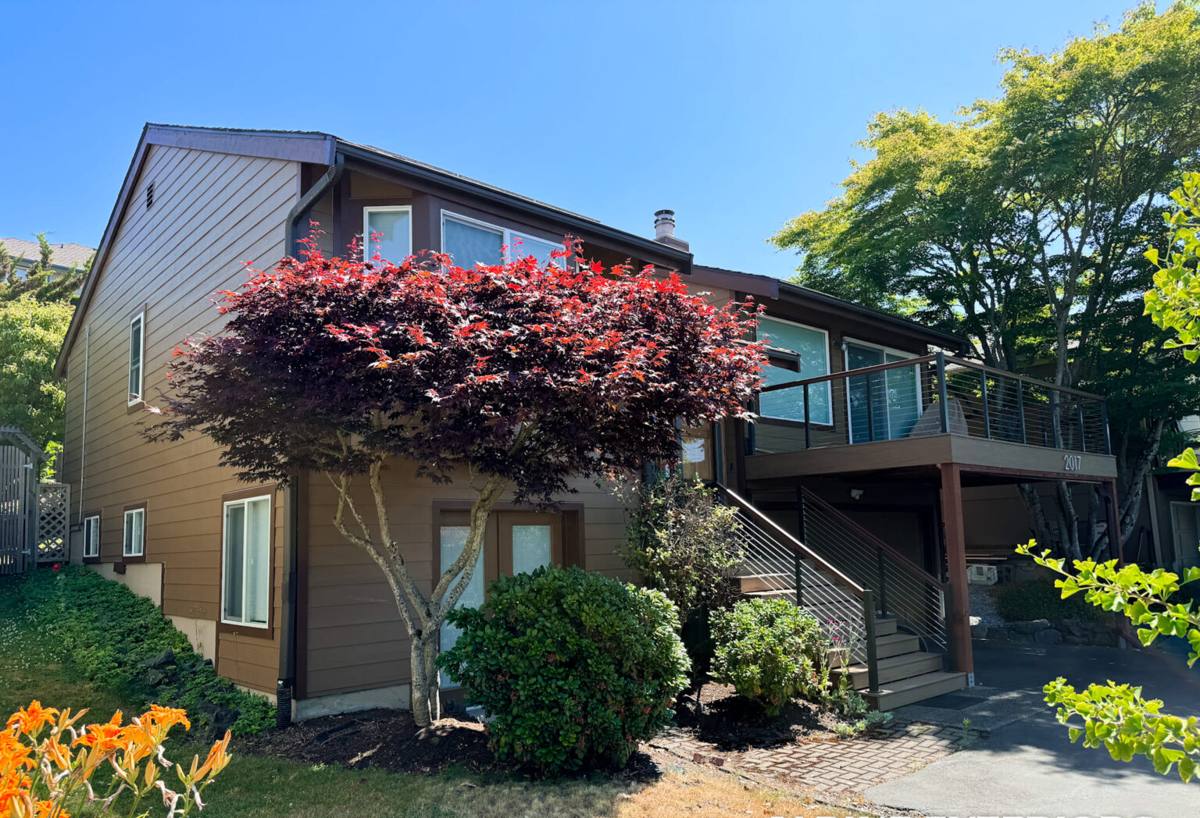
What Bellingham Storms Do to a Roof
Whatcom County storms rarely bring the kind of dramatic hail damage you'd see elsewhere. The damage here is slower and more cumulative:
- Wind-driven rain pushes water sideways under shingle tabs and around flashing that would shed a straight-down rain just fine.
- Salt air accelerates corrosion on exposed nail heads, metal flashing, and vent boots, especially on roofs facing the bay.
- Repeated freeze-thaw cycles in the shoulder seasons stress shingles and sealant that are already brittle from age.
- Extended moss growth holds moisture against the roof deck long after a storm has passed, which turns a small storm-related opening into a slow leak that's hard to trace back to its cause.
Because of this, storm damage in Fairhaven often shows up weeks after the actual weather event — a stain on a ceiling in dry weather is frequently the tail end of damage that started during a storm that's long since passed.
Signs Your Fairhaven Roof May Have Storm Damage
Not every sign is obvious from the ground, and not every homeowner should be climbing onto a wet roof to check. Here's what's worth a closer look, and what usually warrants a call:
- Shingles that look lifted, curled, or missing after a windstorm
- Granules collecting in gutters or at downspout outlets
- Visible gaps or rust streaks around flashing at chimneys, vents, or wall intersections
- New or worsening ceiling stains, especially near exterior walls
- Soft or spongy spots when walking a flat or low-slope section
- Moss buildup that's thicker on one side of the roof, which often points to a shaded, slower-drying area more prone to hidden moisture damage
- Daylight visible through the roof deck from inside an attic
If you see any of these after a storm, the priority is getting a proper look before the next rain, not necessarily before the next business day. A tarped section that's properly secured can buy time; an unaddressed one usually gets worse with every additional storm.
What a Correct Storm Damage Repair Actually Involves
Assessment Before Anything Gets Touched
A repair that only replaces the shingles you can see from the ground is a repair that's likely to fail again. A proper assessment means getting on the roof, checking the decking underneath the visibly damaged area, and inspecting the flashing and underlayment in the surrounding sections — not just the spot that's obviously torn or missing. Storm damage often extends further than the visible entry point, especially once wind has worked underneath adjacent shingles.
Matching Materials, Not Just Covering the Hole
Shingle color, profile, and manufacturer all matter for a repair to look right and perform right. A mismatched patch is a cosmetic problem today and often a maintenance problem later, since different shingle lines don't always seal the same way against each other. Where an exact match isn't available — which happens with older roofs — the honest approach is to tell the homeowner that up front and talk through the options, rather than installing something that will visibly stand out.
Flashing, Underlayment, and the Parts You Don't See
Most of the leaks we trace back on storm calls aren't from the shingles themselves — they're from flashing that's corroded, underlayment that's torn, or a seal around a vent or chimney that's failed. In a coastal-influenced climate like Fairhaven's, this is where the salt air factor really shows up: fasteners and thin flashing metal corrode faster here than a few miles inland, so a repair that only replaces shingles and leaves compromised flashing in place is a repair that's going to be called back out within a season or two.
Dealing With Moss and Trapped Moisture
If moss caused or contributed to the original damage, clearing it and treating the area is part of a correct repair — not an upsell. Leaving moss in place after a repair just sets up the same failure to happen again in the same spot, usually within a year or two given how long the wet season runs here.
Repair vs. Replacement: How We Make the Call
| Situation | Repair Usually Makes Sense | Replacement Usually Makes Sense |
|---|---|---|
| Roof age | Under roughly 12-15 years, materials still supple | Nearing or past manufacturer's expected service life |
| Damage extent | Isolated to one section or slope | Multiple sections, or damage found in more than one storm cycle |
| Decking condition | Solid, dry, no rot found during assessment | Soft, delaminated, or water-stained decking underneath |
| Underlying material | Still matches current shingle line reasonably well | Discontinued shingle line, poor match available |
| Recurrence | First storm-related issue in that area | Same area has needed repair more than once |
We'll walk through where your roof actually falls on this list rather than defaulting to whichever option is more profitable. A lot of Fairhaven roofs are genuinely fine with a targeted repair; some aren't, and pretending otherwise just delays a bigger bill.
Our Storm Damage Repair Process
- Initial contact and triage — we ask what happened and when, and whether the area needs a temporary tarp before we can get out.
- On-roof inspection — checking the damaged area plus adjacent sections, decking, flashing, and attic access points if available.
- Written scope and estimate — what we found, what needs to happen, and a real cost range before any work starts.
- Repair — matching materials where possible, replacing compromised flashing and underlayment, not just the top layer of shingles.
- Final check — confirming the repair sheds water correctly and that surrounding areas weren't missed.
What Storm Damage Repair Typically Costs
Every repair is different, but the main cost drivers are consistent. This isn't a quote — it's what actually moves the price up or down on a storm repair job.
| Cost Factor | Why It Matters |
|---|---|
| Size of the damaged area | Larger sections mean more material and labor, straightforwardly |
| Roof pitch and access | Steeper roofs and difficult access add setup time and safety measures |
| Flashing and decking condition | Hidden damage found during assessment often changes scope once we're up there |
| Material match availability | Older or discontinued shingle lines can require sourcing time or a broader repair |
| Story height | Multi-story homes typically require more equipment and time |
We give a written range after the on-roof inspection, not before — anyone quoting a firm price over the phone without seeing the damage is guessing.
Insurance and Storm Damage Claims
Many storm damage repairs in this area go through homeowner's insurance. We're happy to document what we find with photos and a written assessment that you can use for a claim, but we're not adjusters and won't promise a claim outcome. What we can tell you honestly: the sooner damage is documented after a storm, the easier that conversation with an insurer tends to go, since delayed damage is harder to tie back to a specific weather event.
Why a Crew That Works Fairhaven Specifically Matters
Bellingham covers a lot of different microclimates and building ages, and Fairhaven's mix of older homes and coastal exposure isn't the same as what you'd find further inland in Whatcom County. A crew that regularly works this neighborhood already has a sense of which roof styles and ages are common here, how the salt air and moss cycle typically show up on local roofs, and what corners tend to get cut on older repairs that need to be undone properly this time. That's not a substitute for a thorough on-roof inspection of your specific home, but it does mean fewer surprises and a repair plan that accounts for the conditions your roof is actually dealing with, not generic advice built for a drier, inland climate.
Get a Straight Answer on Your Roof
If you've had storm damage in Fairhaven — or you're not sure whether what you're seeing is storm damage or just wear — we'll come take a real look and give you a written, honest assessment. No pressure, no inflated scope. Use the form below to request a free estimate and we'll get back to you to schedule a time.