 Bellingham
 Deck Building in Sunnyland: Built for What This Neighborhood Actually Deals With
Sunnyland sits close enough to Bellingham Bay that salt-tinged air, wind-driven rain, and a moss season that can run half the year all show up in how a deck ages. A deck built the same way you'd build one in Spokane or Sacramento will not hold up the same way here. The framing, fastener choice, decking material, and drainage details all need to answer to our specific climate, not a generic build spec pulled from a national lumber yard catalog. That's the difference between a deck that needs real attention at year five and one that's still solid at year twenty.
We're a Bellingham-based crew that works Whatcom County neighborhoods regularly, Sunnyland included. That matters more than it sounds like it should — knowing how a particular block drains, how much shade a lot gets off mature trees, and what the moisture load looks like in a given micro-area changes real decisions on a deck project.
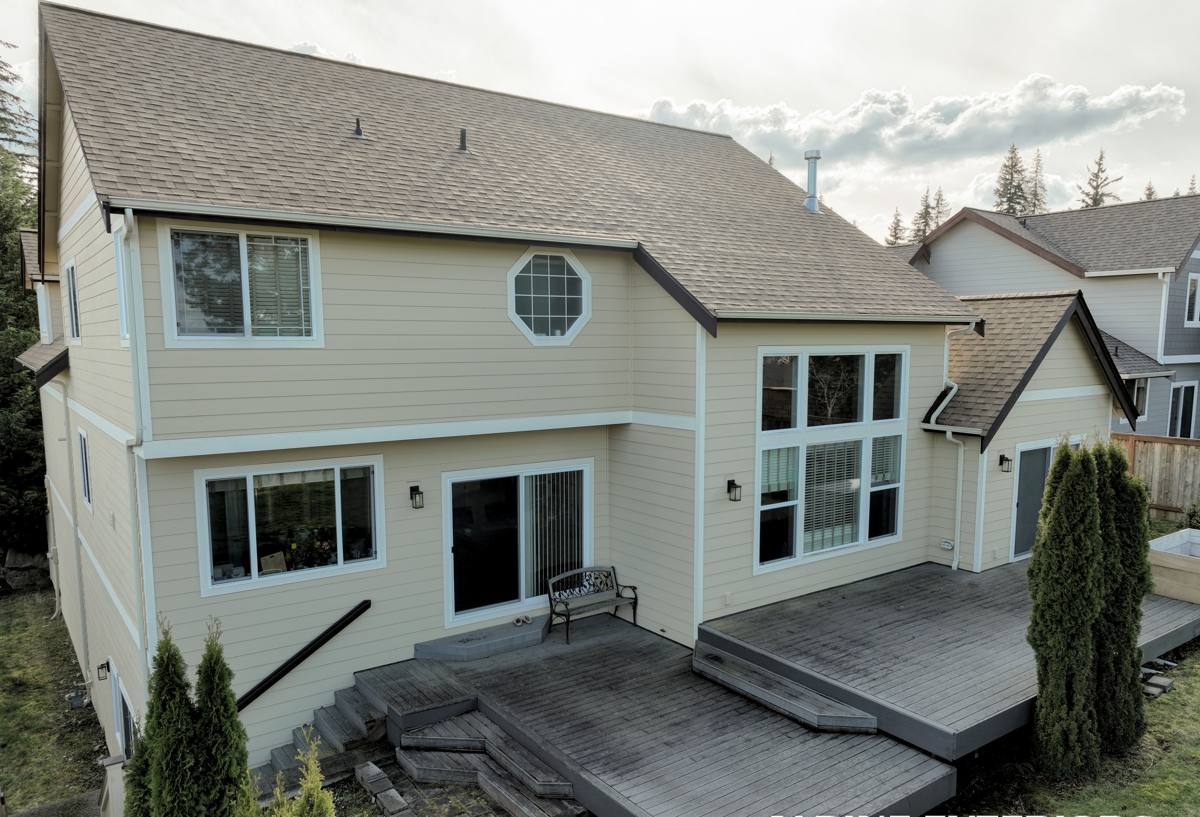
What Bellingham's Climate Does to a Deck Over Time
Moisture Is the Whole Game
Whatcom County doesn't get the heaviest annual rainfall in the state, but it gets a lot of low-intensity, long-duration wet weather — the kind that keeps wood damp for days at a stretch rather than a hard downpour that runs off fast. That extended dampness is what drives rot, fastener corrosion, and moss growth. A deck that dries out quickly between rain events lasts. A deck that stays damp doesn't, regardless of what species of lumber or composite you started with.
Salt Air and Metal Fatigue
Sunnyland's proximity to the bay means airborne salt is a real factor, even a few miles inland. Salt air accelerates corrosion on any exposed metal — joist hangers, structural screws, railing brackets, post bases. Standard electro-galvanized hardware corrodes faster here than it would in a dry inland climate. This is a detail a lot of out-of-area or one-off builders miss because it's not something you'd think about unless you've watched hardware fail on local decks over the years.
Moss Season and Surface Wear
Shaded, north-facing, or tree-covered decks in this area can grow moss for much of the fall through spring. Moss holds moisture against the deck surface and, on wood decking, can accelerate surface decay. On composite or capped boards it's mostly cosmetic but still needs a cleaning routine to stay ahead of it. Either way, a deck design that ignores drainage and airflow underneath is signing up for a moss problem from day one.
What a Correctly Built Deck Looks Like Here
A deck built right for Bellingham's climate isn't exotic — it's a set of ordinary decisions made correctly and consistently, rather than skipped to save time or cost.
- Ledger board flashed properly where it meets the house, with a drainage gap and self-adhering flashing tape — not just caulk, which fails over time
- Structural fasteners and hardware rated for coastal/high-moisture exposure, not standard interior-grade hardware
- Joist tape or a comparable protective barrier on top of framing lumber to slow moisture intrusion at the most vulnerable point of the structure
- Decking gap spacing set to allow for wood movement and to let water drain through rather than pool
- Post bases elevated off grade or concrete, never buried, to avoid constant ground moisture contact
- Adequate under-deck ventilation and clearance so air can actually move and dry the structure out between rain events
- Stair and railing hardware installed to current code, since this is one of the most common inspection failure points on older decks
None of this is complicated. It's mostly about not cutting corners on the parts of the job that don't show once the deck is finished — which is exactly why they get skipped by builders who aren't planning to be the ones fixing it in five years.
Decking Material Options and Local Trade-Offs
There's no universally "best" decking material — there's a best fit for the homeowner's budget, maintenance appetite, and how exposed the deck will be to sun, shade, and moisture. Here's how the common options actually perform in this climate.
| Material | Upfront Cost | Maintenance in This Climate | Notes |
|---|---|---|---|
| Pressure-treated wood | Lowest | Annual cleaning, re-staining/sealing every 1-2 years | Most vulnerable to moss and moisture if maintenance lapses; needs the most attention here |
| Cedar | Moderate | Sealing every 1-2 years to hold color and resist moisture | Naturally more rot-resistant than treated pine but still needs upkeep in wet shade |
| Composite (capped) | Higher | Occasional washing, no staining/sealing | Best resistance to moss staining and moisture damage; better long-term value where budget allows |
| PVC decking | Highest | Lowest — mostly rinsing | Fully moisture-immune surface; premium cost, good fit for heavily shaded or damp lots |
We'll walk through this honestly based on your specific lot — a sun-exposed deck on the south side of a Sunnyland property doesn't need the same material decision as a shaded deck tucked under mature trees.
Our Process for a Sunnyland Deck Build
1. On-Site Assessment
We look at drainage on the lot, sun/shade exposure, existing structure if this is a rebuild, and any code or permit considerations specific to the property. This is also where we talk through material options against your budget and how much upkeep you actually want to sign up for.
2. Design and Permitting
Most deck projects in the city require a permit, especially anything attached to the house or elevated more than a couple feet off grade. We handle that process rather than leaving it to the homeowner to sort out with the city.
3. Demo and Site Prep (Rebuilds)
If we're replacing an existing deck, we assess the ledger connection and framing underneath before committing to a full teardown — sometimes the structure is salvageable and only the surface needs replacing, which changes both cost and timeline.
4. Framing and Flashing
This is the stage where climate-specific details actually get built in — ledger flashing, joist protection, corrosion-resistant hardware, proper post footings. It's also the least visible stage once the project is done, which is exactly why it matters most.
5. Decking, Railing, and Finish
Surface installation, railing to code, stairs, and any finish work like fascia boards or built-in seating if that's part of the design.
6. Final Walkthrough
We go over maintenance expectations specific to the material chosen — what a cedar deck needs versus what a composite deck needs in our climate — so there are no surprises a year or two down the line.
Cost Factors Worth Understanding Upfront
Deck project costs vary widely based on size, material, and site conditions, but the factors that move the number most in this area are worth knowing before you start pricing:
- Height and elevation: a deck requiring stairs, railings, and deeper footings costs meaningfully more than a low ground-level deck
- Ledger and structural condition: rebuilds where the house-side connection needs repair add cost that isn't obvious from looking at the old deck
- Material choice: the spread between pressure-treated wood and premium composite or PVC can be substantial, but so is the maintenance cost difference over 15-20 years
- Site access: lots with difficult equipment or material access (steep grades, tight side yards) add labor time
- Permitting and inspection requirements: straightforward for most residential decks, but structural changes or larger elevated decks can add review time
Why a Local Crew Matters for This Job
Deck building isn't a job where "close enough" hardware and generic framing details cause a problem right away — it's a job where the shortcuts show up two, five, ten years later, usually as rot at the ledger, corroded hardware, or a moss-slicked surface that never dries out properly. A crew that works Whatcom County regularly has already seen what fails here and builds around it as a default, not as an upsell.
Working Sunnyland specifically also means we're not guessing at typical lot conditions in the area — tree cover, drainage patterns, and how close a given block sits to bay-influenced weather. That local familiarity shows up in fewer surprises during the build and a deck that's designed for the actual conditions it'll sit in, not a textbook average.
Get a Straight Answer on Your Deck Project
If you're planning a new deck or need to replace one that's showing its age, we're happy to come take a look and give you an honest read on condition, options, and realistic cost ranges — no pressure, no upsell script. Use the form below to request a free estimate for your Sunnyland property.