 Bellingham
 Building a Deck That Actually Holds Up in Silver Beach
Silver Beach is one of the quieter, tree-lined residential pockets in the greater Bellingham area, and it comes with a climate profile that's tougher on outdoor structures than most homeowners expect. Between the salt-tinged air that moves off Bellingham Bay, the long stretches of driving rain, and a moss season that can run eight months or more, a deck here is under near-constant moisture pressure. We've built and repaired enough decks around Whatcom County to know that the difference between a deck that lasts fifteen years and one that needs major work in five almost always comes down to decisions made before the first board goes down — material choice, framing details, and drainage.
This page is about custom deck builds specifically for Silver Beach lots: what the local conditions demand, what a correctly built deck actually involves under the surface, and how we approach the job from first visit to final walkthrough.
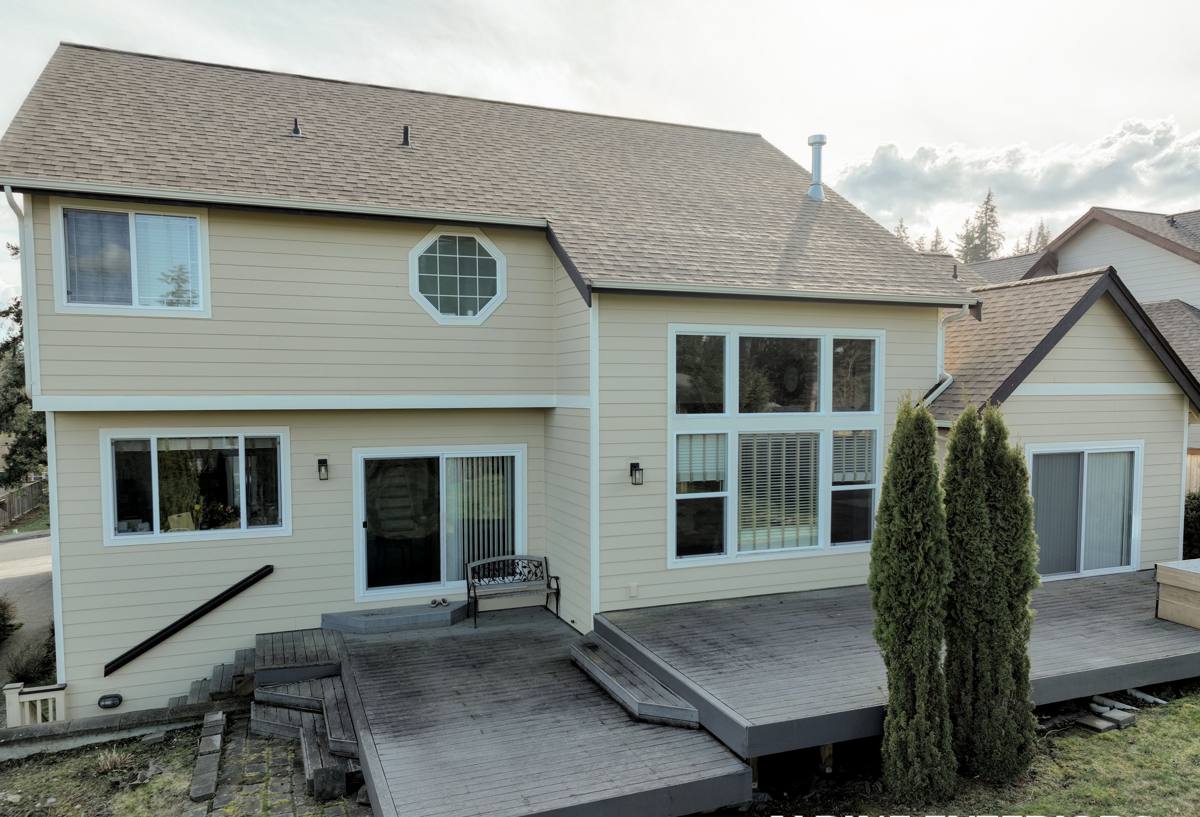
What Silver Beach's Conditions Do to an Ordinary Deck
Moisture and Moss
Bellingham's rain doesn't fall in short, drenching bursts the way it does in a lot of the country — it settles in for days. Combined with the shade from mature trees common on many Silver Beach lots, that means deck surfaces, joists, and fasteners can stay damp far longer than manufacturers assume when they publish maintenance schedules. Moss and algae take hold on any horizontal wood surface that doesn't dry out regularly, and once established, they hold moisture against the wood grain instead of letting it shed.
Salt Air and Hardware
Being close enough to Bellingham Bay to catch salt-laden air means standard steel fasteners, brackets, and screws corrode faster here than they would fifty miles inland. This isn't dramatic — it's slow, and it's usually invisible from the top of the deck. The failures that actually cause problems (a ledger board pulling away, a post base rusting through) start below the decking boards, which is exactly why so many older decks look fine right up until they don't.
Sun and Shade Patterns
Tree cover that makes a lot appealing also means uneven drying across the deck surface — one section baked by afternoon sun, another permanently shaded and damp. That inconsistency accelerates warping and color change on lower-grade wood, and it's a big part of why we design drainage and board spacing around each yard's actual sun exposure instead of a one-size-fits-all layout.
Choosing the Right Decking Material for This Neighborhood
There's no universally "best" decking material — there's a best material for a given budget, maintenance appetite, and site condition. Here's how the common options actually perform in Bellingham's climate:
| Material | Moisture & Moss Resistance | Maintenance | Typical Lifespan | Relative Cost |
|---|---|---|---|---|
| Pressure-treated wood | Fair — needs sealing to perform | Annual cleaning and re-sealing | 10–15 years | Lowest upfront |
| Cedar | Good natural resistance, but surface still needs care | Periodic cleaning, oil/stain every 2–3 years | 15–20 years | Mid-range |
| Capped composite | Very good — resists moisture absorption | Occasional washing, no sealing | 20–25+ years (manufacturer-dependent warranty) | Higher upfront |
| PVC/vinyl decking | Excellent — non-porous surface | Lowest — soap and water | 25+ years | Highest upfront |
We won't tell a homeowner that wood is a bad choice — a well-built cedar deck, sealed on a normal schedule, looks great and lasts a long time. What we will say honestly is that composite and PVC products remove a lot of the maintenance burden that this climate imposes on wood, which is why we steer people toward them when low upkeep matters more than upfront cost. The trade-off is real: composite and PVC cost more to install, and repairs to a damaged board are less forgiving than simply sanding and re-staining a wood plank.
Substructure and Fasteners: The Part You Don't See
Footings and Framing
A deck is only as good as what's underneath it. In a climate this wet, footing depth, drainage gravel, and proper standoff between the ground and the lowest framing members matter more than they would in a drier region. We frame with an eye toward airflow underneath the deck — a structure that can't breathe underneath holds moisture against the joists year-round, which is where rot actually starts, not on the visible decking.
Ledger Boards and Flashing
Where a deck attaches to the house, proper flashing is non-negotiable. A ledger board without correct flashing is one of the most common sources of hidden water damage we find on older decks in this area — water works its way behind the board and into the house's rim joist over years, unnoticed until siding or interior damage shows up.
Fasteners and Connectors
Given the salt air off the Bay, we use stainless steel or heavy hot-dip galvanized fasteners and connectors rather than standard coated hardware. It costs a little more up front and makes zero visible difference on installation day — but it's the single biggest factor in whether the structural hardware is still sound in fifteen years or corroding in five.
Design Considerations Specific to Silver Beach Lots
Grading and Drainage
Many lots in this part of Bellingham have some slope or uneven grading, which affects how water moves around and under a deck's footings. Before we design anything, we look at how water actually moves across the yard during a heavy rain, not just where the deck will look nice — footing placement and any needed drainage work follow from that.
Railings and Code Compliance
Deck height above grade determines whether guardrails are required and to what specification, and Whatcom County's building department has specific requirements on rail height, baluster spacing, and stair guards. We handle permitting and inspection scheduling as part of the build so homeowners aren't left chasing down code requirements themselves.
Shade-Driven Layout Choices
On lots with heavy tree cover, board orientation and gap spacing can be adjusted to encourage faster drying in perpetually shaded areas. It's a small design detail, but it meaningfully reduces moss buildup in the sections of a deck that never see direct sun.
Our Process for a Silver Beach Deck Build
- Site visit and assessment — we look at grade, sun/shade exposure, existing structure (for replacements), and how the deck will connect to the house.
- Design and material walkthrough — we go over material options honestly, including maintenance expectations, so the choice matches how the homeowner actually wants to live with the deck long-term.
- Permitting — we handle the paperwork and inspection scheduling with the county so the project stays compliant from footings to railings.
- Framing and structural work — footings, joists, ledger flashing, and hardware are all done to hold up under this specific climate, not a generic spec sheet.
- Decking, railing, and finish work — installed to the manufacturer's specifications (critical for composite/PVC warranties) with attention to drainage and airflow underneath.
- Final walkthrough — we go over care and maintenance specific to the material chosen before we consider the job done.
Maintenance Checklist to Protect Your Investment
Whatever material a deck is built from, a few habits make a real difference in how long it lasts in this climate:
- Sweep debris and standing leaves off the deck surface regularly, especially in fall and winter under tree cover
- Clean moss and algae buildup at the first sign of it rather than waiting for it to spread
- Check that gaps between boards stay clear so water can drain rather than pool
- Inspect the underside of the deck once a year for signs of moisture staining or soft wood near the ledger board
- Re-seal or re-stain wood decking on the schedule recommended for the specific product used, not just "when it looks faded"
- Confirm downspouts and yard drainage near the deck are directing water away from footings
Why Hire a Crew That Already Works in Silver Beach
A deck built to a generic national spec sheet will pass inspection and look fine on day one. Whether it's still sound in fifteen years depends on whether the builder actually accounted for this region's rain, moss, and salt air in the framing and hardware choices — details that don't show up in a photo or a walkthrough at handoff. Working regularly in Bellingham and around Whatcom County means we've already seen how different materials and framing approaches hold up here over time, not just on paper. That's the kind of judgment that only comes from building in the same climate repeatedly, and it's what separates a deck that needs re-work in year six from one that's still solid at year twenty.
If you're planning a new deck or considering a rebuild for a Silver Beach property, we're happy to take a look and walk through honest options for your specific lot and budget. Fill out the form below for a free, no-pressure estimate.