 Bellingham
 Roof Repair Built for Lynden's Weather, Not a Generic Climate
Lynden sits in the fertile stretch of Whatcom County east of Bellingham, close enough to the water that the same weather systems moving off the Strait of Georgia and Bellingham Bay reach it as steady, driving rain and long stretches of gray, damp air. It's a different roofing environment than a dry inland climate, and it asks more of a roof than most homeowners realize until something starts leaking. We repair roofs in Lynden regularly, and the patterns we see here — moss creeping under shingle tabs, valleys that never fully dry out, flashing that's worked loose from years of wind-driven rain — are consistent enough that we plan every repair around them, not around a one-size-fits-all checklist.
This page is about roof repair specifically, not full replacement. Plenty of roofs that look rough from the ground still have years of life left if the right sections are addressed correctly. The goal of a good repair is to stop water intrusion, correct the underlying cause, and blend the fix into the surrounding roofing so it performs — and looks — like it belongs there.
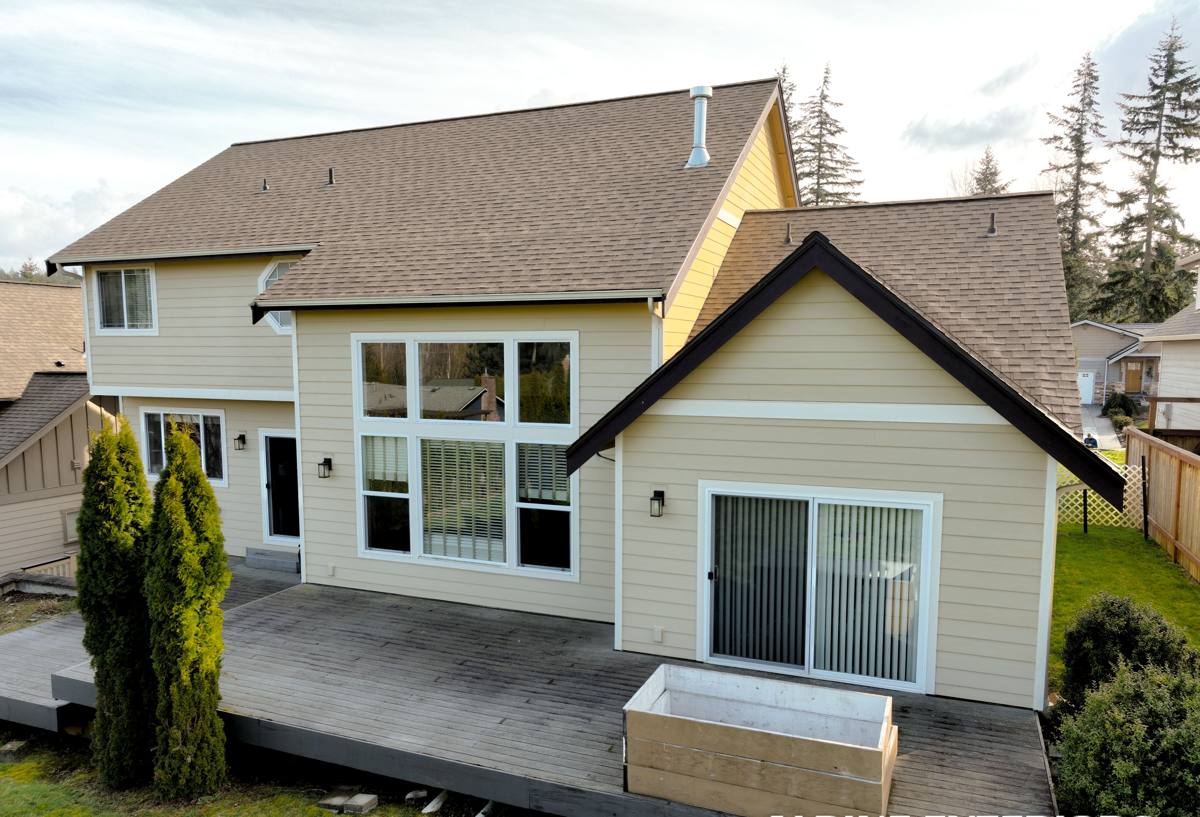
What the Local Climate Does to a Roof Over Time
Whatcom County's roofing challenges aren't dramatic single events, they're cumulative. A roof here rarely fails all at once; it fails one small overlooked spot at a time.
Moss and Organic Growth
Shade, moisture, and mild temperatures are exactly what moss needs to thrive, and Lynden has all three for a good chunk of the year. Moss doesn't just look bad — it holds water against the roofing surface, works its way under shingle edges and shakes, and lifts material away from the deck. Left alone through a full wet season, a mossy patch can go from cosmetic to a genuine leak point.
Driving Rain and Wind
Rain that falls straight down is far less punishing than rain pushed sideways by wind, which is common during Pacific storm systems that move through this part of Washington. Wind-driven rain finds gaps that vertical rain never would — under flashing laps, around fasteners, at the edges of skylights and vent boots. Most of the leaks we trace back start at one of these transition points, not in the open field of the roof.
Prolonged Dampness
Even without a single heavy storm, roofs here can stay damp for days at a time in fall and winter. That extended moisture exposure accelerates rot in exposed wood trim, degrades underlayment faster than manufacturers' climate assumptions account for, and gives algae and moss a head start every single year.
Signs a Lynden Roof Needs Repair
Homeowners usually notice a problem well after it started. Catching it earlier keeps a repair a repair, instead of turning it into a replacement.
- A ceiling stain that appears after a windy rainstorm specifically, rather than every time it rains
- Moss or dark streaking concentrated on north-facing or shaded slopes
- Shingles that look cupped, curled, or are missing granules in patches
- Soft or spongy spots when walked on, especially near valleys or chimneys
- Flashing around vents, skylights, or the chimney that looks lifted, rusted, or gapped
- Gutters that fill with granules or moss debris faster than they should
- Daylight visible through the roof deck from inside an attic
- Musty smell in an attic or upper closet with no obvious source
Any one of these on its own is usually a fixable, localized problem. Several at once, or a stain that keeps reappearing after previous patch attempts, is a sign the underlying issue hasn't actually been solved yet.
What a Correct Repair Actually Involves
A roof repair that lasts isn't just about swapping a few shingles. It's about finding the real entry point and rebuilding that section correctly, in the right order.
Diagnosis Before Anything Gets Touched
Water doesn't always show up on the ceiling directly below where it entered the roof — it can travel along rafters or sheathing before dripping. A proper repair starts with tracing the path from the interior stain or attic evidence back to the actual point of entry, checked from both inside and on the roof itself.
Addressing the Cause, Not Just the Symptom
If moss lifted a course of shingles, replacing the shingles without treating and physically clearing the moss just resets the clock on the same failure. If flashing failed because it was undersized or improperly lapped, a patch of roofing cement over it is a temporary cover-up, not a repair. Correct flashing work — proper laps, sealed fastener penetrations, step flashing tied into the right layer — is what actually keeps water out long term.
Matching Materials and Weathering
New shingles or shakes look different from weathered ones for a while. A careful repair pulls replacement material from the least visible slope when possible, or blends transitions at natural break points like a hip or ridge line, so the patch doesn't stand out as a patch.
Ventilation and Underlayment Condition
Repeated moisture problems in one area sometimes trace back to poor attic ventilation trapping humid air against the underside of the deck. When that's part of the picture, we say so — a shingle repair alone won't fix a ventilation problem, and pretending it will just means a return visit.
Repair or Replace: How We Help You Decide
Not every homeowner needs the same answer, and we don't default to recommending replacement just because it's the bigger job. The honest answer usually comes down to a handful of factors.
| Factor | Leans Toward Repair | Leans Toward Replacement |
|---|---|---|
| Roof age | Under roughly two-thirds of expected material lifespan | At or past expected lifespan for the material |
| Extent of damage | Isolated to one slope, valley, or penetration | Spread across multiple slopes or the whole roof |
| Decking condition | Solid, no soft spots found | Soft, rotted, or delaminated sheathing found |
| Underlayment | Still intact where exposed during the repair | Brittle, torn, or failing broadly |
| Moss/algae history | First occurrence or recently treated | Repeated, heavy growth across the roof for years |
| Prior repairs | None, or this is the first issue | Multiple past patches that keep reopening |
We walk homeowners through where their roof lands on each of these before recommending anything. If a repair is the honest answer, that's what we'll propose — a roof doesn't need to be replaced just because it's convenient for us to sell a bigger job.
Our Roof Repair Process
- Inspection: We get on the roof (weather permitting) and in the attic, tracing the leak or damage to its actual source rather than guessing from ground level.
- Written scope: You get a clear explanation of what's failing, why, and what fixing it correctly involves — no vague line items.
- Repair: We remove and rebuild the affected section — flashing, underlayment, decking, and roofing material as needed — rather than layering a patch over the problem.
- Moss and debris treatment: Where growth contributed to the issue, we clear it and treat the area so the same spot doesn't fail again next wet season.
- Cleanup and check: Job site and gutters cleared of debris, and the repair area reviewed with you before we consider the job done.
Why a Crew That Already Works in Lynden Matters
Roof repair is a trade where local familiarity actually changes outcomes, not just convenience. A crew that regularly works roofs across Whatcom County recognizes the difference between damage typical of this climate and something unusual, and doesn't waste time or your money chasing the wrong cause. We know which manufacturers' products hold up reasonably in a wet, mossy environment and which ones tend to need more attention here, and we're straightforward about those trade-offs rather than steering you toward whatever's easiest for us to install.
There's also the practical side: being local means we can respond faster when a leak shows up mid-storm, we're familiar with the permitting and inspection expectations that apply in this area, and we're not disappearing after the invoice clears — if something about the repair doesn't hold up the way it should, we're a short drive away, not a call center in another state.
Simple Maintenance That Prevents Repair Calls
A lot of the repairs we make in Lynden trace back to small maintenance items that got skipped for a year or two. This is a reasonable seasonal checklist for homeowners who want to stay ahead of it:
- Clear moss and organic debris from shaded slopes at least once a year, ideally before the wet season sets in
- Keep gutters and downspouts clear so water isn't backing up under the roof edge
- Trim back tree branches that keep a section of roof shaded and damp longer than the rest
- Look at flashing around chimneys, skylights, and vents from the ground with binoculars after major windstorms
- Check the attic once or twice a year for staining, daylight gaps, or a musty smell
- Address small leaks immediately — a repair that's a few shingles today can become deck replacement in a season or two if ignored
Get a Straightforward Look at Your Roof
If you're dealing with a stain on the ceiling, moss that's gotten out of hand, or you just want a second opinion before committing to a bigger job, we're glad to come take a look. We'll give you an honest read on what's actually going on and what it would take to fix it right — no pressure, no upsell script. Use the form below to request a free estimate for roof repair at your Lynden home.