 Bellingham
 Why Cordata Roofs Wear the Way They Do
Cordata sits on the north side of Bellingham, in a part of Whatcom County where mature conifers shade a lot of the housing stock and moisture has more ways to find its way onto a roof than most homeowners realize. It's not one thing wearing your roof out — it's three things working together, year after year: salt-tinged air moving in off Bellingham Bay and the Salish Sea, long stretches of driving rain that don't let up for days, and a moss season that, in a shaded neighborhood like this one, can run nine months out of twelve.
None of those three things is dramatic on its own. A little salt in the air doesn't hurt much in July. A few weeks of steady rain is normal for the Pacific Northwest. A patch of moss on a north-facing slope looks cosmetic. Put them together on the same roof for fifteen or twenty years and you get lifted shingle tabs, soft decking under the moss mats, and fastener corrosion that a drier climate would never produce. A roof replacement done right for a Cordata address has to account for all three, not just swap old shingles for new ones.
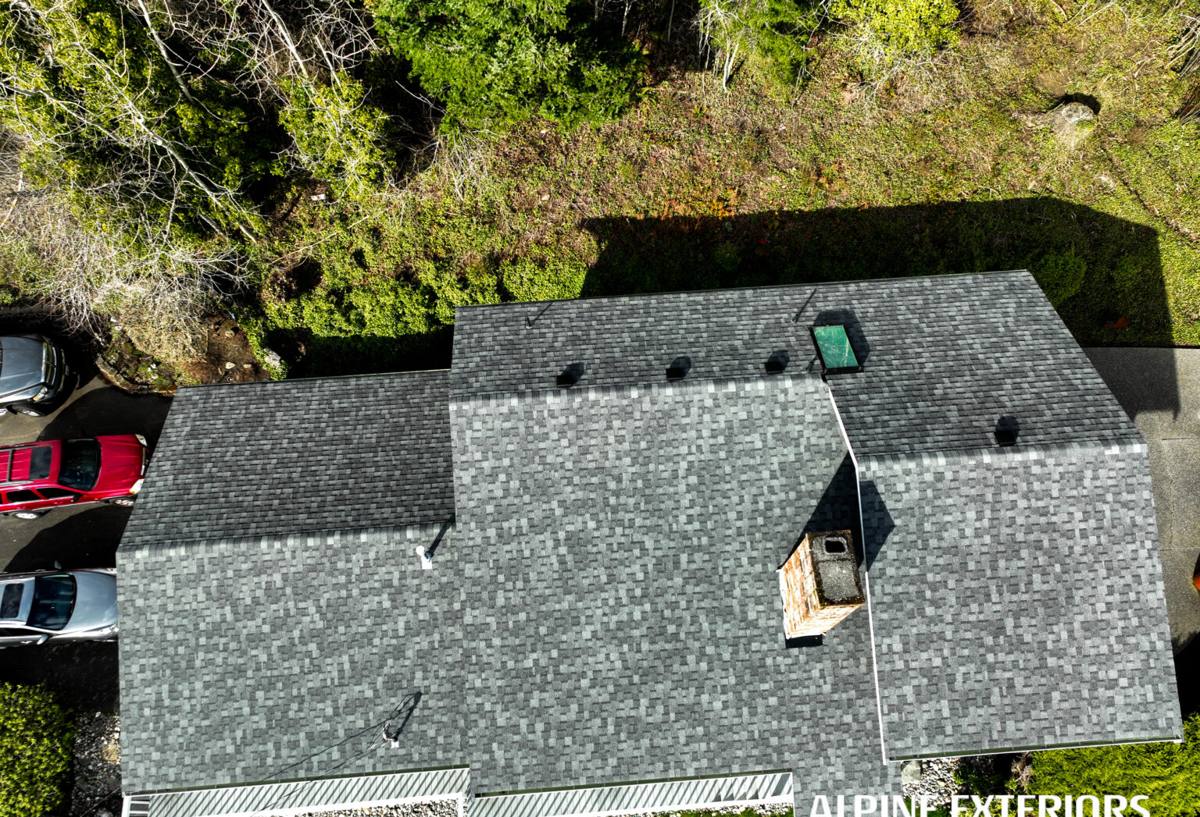
Signs a Cordata Roof Is Ready for Replacement, Not Another Repair
We get called out for a lot of roofs that homeowners assume just need a patch. Sometimes that's true. Often, once we're actually up there, it's clear the roof has been quietly failing for a while and a patch would just be a delay. Here's what tells us a full replacement is the honest recommendation instead of another repair:
- Moss mats thick enough to hold water against the shingles for days after it stops raining
- Granule loss heavy enough that you can see bare, shiny patches on south- and west-facing slopes
- Shingle tabs curling, cracking, or lifting at the edges, especially where moss has been scraped or pressure-washed off in the past
- Soft or spongy spots underfoot on the roof deck itself, usually near valleys or old repair patches
- Rust staining or visible corrosion around flashing, vent boots, or exposed fasteners
- Daylight, water stains, or a musty smell in the attic, particularly along the north-facing slopes that never fully dry out
- A roof already past 20–25 years old, even if it "looks fine" from the ground
Any one of these by itself might still be repairable. Two or three together, on a roof that's already into its second decade, usually means the underlying materials are failing faster than the visible shingles suggest.
What a Correct Roof Replacement Actually Involves
A roof replacement is not just new shingles laid over what's there. Done correctly, it's a full rebuild of the roof's water-management system, and in a climate like this one, skipping steps is exactly where roofs end up failing early.
Tear-Off and Deck Inspection
We strip the old roofing down to bare decking rather than overlaying, because overlaying traps moisture between layers — a real problem in a climate that's damp for most of the year. Once the deck is exposed, we check every sheet for rot, soft spots, and old water damage, particularly around valleys, chimneys, and any spot where moss has been sitting for years. Any compromised decking gets replaced before anything new goes down. This is the step that separates a roof that lasts 25+ years from one that needs attention again in eight.
Moss and Moisture Control
On a shaded lot, moss isn't a one-time problem you solve during installation — it's an ongoing condition you design around. That means proper slope and flashing details so water sheds instead of pooling, zinc or copper strips at the ridge on request to slow future moss growth, and making sure no organic debris from the old roof gets buried under the new one. We also pay close attention to any trees overhanging the roofline, since constant shade and falling needles are what let moss take hold in the first place.
Ventilation and Underlayment
A roof that can't breathe traps humidity in the attic, which shortens the life of the decking from underneath — invisible from the ground, but it's one of the most common causes of early roof failure we see in this climate. We check intake and exhaust ventilation as part of every replacement and correct it where it's inadequate. Underneath the shingles, synthetic or self-adhering underlayment (with additional ice-and-water membrane at eaves, valleys, and around penetrations) gives the deck a real second line of defense against the wind-driven rain that comes through Whatcom County in fall and winter.
Choosing a Roofing Material for This Climate
There's no single "best" roofing material — there's a best fit for your house, your budget, and how much long-term maintenance you're willing to take on. For a shaded, damp, salt-air neighborhood like Cordata, here's how the common options actually compare:
| Material | Typical Lifespan | Moss/Moisture Behavior | Relative Cost | Maintenance |
|---|---|---|---|---|
| Architectural asphalt shingles | 25–30 years | Good with proper ventilation and periodic moss removal | $ | Low to moderate |
| Standard 3-tab asphalt | 15–20 years | More prone to curling and granule loss under constant moisture | $ | Moderate |
| Metal (standing seam or panel) | 40–50+ years | Sheds water and moss well; needs coastal-rated fasteners near the bay | $$$ | Low |
| Cedar shake/shingle | 20–30 years with upkeep | Attractive but holds moisture; needs regular treatment to resist rot and moss | $$$ | High |
We don't push cedar on shaded, damp lots as a first recommendation — it can look great, but the maintenance schedule needed to keep it from rotting or growing moss in this specific climate is a real, ongoing commitment, not a one-time cost. That's a trade-off we'll walk through honestly rather than upsell you into during an estimate. Architectural asphalt is the right call for most Cordata homes because it balances upfront cost against a realistic maintenance schedule; metal earns its higher price tag on steep-pitch roofs or for homeowners who want to essentially remove moss and moisture as a recurring concern.
Our Roof Replacement Process
- On-site inspection of the current roof, attic ventilation, and deck condition — no obligation, no pressure
- Written estimate with material options and a clear breakdown of what's included
- Scheduling around Whatcom County's weather windows to avoid tearing off a roof into an open forecast
- Tear-off, deck inspection and repair, and disposal of old materials
- Underlayment, flashing, ventilation correction, and installation of the chosen roofing material
- Full cleanup, including a magnetic sweep for stray fasteners around the yard and driveway
- Final walk-through and warranty paperwork before we consider the job done
We don't start a tear-off without a real weather window. Pulling a roof open and getting caught by an unplanned system moving in off the Sound is how homeowners end up with interior water damage — a completely avoidable problem with basic scheduling discipline.
Permits, Timing, and Local Requirements
Roof replacements in Bellingham typically require a permit, and inspection scheduling can add a few days to a project timeline depending on the season. We handle that paperwork as part of the job rather than leaving it for the homeowner to sort out. Late fall and winter are Whatcom County's busiest storm months, which makes late summer and early fall the most reliable window for scheduling — though a failing roof shouldn't wait for "ideal" timing if it's already letting water in.
Why a Crew That Already Works in Cordata Matters
A roofing crew that's replaced roofs on your street, or one very much like it, already knows which slopes hold moss longest, how the tree cover on a given lot affects drying time between storms, and what the local permit and inspection process actually looks like in practice — not just on paper. That's not a marketing point, it's a practical one: it means fewer surprises mid-project and a scope that's accurate the first time, rather than a change order two weeks in.
We're a siding contractor first, which means we look at a roof replacement as part of the whole exterior envelope, not an isolated system. Roof leaks don't stay on the roof — they travel down into fascia boards, soffits, and siding, and a roof that's improperly flashed at the wall line will keep causing siding problems long after the shingles themselves look fine. When we replace a roof, we're checking that transition, not just the field of shingles.
After Installation: Keeping a New Roof Performing in This Climate
A new roof still lives in the same climate the old one did, so a little ongoing attention protects the investment:
- Keep gutters clear so water isn't backing up under the shingle edge, especially under overhanging trees
- Have moss growth removed gently (not pressure-washed, which can strip granules) as soon as it appears, not after it's established
- Trim back branches that keep a section of roof shaded and damp longer than the rest
- Walk the attic once a year to check for ventilation issues or early signs of moisture before they become structural
None of this is complicated, but it's the difference between a roof that comfortably hits the top of its expected lifespan and one that starts showing the same old problems again in twelve years.
If your roof is showing any of the signs above, or you just want an honest read on how many years it's got left, we're happy to take a look. The estimate is free, there's no pressure to book anything on the spot, and you'll get a straight answer about what your roof actually needs — just fill out the form below to get started.