 Bellingham
 Composite Decking for Happy Valley: Built for the Weather We Actually Get
Happy Valley is one of Bellingham's established neighborhoods, and like most of Whatcom County it sits under a marine climate that's tough on outdoor wood. Salt air drifting in off the water, driving rain that comes in sideways for days at a time, and a moss season that can stretch from October into May all work against a deck year-round. Composite decking doesn't solve every problem on its own, but installed correctly for this specific climate, it holds up a lot better than dimensional lumber and needs far less babysitting to look good ten years in.
This page is about one thing: composite deck installation for Happy Valley homes, what the local weather actually does to a deck over time, and what a correct install looks like so you're not redoing this project in five years.
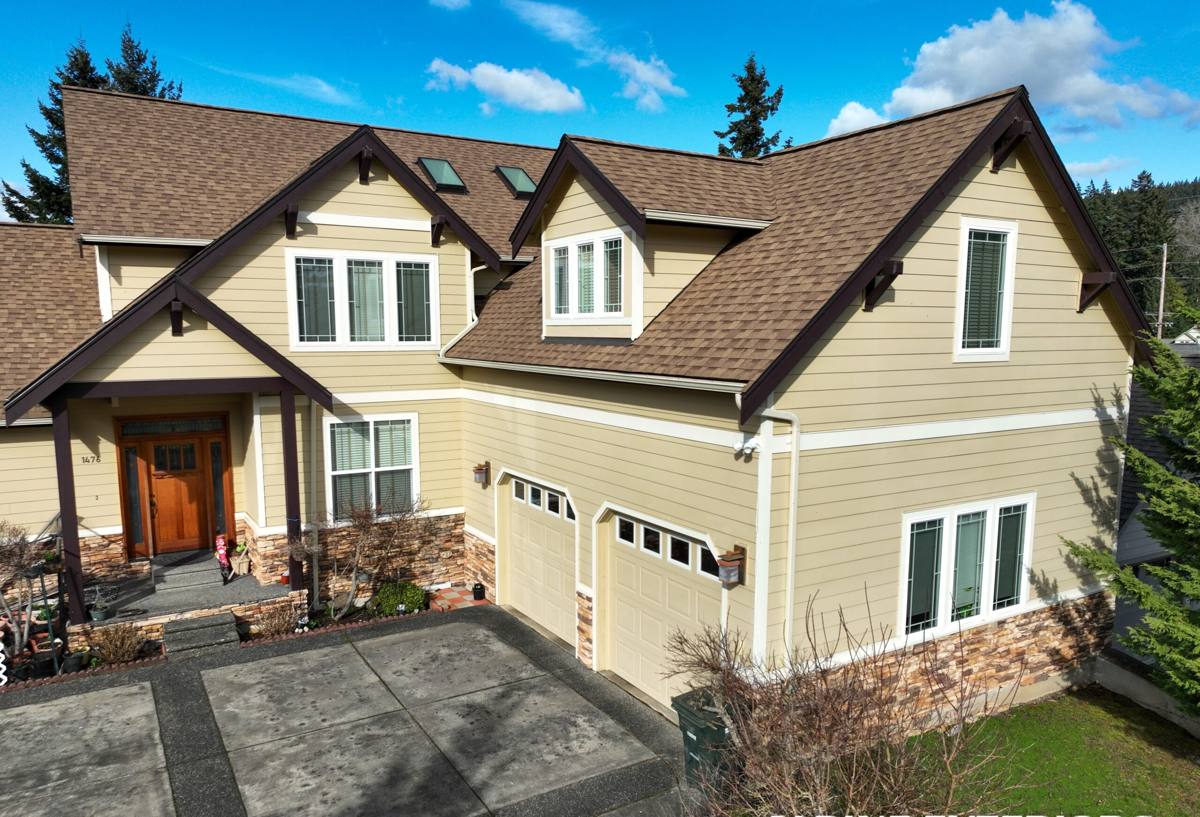
What Bellingham's Climate Does to a Deck Over Time
Moisture and Ground Contact
Whatcom County gets a lot of rain, but it's the slow, soaking, day-after-day rain that causes the real damage — not the occasional downpour. Water works its way into fastener holes, end grain, and anywhere two boards sit tight against each other. On a poorly built deck, that moisture has nowhere to go, so it sits, and wood rots or composite boards without proper capping can swell at the edges. The framing underneath matters just as much as the decking on top.
Salt Air and Fasteners
Being close to the water means salt-laden air reaches inland further than people expect. It's not just an oceanfront problem. Salt air accelerates corrosion in fasteners, brackets, and any exposed metal hardware. Composite boards themselves don't corrode, but a deck is only as good as the screws, joist hangers, and structural connectors holding it together, so hardware selection matters as much as board selection.
Moss and Shade
Many Happy Valley lots have mature trees and partial shade, which is great for privacy and terrible for moss. A long moss season means any decking surface that stays damp and shaded will grow something green on it eventually. Composite boards with a proper capped surface and the right surface texture resist moss and algae far better than uncapped composite or bare wood, but no decking material is moss-proof if airflow and drainage underneath are ignored.
Composite vs. Wood vs. PVC: An Honest Comparison
There's no single "best" decking material for every house — it depends on budget, how much upkeep you're willing to do, and how much shade and moisture the deck will see. Here's how the common options actually compare for a Whatcom County property.
| Material | Upkeep | Moisture/Moss Resistance | Typical Lifespan Locally | Relative Cost |
|---|---|---|---|---|
| Pressure-treated wood | Annual cleaning, periodic staining/sealing | Poor in shaded, damp spots without upkeep | 10–15 years | Lowest upfront |
| Cedar | Regular sealing to hold color and resist rot | Moderate; softens faster in constant shade | 12–18 years | Low-Mid |
| Uncapped composite | Periodic cleaning; can absorb moisture at cut edges | Moderate | 15–20 years | Mid |
| Capped composite | Occasional washing, no sealing or staining | Strong, including shaded/mossy areas | 20–30 years | Mid-High |
| PVC decking | Minimal; wash only | Very strong, fully non-porous | 25+ years | Highest |
Capped composite is the sweet spot for most Happy Valley homes we work on: it costs less than PVC, resists this climate's moisture and moss far better than wood or uncapped composite, and doesn't ask for a sealing schedule you'll eventually fall behind on.
What a Correct Composite Deck Installation Actually Involves
Substructure and Drainage First
The decking boards get all the attention, but the framing underneath is what determines whether the deck lasts. That means pressure-treated or engineered joists sized correctly for the span, joist tape or flashing to keep water off the top of the framing, and a layout that lets water drain away from the house instead of pooling against siding or a foundation wall.
Fastening and Hidden Clips
Most quality composite systems use hidden fastener clips rather than face-screwing every board. Done right, this gives a clean surface with no screw heads to trap water or moss, and it lets the boards expand and contract with temperature swings without buckling. Board spacing has to account for our wet climate — gaps that are too tight trap debris and moisture; gaps that are too wide look sloppy and catch heels.
Ventilation Underneath
A deck built low to the ground or boxed in on the sides without any airflow underneath will stay damp longer after every rain, which is exactly what moss wants. Proper skirting still allows for airflow, and any low-clearance framing gets extra attention to drainage since it dries out more slowly.
Choosing the Right Board for a Shaded, Rainy Lot
Not every composite board performs the same way here. A few things worth thinking through before picking a color and brand:
- Capped vs. uncapped: a fully capped board (cap on all four sides, including cut ends where possible) resists moisture intrusion far better in a climate that rarely lets a deck fully dry out.
- Color and shade: very dark boards run hotter in direct sun but hold up fine in mostly shaded yards, which describes a lot of Happy Valley lots with mature trees.
- Surface texture: a texture with some grip does better against moss and algae than a dead-flat, glossy finish, which can get slick when wet.
- Warranty structure: read what's actually covered — fade, staining, and structural warranties are often separate, and installation errors can void coverage regardless of the product.
Our Process for Happy Valley Projects
Site Visit and Assessment
We walk the actual site — slope, sun exposure, existing structure if there is one, and how water currently moves across the yard. A deck that ignores drainage on day one will fight that problem for its entire life.
Installation
We build the substructure to handle our rainfall and soil conditions, use corrosion-resistant hardware suited to salt-air exposure, and install boards with proper spacing and hidden fastening. We don't cut corners on flashing or joist protection just because it's hidden under the decking — that's the part that fails first if it's skipped.
Final Walkthrough
Before we call a job done, we walk it with you, point out how it drains, and go over what little maintenance it actually needs going forward.
Maintenance Checklist for a Whatcom County Deck
Composite decking is low-maintenance, not no-maintenance. A short seasonal routine keeps it looking right through the wet months.
- Sweep debris and fallen leaves off the surface regularly during fall — trapped organic matter feeds moss and holds moisture against the boards.
- Rinse the deck and scrub lightly with a soft brush and mild soap once or twice a year, more often in heavily shaded spots.
- Check that gaps between boards and around the perimeter stay clear so water keeps draining through instead of pooling.
- Keep gutters and downspouts near the deck clear so runoff isn't dumping directly onto or under it.
- Inspect fastener points and any metal hardware yearly for early corrosion, especially on homes closer to the water.
- Trim back overhanging branches where practical to cut down on shade and moss buildup on the deck surface.
Cost Factors Worth Understanding
Composite decking costs more upfront than pressure-treated wood and less than PVC in most cases, but the final number on a Happy Valley project depends on more than just the board price per square foot.
| Factor | Why It Moves the Price |
|---|---|
| Substructure condition | Replacing rotted or undersized framing costs more than decking over sound existing framing |
| Deck height and access | Elevated decks need railings, stairs, and sometimes footings that ground-level decks don't |
| Drainage work | Grading, gutters, or French drains added to keep water moving away from the structure |
| Board grade and brand | Capped composite and PVC cost more per board than uncapped composite or basic wood |
| Site accessibility | Tight side yards or limited equipment access can add labor time |
We give straightforward, itemized estimates rather than a single vague number, so you can see where the cost is actually going and where there's room to adjust the scope if needed.
Why Local Experience in Happy Valley Actually Matters
A crew that already works in and around Bellingham knows how differently a north-facing, tree-shaded lot behaves compared to an open, sun-exposed one a few blocks away — and Happy Valley has plenty of both. We know what Whatcom County's building department expects for permitting on a deck rebuild or new structure, what soil drainage typically looks like in this part of the county, and how much sun exposure a given yard will realistically get through the seasons. That local knowledge shows up in decisions you don't see later — board spacing, drainage slope, hardware choice — not just in the finished look of the deck.
Hiring out-of-area crews or big regional companies unfamiliar with our specific rain patterns and moss pressure often means generic installation choices that work fine in a drier climate but underperform here. A deck built for Bellingham's actual conditions, by people who deal with those conditions on every job, is the difference between a deck you maintain and a deck you replace.
If you're weighing composite decking for a Happy Valley property, we're happy to walk the site, talk through the real trade-offs for your yard's sun and drainage, and put together a free, no-pressure estimate. Use the form below to get started.