 Bellingham
 Why Columbia Roofs Wear Differently Than Roofs Inland
Columbia sits close enough to Bellingham Bay that homes here deal with a combination most inland Whatcom County neighborhoods don't: salt-laden air moving off the water, wind-driven rain that hits roofs at an angle instead of falling straight down, and a wet season that stretches long enough for moss to get a real foothold on anything that stays damp. None of these things individually is unusual for Western Washington. Together, on an older roof, they add up faster than most homeowners expect.
Asphalt shingles in this environment tend to show granule loss and algae staining earlier than the manufacturer's numbers suggest, and moss doesn't just sit on top — it works its rhizoids under shingle tabs and lifts them, which is how a "cosmetic" moss problem turns into a leak. Metal roofing handles this particular mix of conditions better than most other roofing materials, which is why we get asked about it often in this part of Bellingham.
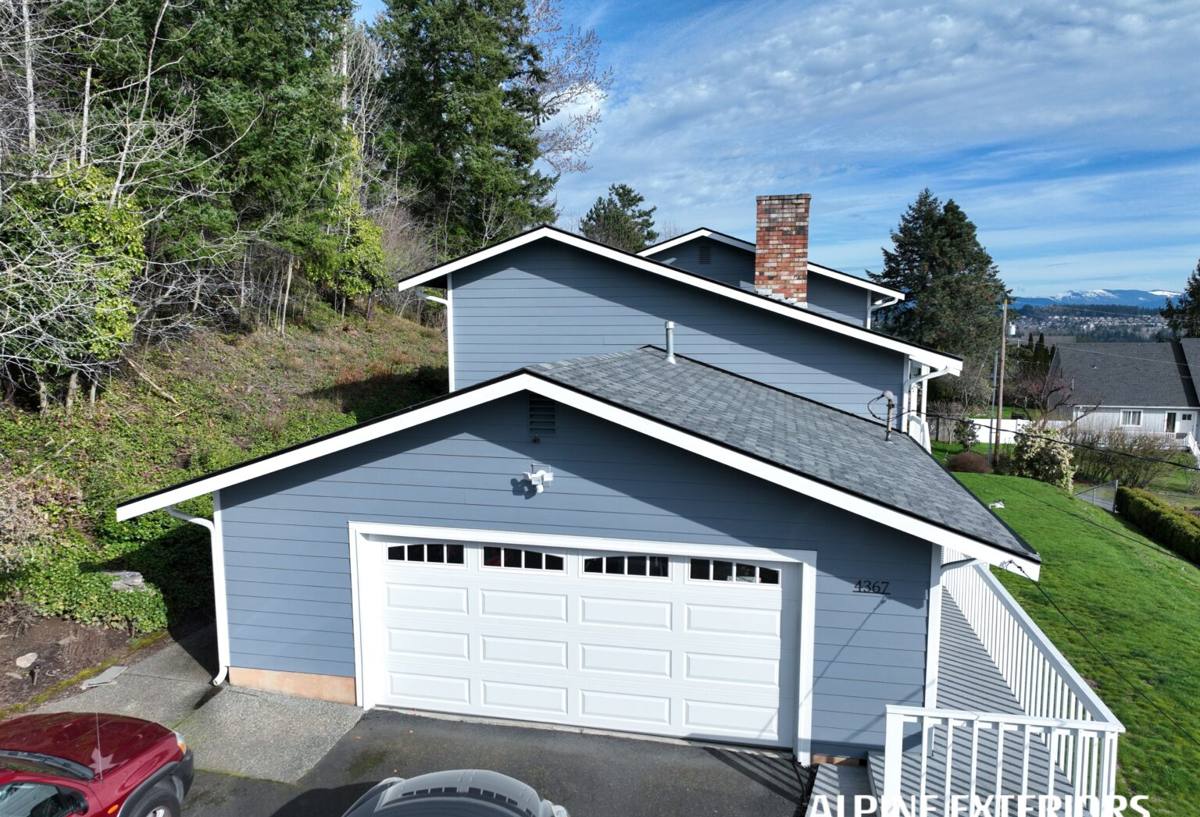
What Salt Air, Rain, and Moss Actually Do to a Roof
Salt Air
Airborne salt is corrosive to unprotected or poorly coated metal fasteners, flashing, and gutters. It's not usually enough to damage properly finished metal panels, but it will find any weak point — an exposed cut edge, a scratched coating, a fastener that isn't rated for the exposure.
Driving Rain
Storms coming off the water don't always fall straight down. Wind-driven rain gets pushed sideways and upward under laps, around penetrations, and along ridge lines. A roof that's only designed for vertical rain shedding can leak in these conditions even when every shingle is technically intact.
Moss Season
Whatcom County's wet season runs long, and north-facing or shaded sections of a roof — common on tree-lined Columbia lots — can stay damp for weeks at a stretch. Moss and algae thrive in that moisture, and organic growth holds water against the roofing material far longer than bare surfaces do.
Why Metal Roofing Is a Strong Fit for This Climate
Metal roofing addresses these three issues more directly than most alternatives:
- Shedding, not absorbing: Metal panels don't hold moisture the way shingles or wood shakes can, so there's less material for moss to root into.
- Fewer laps and edges: A properly installed standing seam roof has far fewer horizontal seams than shingles, which reduces the number of places wind-driven rain can work its way in.
- Long service life when installed correctly: Quality steel or aluminum roofing with a proper factory finish is built to hold up through decades of coastal weather, provided the coating and fasteners are matched to the exposure.
- Steep, clean surfaces discourage moss: Moss needs a foothold and moisture. Smooth metal panels give it neither, especially compared to the textured surface of shingles.
Metal isn't magic, though — it's only as good as the coating, the fastener hardware, and the installation underneath it. That's where most of the roofs we get called out to repair went wrong.
Standing Seam vs. Exposed Fastener: What We Recommend and Why
Not all metal roofing is built the same way, and the difference matters more in a salt-air, high-rain environment than it does somewhere drier.
| Feature | Standing Seam | Exposed Fastener |
|---|---|---|
| Fasteners | Hidden under the seam, not exposed to weather | Exposed through the panel face |
| Long-term seal | No fastener penetrations to fail over time | Depends on gasket washers staying sound for the life of the roof |
| Salt air resistance | Fewer exposed metal points for corrosion to start | More exposed hardware to inspect and maintain |
| Upfront cost | Higher material and labor cost | Lower upfront cost |
| Best fit | Primary homes, long-term ownership | Outbuildings, budget-driven projects |
For a primary residence in Columbia that's going to face decades of coastal weather, we generally steer homeowners toward standing seam. The exposed-fastener screws in a typical panel system rely on rubber gaskets that do wear out — when they do, that's when leaks start showing up around every screw line. Standing seam avoids that maintenance item entirely. We'll still install exposed-fastener systems where the project or budget calls for it — outbuildings, shops, additions — but we tell homeowners the trade-off upfront rather than letting them find out later.
What a Correct Metal Roof Installation Actually Involves
The panels get the attention, but the roof's actual performance in Bellingham weather comes down to what's underneath and around them.
Underlayment
A synthetic, high-temperature underlayment rated for metal roofing goes down first. In a wind-driven rain climate, this layer is the backup that catches any moisture that gets past the panels — it's not optional, and it's not the place to cut cost.
Fastener and Hardware Selection
Fasteners, flashing, and trim need to be matched in metal type to the panels themselves, and rated for coastal exposure. Mixing incompatible metals causes galvanic corrosion — a slow problem that shows up as staining and pitting long after installation, often outside a standard warranty window.
Flashing and Penetrations
Chimneys, vents, and valleys are where the vast majority of roof leaks start, metal or otherwise. Flashing has to be formed and layered correctly so water is directed out, not channeled toward a seam or fastener.
Ventilation
Metal roofs still need a properly vented attic underneath. Without it, condensation can form on the underside of the panels, which causes its own moisture problems independent of anything happening outside.
Our Process on a Columbia Metal Roofing Project
The steps below are the same ones we'd walk through with any Bellingham homeowner, but we pay particular attention to a few of them given what this neighborhood's roofs are up against.
- On-site assessment: We look at existing moss and moisture patterns, roof orientation relative to prevailing wind and rain, and the condition of the decking underneath.
- Tear-off and deck inspection: Old roofing comes off and we check the decking for rot or soft spots — common where moss has been holding moisture against the roof for a while.
- Underlayment and flashing: Installed to match the exposure level of the specific roof, not a one-size-fits-all approach.
- Panel installation: Panels, seams, and fasteners installed to manufacturer spec, with attention to coastal-rated hardware.
- Final walkthrough: We go over the finished roof and the maintenance items that matter for this environment, so there are no surprises later.
Keeping a Metal Roof Performing Through Moss Season
Metal roofing needs far less upkeep than shingles, but "far less" isn't "none." A short annual checklist keeps a Columbia roof performing the way it's supposed to:
- Clear overhanging branches so shaded sections dry out faster after rain
- Rinse off accumulated debris and organic buildup once or twice a year, especially on north-facing slopes
- Check gutters and downspouts for blockages that can back water up under the roof edge
- Look over exposed fasteners (if that system was used) for early signs of wear on the gasket washers
- Have flashing around chimneys, vents, and skylights inspected periodically, since these are the most common leak points regardless of roofing material
What Affects the Cost of a Metal Roof in This Area
Every roof is different, but the same handful of factors drive most of the price variation we see on Columbia projects.
| Factor | Why It Matters Here |
|---|---|
| Panel system (standing seam vs. exposed fastener) | Standing seam costs more upfront but removes the long-term fastener maintenance issue |
| Roof pitch and complexity | Valleys, dormers, and multiple planes all add flashing work and labor time |
| Existing roof condition | Moss and moisture damage sometimes means deck repair before panels can go on |
| Coating and finish grade | Higher-grade finishes hold up longer against salt air but cost more per square |
| Tear-off vs. overlay | Full tear-off costs more but lets us properly address decking and underlayment |
We don't quote a metal roof over the phone, and we'd be skeptical of anyone who does. Pitch, access, and existing roof condition change the number enough that a real quote needs an actual look at the roof.
Why It Matters That We Already Work in Columbia and Bellingham
A crew that already works this part of Whatcom County isn't guessing at how a roof will hold up here — we've seen how salt air treats different fastener grades, how far moss can spread on a shaded north slope before it's a problem, and which flashing details actually stop wind-driven rain instead of just slowing it down. That's not something you get from a spec sheet. It comes from doing this work, on roofs like this one, in this exact climate, repeatedly.
It also means we're not learning Bellingham's permitting and inspection process on your project, and we're not a crew that disappears out of the area if something needs a warranty follow-up. Local work stays local.
If you're weighing a metal roof for a home in Columbia, we're glad to take a look and give you a straight, no-pressure estimate — what your specific roof needs, what it'll cost, and why. Use the form below to get started.