 Bellingham
 Why Columbia Homes Take a Different Kind of Beating
Columbia sits close enough to Bellingham Bay that salt-laden air is a daily fact of life, not an occasional weather event. Add Whatcom County's long stretch of driving rain and a moss season that can run from fall through spring, and you've got a combination that finds every weak point in a home's exterior: end grain that wasn't sealed, a nail that backed out, a caulk joint that dried out and cracked. None of that is unique to any one street or block, but it's the reality for the neighborhood as a whole, and it's why siding choice and installation quality matter more here than in a drier inland climate.
A lot of the housing stock in Columbia is older, which means many homes have already been through at least one re-side. Some still have original wood siding patched and painted over decades; others got vinyl or an engineered wood product at some point when that was the cheaper fix. Whatever is on the wall now, the underlying wall assembly has usually been wet and dry more times than a newer home across town. That history matters when we're deciding how much prep work happens before a single new board goes up.
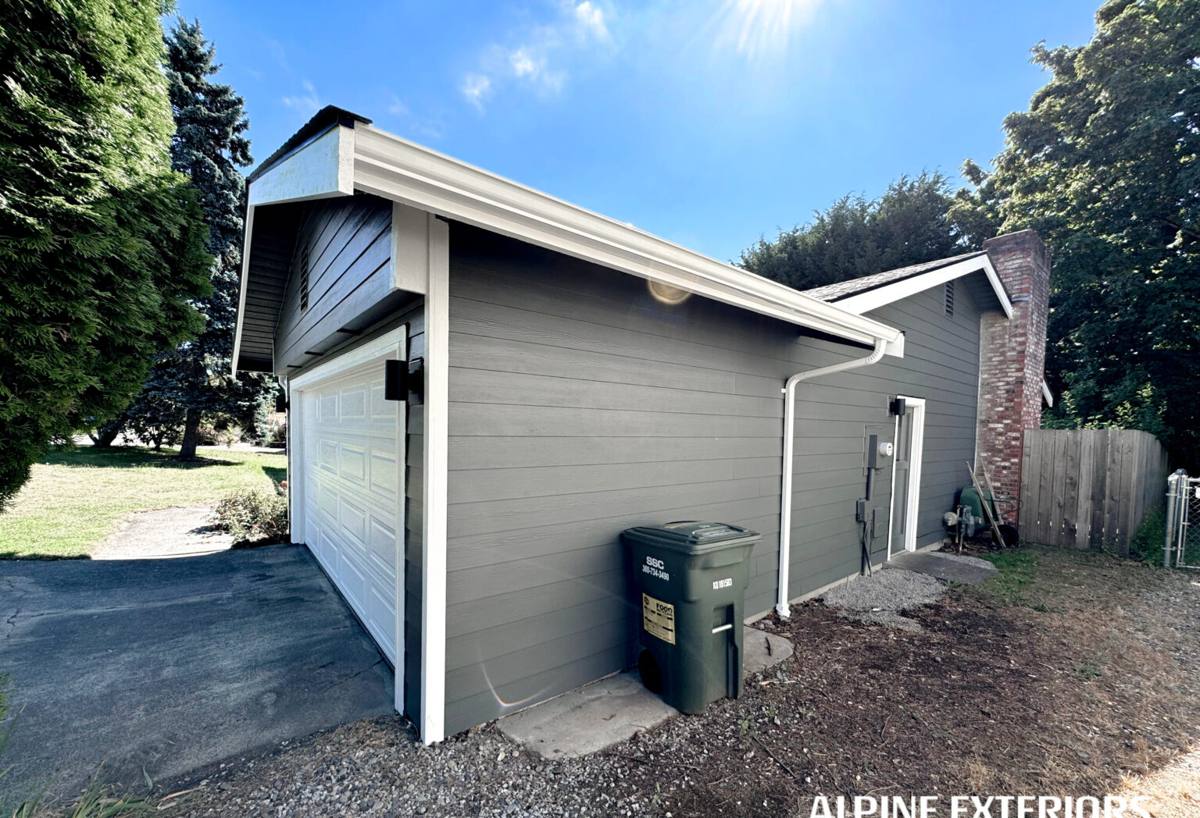
What "Correct" James Hardie Installation Actually Involves
James Hardie fiber cement is a good product, but it only performs like one when it's installed to the manufacturer's spec — not just nailed up in a way that looks fine from the sidewalk. The details that matter are mostly invisible once the job is done, which is exactly why they get skipped by crews in a hurry.
Clearances and gaps
Hardie's installation manual calls for specific clearances from grade, roofing, decks, and other trim — typically a couple of inches minimum, more in some conditions. Skip this and you're inviting the board to wick up moisture from splashback or standing water, which defeats the whole point of switching to fiber cement in the first place.
Flashing and the drainage plane
Siding is the last layer, not the first line of defense. Behind it needs to be a continuous, properly lapped weather-resistive barrier and correctly integrated flashing at every window, door, and horizontal trim transition. In a climate that gets as much sideways rain as this one does, a gap in the drainage plane behind the siding causes problems long before anyone notices a stain on the outside.
Fastening
Hardie specifies fastener type, spacing, and placement relative to the board edge. Corrosion-resistant fasteners are non-negotiable this close to salt air — standard fasteners can bleed rust through a factory finish within a few years and compromise the hold well before that's visible.
HZ5 Engineering: Why the "Cold and Wet" Version Matters Here
James Hardie makes climate-specific formulations under its HZ system, engineered for different combinations of moisture and temperature exposure across the country. Western Washington falls into the category built for prolonged wet conditions rather than extreme heat or dryness. Using the correct HZ product line is not a marketing detail — it affects how the board handles repeated wetting cycles over the decades it's expected to last.
The ColorPlus factory finish is the other half of the equation. It's baked on in a controlled environment rather than field-applied, which gives noticeably better resistance to fading, chipping, and moisture intrusion at the surface than a job-site paint job. The one place this doesn't apply is cut edges — those still need to be sealed with the specified touch-up product every time a board is trimmed on site, which is a step that's easy to rush and easy to verify after the fact if you know to look.
Choosing the Right Hardie Product Line for a Columbia Home
Not every Hardie product is the right fit for every house. Older homes in this neighborhood tend to have traditional lap-siding profiles, but some have porches, gables, or accent walls where a different format makes more sense.
| Product | Typical Use | What It Looks Like |
|---|---|---|
| HardiePlank lap siding | Most full-wall re-sides; matches traditional lap profiles found on older homes | Horizontal overlapping boards, several width and texture options |
| HardiePanel vertical siding | Gables, accent sections, some garages and additions | Smooth or textured vertical panels with battens |
| HardieShingle | Accent gables or full facades on homes with a shingle-style look | Staggered or straight-edge shingle profile |
| HardieTrim | Corners, window and door casing, fascia | Smooth, paintable trim boards that match the siding system |
Mixing formats — lap siding on the main walls with a shingle or panel accent on a gable — is common and holds up fine as long as the transitions are flashed correctly. It's also a reasonable way to update an older home's look without changing its overall proportions.
Our Process on a Columbia Job
The process doesn't change dramatically from house to house, but the sequence matters, especially on an older home where we don't yet know what's behind the existing siding.
- On-site assessment, including a look at the existing siding's condition and, where accessible, a check of the sheathing behind it for moisture damage or rot.
- Full tear-off of the old siding rather than covering over it — you cannot properly inspect or repair a wall assembly you've buried.
- Sheathing repair or replacement where needed, before anything new goes up.
- Installation or repair of the weather-resistive barrier, with attention to proper lapping and sealing at seams.
- Flashing installed or corrected at every window, door, and horizontal trim intersection.
- Hardie siding installed to manufacturer spec: correct clearances, fastening pattern, and cut-edge sealing.
- Final walkthrough and cleanup, including nail and debris cleanup from the yard and any planting beds.
The tear-off and inspection step is the one that gets skipped by crews trying to save a day of labor, and it's the one that determines whether the new siding actually solves the problem or just hides it for a few more years.
Cost Factors for a Columbia Siding Project
We don't publish blanket per-square-foot pricing because the range on any given house depends on real variables, not just square footage. The factors below are the ones that actually move a bid up or down.
| Factor | Why It Matters |
|---|---|
| Condition behind the existing siding | Rot or moisture damage found during tear-off means sheathing repair before installation can proceed |
| Number of stories and access | Second-story walls, tight side yards, or limited staging space add labor time |
| Trim and detail complexity | Multiple gables, dormers, or accent materials take more cutting, flashing, and fitting than a simple rectangular wall |
| Product mix and finish | Combining lap siding with shingle or panel accents, or choosing a premium ColorPlus color, changes material cost |
| Whether trim is replaced | New HardieTrim around windows and corners versus reusing existing trim affects both cost and long-term appearance match |
Living With Hardie Siding in a Moss-Prone, Salty Climate
Fiber cement is genuinely low-maintenance compared to wood or engineered wood siding, but "low-maintenance" doesn't mean "no maintenance," especially in this climate. A few habits keep a Hardie exterior looking and performing the way it should for the long haul.
- Rinse the exterior periodically to clear salt film and organic buildup, particularly on walls that face the water or prevailing weather.
- Keep gutters and downspouts clear so water isn't splashing back onto lower courses of siding.
- Trim back shrubs, trees, and vines that block airflow along a wall — reduced airflow is a major contributor to moss and algae growth on any siding material.
- Inspect caulk joints around windows, doors, and trim once a year and re-caulk any that have cracked or pulled away.
- Avoid piling mulch, soil, or debris against the base of the siding, which traps moisture right at the most vulnerable clearance zone.
- Touch up any cut edges or fastener heads that show exposed material rather than letting them sit through another wet season.
Why Hiring a Crew That Already Works This Neighborhood Matters
A crew that regularly works in Columbia and the surrounding Bellingham area already has a working sense of what's typically found behind older siding here, what the City of Bellingham's permitting process expects for exterior work, and how to sequence a job around the wetter stretches of the year so materials aren't sitting exposed during a string of rain. None of that replaces a proper on-site assessment of your specific house, but it does mean fewer surprises and fewer change orders once tear-off starts. It also means the crew has a reputation in the immediate area to protect, which is a different incentive than a company driving in from out of the region for a single job.
If you're weighing a re-side in Columbia, we're happy to take a look and give you a straight assessment — no pressure, no inflated urgency, just what we'd actually recommend for your house. Reach out for a free estimate using the form below.