 Bellingham
 Why Windows Wear Out Faster in Blaine
Blaine sits right at the edge of Semiahmoo Bay and Drayton Harbor, which means homes here take a different kind of beating than a house twenty miles inland. Salt-laden air off the water works its way into window hardware, corroding hinges, locks, and balance mechanisms years before a homeowner would expect to see that kind of wear. Add in the driving rain that comes through on winter storms — wind-driven water that hits windows sideways instead of straight down — and any weak point in a window's seal or flashing becomes a slow leak waiting to happen.
Then there's the moss season, which in this part of Whatcom County can stretch from early fall well into late spring. Shaded, north-facing walls stay damp for months at a time. That moisture doesn't just grow moss on the roof — it sits against window trim, sills, and the wood framing behind older windows, and over years that constant dampness breaks down caulking, primer, and eventually the wood itself. Windows that would last decades in a drier climate often show real problems in Blaine well before that.
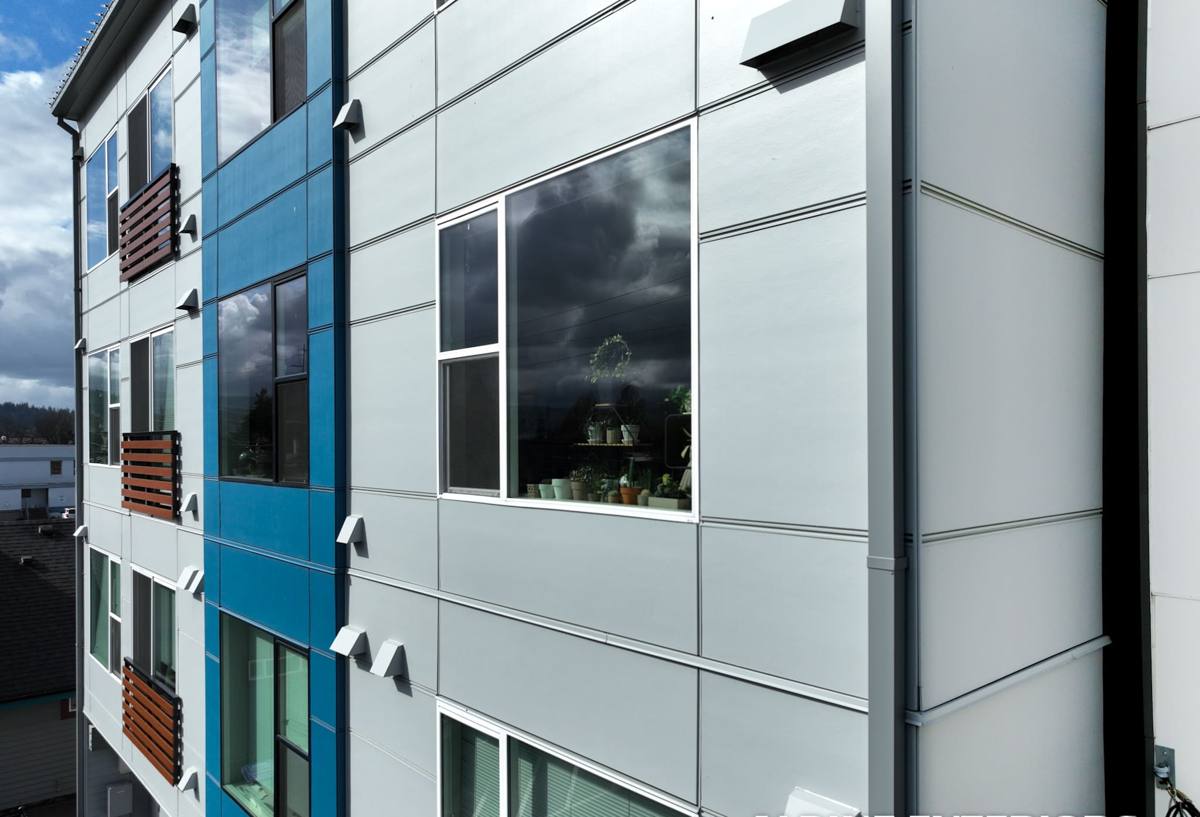
Signs Your Blaine Home Needs Window Replacement
Most homeowners don't wake up one day and decide they need new windows — the signs build up gradually until they're hard to ignore. Here's what we typically hear about, and what we look for on an inspection:
- Fogging or a milky haze between the panes of double-pane glass — a sign the seal has failed and the gas fill is gone
- Noticeable drafts near the frame, especially during a winter storm off the water
- Windows that stick, won't stay open, or are hard to lock — often corroded hardware or a warped frame
- Soft, spongy, or discolored wood at the sill or bottom corners of the frame
- Visible pitting or white corrosion on aluminum-framed windows
- Condensation forming on the inside of the glass regularly, even when it's not especially cold
- Paint that keeps peeling or bubbling around the same window no matter how often it's touched up
- A noticeable jump in heating costs without any other explanation
Any one of these on its own might not mean full replacement is necessary. Several of them together, especially on a window facing the water or the prevailing weather, usually does.
What a Correct Window Replacement Job Actually Involves
Window replacement looks simple from the outside — old window out, new window in — but the parts that matter most are the ones you don't see once the job is done. A rushed installation can look fine for a year or two and then start failing exactly where the old window did.
Opening Inspection
Once the old window is out, we check the rough opening for rot, soft sheathing, or old water damage that was hidden behind the frame. In a coastal, high-moisture area like this, it's common to find some degree of moisture damage around older windows, particularly on walls that take the worst of the weather. That gets repaired before anything new goes in — installing a new window into a compromised opening just hides the problem for a few more years.
Flashing and Water Management
This is the step that determines whether a window leaks in five years. Proper flashing integrates with the home's weather-resistant barrier so that any water that gets past the exterior trim is directed back out, not into the wall cavity. Skipping or shortcutting this step is one of the most common causes of hidden rot behind newer windows.
Sealing, Shimming, and Insulation
The window gets shimmed square and plumb, insulated around the gap (not over-packed, which can bow the frame), and sealed with backer rod and exterior-grade sealant rated for this climate. Interior and exterior trim is reinstalled or replaced to match the home.
Choosing the Right Window Material for a Coastal Climate
Not every frame material holds up the same way to salt air and constant moisture. We'll talk through the trade-offs honestly rather than push whatever's easiest to install.
| Frame Material | How It Handles Salt Air & Moisture | Trade-offs |
|---|---|---|
| Vinyl | Good — won't rust or corrode, low maintenance | Limited color/finish options, less rigid on very large openings |
| Fiberglass | Very good — dimensionally stable, resists moisture and corrosion | Higher upfront cost than vinyl |
| Wood-clad | Good on the exterior-clad face, but any breach in the cladding exposes wood to rot | Higher maintenance burden long-term in a wet climate; warranty structure often more limited on exposed wood components |
| Aluminum | Poor to fair — prone to pitting and corrosion near salt air, conducts cold | We generally steer homeowners away from bare aluminum on water-facing walls in this area |
As a standard, we lean toward vinyl and fiberglass for most Blaine replacements because they hold up to salt exposure with the least maintenance. Wood-clad is still a good option for homeowners who want that look, as long as they understand the upkeep involved in a climate that stays damp for much of the year.
Our Window Replacement Process
- Assessment: We look at every window being considered, check for hidden moisture damage, and note which walls take the worst weather exposure.
- Product selection: We walk through frame material, glass package, and grille or style options based on the home's exposure and your budget — no pressure toward the most expensive option.
- Measurement and ordering: Exact measurements are taken for each opening; nothing is templated or guessed.
- Prep and protection: Interior furnishings and flooring are protected before any window is removed.
- Removal and inspection: Old windows come out carefully so we can inspect and repair the opening if needed.
- Installation: Flashing, shimming, insulation, and sealing are done to hold up to Whatcom County weather, not just pass a quick visual check.
- Cleanup and walkthrough: Every window is operated and checked with you before we consider the job finished.
What Affects the Cost of Window Replacement in Blaine
Every home is different, so we don't quote sight-unseen prices — but these are the factors that move the number up or down on most jobs:
| Factor | Why It Matters |
|---|---|
| Frame material | Vinyl typically costs less than fiberglass or wood-clad |
| Glass package | Standard dual-pane vs. upgraded Low-E coatings or triple-pane glass |
| Number and size of windows | Larger openings and full-house projects have more material and labor |
| Condition of the opening | Hidden rot or framing repair adds time and material |
| Accessibility | Second-story or hard-to-reach windows take more labor to install safely |
| Trim and finish work | Matching existing interior/exterior trim vs. simple casing |
As a general range, single-window replacements often land in the low-to-mid four figures, and whole-house projects commonly move into five figures depending on the scope. The only way to get an accurate number is a real look at your home, which is what the free estimate is for.
Energy Efficiency and Comfort
Beyond stopping leaks and drafts, new windows change how a home feels day to day. Low-E glass coatings cut down on heat loss in winter and heat gain in summer, and argon-filled dual-pane (or triple-pane) glass adds another layer of insulation. In a climate where the heating season runs long, that translates to a noticeable difference in comfort near the windows, less cold-air drop in the evenings, and less condensation buildup on the glass during cold, wet stretches — condensation that, left unchecked, contributes to the same moisture problems that damage window frames in the first place.
Why a Local Crew Matters for This Job
Window replacement isn't a one-size-fits-all job, and a crew that already works in Blaine brings a few real advantages over a company that's never worked this stretch of coastline:
- We know which walls and orientations take the worst weather exposure in this part of Whatcom County, and we plan flashing and sealant accordingly
- We're familiar with local permitting requirements, whether the property falls within Blaine city limits or unincorporated Whatcom County
- We're close enough to respond quickly if a warranty question or adjustment comes up after the install, without a multi-hour drive
- We've seen firsthand how salt air and moss-season moisture affect different window materials over time in this specific area, not just in a showroom
Keeping New Windows Performing Long-Term
A correct installation does most of the work, but a little upkeep extends the life of any window in this climate. Rinsing salt residue off frames and hardware a few times a year helps prevent corrosion before it starts. Keeping weep holes clear of debris lets water drain the way it's designed to instead of pooling at the sill. Checking exterior caulking once a year and touching it up before it fails keeps water from finding its way behind the trim. And clearing moss or algae buildup around frames during the wet months keeps that constant dampness from sitting against the window longer than it needs to.
If your windows are showing any of the signs above, or you're just not sure whether repair or replacement makes more sense for your home, we're happy to take a look. Reach out for a free, no-pressure estimate using the form below — we'll give you a straight answer, not a sales pitch.