 Bellingham
 Asphalt Shingle Roofing Built for Birchwood's Weather
Birchwood homes sit close enough to the water and the hills around Bellingham that roofs here take a different kind of beating than roofs a hundred miles inland. Salt-laden air off Bellingham Bay works on exposed fasteners and metal flashing year-round. Driving rain off Puget Sound doesn't just fall straight down — wind pushes it sideways and up under shingle tabs and around penetrations that would stay dry in a calmer climate. And the long, damp stretch from fall through spring gives moss, moisture, and organic growth months at a time to take hold on north-facing slopes and shaded sections of roof. An asphalt shingle roof that's installed correctly for this environment can last its full rated lifespan. One that's installed to a generic spec, without accounting for any of that, tends to show problems early — curling tabs, granule loss, soft decking, and moss lines within the first several years.
This page is specifically about asphalt shingle roofing for Birchwood — installation, repair, and the maintenance that keeps a roof performing through Whatcom County's wet season after wet season. It's not a general roofing overview; it's what we've found actually matters for homes in this part of Bellingham.
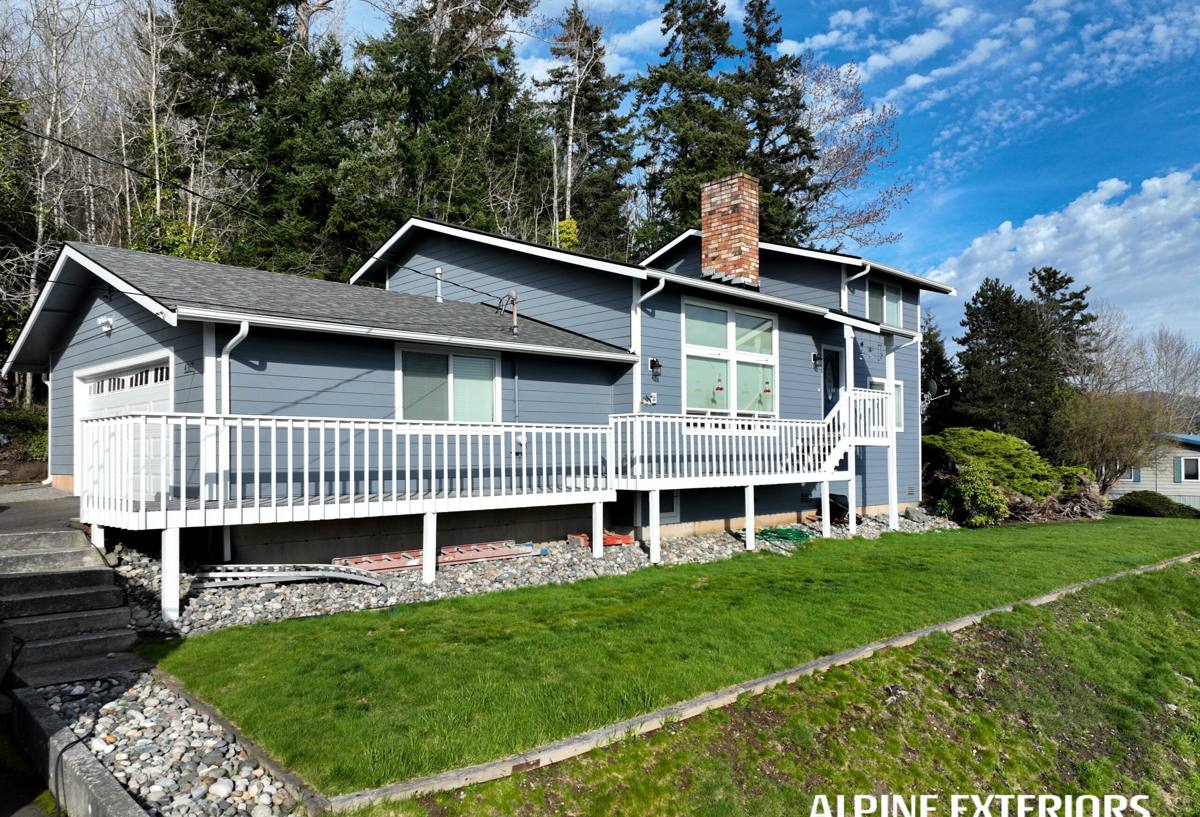
What Birchwood's Climate Does to a Shingle Roof
Salt Air and Metal Fatigue
Proximity to the bay means airborne salt settles on every exterior surface, including roofing hardware. Exposed nail heads, unpainted flashing, and lower-grade metal valleys corrode faster here than they would twenty or thirty miles inland. Over time that corrosion can compromise the very flashing details that are supposed to keep water out at chimneys, skylights, and valleys — which is often where a "shingle roof" leak actually turns out to be a flashing leak.
Driving Rain and Wind-Driven Water
Bellingham's storms frequently come with enough wind to drive rain sideways and under shingle edges, especially at eaves, rakes, and low-slope transitions. A roof that relies only on the shingles themselves for waterproofing — without proper underlayment layering and ice-and-water membrane at the vulnerable spots — is more exposed to wind-driven intrusion than the same roof built with those extra layers.
Moss, Algae, and the Long Wet Season
Whatcom County's roofing season isn't really a season — moss and algae growth can continue nearly year-round on shaded, north-facing, or tree-covered slopes. Left unmanaged, moss holds moisture directly against the shingle surface, works its way under tabs, and accelerates granule loss. It's cosmetic at first and structural later, once moisture starts reaching the decking underneath.
What a Correct Installation Actually Involves
A shingle roof is a system, not a single product. Skipping any one layer shows up as a problem years later, usually right when it's most expensive to fix. For Birchwood homes, we treat every one of these as non-negotiable:
- Deck inspection and repair — soft, delaminated, or water-stained sheathing gets replaced before anything new goes down, not covered up.
- Ice-and-water shield at eaves, valleys, and around all penetrations — the membrane that actually stops wind-driven water where shingles alone can't.
- Synthetic underlayment across the full deck as a secondary water barrier, sized and lapped correctly for our rain volume.
- Drip edge at eaves and rakes, properly lapped with the underlayment rather than tucked underneath it.
- Balanced attic ventilation — intake at the soffits, exhaust at the ridge — so moisture and heat don't get trapped under the deck.
- Correct nailing pattern — proper nail count and placement per shingle, driven flush, not overdriven or underdriven, which matters more for wind resistance than most homeowners realize.
- Flashing at every transition — chimneys, skylights, sidewalls, and valleys detailed with corrosion-resistant metal, not just caulked and hoped for.
Any one of these done wrong doesn't necessarily fail immediately. It fails on the schedule of the next big windstorm or the next wet winter, which is exactly why a rushed or underspecified install can look fine at handoff and start leaking two or three years in.
Choosing the Right Shingle for a Birchwood Roof
Not every asphalt shingle product is built the same, and for a climate with this much rain and moss exposure, the difference matters more than it would in a drier region. Here's how the common tiers compare for our conditions:
| Shingle Type | Typical Lifespan | Algae/Moss Resistance | Wind Rating | Best Fit |
|---|---|---|---|---|
| 3-Tab (economy) | 15–20 years | Low unless treated | Lower | Budget-driven projects, secondary structures |
| Architectural / Dimensional | 25–30 years | Moderate to good with algae-resistant granules | Higher | Most Birchwood homes — best balance of cost, durability, and appearance |
| Premium / Designer | 30–50 years | Good, often with enhanced algae-resistant granule treatment | Highest | Steep-slope, high-visibility, or long-hold-period homes |
We lean toward algae-resistant (AR) granule shingles for nearly every Birchwood job, regardless of tier, simply because the extended wet season here makes standard granules a losing bet on shaded slopes. It's a modest cost difference for a real reduction in how fast moss and streaking show up.
Color and Heat Considerations
Darker shingles hide streaking better in a wet climate but run slightly warmer in summer; lighter shingles show algae staining sooner but stay cooler. Neither is wrong — it's a trade-off worth talking through based on your roof's exposure and how it faces.
Moss Prevention: Beyond Just Cleaning It Off
Scraping moss off a roof without addressing why it's growing there just resets the clock. A durable approach combines a few things:
- Algae-resistant shingle granules chosen at installation, not added later
- Zinc or copper control strips installed near the ridge, which release trace metal ions that inhibit growth as rain washes over them
- Trimming back overhanging branches that keep shaded sections of roof damp longer than the rest
- Keeping gutters and valleys clear so water doesn't pool against shingle edges
- Gentle, low-pressure cleaning on a regular schedule rather than aggressive pressure washing, which strips granules and shortens shingle life
Pressure washing is worth calling out specifically: it's the fastest way to strip the granules that protect a shingle from UV and moisture damage. If moss removal is done wrong, you can trade a cosmetic problem for a real one.
Ventilation: The Part of the System You Don't See
A shingle roof's lifespan depends as much on what's happening underneath the deck as on what's happening on top of it. Without balanced intake and exhaust ventilation, moist air from the living space gets trapped in the attic, condenses against the underside of the roof deck, and creates the kind of chronic dampness that rots sheathing and blisters shingles from below — independent of any weather hitting the outside of the roof. In a climate as consistently humid as Bellingham's, undersized or blocked ventilation is one of the most common hidden causes of premature shingle failure we see.
Repair or Full Replacement?
Not every roofing issue in Birchwood means a full tear-off. The right call depends on the roof's age, the extent of the damage, and what's happening at the deck level.
| Factor | Points Toward Repair | Points Toward Replacement |
|---|---|---|
| Roof age | Under 15 years, isolated issue | Approaching or past rated lifespan |
| Damage extent | Localized — one slope, one flashing detail | Widespread granule loss, curling, multiple leak points |
| Deck condition | Solid, dry sheathing | Soft spots, staining, or rot found on inspection |
| Moss/algae staining | Surface-level, recent | Long-term, granules visibly worn thin underneath |
| Ventilation | Adequate, functioning | Blocked, undersized, or absent — often forces replacement anyway |
An honest inspection tells you which side of that table you're on before any work starts. We'd rather do a well-scoped repair on a roof that has years left than sell a replacement it doesn't need — and we'd rather tell you a repair is a short-term patch than let you find that out the hard way in the next storm.
How Our Process Works
- On-site inspection — we walk the roof (or use a drone where pitch or access makes that safer), check the attic for ventilation and moisture signs, and document flashing, valley, and edge condition.
- Straight assessment — you get a clear explanation of what's actually going on, what's driving it, and what your realistic options are, in plain terms.
- Written estimate — scope, materials, and timeline spelled out before any work begins, with no surprise add-ons mid-project.
- Tear-off and deck check (if replacing) — old material removed, deck inspected and repaired as needed before anything new goes down.
- Full system install — underlayment, ice-and-water shield, drip edge, ventilation, shingles, and flashing installed to the standard described above, not a shortened version of it.
- Cleanup and final walkthrough — site cleared, including a magnetic sweep for stray nails, and a final review of the finished work with you.
Maintenance That Keeps a Birchwood Roof Healthy
A well-installed shingle roof still needs periodic attention in this climate. A simple annual routine catches most problems while they're still cheap to fix:
- Clear gutters and valleys of needles and debris before the fall rains set in
- Check for moss or algae starting on shaded, north-facing slopes each spring
- Look for lifted, cracked, or missing shingles after any major windstorm
- Confirm attic ventilation isn't blocked by insulation or storage
- Have flashing around chimneys and skylights checked every few years for corrosion or gaps
- Schedule a professional inspection if the roof is more than 10–15 years old, even with no visible issues
Why a Crew That Already Works Birchwood Matters
Roofing specs written for a dry climate don't hold up here, and a crew that mainly works other regions can default to those specs without realizing it. A crew that already works Birchwood and the surrounding Bellingham area knows to spec ice-and-water shield generously, to push for algae-resistant granules as a default rather than an upsell, and to take flashing corrosion seriously because they've seen what salt air does to it over a few winters. That familiarity with Whatcom County conditions — not just general roofing experience — is what keeps a shingle roof performing for its full rated life instead of needing attention again in year five.
If you're dealing with moss buildup, a suspected leak, or you're simply due for a roof assessment, we're happy to take a look and give you a straightforward, no-pressure estimate. Use the form below to get started.