 Bellingham
 Building Decks in Cordata: What Bellingham's Climate Actually Demands
Cordata sits in one of the wetter, greyer stretches of a county that's already wet and grey most of the year. Whatcom County gets long stretches of low-intensity rain, heavy fall and winter cloud cover, and enough humidity that anything wood-framed and outdoors is fighting moisture nine or ten months a year. A deck built the way it would be in a drier climate — thinner flashing, minimal ventilation under the boards, standard fasteners — will show problems here faster than it would somewhere inland or south. Salt-tinged air off the Sound, driving rain that comes in sideways during winter storms, and a moss season that can run from October through May all put real stress on decking, framing, and railings.
None of that means you can't have a great deck in Cordata. It means the details that get skipped in a rush job are exactly the details that matter most here: flashing at the ledger, drainage under the frame, fastener choice, and a decking material picked for how it handles standing moisture, not just how it looks in a showroom.
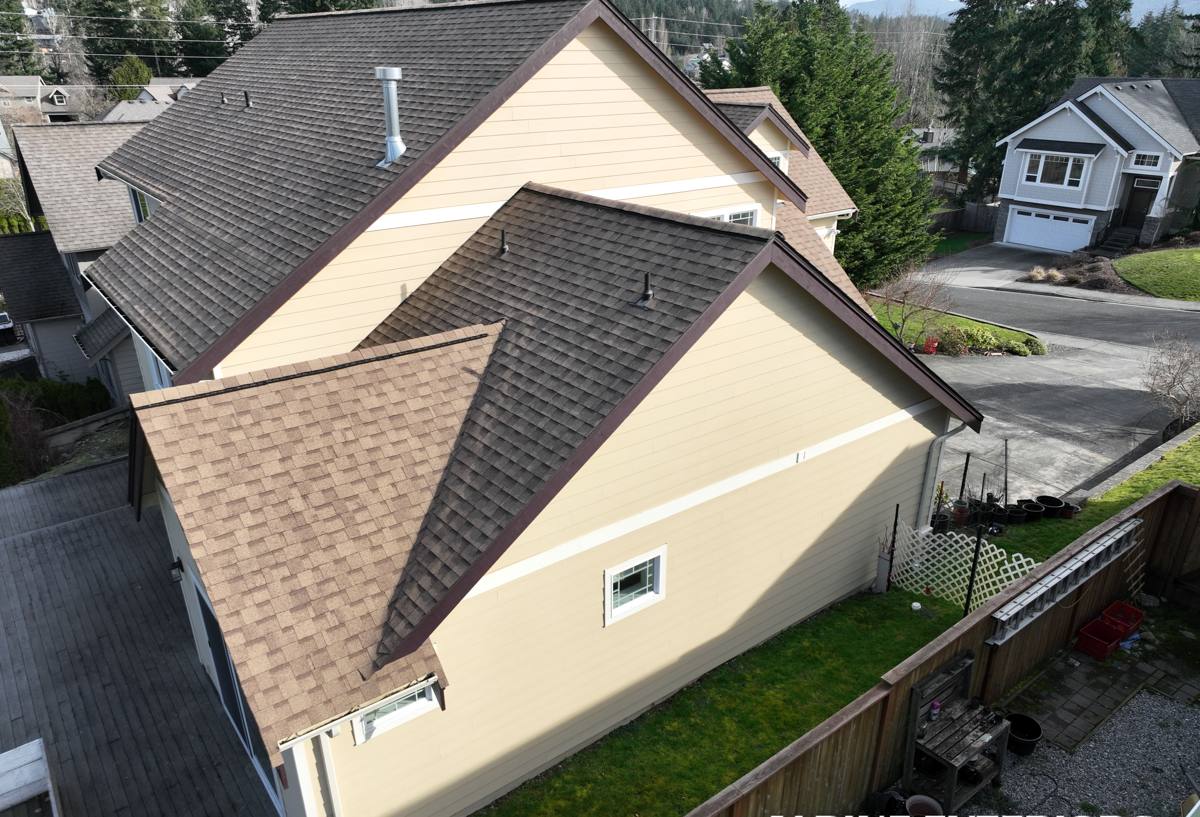
What Cordata Homes Need From a Deck
Cordata is a mix of newer subdivisions and mid-decade construction, with lots and setbacks that vary block to block. A few things tend to be consistent across the neighborhood:
- Yards that hold water longer than you'd expect after a heavy rain, which means deck footings and post bases need real drainage, not just a hole backfilled with native soil.
- Tree cover and fence lines that shade parts of a yard most of the day — those shaded areas are where moss and algae take hold first on decking and railings.
- A mix of lot orientations, so wind and rain exposure on the same street can differ significantly from house to house depending on which side of the home the deck sits on.
Before we design anything, we walk the specific lot — sun exposure, drainage patterns, existing grade, and how water actually moves across that yard during a storm. A deck plan that ignores that is a deck plan built for a different climate.
Getting the Structure Right
Footings and Framing
In ground that holds moisture, footing depth and drainage around the post base matter more than they would in sandier or drier soil. We set footings below frost depth per Whatcom County requirements and make sure water has somewhere to go rather than sitting against the concrete and the post hardware. Joists get spaced and sized for the actual decking material and span, not a generic default — composite and PVC boards often have different span tables than wood, and building to the wrong spec is a common shortcut that shows up as bounce or sag within a few years.
Ledger Board Flashing
Where a deck attaches to the house, the ledger board and its flashing are the single most common failure point we see on decks that were built without enough attention to water management. If flashing isn't installed correctly — proper overlap, correct materials, sealed fastener penetrations — water works its way behind the siding and into the rim joist over time. This is a slow, hidden kind of damage, and it's much more common in climates like ours where the wall assembly rarely gets a chance to fully dry out between rain events. We flash every ledger connection as if the deck will be rained on the day after it's finished, because in Bellingham, it usually will be.
Fasteners and Hardware
Standard hot-dip galvanized or stainless fasteners matter more here than in a dry climate, especially for decks with any exposure to salt-influenced air near Bellingham Bay. Mismatched hardware — the wrong fastener with a treated lumber type, or a fastener that isn't rated for ground contact where it's needed — corrodes faster in persistent moisture and can compromise structural connections well before the boards themselves show wear.
Choosing a Decking Material for a Wet Climate
There's no single "best" decking material — there's a best material for your budget, your maintenance tolerance, and how much sun and rain that specific deck will see. Here's how the common options actually perform in Whatcom County conditions:
| Material | Upfront Cost | Maintenance in Our Climate | Moisture Behavior |
|---|---|---|---|
| Pressure-treated wood | Lowest | Annual cleaning and re-sealing to control moss and graying | Absorbs water; needs a finish to slow it and prevent warping/splitting |
| Cedar | Moderate | Regular cleaning and periodic oiling or sealing | Naturally rot-resistant but still needs upkeep in constant damp shade |
| Capped composite | Higher | Occasional washing; no sealing or staining | Resists moisture absorption well; still needs cleaning where moss gets a foothold |
| PVC decking | Highest | Lowest of the group — soap and water | Doesn't absorb water at all, best in fully shaded, damp spots |
Wood costs less to install but costs the most over time in labor if you keep up with it properly — and if you don't, it shows fast in a climate like this. Composite and PVC cost more upfront but hold up with far less seasonal attention, which is a real factor for a lot of Cordata homeowners who'd rather spend a Saturday doing something other than re-staining a deck. We'll walk you through the honest trade-offs for your specific site rather than push one product across the board.
Moss, Mildew, and Long-Term Maintenance
A long moss season is one of the defining maintenance challenges for any exterior surface in this part of Washington, and decks are no exception. Moss and algae don't just look bad — they hold moisture against the board surface, make stairs and walking surfaces slick, and on wood decking, accelerate rot underneath the growth. A few things reduce how much of a problem this becomes:
- Gapping and spacing boards correctly so air can move underneath and water doesn't pool between them.
- Keeping the area under the deck clear of debris that traps moisture against the framing.
- Choosing a surface texture and material suited to how much shade the deck actually gets — a heavily shaded deck under trees needs a different plan than one that gets afternoon sun.
- Cleaning on a schedule that matches the season, not waiting until moss is visibly established.
We design for this from the start — proper board spacing, sensible material choice for the site's shade pattern, and, where it makes sense, ventilation gaps or skirting details that let air circulate underneath rather than trapping damp air against the frame.
Railings, Stairs, and Code Compliance
Railing height, baluster spacing, and stair geometry are governed by code, and Whatcom County and City of Bellingham requirements apply depending on where in or around Cordata your property falls. Beyond the legal minimums, railing hardware in a wet climate needs the same attention as the deck frame — correct fasteners, proper attachment to blocking, and materials that won't corrode or loosen as they cycle through wet and dry. A railing that's technically up to code but poorly fastened is still a liability a few winters down the road. We pull permits where required and build to the applicable code the first time, so you're not dealing with a failed inspection or a retrofit later.
Our Process, Start to Finish
1. On-Site Assessment
We walk your yard, look at drainage, sun and shade patterns, existing structures, and talk through how you actually plan to use the space — entertaining, grilling, a quiet spot off the kitchen, whatever it is.
2. Design and Material Selection
We lay out size, layout, and material options with real numbers attached, including the maintenance trade-offs above, so you're choosing with full information rather than guessing.
3. Permitting
Where a permit is required, we handle the application and inspections as part of the job — you shouldn't have to chase that down yourself.
4. Build
Footings, framing, flashing, decking, and railing, in that order, with the moisture-management details covered above built in at every stage — not treated as extras.
5. Final Walkthrough
We go over the finished deck with you, including what maintenance (if any) it needs and on what schedule, so there are no surprises the first wet winter.
Why It Matters to Hire a Crew That Already Works in Cordata
A deck builder who mostly works drier inland climates will design and build to habits that don't hold up here — less attention to ledger flashing, decking gapped too tight, footings that don't account for how long this soil stays saturated. A crew that already works in and around Bellingham and Whatcom County has seen what actually fails on decks in this exact climate, and builds to avoid those specific failure points from day one, not as a fix after the fact. That local pattern-recognition — knowing which details matter here versus which are overkill — is worth more than it sounds like on paper, especially once you're a few winters into owning the deck.
Signs Your Current Deck Needs Attention
If you've got an existing deck in Cordata rather than a new build, a few warning signs are worth checking before another wet season:
- Soft or spongy spots in decking boards, especially near the house or in shaded corners.
- Persistent moss or dark staining that comes back within weeks of cleaning.
- Visible gaps, rust streaks, or staining around the ledger board where it meets the house.
- Railings or stair stringers that feel loose or flex when weight is applied.
- Fasteners that are visibly corroded or backing out of the decking.
Any of these can usually be addressed, but the fix ranges from a straightforward repair to a full rebuild depending on how far the underlying moisture damage has gone — worth having looked at before it gets worse over another rainy season.
If you're planning a new deck or need an honest read on an existing one, we're happy to come take a look. The estimate is free, there's no pressure, and you'll get a straight answer about what your specific Cordata lot actually needs — just fill out the form below.