 Bellingham
 Why Bellingham's Climate Is Hard on Barkley Roofs
Roofs in the Barkley area don't fail the way roofs do in drier parts of the country. Whatcom County's marine climate is mild, which is part of why people like living here, but "mild" also means near-constant moisture. Salt air drifting off Bellingham Bay, wind-driven rain that comes in sideways instead of straight down, and a moss season that can run eight or nine months a year all work on a roof at the same time, year after year. A roof replacement done right in Barkley has to account for all three, not just swap old shingles for new ones.
Salt Air and Roofing Metal
Homes closer to the water deal with airborne salt that accelerates corrosion on exposed metal — nail heads, flashing, vent stacks, and gutter hardware. Standard electro-galvanized fasteners and thin flashing can start showing rust streaks well before the shingles themselves are worn out. We spec corrosion-resistant fasteners and heavier-gauge flashing on Barkley jobs specifically because of this, not as an upsell but because replacing flashing twice costs more than doing it right once.
Driving Rain and Roof-Wall Intersections
Storms off the Salish Sea rarely fall straight down. Wind-driven rain gets pushed sideways and upward under shingle edges, around chimneys, and especially at roof-to-wall transitions — the exact spots where a roofing crew and a siding crew need to agree on details. This is where most "roof leaks" in Barkley actually originate: not the open field of the roof, but the step flashing, kickout flashing, and wall intersections that get rushed or skipped by crews that only think about the shingles.
Moss: Whatcom County's Longest-Running Roof Problem
Shaded lots, tree cover, and cool damp weather add up to one of the longest moss seasons on the West Coast. Moss isn't just cosmetic. It holds moisture against the roof surface, lifts shingle edges as it grows, and works its way under laps where it keeps the deck wet long after the rain stops. A roof that looked fine at replacement can be shortened by years if moss isn't accounted for in the material choice and the maintenance plan that follows.
Signs Your Barkley Roof Needs Replacement, Not Another Repair
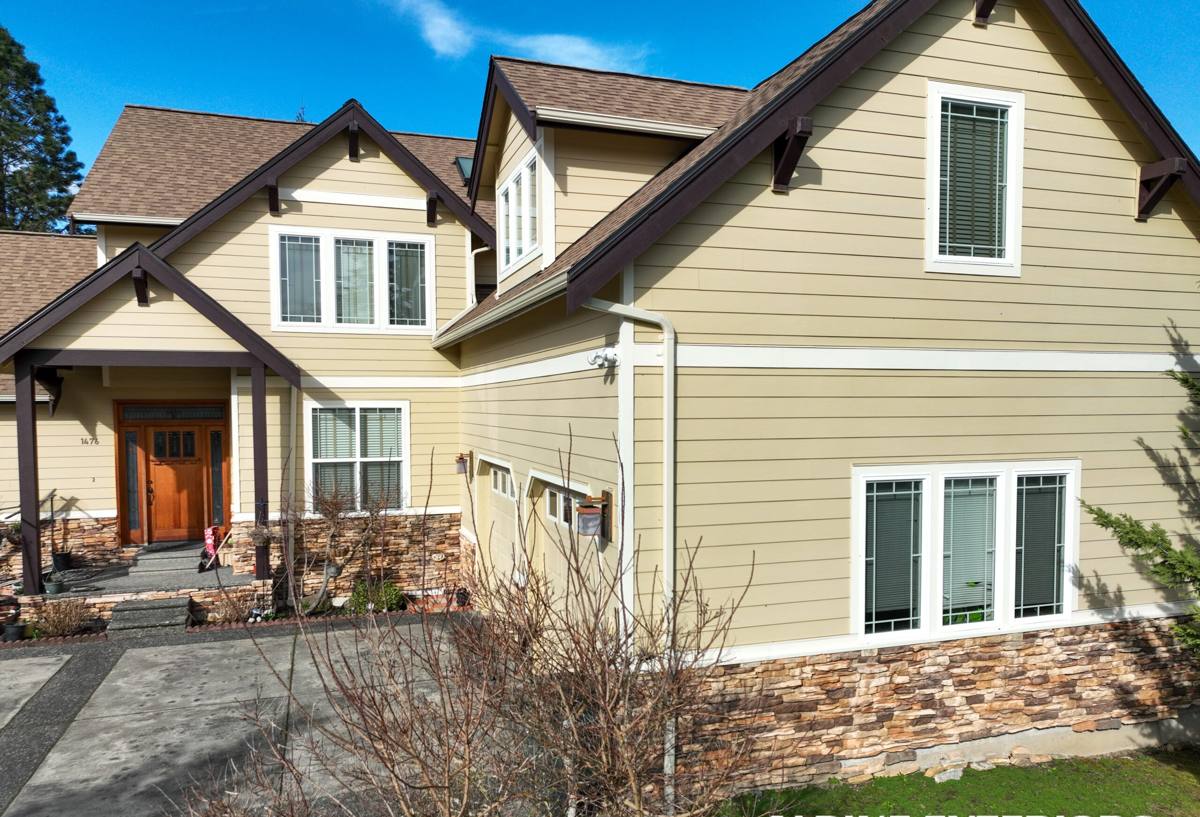
Repair makes sense for isolated damage. Replacement makes sense when the roofing system as a whole is past the point where patching buys you meaningful time. Here's what we actually look for during an inspection before recommending full replacement:
- Granule loss heavy enough that you can see bare, shiny patches on multiple shingles, not just one or two
- Shingles that are cupping, curling, or cracking across large sections of the roof rather than in one localized spot
- Soft or spongy decking found when we walk the roof, which signals moisture has already reached the plywood or planking underneath
- Moss or algae growth that's returned repeatedly despite cleaning, especially on north-facing slopes that stay shaded most of the day
- Flashing that's rusted, separated, or was installed with sealant instead of proper metal in the first place
- Daylight visible through the roof deck from the attic, or water staining on rafters and sheathing
- The roof is at or past the manufacturer's expected service life for this climate, which is shorter here than in drier regions
If you're only seeing one or two of these, a repair is often the honest recommendation — we'll tell you that. Replacement gets recommended when the underlying materials, not just the surface, have reached the end of their useful life.
What a Correct Roof Replacement Involves in This Climate
Full Tear-Off and Deck Inspection
We don't install new roofing over old layers. A full tear-off is the only way to actually see the deck, and in a climate like this, deck condition is the thing that determines how long the new roof lasts. Soft spots, delaminated plywood, or rot around old vent penetrations get found and replaced before anything new goes down. Covering that up with new shingles just hides a problem that gets more expensive later.
Underlayment and Flashing Built for Driving Rain
Because rain here doesn't always fall straight, underlayment choice and flashing detail matter more than they would in a drier climate. We use synthetic or ice-and-water underlayment at vulnerable areas — eaves, valleys, and roof-wall intersections — where wind-driven water is most likely to get pushed under the shingle course. Step flashing and kickout flashing at wall intersections get formed and installed as separate metal pieces, not caulked seams, because sealant degrades and metal doesn't.
Choosing Materials That Handle Moss and Moisture
Not every shingle line performs the same in a wet, shaded climate. Algae-resistant shingles with copper or zinc granules built in give you ongoing protection against moss and streaking rather than a one-time treatment that fades. We'll walk you through which product lines make sense for your roof's sun exposure and slope, because a roof that gets shaded most of the day needs different consideration than one that gets full sun.
Roofing Material Options for Barkley Homes
There's no single "best" roofing material — the right choice depends on your roof's exposure, your budget, and how much long-term maintenance you're willing to do. Here's an honest comparison of the options we most often discuss with Barkley homeowners.
| Material | Moss/moisture resistance | Maintenance | Typical lifespan here |
|---|---|---|---|
| Architectural asphalt shingle (algae-resistant) | Good with AR granules; needs periodic cleaning on shaded slopes | Low to moderate | 25–30 years |
| Standard 3-tab asphalt shingle | Fair; more prone to moss holding moisture at laps | Moderate | 15–20 years |
| Standing-seam metal | Excellent; sheds moisture and resists moss growth on most slopes | Low | 40–50+ years |
| Synthetic/composite shingle | Good; consistent performance in wet climates | Low to moderate | 30–40 years |
Metal roofing costs more upfront and isn't the right look for every home, but its resistance to moss and moisture is a genuine advantage in a climate like Whatcom County's. Architectural asphalt with algae-resistant granules remains the most common choice because it balances upfront cost, appearance, and reasonable maintenance for most Barkley homes.
Our Roof Replacement Process
- On-site inspection. We walk the roof, check the attic from inside when accessible, and document the actual condition — not just what's visible from the ground.
- Written estimate. You get a clear scope of work and pricing, including what's driving the cost, before any work is scheduled.
- Material selection. We go over the options that make sense for your roof's exposure and your budget, with honest trade-offs explained.
- Scheduling around weather. Roofing here means working around rain windows. We schedule tear-off in stages that keep the deck protected if weather moves in faster than expected.
- Tear-off and deck repair. Old roofing comes off down to the deck, and any damaged sheathing gets replaced before underlayment goes down.
- Underlayment, flashing, and installation. New underlayment, properly formed flashing at all penetrations and wall intersections, then the roofing material itself.
- Cleanup and magnetic sweep. Job site debris and stray nails get cleared from the yard and driveway before we consider the job done.
- Final walkthrough. We go over the finished roof with you, point out the flashing and ventilation details, and answer questions before closing out the job.
What Roof Replacement Costs Depend On
Every roof is different, and we won't quote a number without seeing yours. But these are the factors that most often move the price up or down:
| Factor | Why it matters |
|---|---|
| Roof size and number of stories | More square footage and steeper access both add labor time |
| Pitch and complexity | Steep slopes, multiple valleys, and dormers all slow installation and require more flashing work |
| Layers to remove | Tearing off two layers of old roofing costs more than tearing off one |
| Deck condition | Rot or soft sheathing found during tear-off means added material and labor to replace it |
| Material choice | Standard architectural shingle, premium shingle lines, and metal roofing carry different material costs |
| Access and site conditions | Tree cover, tight driveways, and roof height all affect how efficiently a crew can work |
Why It Matters to Hire a Crew That Already Works in Barkley
A roofing crew that's worked other homes in this specific area already knows how the local weather patterns behave against different roof orientations, which slopes hold moss longest, and how homes here were typically built and vented. That's not a small thing. A crew unfamiliar with Whatcom County conditions might spec the same underlayment and flashing details they'd use in a drier climate, and those shortcuts show up as leaks two or three winters later, not on move-out day. Working locally also means we're accountable locally — if something needs a second look after installation, we're not driving in from out of the area to handle it.
Keeping a New Roof Working After Installation
A correctly installed roof still needs some ongoing attention in this climate, especially around moss. A few habits go a long way toward protecting the investment:
- Keep gutters and downspouts clear of needles and debris so water isn't backing up under the roof edge
- Trim back tree limbs that overhang the roof to cut down on shade, debris, and moss growth
- Have moss treated or gently removed before it establishes rather than after it's visibly thick
- Check attic ventilation periodically — poor airflow traps moisture against the underside of the deck
- Have flashing and roof-wall intersections looked at every few years, since these are the areas most likely to need attention first
None of this requires a major annual project — it's mostly about not letting small issues sit through an entire wet season.
If your roof is showing its age or you just want an honest read on where it stands, we're happy to take a look. We offer free, no-pressure estimates for Barkley homeowners — walk us through what you're seeing, and we'll walk you through what we find and what it would take to fix it right. Use the form below to get started.