 Bellingham
 Energy-Efficient Windows for York Homes in Bellingham
Homes in the York area sit close enough to Bellingham Bay and the surrounding wetlands that windows take a different kind of beating than they would further inland. Salt-laden air off the water, long stretches of driving rain, and a shady, damp moss season that can run most of the year all work on window frames, glazing seals, and trim in ways that show up as fogged glass, drafts, and rot long before a homeowner expects it. An energy-efficient window swap in York isn't just about a lower power bill — it's about putting product and installation detail in the openings that can actually stand up to this climate for the long haul.
This page covers what that means specifically for York: what the local weather does to windows over time, what a correct installation actually involves, how we run the job from estimate to cleanup, and why it matters to hire a crew that already knows this neighborhood's housing stock rather than one working from a generic checklist.
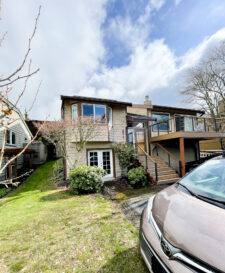
What Whatcom County Weather Does to Old Windows
Salt Air and Coastal Moisture
Even a few miles inland from Bellingham Bay, airborne salt settles on exterior surfaces and accelerates corrosion on window hardware — hinges, cranks, and lock mechanisms in particular. On older aluminum or lower-grade vinyl frames, this shows up as pitting, stiff operation, and seals that give up early. It's one reason we pay attention to hardware finish and frame material, not just the glass package, when we spec a window for a York home.
Driving Rain and Wind-Driven Water
Storms off the water don't just fall straight down — wind pushes rain sideways into wall assemblies, and windows are the weakest point in that wall if they aren't flashed correctly. A window that looks fine from the outside can still be feeding water behind the trim and into the wall cavity, where it rots sheathing and framing you can't see until the damage is extensive.
Moss Season and Shade Humidity
Whatcom County's long wet season and plenty of tree cover in and around York mean sustained humidity against north- and shade-facing walls for months at a time. That moisture cycle is hard on wood sills and any caulk or sealant joint that wasn't detailed to shed water on its own — sealant alone, without proper flashing behind it, fails eventually.
What "Energy-Efficient" Actually Means Here
Energy-efficient windows are a system of choices, not a single feature. For a York home, the choices that matter most are the ones that hold up to moisture cycling while keeping heat in during our long heating season.
- U-factor: measures how much heat escapes through the window — lower is better for our climate, where heating load dominates over cooling load.
- SHGC (Solar Heat Gain Coefficient): matters less here than in sunnier climates, but still worth getting right on south- and west-facing openings.
- Glazing: dual-pane with a low-E coating and an argon or krypton gas fill is standard for this region; triple-pane can make sense on street-noise-exposed or particularly exposed walls, at added cost.
- Frame material: has to resist the moisture and salt exposure described above, not just insulate.
Frame Material Comparison for This Climate
| Frame Type | Moisture/Salt Resistance | Maintenance | Typical Fit for York Homes |
|---|---|---|---|
| Vinyl (quality-grade) | Good — won't rot or corrode | Low | Strong all-around choice; verify weld quality and reinforced corners |
| Fiberglass | Very good — dimensionally stable, resists salt air well | Low | Worth the upcharge on heavily exposed walls |
| Wood-clad | Depends heavily on cladding integrity and seal quality | Higher — cladding failures let moisture reach the wood core | Fine where appearance matters most, but needs disciplined maintenance in this climate |
| Aluminum | Poor without thermal break — conducts cold, prone to corrosion near the coast | Moderate | Generally not our first recommendation for this area |
We don't push one brand or material on every job — the right call depends on the wall's exposure, the home's existing trim detail, and the homeowner's budget and maintenance appetite. What we won't do is install a frame or glazing package that we know is a poor match for a wet, salt-exposed wall just because it's cheaper up front — that's a callback waiting to happen, and it's on us, not the manufacturer, if we spec it wrong.
Signs Your Windows Are Costing You Money
Most homeowners in York call us after noticing one or two of these, not because they went looking for a window project:
- Visible fog or moisture between panes (the seal has failed and the gas fill is gone)
- Drafts you can feel with a hand near the frame on a windy day
- Soft or discolored wood trim or sill, especially on north- or west-facing walls
- Windows that are hard to open, close, or lock — often a sign of frame swelling or hardware corrosion
- Condensation forming on the inside of the glass in cold weather
- A noticeable jump in heating costs without a clear reason
- Visible gaps or failing caulk lines around the exterior trim
Any one of these can usually be repaired short-term, but when several show up together, it's often more cost-effective to replace than to keep patching a window that's already lost its seal integrity.
What a Correct Installation Involves
The window unit itself only matters if it's installed to actually shed water. This is where most of the long-term failures we get called out to fix in older York homes trace back to — not the window product, but how the opening was flashed and sealed the first time around.
- Remove the old unit and inspect the rough opening for rot, soft framing, or prior water intrusion before anything new goes in.
- Repair or replace any damaged framing or sheathing found during that inspection — this is non-negotiable if we find it.
- Install a sloped sill pan so any water that gets past the window has a way out instead of pooling against the frame.
- Integrate flashing with the existing weather-resistive barrier in the correct shingle-lap order (top piece over the one below it), so water is directed out and down, never trapped behind the trim.
- Set and shim the window level, plumb, and square — a unit that's racked even slightly won't operate correctly and can stress the seals prematurely.
- Insulate the gap around the frame without overpacking it, which can bow the frame inward.
- Seal and trim the exterior with a sealant joint that's backed up by proper flashing, not relied on as the only line of defense.
Skipping the sill pan or getting the flashing lap order wrong is the single most common cause of hidden water damage we find behind window trim in this region — it's invisible until the wood underneath is already compromised.
Our Process on a York Job
We keep the process straightforward because homeowners deserve to know what's happening at each step:
- Free on-site estimate — we look at each window opening individually, since condition and exposure often vary wall to wall on the same house.
- Written scope and pricing — covering window specs, flashing detail, and any framing repair contingencies, so there are no surprises mid-job.
- Scheduling around the weather — we don't open up exterior walls during an active storm system if we can help it; Whatcom County's rain patterns mean we plan install windows carefully.
- Installation — following the flashing and sealing sequence above, opening by opening.
- Walkthrough — we operate every window with the homeowner present and go over care and warranty coverage before we consider the job done.
Why a Crew That Already Works York Matters
York's housing stock spans a range of ages and construction styles, and a lot of it has the same coastal exposure and shade/moss conditions common across Bellingham. A crew that regularly works this specific area already has a feel for which walls tend to take the worst weather, what kind of rot patterns show up in homes of a certain era, and how local siding and trim details typically get built — which matters when window replacement intersects with siding work, as it often does once trim or sheathing needs repair. That familiarity means fewer surprises mid-job and a scope that's realistic from the first estimate, not one that grows once the crew starts pulling old units and finds conditions nobody warned the homeowner about.
Cost Factors to Expect
| Factor | Why It Affects Price |
|---|---|
| Frame material (vinyl vs. fiberglass vs. wood-clad) | Material cost and long-term durability tradeoffs |
| Glazing package (dual-pane vs. triple-pane) | Extra panes and gas fill add material and weight-handling cost |
| Number of window openings | Per-unit labor and material scale with quantity, though larger jobs often see per-unit savings |
| Condition of the rough opening | Hidden rot or framing damage found during removal adds repair scope |
| Wall exposure and height | Second-story or hard-to-access openings take more time and equipment |
| Trim and siding integration | Matching or repairing surrounding trim/siding adds material and labor |
Because so much of the real cost depends on what we find once old windows come out — not just the units themselves — we give a firm number only after the on-site look, and we flag any framing repair as a separate line item before we proceed, not after.
Get a Straight Answer for Your York Home
If your windows are drafty, fogged, or just old enough that you're wondering whether it's worth fixing versus replacing, we're glad to take a look and give you an honest read — no pressure, no hard sell. Request a free estimate using the form below and we'll walk your home's specific exposure and window condition with you before recommending anything.