 Bellingham
 Decks in Columbia Take a Different Kind of Beating
The Columbia neighborhood sits close enough to Bellingham Bay that salt-laden air is a constant, not an occasional visitor. Add Whatcom County's long wet season and the moss that comes with it, and you've got conditions that age a deck faster than most homeowners expect. A deck that would hold up fine east of the Cascades can show rot, corroded fasteners, and slick moss growth within a handful of years here if it wasn't built or maintained with this climate in mind.
We've repaired a lot of decks around Bellingham, and the ones in Columbia and other close-in neighborhoods tend to show a consistent pattern of problems tied directly to salt air and moisture. Understanding that pattern is the difference between a repair that lasts and one that's just cosmetic.
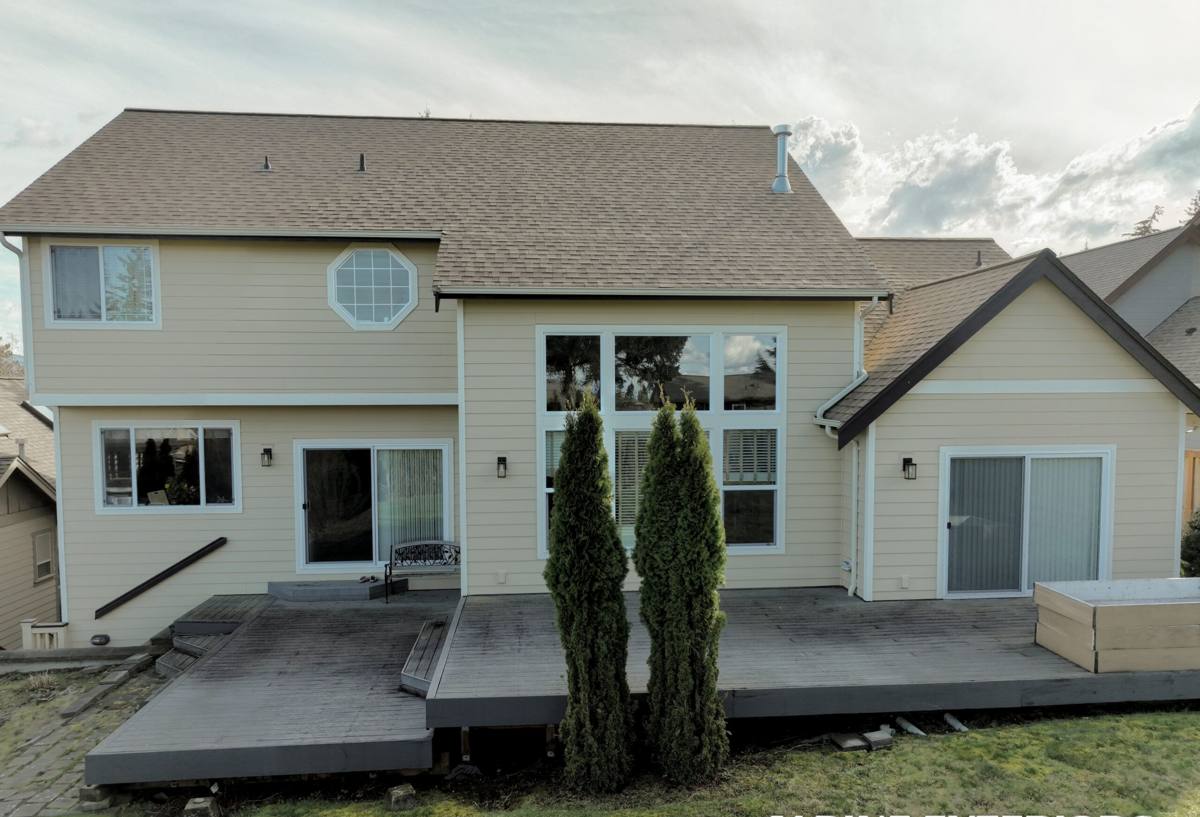
What Salt Air, Rain, and Moss Actually Do to a Deck
Salt Air and Metal Fasteners
Salt in the air accelerates corrosion on nails, screws, and joist hardware. Once a fastener starts rusting, it loses grip strength and can stain the wood around it. On older Columbia decks, we regularly find fasteners that look fine from a few feet away but crumble or pull loose under load — a hidden safety issue as much as a cosmetic one.
Driving Rain and Hidden Rot
Wind-driven rain doesn't just fall straight down — it gets pushed sideways into ledger boards, under railings, and into any gap where flashing was skipped or installed incorrectly. That moisture gets trapped and rot sets in from the inside, often invisible until a board feels soft underfoot or a railing post wobbles.
Moss and Algae
Bellingham's long wet season gives moss and algae months to establish themselves on horizontal deck surfaces, especially in shaded spots or under overhangs that rarely dry out. Beyond being unsightly, moss holds moisture against the wood surface and creates a genuinely slick, dangerous walking surface — a real liability on stairs and ramps.
Common Repair Issues We See in Columbia Homes
- Soft or spongy decking boards near the house, where rain runoff collects
- Corroded or failing joist hangers and ledger fasteners
- Loose or wobbly railing posts from rot at the base
- Moss and algae buildup on shaded boards and stair treads
- Gaps or missing flashing where the deck ledger meets the house siding
- Delamination or surface cracking on older composite decking
- Standing water on decks with inadequate slope or drainage
Repair or Replace? How We Decide
Not every deck problem means starting over, and not every deck is worth saving as-is. We look at the structural frame separately from the surface — a deck can have tired-looking boards but a perfectly sound frame, or the reverse: nice-looking boards over a compromised structure.
| Sign | Usually Repairable | Usually Needs Replacement |
|---|---|---|
| Deck boards | Isolated soft spots, surface graying, minor cracking | Widespread rot, boards soft across most of the deck |
| Framing/joists | Localized rot at one or two joists | Rot spreading through multiple joists or the ledger board |
| Railings | Loose balusters, one or two failing posts | Structural posts rotted at the base, code-noncompliant spacing |
| Fasteners | Scattered corroded fasteners | Fastener failure is systemic across the deck |
| Age | Under 15-20 years, maintained regularly | Original construction quality was poor or deck is well past its service life |
When we come out for an estimate, we'll tell you honestly which category your deck falls into. Plenty of Columbia decks just need targeted structural repair, moisture correction, and a refinish — not a full teardown.
What a Correct Repair Actually Involves
A repair that only replaces the boards you can see, without addressing what's underneath, tends to fail again within a season or two around here. A correct repair goes in this order:
- Structural inspection — checking joists, beams, posts, and the ledger connection to the house for rot, corrosion, and proper attachment
- Flashing correction — making sure the ledger board has proper flashing so rain can't get trapped between the deck and the house wall
- Framing repair — sistering or replacing any compromised joists and beams, not just patching around them
- Fastener upgrade — replacing corroded hardware with fasteners rated for this environment
- Surface repair or replacement — decking boards, stair treads, and railings replaced or refinished as needed
- Drainage and moss prevention — correcting slope issues and addressing conditions that let moss take hold
Skipping straight to step five is the shortcut that leads homeowners to call us again in a year or two for the same problem.
Our Process for Columbia Deck Repairs
We keep the process straightforward, because deck repair shouldn't be a mystery:
- Free on-site inspection where we walk the whole deck, check the frame from underneath where accessible, and probe suspect boards
- A written scope of work explaining what's structural, what's cosmetic, and what our repair recommendation is — with honest talk about repair versus replacement where relevant
- Scheduling that accounts for Bellingham's weather windows, since certain repair and finishing steps need dry conditions to hold up
- The repair itself, done in the order above rather than surface-first
- A final walkthrough so you know what was done and what maintenance will keep it that way
Materials and Fasteners That Hold Up in This Climate
What we use for a repair depends on what's already on your deck and what you're trying to achieve, but here's how the common options compare for a salt-air, high-rain environment like Columbia's:
| Material | Moisture Performance | Maintenance | Best For |
|---|---|---|---|
| Pressure-treated lumber | Good when properly sealed and maintained | Needs periodic sealing/staining | Framing repairs and budget-conscious board replacement |
| Cedar | Naturally rot- and insect-resistant | Needs regular finish maintenance to hold color and resist graying | Homeowners who want a natural wood look and are willing to maintain it |
| Composite decking | Very good moisture resistance, won't rot | Low — occasional cleaning | Long-term, low-maintenance surface replacement |
On fasteners, we default to hot-dip galvanized or stainless steel hardware rated for treated lumber contact, rather than standard coated screws that corrode faster in salt air. It costs a bit more up front, but replacing corroded fasteners every few years costs more over time — and a fastener failure on a railing or stair is a safety issue, not just a maintenance one.
A Note on Composite Decking
Composite is a good option for many Columbia homes because it doesn't rot and resists moss better than bare wood, but it's not maintenance-free — it still needs periodic cleaning, and older composite products can delaminate at cut edges if they weren't sealed properly during installation. We'll walk you through the trade-offs honestly rather than push whatever's easiest for us to install.
Maintenance That Extends the Life of a Repair
A good repair only lasts if it's maintained. This is what we recommend for Columbia decks specifically, given the salt air and moss pressure:
- Sweep debris off the deck regularly, especially in fall, so moisture doesn't sit under leaves and needles
- Clean moss and algae off boards and stairs at least once a year, ideally before the wettest months set in
- Check railing posts and stair stringers for looseness once a year
- Reseal or restain wood decking on the manufacturer's recommended schedule — don't wait until it's visibly graying
- Keep an eye on the ledger board area where the deck meets the house — that's the first place hidden rot tends to show up
- Make sure gutters and downspouts near the deck aren't dumping extra water onto it
Why It Matters to Hire a Crew That Already Works Columbia
Deck repair looks straightforward from the outside, but the details that make a repair last — correct flashing at the ledger, fastener selection for salt air, framing that accounts for how driving rain actually hits a Whatcom County deck — come from having done this work in this specific area repeatedly. A crew that mostly works drier inland climates may not default to the same moisture details as a crew that works Bellingham's waterfront-adjacent neighborhoods every season.
We also know that older homes in neighborhoods like Columbia often have decks that were built or previously repaired to standards that have since changed, so part of our job is catching those gaps — undersized flashing, missing joist hangers, railing spacing that wouldn't pass today — while we're already in there working.
Get a Free, No-Pressure Estimate
If your deck has soft spots, loose railings, stubborn moss, or you're just not sure whether it needs a repair or a replacement, we're happy to take a look. Fill out the form below for a free estimate — no pressure, just an honest assessment of what your deck actually needs.