 Bellingham
 Windows on South Hill Face a Different Kind of Weather
South Hill sits up above much of Bellingham, which means homes here catch more of what comes off Bellingham Bay and the Strait of Georgia than houses tucked into lower, more sheltered neighborhoods. That elevation and exposure bring wind-driven rain that hits window frames at an angle instead of straight down, salt-laden air that speeds up corrosion on hardware and fasteners, and a long, damp moss season that keeps north- and west-facing walls wet for weeks at a time. Windows are one of the first places that combination shows up as a problem — soft trim, foggy glass, drafts, or water staining below the sill.
None of that means South Hill homes need exotic products. It means the installation has to account for how water actually moves across a wall in this climate, not just how it moves on a dry day during a demonstration. A window that's a perfect fit for a home in eastern Washington can still fail here if it's flashed and sealed like it's going into a drier climate.
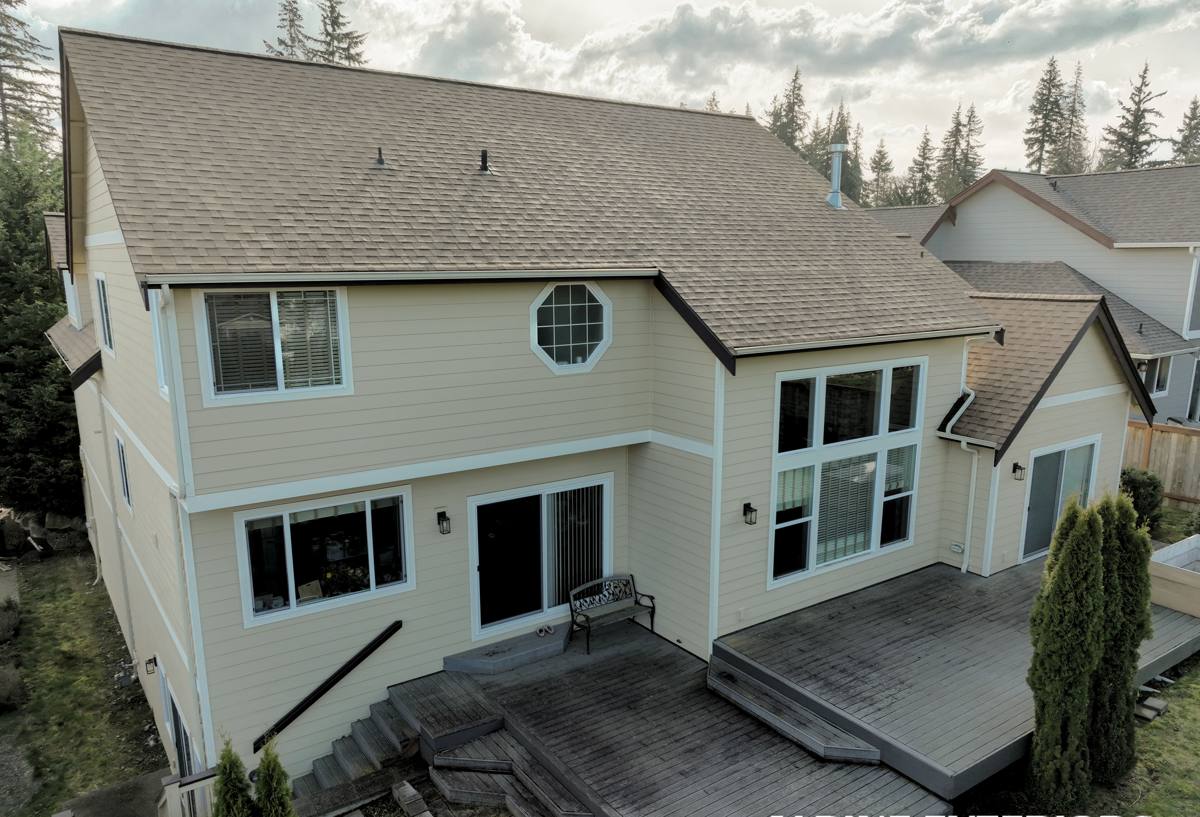
What "Correct" Window Installation Actually Involves
Window installation is often talked about like it's just swapping one unit for another, but the window itself is only part of the job. Most leaks and rot we get called out to fix didn't come from a bad window — they came from a gap in the water management around it. On a home exposed to the kind of driving rain South Hill gets, the details around the opening matter as much as the glass.
The parts that actually stop water
- A sloped sill pan that carries any water that gets past the window back outside, instead of letting it sit against the framing
- Self-adhered flashing tape at the sill, jambs, and head, layered in the correct shingle-style order so water is always directed downward and outward
- A weather-resistant barrier (house wrap or building paper) that laps correctly over the flashing, not under it
- Backer rod and a proper exterior sealant joint sized for movement, not just a bead of caulk smeared over a gap
- Shimming that supports the frame without bowing it, so the sash operates smoothly for years instead of binding after one wet winter
- Insulation in the gap between the window frame and rough opening — not stuffed tight, which can bow the frame, and not left empty, which creates a cold, drafty perimeter
Skip or rush any one of these steps and the window can look fine for a year or two before problems show up inside the wall, where they're much more expensive to fix than they would have been to prevent.
Common Window Problems We See on South Hill Homes
Moss and organic buildup around frames
Whatcom County's mild, wet stretches from fall through spring are ideal moss-growing conditions, and window sills, trim, and the tops of frames are common landing spots. Moss holds moisture against wood and painted surfaces far longer than open air would, which accelerates rot and paint failure. Good installation includes trim details and drainage paths that don't give moss an easy place to establish itself, and drip caps that keep water moving off the top of the window instead of pooling.
Corroded or stiff hardware
Salt air moving in off the water is harder on metal hardware — hinges, cranks, locks — than most homeowners expect, especially on homes with more open exposure. Lower-grade hardware can start sticking or corroding years before the glass or frame shows any wear, which is one reason hardware quality matters as much as brand name when we're comparing window lines for a South Hill home.
Condensation and fogged glass
A failed seal between the panes of an insulated glass unit shows up as permanent fogging or moisture trapped between the layers of glass. This is a manufacturing or age issue with the glass unit itself, not something caused by installation, but it's a common reason homeowners start looking into replacement. It's also a good reminder to check warranty terms on glass seals specifically, since they're often covered separately from the rest of the window.
Drafts and rot at the rough opening
When flashing was skipped or installed out of order — a common shortcut on older or lower-bid installations — water works its way behind the trim and into the framing over time. By the time it's visible as a soft spot or bubbling paint, there's usually already damage to the sheathing or framing underneath that needs to be addressed before a new window goes in.
Choosing a Window Type for South Hill's Climate
There's no single "best" window material — the right choice depends on your home's exposure, your maintenance preferences, and your budget. Here's how the common options compare for a wet, coastal-influenced climate like ours.
| Material | Moisture Performance | Maintenance | Typical Trade-Offs |
|---|---|---|---|
| Vinyl | Won't rot; handles moisture well | Low — occasional cleaning | Frame color/size options are more limited; not repainted |
| Fiberglass | Excellent; very stable in wet-dry cycling | Low | Higher upfront cost than vinyl |
| Wood-clad | Good if the exterior cladding and seals are intact | Higher — cladding and interior wood need periodic attention | Best interior look; more sensitive to installation quality |
| Aluminum | Prone to condensation without a thermal break | Moderate; watch for corrosion near salt air | Slim sightlines but generally a poor fit for this climate |
For most South Hill homes, we steer people toward vinyl or fiberglass for anything with real weather exposure, and reserve wood-clad for more sheltered elevations where the homeowner specifically wants that interior wood look and is willing to keep up with it. We're honest about that trade-off upfront rather than selling whatever has the best margin.
Our Installation Process
- On-site assessment. We look at each opening individually — exposure, existing flashing condition, and any signs of past water intrusion — rather than assuming every window on the house needs the same approach.
- Removal and opening inspection. Once the old window is out, we check the sheathing and framing for hidden rot before anything new goes in. This is often where problems that weren't visible from outside get caught.
- Sill pan and flashing. We install a sloped sill pan and layer flashing in the correct order so water is always directed out and down, never trapped.
- Window setting and shimming. The new window is leveled, plumbed, and shimmed to spec so the sash operates correctly and the frame isn't stressed.
- Insulation and air sealing. The gap around the frame is insulated and air-sealed without overpacking it.
- Exterior trim and sealant. Trim is reinstalled or replaced, and sealant joints are sized and placed to handle real movement and weather, not just look clean on installation day.
- Final walkthrough. We test operation, locks, and weatherstripping with you before we consider the job finished.
What Window Installation Costs Depend On
We don't publish a flat price because the honest answer is "it depends," but these are the factors that actually move the number:
| Factor | Why It Matters |
|---|---|
| Number and size of windows | Larger and specialty shapes cost more in both material and labor |
| Material (vinyl, fiberglass, wood-clad) | Material cost varies significantly, as shown above |
| Condition of the existing opening | Hidden rot or old, out-of-order flashing adds repair time before the new window can go in |
| Retrofit vs. full-frame replacement | Full-frame replacement addresses flashing and framing issues but takes more labor than an insert into an existing frame |
| Access and story height | Second-story or hard-to-reach windows take longer and may need staging |
| Trim and finish work | Matching existing exterior trim profiles adds carpentry time |
We walk every job in person before quoting, because two houses with the "same" ten windows can have very different scopes once we're actually looking at the openings.
Why a Crew That Works South Hill Regularly Matters
A window installer who mostly works drier, more sheltered parts of Whatcom County can still do competent work, but a crew that regularly installs on South Hill has already seen how this specific exposure behaves over multiple seasons — which elevations catch the worst of the driving rain, where moss tends to establish first, and which older homes in the area were built with flashing details that don't hold up anymore. That familiarity shows up in fewer surprises once the old window comes off the wall, and in trim and sealant choices that are picked for how they'll actually perform here, not just how they look on installation day.
It also means we're a known, findable business if a warranty question comes up five years from now — not a crew that worked the area for one season and moved on.
Maintenance checklist to protect a new installation
- Clear moss and debris from sills and trim at least once a year, more often on north- and west-facing windows
- Inspect exterior sealant joints annually for cracking or separation and have them redone before they fail completely
- Check that weep holes (on vinyl and fiberglass frames) stay clear so water can drain out
- Watch for soft spots in exterior trim, which can signal water getting behind it
- Operate every window at least a few times a year so hardware doesn't seize up from disuse
- Keep gutters and downspouts clear so roof runoff isn't dumping extra water onto window heads below
Let's Look at Your Windows
If your South Hill home has drafty, foggy, or aging windows — or you're planning ahead for a remodel — we're happy to come take a look and give you a straightforward, no-pressure estimate. Use the form below to get started.